This article was translated from Japanese using AI. Read the Japanese original
The Joseph Bulova School of Watchmaking Training Manual is an English-language manual prepared by the school for practical training in mechanical watch repair. Students replace the balance staff, check the wheel for runout and uneven weight, and correct the shape of the balance spring. They then assemble a watch and learn how the components they have worked on individually fit together. This article follows the manual’s structure through the available scan of the assembly unit and a bibliography comparing editions. 1 2
Exercises in balance repair#
The balance is a wheel that oscillates under the action of the balance spring. The balance staff passes through its centre and is supported by bearings at both ends. The 1947 exercises cover staking the staff to the balance, checking where the wheel runs out of true relative to its axis, removing a damaged staff and making a replacement on a lathe. Another exercise covers polishing the narrow pivots. The Bowman Technical School records at LancasterHistory contain extracts from Bulova lessons on fitting balance staffs and truing balances. 2 3
Once the wheel is true, the next exercise is poising, or checking its weight distribution. For static poising, support the staff horizontally with the balance spring removed, leaving the wheel free to turn. If its mass is unevenly distributed, the heavy point settles at the bottom. 11 12 Later units cover truing the balance spring in the flat and studying how it oscillates. Students examine the wheel’s shape, its distribution of mass and the condition of the spring in turn. 1 2
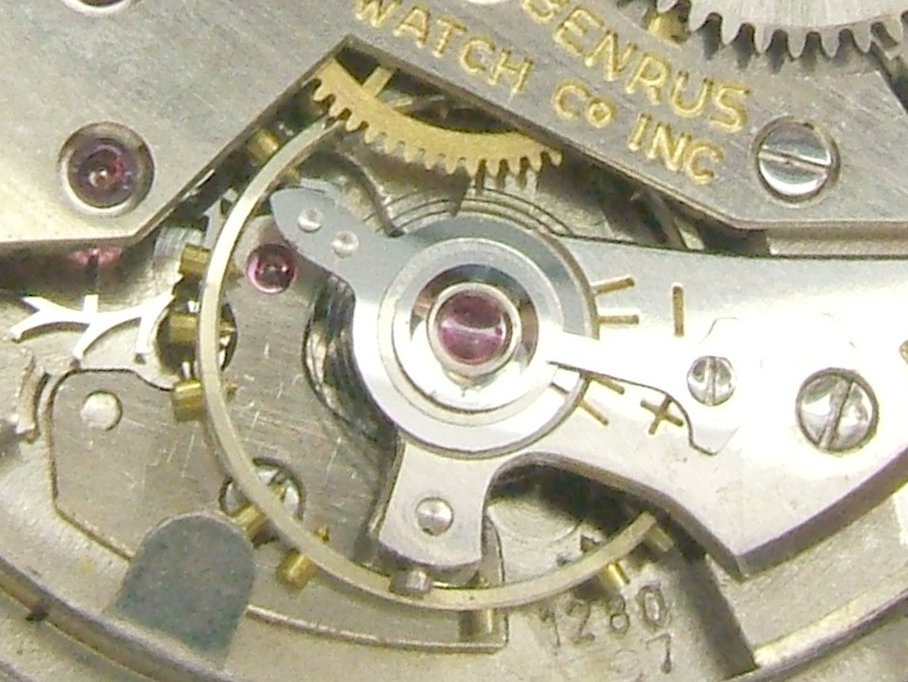
Figure 1. The balance and balance spring in a separate example, a Benrus DN21 movement. Photograph by Chetvorno. Source Wikimedia Commons photograph and rights statement. The photographer dedicated the image to the public domain worldwide and permits use for any purpose where that dedication is legally unavailable. Reproduced unchanged.

Reading the assembly drawings for the 10 AK#
Training Unit 9, “Watch Assembly,” divides the watch into nine groups: plates and bridges, power, train, bearing jewels, escapement, balance and balance spring, winding and setting, dial and hands, and case. The opening photograph shows Bulova’s markings “10 AK” and “17 JEWELS.” The gear train diagram gives the centre wheel one revolution per hour, the third wheel 7.5, the fourth wheel 60 and the escape wheel 600. The fourth wheel’s 60 revolutions per hour equal one revolution per minute. Another diagram in the unit shows a dial with subsidiary seconds at 6 o’clock. 1
The winding and setting drawings show the crown pushed in and pulled out. Pulling it out moves a lever and changes what the sliding pinion engages, so turning the same crown sets the hands. The assembly drawings show the same movement in an exploded arrangement and in side section, making it possible to follow the positions of the barrel, train, escapement and balance. 1
From postwar vocational training to readers outside the school#
The school in Queens, New York, offered free vocational training in watch repair to veterans disabled during the Second World War. Bulova’s 1955 annual report dates the founding to 1944, while the company’s current history and a collection article by the Horological Society of New York (HSNY) place the school’s activity in 1945. Photographs shown by HSNY depict training rooms accessible to wheelchair users and benches adjustable for individual students. The society also holds manuals with annotations apparently made by students. 4 5 6
The material circulated outside the school. In April 1950 the Horological Institute of America advertised the illustrated training units in its journal and provided an order form. The translator’s preface to the Standard Manual of Watchmaking Techniques, edited by the HIA’s Japanese branch and translated by Kazumi Sue, describes how the Bulova textbook was adapted for use in Japan. 7
Editions and access#
Horological bibliographer Richard Watkins has identified several editions going back to the 1940s. Compared with the 1947 edition, the ninth edition of 1968 adds a chapter on the train, including truing individual wheels and securing wheels to pinions. A repair chapter also checks the height and horizontal alignment of parts of the lever escapement. The manual expanded from general component functions to points students could inspect during practical work. 2
Bibliographic records list the school as the publisher of the eleventh edition in 1975 and the American Watchmakers-Clockmakers Institute (AWCI) as the publisher of the thirteenth in 2003. The thirteenth edition has ISBN 978-0-918845-21-4. In 2023 AWCI described the manual as one of the designated references for its watchmaker certification examination. The assembly drawings and text appear in the scan in reference 1. Reference 4 shows photographs of school records and copies of the book. 1 4 8 9 10
References#
- Joseph Bulova School of Watchmaking, “Training Unit Number 9: Watch Assembly,” copyright notice dated 1945, edition unidentified, pp. 185–194. Scan available through myBulova. Accessed 20 November 2026.
- Richard Watkins, “Mechanical Watches: An Annotated Bibliography,” R461, “Training units.” NAWCC Horological Index. Accessed 20 November 2026.
- LancasterHistory, “Bowman Technical School Records,” folder 92, extracts from watchmaking and repair teaching materials. Accessed 20 November 2026.
- Horological Society of New York, “Reading Time at HSNY: Veteran Watchmakers at the Bulova School,” teaching materials and school records in the collection, figs. 4 and 6. Accessed 20 November 2026.
- Bulova Watch Company, “1955 Annual Report,” “The Joseph Bulova School of Watchmaking.” Accessed 20 November 2026.
- Bulova, “About Us,” “Veterans Watchmakers Initiative.” Accessed 20 November 2026.
- Horological Institute of America, “H.I.A. Journal, April 1950,” “Training Units” advertisement. Accessed 20 November 2026.
- Joseph Bulova School of Watchmaking, “Training Manual,” eleventh edition, Woodside, NY, 1975, Google Books record. Accessed 20 November 2026.
- Joseph Bulova School of Watchmaking, “The Joseph Bulova School of Watchmaking Training Manual,” thirteenth edition, AWCI, 2003, Google Books record. Accessed 20 November 2026.
- James Sprague, “Popular Watchmaking Book Returns to Stock at AWCI,” Horological Times, August 2023, p. 15. Accessed 20 November 2026.
- American Watchmakers-Clockmakers Institute, “Standards for the Location and Appearance of Poising Marks on the Modern Balance Wheels,” static and dynamic poising. Accessed 20 November 2026.
- Archie B. Perkins, “Poising Balance Wheels,” Horological Times, October 1980, pp. 8–9. Accessed 20 November 2026.