This article was translated from Japanese using AI. Read the Japanese original
The Standard Manual of Watchmaking Techniques was designed to develop the hands-on skills needed to repair mechanical watches. It starts with finger exercises for handling components, then moves to fitting the staff of the oscillating balance and correcting its form and weight distribution. It ends with the escapement and setting the watch in beat. The Japanese branch of the Horological Institute of America edited it, and Kazumi Sue translated it. This article follows the book’s structure through published photographs of the preface, contents and practical lessons. 1 2
Training the hands before repairing a balance#
In the translator’s preface dated March 1960, Sue explains that the textbook of the Bulova School of Watchmaking in the United States was adapted for use in Japan. Students were to spend time on basic exercises and become comfortable with the tools before touching a watch. The opening pages include exercises for the fingers and list a loupe and tweezers among the tools. Lesson 1 introduces fitting the balance staff, the arbor that supports the balance. 2
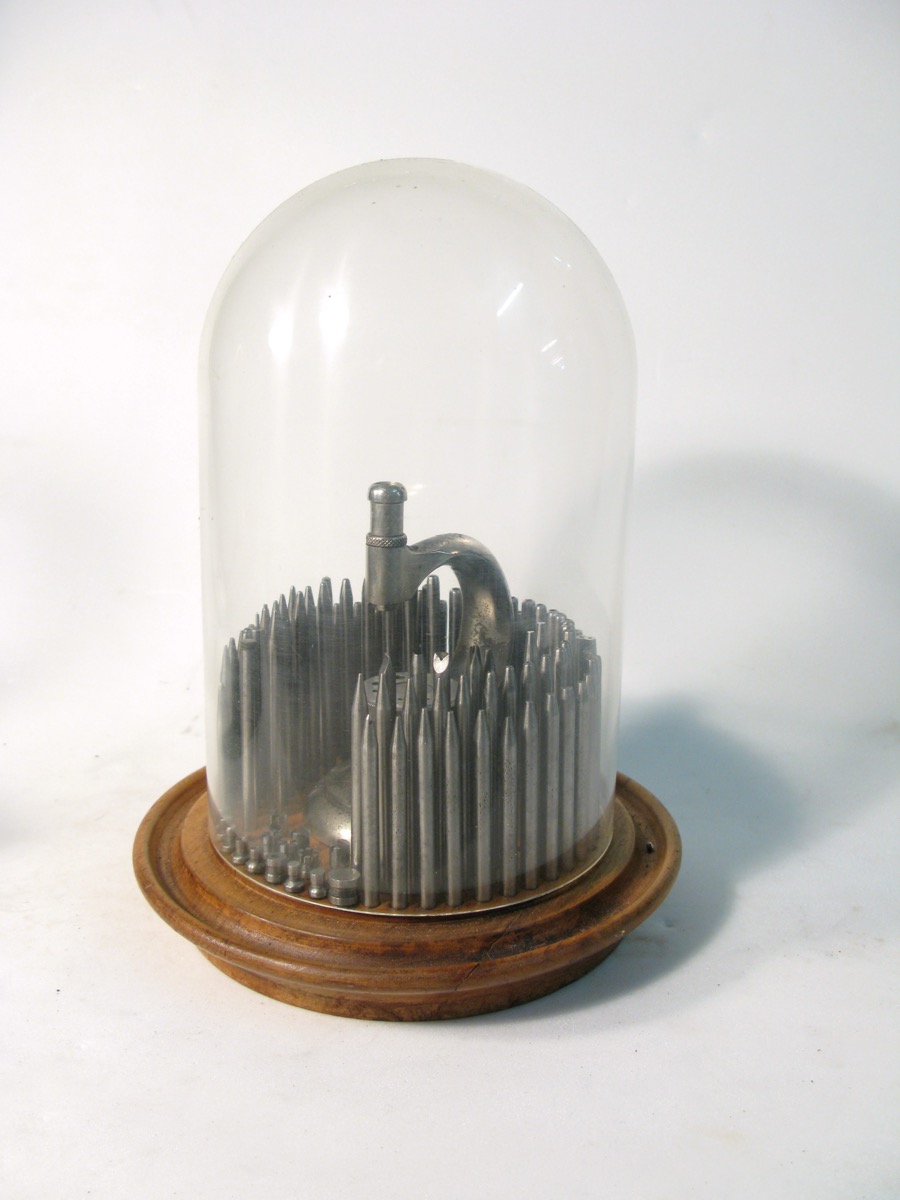
Figure 1. A watchmaker’s staking set, used for tasks including securing a balance staff. The photograph shows a separate collection object that illustrates the same kind of work. Photograph and collection: Collection of Auckland Museum Tamaki Paenga Hira, 2004.51.44. Source Wikimedia Commons. Licence CC BY 4.0. Resized only.

The next task after fitting the balance staff is truing, spinning the balance wheel to check for departures from its intended shape. The drawing on p. 20 shows a truing caliper supporting both ends of the staff, with a reference point set close to the rim. As the wheel turns, changes in the gap between the rim and reference point reveal the runout. The contents deal separately with truing in the flat, where the rim rises and falls, and truing in the round, where the rim moves sideways relative to the axis. 2
The lathe lessons teach how to sharpen cutters and measure dimensions, before moving on to making a balance staff and a winding stem, which transmits rotation from the crown to the inside of the watch. The narrow ends of the balance staff that fit in the bearings are called pivots. One lesson covers polishing them and correcting defects. The subsequent illustration of poising shows the weight of screws around the rim being adjusted. Truing corrects the shape of the rim, while poising corrects the distribution of its weight. 2
From the balance spring to assembly#
The balance spring (article in Japanese) is the small spiral spring that returns the balance towards its resting position. The manual covers fitting it to the balance and correcting its form before moving on to making an overcoil. The published sample from Lesson 6 shows how to fit the balance spring to the collet that holds it on the balance staff. The contents for Lesson 8 list how to make an overcoil by raising and shaping the outer turn. Having examined the form and weight of the rim, the reader turns to small bends in the spring. 2
The contents of the second half begin with assembly, then move on to the mainspring and barrel that store power and the jewel bearings that support arbors. The lessons on the escapement (article in Japanese), which releases the gears in steps and delivers power to the balance, cover operation, inspection, adjustment and repair. The final work of fitting and setting the balance includes centring the spring and setting the watch in beat, so that the interval from tick to tock equals the interval from tock to the next tick. Exercises appear throughout the contents, and a published review also notes the illustrations of the procedures and the exercises. 2 3
American teaching material and Japanese certification#
According to the history published by the Japan Watchmakers Association, the Japanese branch of the Horological Institute of America (HIA) grew out of the Kansai branch of the Horological Institute of Japan in 1953 to administer the US institute’s Certified Master Watchmaker (C.M.W.) exam in Japan. Sue passed the first Japanese examination in September 1954 and organised a study group for candidates in 1956. The journal of the American AWCI (article in Japanese) also records that 21 candidates received C.M.W. certificates in Osaka on 6 July 1957. 4 5
According to the Horological Society of New York’s account of teaching materials it holds, the Bulova School’s English-language course likewise made staking a balance staff an early exercise, teaching the operation using diagrams and photographs. Sue explains in the Japanese preface that students who complete the course can develop skills of a standard that allows them to aim for the HIA’s advanced watchmaking examination. The manual shows how practical exercises used in an American classroom became part of training for Japanese repair technicians. 2 6
Publication and holdings#
| Publication date | Bibliographic details |
|---|---|
| 1 June 1960 | First edition, Gnomon. 3 7 |
| 1961 | Second edition, Gnomon, Tokyo, Gnomon Horology Series 3, 223 pp., 22 cm, Japanese. National Diet Library bibliographic ID 000001039677. 1 |
| January 1998 | Published by Gnomon and distributed by La Terre Publishing, 223 pp. ISBN 978-4-947681-56-0. 8 9 |
The National Diet Library holds the 1961 second edition at its Kansai-kan and makes the digital copy available through its transmission services for libraries and individuals. Fully registered users residing in Japan can view it through the individual service. Tokyo Metropolitan Library also has holdings records. The 1961 book appears in the holdings section of National Diet Library Search, and the 1998 edition appears in the metropolitan library’s Digital BookShelf. 1 9
References#
- National Diet Library, “Standard Manual of Watchmaking Techniques (Gnomon Horology Series 3),” bibliographic record, holdings and access information for the 1961 second edition. Accessed 20 November 2026.
- Japanese branch of the Horological Institute of America, ed., Kazumi Sue, trans., Standard Manual of Watchmaking Techniques. Doranobita, “Basic Watchmaking Reader and Standard Manual of Watchmaking Techniques, Gnomon,” photographs of the book posted on 25 July 2014, showing the preface, contents, basic exercises, truing, poising and fitting the spring to the collet. Accessed 20 November 2026.
- Joes, “Standard Manual of Watchmaking Techniques (Japanese branch of the Horological Institute of America),” JWC, bibliographic details, contents and review. Accessed 20 November 2026.
- Japan Watchmakers Association, “History of the C.M.W..” Accessed 20 November 2026.
- American Watchmakers-Clockmakers Institute, “A History of the American Watchmakers Institute,” Horological Times, June 2014, p. 40. Accessed 20 November 2026.
- Horological Society of New York, “Reading Time at HSNY: Veteran Watchmakers at the Bulova School,” overview of teaching materials and photographs in the collection. Accessed 20 November 2026.
- WUR Japan, “A Journey into Mechanical Timepieces: Bibliography,” first-edition bibliographic details. Accessed 20 November 2026.
- Rakuten Books, “Standard Manual of Watchmaking Techniques,” bibliographic details of the 1998 publication. Accessed 20 November 2026.
- Tokyo Metropolitan Library, “Digital BookShelf,” class 535.2, bookshelf 5019. Accessed 20 November 2026.