This article was translated from Japanese using AI. Read the Japanese original
A timekeeper carrying the time at the port of departure could help navigators find longitude from the difference between its reading and local time at sea. Published in London in 1799, this book examines Thomas Mudge’s timekeeper through his essay and letters, his son’s account of parliamentary scrutiny and efforts to put the design into production, and Robert Pennington’s illustrated explanation. It also considers how to test the timekeeper’s accuracy and how to make and deliver others of the same design to the Navy. 1 2
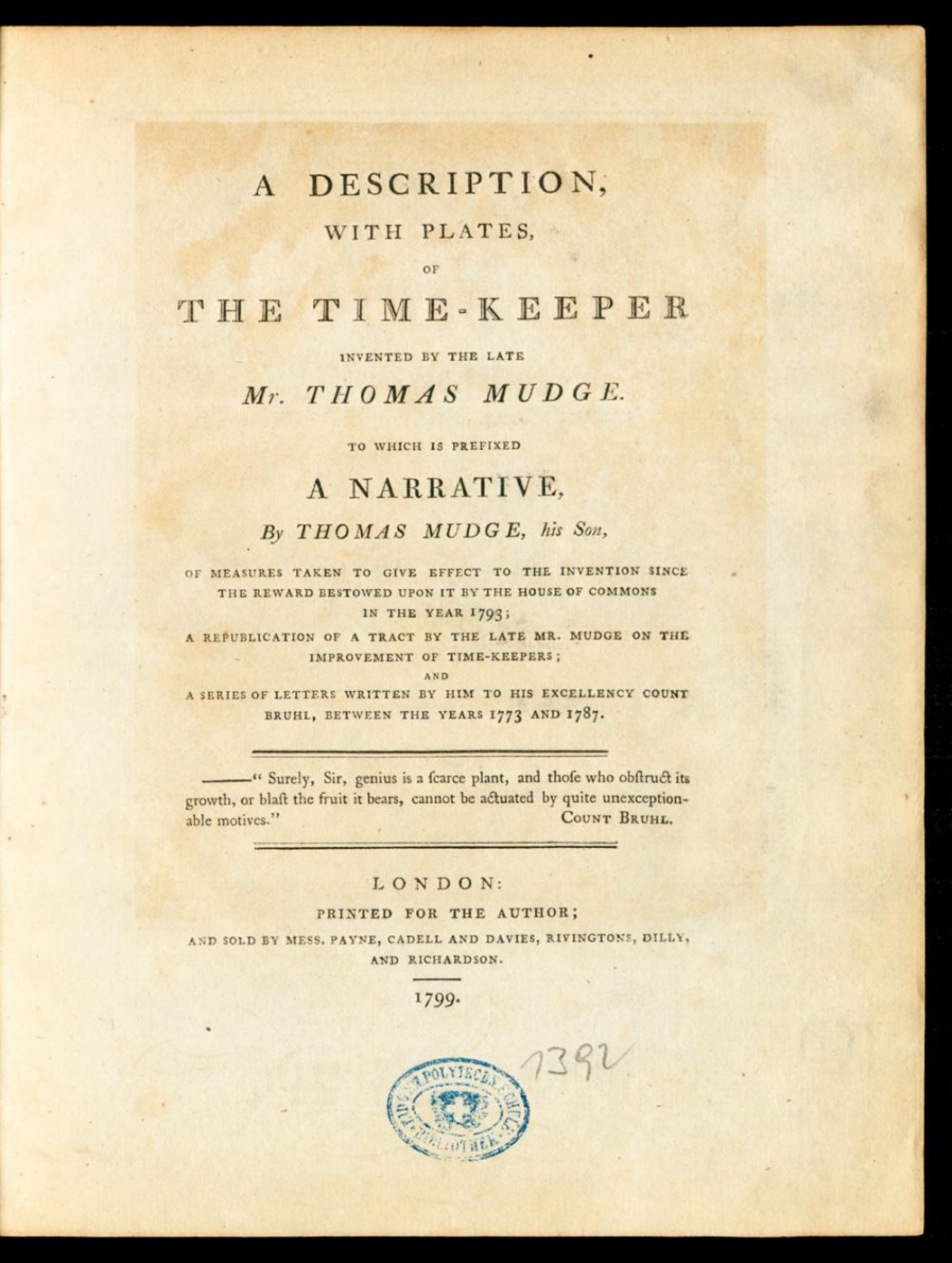
Figure 1. Title page of the 1799 edition. Edited by Thomas Mudge the younger. The compositor of the title page is unknown. Source ETH-Bibliothek Zürich, Rar 4152 (PDF p. 10). Public Domain Mark 1.0 (published in 1799). One PDF page converted to JPEG and resized, with no cropping or additions.
Bibliographic details and structure#
| Item | Details |
|---|---|
| Original title | A Description, with Plates, of the Time-Keeper Invented by the Late Mr. Thomas Mudge |
| Editor and contributors | Introduction by Thomas Mudge the younger, essay on improving watches and letters to Count Brühl by Thomas Mudge the elder, and explanation of the plates by Robert Pennington |
| Publication | London, 1799, printed for the author. Sold by Payne, Cadell and Davies, Rivingtons, Dilly and Richardson. |
| Language and copy consulted | English. ETH Library, Rar 4152. The introduction uses Roman numerals, then pagination switches to Arabic numerals from the father’s essay onward. |
The father’s essay, Thoughts on the Means of Improving Watches, is a reprint dated 25 June 1763 at the end. The book’s main title page gives the start of the correspondence as 1773, while the separate title page for the letters gives 1772. The first letter included is from Plymouth, dated 17 April 1772. 1
Testing a marine timekeeper’s accuracy#
In the introduction, the younger Mudge says he published the drawings and letters to make his father’s invention known and available for wider use. According to the House of Commons select committee report included in the introduction, one timekeeper of the design under review was made in 1774 and two in 1777. The committee gathered records of trials and testimony for the three instruments and also considered data on timekeepers by John Arnold and others. 1 3
The two later instruments appear in the report as the Green and the Blue. For the results from the Royal Observatory, Greenwich, the report gives calculations using two rates. Astronomer Royal Nevil Maskelyne’s method uses a rate derived from the first month of the entire trial. The other uses the rate from the month immediately preceding each period of evaluation. Rate is the amount of time a timekeeper gains or loses over a given interval. Different choices of the interval used to estimate the ordinary rate can change how the same trial records are assessed. 1
The introduction also includes the terms the younger Mudge proposed for supplying the Navy. Under the draft contract, payment applied to timekeepers whose error stayed within one minute and 20 seconds over a six-week trial after allowing for their stated rate at delivery. An error of one minute and 20 seconds in time corresponds to one third of a degree of longitude. The proposed prices fell into three categories by winding interval: daily, two-day and weekly. 1
Two springs that impulse the balance#
In his essay Mudge the elder explains that the mainspring restores the motion lost to friction and other effects as the balance oscillates. The balance is the wheel whose oscillation sets the timekeeper’s pace. He argues that a sea timekeeper moving with the ship needs more power in reserve than a clock operating in a fixed location. He also considers the ship’s motion when the balance lies horizontally. 1
Pennington’s explanation and plates V and VI show how impulse is delivered in the escapement. The escape-wheel teeth alternately lift the pallets on each side. Small springs on the same arbors as the pallets act through the corresponding arms to push pins on the balance staff and sustain its motion in alternation on the outward and return swings. Plates V and VI show the same mechanism from different directions and use the same letters to identify its parts. The explanation of plate IV also covers a compensator that uses the difference in thermal expansion between steel and brass to reduce changes in rate with temperature. 1
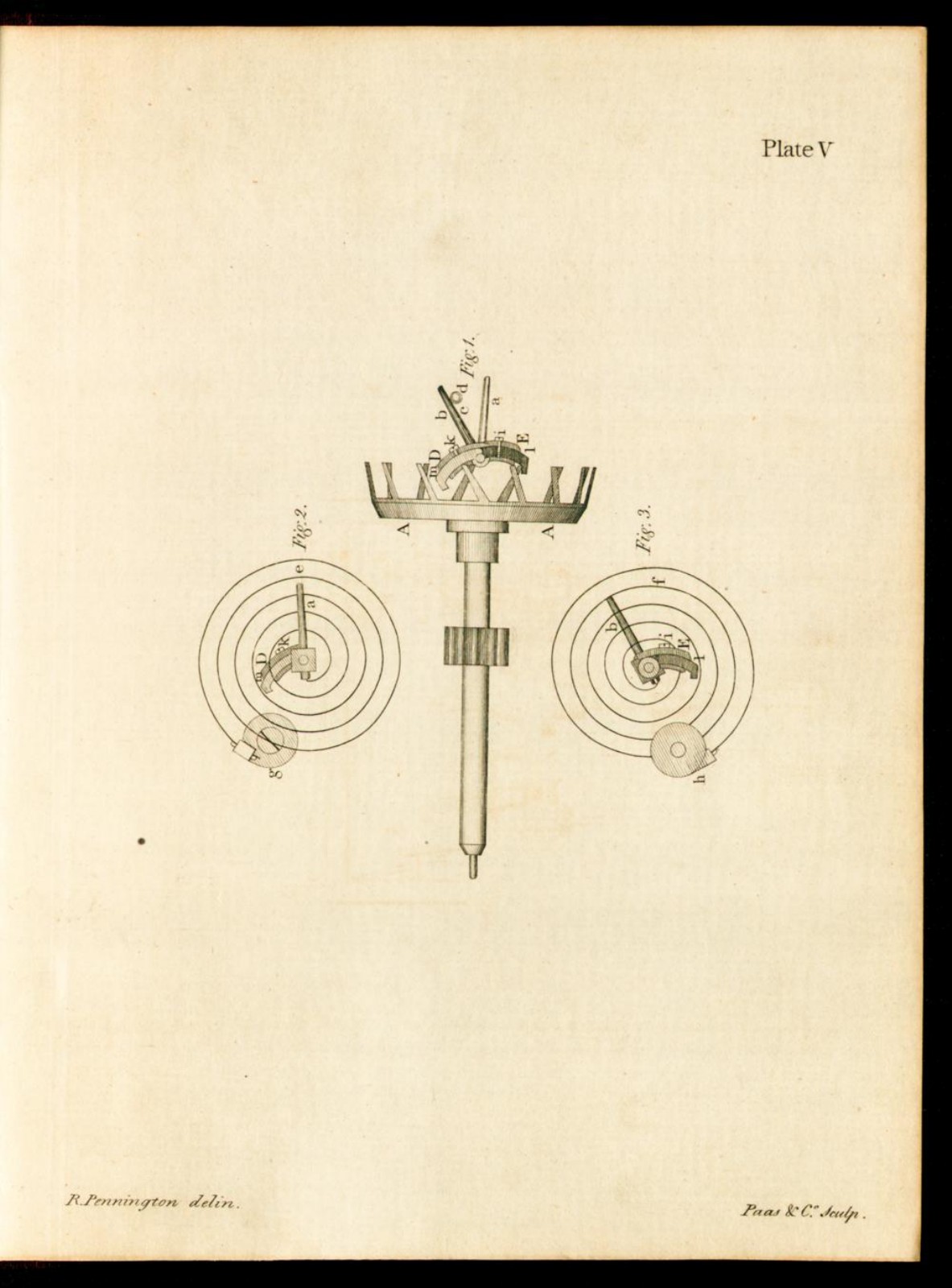
Figure 2. Plate V. Drawn by Robert Pennington and engraved by Paas & Co., as signed on the plate. Source ETH-Bibliothek Zürich, Rar 4152 (PDF p. 358). Public Domain Mark 1.0 (published in 1799). One PDF page converted to JPEG and resized, with no cropping or additions.
Plate IX shows an escapement the elder Mudge used in a watch he made for the Queen, along with a way to represent the Moon’s mean motion by gearing. Together with the marine timekeeper drawings, it shows other mechanisms that occupied the same maker. 1
Surviving timekeepers and access#
The Science Museum Group holds a marine timekeeper of about 1795 that the younger Mudge had Howells and Pennington make to his father’s design. No. 12 of 1796, held by the National Maritime Museum in Greenwich, is a two-day timekeeper made by the son’s business and later converted to an Earnshaw-type spring detent escapement. The workshop and any later alterations help identify what to look for when comparing a surviving mechanism with the plates. 4 5
In the digitised original, the title page is PDF p. 10, the introduction begins at p. 22, the essay on improving watches at p. 178, the first letter at p. 192 and the separate title page for Pennington’s explanation at p. 336. The English facsimile published in 1977 by Turner & Devereux in London and Movements in Time in Toronto appears in the library catalogues of the History of Science Museum in Oxford and the Rijksmuseum in Amsterdam. 1 6 7
Related articles include Thomas Mudge, the detent escapement and The Principles of Mr. Harrison’s Time-Keeper (articles in Japanese).
References#
- Thomas Mudge the younger (ed.), Thomas Mudge the elder and Robert Pennington, A Description, with Plates, of the Time-Keeper Invented by the Late Mr. Thomas Mudge, London, 1799. ETH-Bibliothek Zürich, Rar 4152. Original PDF, title page and introduction pp. i–ii, vii–viii, xiv–xix and lxxi–lxxiii, essay pp. 3–9 and 16, separate title page for the letters and p. 19, explanation of the plates pp. 165–174, plates IV–VI and IX (accessed 21 November 2026).
- Royal Museums Greenwich, “Observations on Mr Mudge’s application to parliament for a reward for his timekeepers”. Introduction to the 1793 document Cambridge University Library, RGO 14/23: 176, on the application to Parliament and evaluation of the timekeepers’ accuracy (accessed 21 November 2026).
- History of Science Museum, Oxford, Library Catalogue, Report from the Select Committee …. Catalogue record of the report on Mudge’s timekeepers ordered printed on 11 June 1793 (accessed 21 November 2026).
- Science Museum Group, “Marine timekeeper with constant force escapement”. Marine timekeeper by Howells and Pennington, c. 1795 (accessed 21 November 2026).
- Royal Museums Greenwich, “12”. Manufacture of No. 12, its use by the Navy and conversion of its escapement (accessed 21 November 2026).
- History of Science Museum, Oxford, Library Catalogue, A Description with Plates …. 1977 facsimile, accession no. 1977-47 (accessed 21 November 2026).
- Rijksmuseum, A description with plates of the timekeeper …. Publishers and publication year of the 1977 facsimile (accessed 21 November 2026).