This article was translated from Japanese using AI. Read the Japanese original
Even within the Cronos line, date windows can be round or square. Japanese Wristwatches: Seiko Crown, Cronos and Marvel focuses on Seiko’s postwar hand-wound watches, with photographs for comparing dials, case backs and movements. The 2014 expanded edition combines three earlier volumes and adds material on later models and period prices. 1 2 3
Comparing Cronos and Grand Seiko in photographs#
An available two-page spread shows the dated Cronos Self Dater on the left and the Cronos Special on the right. The Self Dater example has a date window at 3 o’clock, and the text discusses variations in window shape. The Special page shows how examples with the same model name can have different dial colours and hour-marker shapes. Photographs of the backs and movements accompany the front views, allowing visible differences to be compared with those inside. 2
The Grand Seiko spread also looks at accessories supplied at sale. The first model’s page shows its box, price tag and precision certificate. The facing page on the Self-Dater shows the date window, lion on the case back and movement. A separate explanatory page gives the first model’s movement number, 3180, and jewel count, linking the model name to its calibre. 2
The three earlier volumes and the factories#
According to the National Diet Library, the expanded edition brings together three of Yoshio Nagao’s Japanese Wristwatches volumes from Tombow Publishing under a new title: vol. 1, Seiko Crown (June 1996), vol. 3, Seiko Cronos (March 1997), and vol. 7, Seiko Marvel (January 1998). Nagao and Yoshitaka Kimura had published Postwar Japanese Wristwatches: Seiko and Takano in 1994. In the expanded edition’s preface, Nagao recalls that about 18 years after the original Crown volume, the publisher proposed combining the books and he asked Yoshihiko Honda to make corrections and additions. 1 2 4 5 6 7
The launch order of the three models shows developments at the Suwa and Kameido sites. According to Epson’s product history, the 1956 Marvel was developed at what was then Daini Seikosha’s Suwa factory and increased the movement diameter to 26 mm. The Seiko Museum describes Daini Seikosha at Kameido introducing the slimmer Cronos in 1958 with the Marvel in mind. The Cronos has centre seconds, with the seconds hand extending from the same centre as the hour and minute hands. 8 9
For the 1959 Crown, Seiko enlarged the Marvel movement and improved the performance of the balance, the oscillating part that regulates the rate. This became the basis for the first Grand Seiko in 1960. At Kameido, the King Seiko followed the Cronos in 1961. The expanded edition lets readers compare the two sites by following the models from Crown to Grand Seiko and from Cronos to King Seiko. 3 10 11
The material from the Crown volume also covers the Crown Chronograph, which adds a stopwatch function to the time display. The 1964 model in Seiko’s product history has a push-button and a scale around the edge of the dial, with no timing subdial. The expanded edition also has a separate entry for a “chronograph with counter.” Alongside a photograph of the movement, the text explains the display at 6 o’clock, where the ordinary seconds hand and the 60-minute counter hand share an axis. 2 3 12
Yoshihiko Honda’s additions#
In his introduction to the expanded material on p. 176, Honda explains that he kept Nagao’s manuscript essentially intact and corrected details that came to light later, such as period retail prices. The back of the book covers the Seiko 35-series quartz watches and the slim hand-wound 68 series, with further material on Grand Seiko and King Seiko. The price tables on pp. 189–190 are extracts from 1959 and autumn 1963. They complement the model photographs by documenting the product ranges of the time. 2
The expanded section begins with the Quartz Astron, a wristwatch launched in 1969. According to Epson, quartz oscillation provides the time reference instead of a mechanical balance, and a stepper motor advances the seconds hand in one-second steps. Page 177 shows the front, back and movement together, allowing comparison of the exterior and mechanism just as the pages on hand-wound models do. 2 13
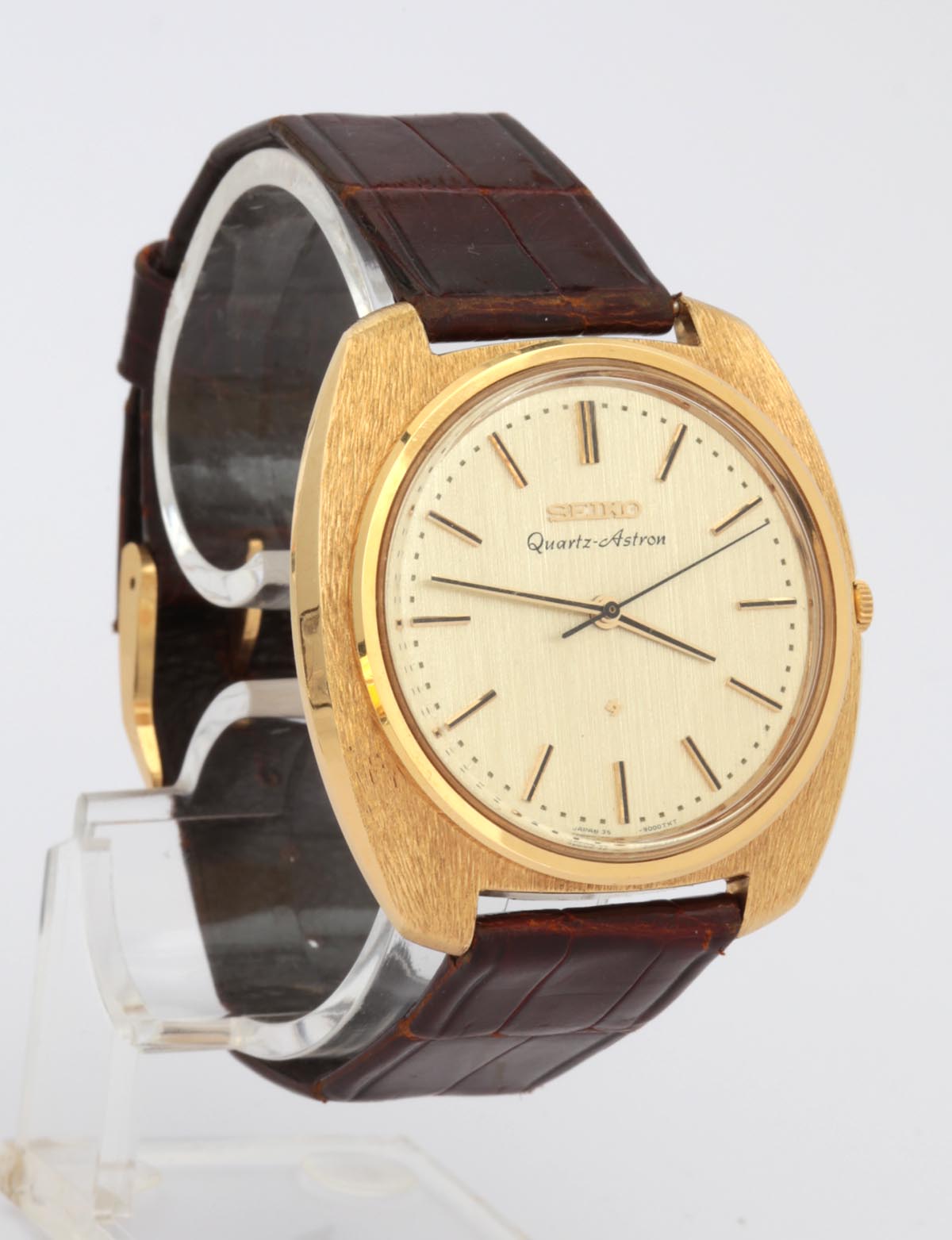
Figure 1. An example of the Quartz Astron covered in the expanded edition. Collection of the German Watch Museum, No. 2012-047. Photograph by Deutsches-uhrenmuseum. Source Wikimedia Commons, CC BY-SA 4.0. Reproduced unchanged.

Bibliographic details and holdings#
| Item | Details |
|---|---|
| Title | Japanese Wristwatches: Seiko Crown, Cronos and Marvel |
| Author and additions | Yoshio Nagao, with additions by Yoshihiko Honda |
| Edition and publication | Expanded edition, Tombow Publishing, February 2014 |
| Format | Japanese, 191 pages, 27 cm |
| ISBN | 978-4-88716-118-4 |
The National Diet Library call number is DL456-L6. CiNii Books lists university library holdings. Tombow Publishing’s Japanese Wristwatches: Seiko Automatics traces the family of models that wind their mainsprings through wrist motion. 1 14
References#
- National Diet Library, “Japanese Wristwatches: Seiko Crown, Cronos and Marvel, expanded edition.” Bibliographic record for the 2014 publication. Accessed 20 November 2026.
- Yoshio Nagao, with additions by Yoshihiko Honda, Japanese Wristwatches: Seiko Crown, Cronos and Marvel, Tombow Publishing, 2014. Opening matter, the pages on Cronos and Grand Seiko, and pp. 176–177 checked in publicly available photographs of the pages. Accessed 20 November 2026.
- Hanmoto.com bibliographic record and contents and the expanded edition’s entry in Plus9Time, “Japanese Domestic Watch Series.” Accessed 20 November 2026.
- National Diet Library, “Japanese Wristwatches, vol. 1.” Bibliographic record for the 1996 publication. Accessed 20 November 2026.
- National Diet Library, “Japanese Wristwatches, vol. 3.” Bibliographic record for the 1997 publication. Accessed 20 November 2026.
- National Diet Library, “Japanese Wristwatches, vol. 7.” Bibliographic record for the 1998 publication. Accessed 20 November 2026.
- National Diet Library Search, “Postwar Japanese Wristwatches: Seiko and Takano.” Bibliographic record for the 1994 publication. Accessed 20 November 2026.
- Seiko Epson Corporation, “Seiko Marvel.” Accessed 20 November 2026.
- Seiko Museum Ginza, “Cronos.” Accessed 20 November 2026.
- Seiko Museum Ginza, “Crown.” Accessed 20 November 2026.
- Seiko Watch, “From King Seiko, a new KSK is born.” Accessed 20 November 2026.
- Seiko Watch, “Our Heritage,” the Crown Chronograph of 1964. Accessed 20 November 2026.
- Seiko Epson Corporation, “Seiko Quartz Astron 35SQ.” Accessed 20 November 2026.
- National Institute of Informatics, “Japanese Wristwatches: Seiko Crown, Cronos and Marvel,” library holdings. Accessed 20 November 2026.