This article was translated from Japanese using AI. Read the Japanese original
A clock helps you tell when school starts and measure how many minutes recess lasts. Supervised by Ichirō Oda, Exploring Timepieces is an illustrated encyclopaedia for children. It moves from the role of clocks in daily life to what goes on inside them, the history of devices for measuring time and the standards people use to share the same time. This introduction draws on the publisher’s description, published contents and library reference records. 1 2 3
What keeps time inside a clock?#
The introduction explains the difference between a time of day and a duration. “8 a.m.” locates a moment in the day, for example, while “8 minutes” tells you how long it is between two moments. Chapter 1 uses photographs and diagrams to show everyday clocks, clocks used at work and what is inside them. The publisher lists both mechanical and quartz movements, along with analogue displays with hands and digital displays with numerals, among the topics covered. 1 3
To understand a timepiece, first look at what it uses to keep time, then how it displays the time. In the Quartz Astron 35SQ described by the Seiko Museum Ginza, for example, the vibrations of a quartz crystal provide the timekeeping reference and the seconds hand advances in one-second steps. The visible motion of the hands can lead to an explanation of how the quartz works inside. 4
Telling time with shadows, water and sand#
Chapter 2 covers clocks that use water or sand, mechanical clocks and the history of timepieces in Japan. The publisher describes the historical coverage as extending from sundials to atomic clocks. The Okayama Prefectural Library cites pp. 46–47 in a reference enquiry about the origins of clocks. Tokorozawa Library in Tokorozawa City identifies pp. 56–57 as covering Japanese clocks. 10 A chronology of timepieces, glossary and index at the back help readers place the devices introduced in the text in their historical context. 1 3 5
A sundial, for instance, tells time by using a graduated scale to read the changing position of a shadow as the Sun moves. Some water clocks tell time from the height of the water as it drains from a vessel. The Seiko Museum Ginza presents an ancient Egyptian example with a hole in the bottom and a scale inside for reading the water level. Both instruments use an observable change to tell the time. 6
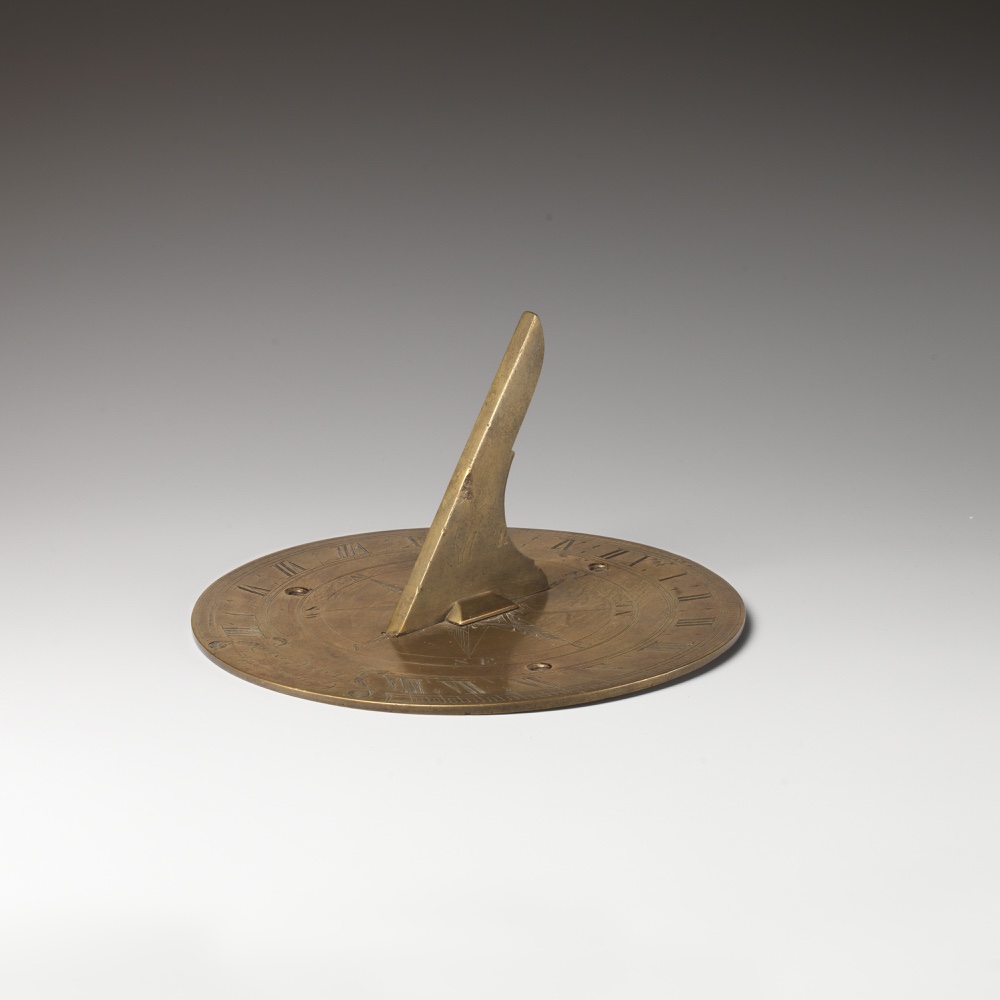
Figure 1. Horizontal sundial, Leeds, England, c. 1720. Attributed to George Davis. The sundial is in the collection of the Metropolitan Museum of Art (03.21.3). Photograph by Richard Lee. Source Wikimedia Commons, CC0 1.0. Resized and recompressed as JPEG.

At a science show in 2005, the Ehime Prefectural Science Museum moved a light source representing the Sun to show how a shadow shifts, and used a model water jar to demonstrate a changing water level. The report cites pp. 45–64 of Exploring Timepieces. 11
The standard for a second and how clocks are synchronised#
Chapter 3 broadens its focus from instruments to changes in calendars, differences in time between regions and standard time. The publisher also lists the standard for one second. The description supplied by the Japan Association of Children’s Book Publishers and included in the National Diet Library catalogue mentions radio-controlled clocks. After looking at how a device keeps time, the book asks what it takes for different places to share the same time. 1 2 3
In Japan, the National Institute of Information and Communications Technology (NICT) encodes Japan Standard Time and transmits it over its standard radio signal, JJY. Clocks that receive the signal automatically correct the time they display. This takes the enquiry from how an everyday clock works to how clocks in different places come to show the same time. 7
In his 1999 book Timepieces and People, Oda also discusses uses such as railway clocks and sports timing, along with the technology that sets clocks by radio. Exploring Timepieces starts with the situations in which people look at clocks in everyday life and connects the need to set them to calendars and standard time. 1 8
Bibliographic details and holdings#
| Item | Details |
|---|---|
| Title | Exploring Timepieces: From Sundials to High-Tech Clocks. Everything You Want to Know About Timepieces! |
| Editorial supervision and publisher | Supervised by Ichirō Oda, published by PHP Institute |
| Release and publication dates | The publisher gives 22 December 2003 as the release date. The National Diet Library records January 2004 as the publication date. |
| Format | Japanese, 79 pp., 29 cm, hardcover |
| ISBN | 4-569-68448-3 / 978-4-569-68448-2 |
The National Diet Library call number is Y11-N04-H45. The Osaka Municipal Library also lists the print edition in its holdings. Oda’s later book The Science of Clocks: 5,000 Years of People and Time (article in Japanese) follows changes in accuracy and technology in a different order. 1 2 9
References#
- PHP Institute, “Exploring Timepieces,” publication details and description (accessed 20 November 2026).
- National Diet Library, “Exploring Timepieces,” bibliographic ID 000004326995, contents provided by JPRO and synopsis provided by the Japan Association of Children’s Book Publishers (accessed 20 November 2026).
- Nakano City Central Library, “Reference Enquiry on Clocks and How They Keep Time,” 2018, item 4 (accessed 20 November 2026).
- Seiko Museum Ginza, “The Birth of the Quartz Watch,” section on the Astron 35SQ and the movement of its hands (accessed 20 November 2026).
- Okayama Prefectural Library, “When and How Did Clocks Begin?,” 2016, source 1 (accessed 20 November 2026).
- Seiko Museum Ginza, “The Birth of the Clock,” sections on the Sun’s shadow and water clocks (accessed 20 November 2026).
- National Institute of Information and Communications Technology, “JJY: Standard Radio Signals,” description of the standard radio signal and time data (accessed 20 November 2026).
- Shokabo, “Timepieces and People: Needs and Technology,” 1999, bibliographic details and contents of chapters 2 and 3 (accessed 20 November 2026).
- Osaka Municipal Library, “Exploring Timepieces,” holdings and bibliographic details (accessed 20 November 2026).
- Tokorozawa City Tokorozawa Library, “I’d Like to See a Book About Japanese Clocks,” steps taken to answer the enquiry (accessed 20 November 2026).
- Mitsuaki Fujimoto, “Report on the Science Show ‘Tick Tock! The Science of Clocks’,” Bulletin of the Ehime Prefectural Science Museum, 11, 2006, pp. 59–61 (accessed 20 November 2026).