This article was translated from Japanese using AI. Read the Japanese original
Clock hands move down the right side of the dial. This familiar movement raises a question about why they turn in that direction. Ichirō Oda’s Tokei no hari wa naze migimawari na no ka (Why Do Clock Hands Turn Clockwise?) starts with everyday questions and goes on to dial markings, sports timing, calendars and how people experience time. The book edition published by Sōshisha in 1994 contains 82 pieces, each of which can be read on its own. This article looks at the book’s structure through its public contents and a history of technology report that cites the title piece, among other sources. 1 2 3
The direction of the shadow and the hands#
The National Museum of Nature and Science’s survey of clock technology cites the title piece and relates the way a shadow moves on a horizontal sundial in the Northern Hemisphere to the direction of time on a mechanical clock dial. Consider a horizontal sundial whose north-pointing sloping edge is installed parallel to Earth’s axis. In the morning the Sun shines from the east, so the shadow falls to the west. At Greenwich, when the Sun passes due south the shadow points due north, then moves east in the afternoon. From above, this is clockwise, from west through north to east. The report explains that clocks with hands inherited this arrangement of times from sundials. 3 4
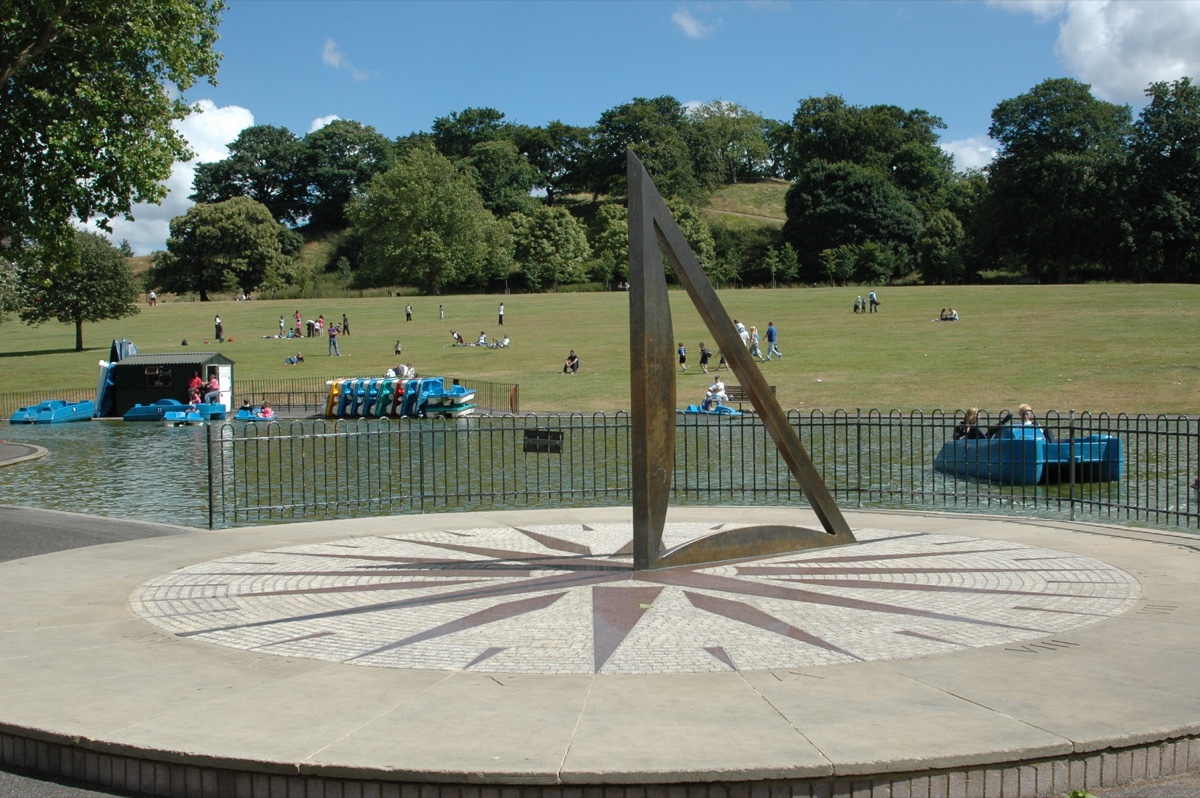
Figure 1. The Millennium Sundial in Greenwich Park, designed by Chris Daniel. Photograph by Gah4. Source: Wikimedia Commons. Photograph licensed under CC BY-SA 4.0. Reduced in size and recompressed as JPEG. 10

Royal Museums Greenwich explains that sundials show time based on the Sun’s apparent motion. At Greenwich, apparent solar noon occurs when the Sun passes due south. The difference between the Sun’s progress and a steadily running clock changes with the seasons. The hands and shadow can move in the same direction, but matching their readings requires allowing for the day’s difference and the location’s longitude. 4
From the dial to a stadium or airport#
In the public contents of the book edition, the chapter asking about the length of Earth’s day is followed by a chapter on clocks that poses the question about the direction of the hands. The chapter on accuracy and measurement asks which part of a runner’s body must cross the finish line to determine the finishing order. A timer can display elapsed time in fine increments, while the rules of the event determine exactly what moment counts. The chapter on everyday time similarly asks whether a flight’s departure means the aircraft starts moving or takes off. Both questions concern which instant is to be recorded. 2
The contents also ask why watch shops and opticians have combined their businesses and why New Year seems to arrive sooner each year. One is about the history of selling watches and the other about how long time feels. Chapter 8 of the book edition ends the volume with the Islamic calendar, bringing together time measured by instruments, felt in everyday life and counted on calendars. 2 5
Book and revised paperback editions#
| Edition | Publication | ISBN | Recorded page counts |
|---|---|---|---|
| Tokei no hari wa naze migimawari na no ka — questions about time and timekeeping | Sōshisha, 25 October 1994, shiroku format | 978-4-7942-0578-0 | 232 pp. according to the publisher, 229 pp. in the National Diet Library record |
| Why Do Clock Hands Turn Clockwise?, revised edition | Sōshisha Bunko, 10 August 2012 | 978-4-7942-1914-5 | 368 pp. according to the publisher |
Both are Japanese-language editions by Ichirō Oda. Sōshisha describes the paperback as revised using information current at publication. The paperback contents listed by Kinokuniya go up to Chapter 7. For the book edition, holdings can be found through National Diet Library Search (call number M197-E11) and CiNii Books (BN1161796X). An example holding of the revised paperback is at Kanagawa Prefectural Kawasaki Library (535.2-8-2012). The National Diet Library’s digital copy of the book edition is available on site only. 1 2 6 7 8
According to the publisher’s profile, Oda joined K. Hattori & Co. in 1971 and worked in sales, sales planning and public relations, bringing information to people who used timepieces. He went independent in 1997. His 1999 book Timepieces and People (article in Japanese) explores the functions clocks were expected to perform in railways, homes and sport. Why Do Clock Hands Turn Clockwise? likewise traces the connections between timekeeping and life, starting from familiar clock hands and schedules one question at a time. 1 9
References#
- Sōshisha, Why Do Clock Hands Turn Clockwise?. Bibliographic details, description and author profile for the 1994 book edition. Accessed 20 November 2026.
- CiNii Books, Why Do Clock Hands Turn Clockwise? — questions about time and timekeeping. Book edition bibliographic details, description and contents. Accessed 20 November 2026.
- National Museum of Nature and Science, systematic survey of clock technology, 2019, p. 74. Accessed 20 November 2026.
- Royal Museums Greenwich, Sundials, “Sundial theory” and “Bristol time”. Accessed 20 November 2026.
- Hiroshima University of Economics Library, Jabara, September 2013, “Recommend Books!” 04. Accessed 20 November 2026.
- Sōshisha, revised Why Do Clock Hands Turn Clockwise?. Bibliographic details and description of the 2012 paperback. Accessed 20 November 2026.
- Kinokuniya, Why Do Clock Hands Turn Clockwise?, revised edition. Contents of the paperback edition. Accessed 20 November 2026.
- National Diet Library Search, Why Do Clock Hands Turn Clockwise? — questions about time and timekeeping. Holdings and digital access for the book edition. Kanagawa Prefectural Kawasaki Library, 60 selected books, no. 39, reading guide and holding for the revised paperback. Accessed 20 November 2026.
- Shōkabō, Timepieces and People — Needs and Technology. Bibliographic details and full contents of the 1999 book. Accessed 20 November 2026.
- The Royal Parks, Monuments in Greenwich Park, Millennium Sundial. Installation date and designer. Accessed 20 November 2026.