This article was translated from Japanese using AI. Read the Japanese original
The ETA 2824 series comprises Swiss automatic movements with central hour, minute and seconds hands and a date display. Within a case fitting diameter of 25.60 mm, it combines manual winding, bidirectional automatic winding and a quickset date. The representative 2824-2 beats at 28,800 per hour, is 4.60 mm thick and has 25 jewels. Watch manufacturers design cases and dials to incorporate it into finished watches. As a family of movements supplied on an industrial scale, it has made possible many combinations of mechanism and external design. 12
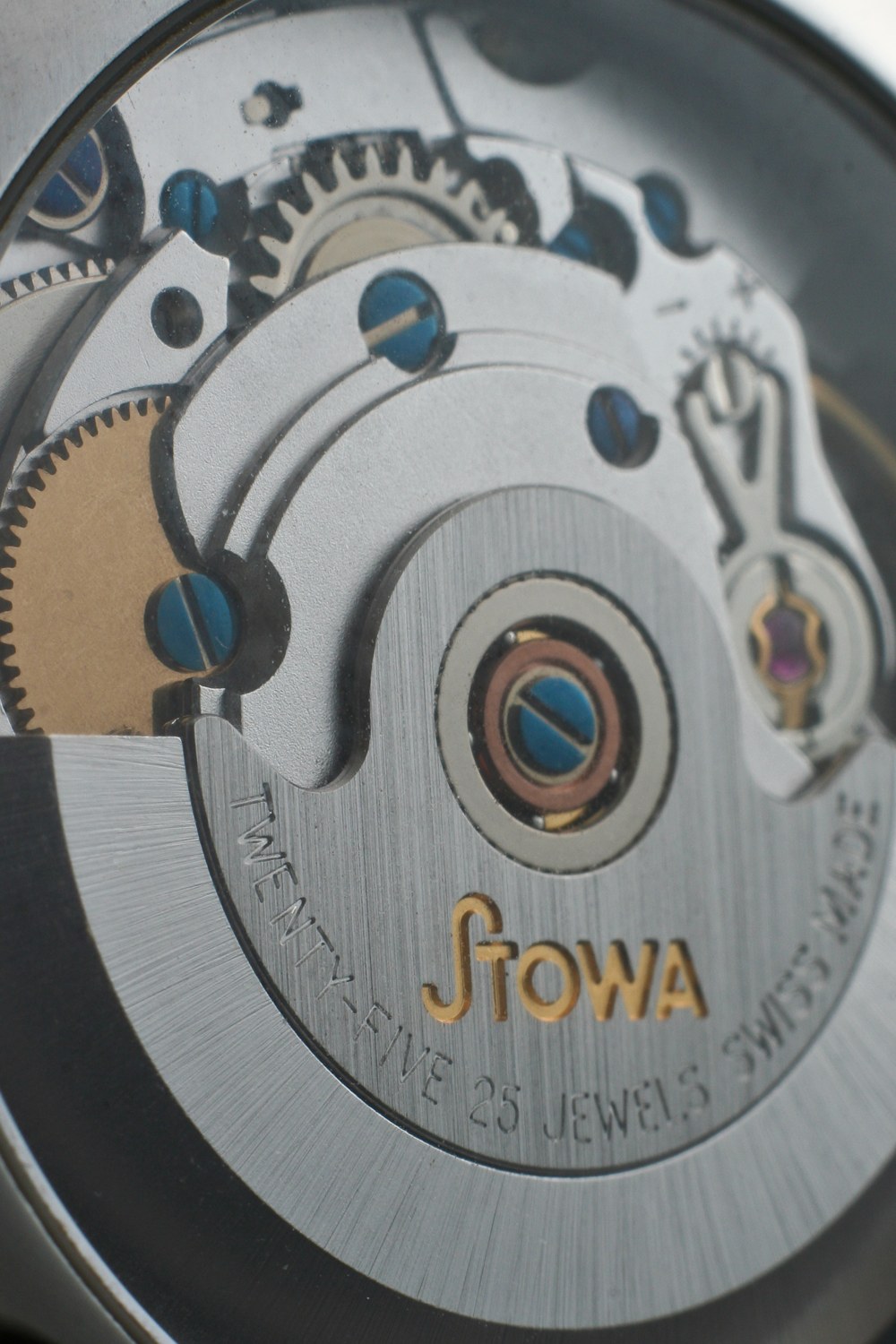
Figure 1. Close-up of an ETA 2824 installed in a STOWA Antea, showing the rotor, bridges and wheels. Photograph by Guy Sie, 27 March 2009. Source “Stowa Antea ETA 2824 macro (3389998183).jpg”, Wikimedia Commons, originally posted on Flickr. Licence CC BY-SA 2.0. Resized and recompressed as a JPEG only.

Origins and related calibres#
Ranfft DB, which includes photographs of surviving examples, dates the original 2824 to 1971 and records production from 1971 to 1979. Watch Movements Archive lists the 2824-2 from 1982 onwards and describes the unsuffixed, -1 and -2 versions as successive generations. The family retained the original dimensions and three-hand date layout while adding generations and variations. 34
ETA’s official 2016 Mecaline catalogue lists the hand-wound 2801-2 and 2804-2 and the automatic day-date 2836-2 in the same 11½-ligne, 25.60 mm size as the 2824-2. The 2826-2 with a large date aperture is 6.20 mm thick, and the 2836-2 with day and date is 5.05 mm. The 2824-2’s thickness of 4.60 mm applies to the three-hand, date, automatic version. 5
One example of use is STOWA’s Marine Automatic. The company’s official history records the launch of the watch with an ETA 2824-2 in 2005. It pairs a legible dial inspired by marine observation watches with central seconds and a date. 6
Dimensions and specifications#
| Item | 2824-2 specification and source conditions |
|---|---|
| Display | Central hour, minute and seconds hands, date in an aperture |
| Functions | Manual winding, bidirectional automatic winding, quickset date, stop seconds |
| Case fitting diameter | 25.60 mm (11½ lignes) |
| Overall diameter | 26.00 mm according to the 2010 manufacturing information |
| Movement thickness | 4.60 mm |
| Frequency | 28,800 half-oscillations per hour, 4 Hz |
| Jewel count | 25 according to the current official specification and the 2010 and 2017 documents |
| Regulating system | ETACHRON |
| Power reserve | At least 38 hours dial up in the 2010 document, 38 hours in the 2017 technical communication, and a typical 42 hours on the current official page |
| Lift angle | 50 degrees according to the 2010 and 2017 documents |
The specifications come from ETA’s product page, manufacturing information and technical communication. In the 2010 document, stop seconds and fine regulation are optional. The current product page includes stop seconds in the specification. The stated power reserves likewise reflect different documents, dates and definitions, including minimum and typical values. 127
The 2010 document specifies brass for the mainplate and bridges, and a heavy-metal rotor supported by a ball bearing. Fitting the movement to the case requires following diagrams for hand height, dial and the positions of the stem and crown as well as the fitting diameter. Two dial fasteners and drawings for casing, hand fitting and stem dimensions provide information for designing the exterior around the movement. 2
Power and the time display#
Barrel, gear train and escapement#
The barrel houses the mainspring, which drives the train as it unwinds. The 2017 parts list and assembly drawings show the barrel, intermediate wheel, third wheel, seconds wheel and escape wheel, together with the pallet fork and balance. The escapement lets the train advance in steps in time with the oscillation of the balance and balance spring, and supplies the balance with the energy to keep it oscillating. 7
A rate of 28,800 half-oscillations per hour is eight half-oscillations, or four complete oscillations, per second. The central seconds hand advances in these increments. On the dial side, the cannon pinion with driving wheel, minute wheel and hour wheel produce the minute and hour displays. The technical drawings show the timekeeping train and the dial-side mechanism that drives the hands as separate assembly stages. 27
Using both directions of rotation for winding#
The rotor turns with wrist movement and winds the mainspring through the reversing wheel, auxiliary reversing wheel, reduction wheel and ratchet-wheel driving wheel. The 2017 parts list gives these as separate components and locates them in the automatic-winding assembly. The official product page describes the winding as bidirectional, meaning that it uses both clockwise and counterclockwise motion of the rotor. 17
A ball bearing supports the rotor at its centre. The gears receiving power and the bearing supporting the rotor form an automatic-winding unit on the back of the movement. For manual winding via the crown, the stem, winding pinion, crown wheel and ratchet wheel form a separate input path. 27
Date and stop seconds#
The dial side has the date indicator, date driving wheel, date jumper, jumper retaining plate and quickset mechanism. The mechanism advances the indicator and the jumper locates it in the aperture. ETA describes the change as semi-instantaneous. The manufacturing information gives the stem three positions. Normal position is for running and manual winding, the middle position for quicksetting and the fully pulled position for time setting. 127
The 2017 parts list shows a separate stop lever. It stops the balance for setting the time and allows the watch to restart in step with a reference. The finished watch’s instructions give the quickset direction and times when adjustment should be avoided. 27
ETACHRON and quality grades#
ETACHRON combines a balance-spring stud support, a regulator and a regulator corrector. The 2017 exploded view shows them as separate components on the balance cock. The regulator changes the active length of the spring to adjust the rate, and the stud side permits beat adjustment, which addresses unequal timing between the two directions of swing. 27
The 2010 ETA document lists Standard, Elaboré, Top and Chronomètre. Grades differ in adjustment positions, balance and balance spring, shock protection, mainspring and decoration. Standard and Elaboré list a gold-plated nickel balance, Nivarox 2 spring and Etachocs shock protection. Top and Chronomètre use an Anachron spring and Incabloc shock protection. 2
| Grade in the 2010 document | Adjustment positions | Mean rate in that document | Maximum difference across positions |
|---|---|---|---|
| Standard | 2 | 12 ± 12 s/day | 30 s/day |
| Elaboré | 3 | 7 ± 7 s/day | 20 s/day |
| Top | 5 | 4 ± 4 s/day | 15 s/day |
| Chronomètre | 5 | COSC criteria | COSC criteria |
These are the indicative figures in the 2010 delivery specifications. The measurement conditions specify an inactive calendar and one to three hours of running after full wind, and recommend 20 seconds of stabilisation and 40 seconds of measurement. A note says 95% of the delivery batch falls within the specified limits. The factory figures are measured in different conditions from the daily rate of a watch on the wrist. 2
Service documentation#
The 2017 technical communication separates the setting mechanism, base movement, escapement and balance, automatic winding, and dial-side mechanism into stages, with diagrams of assembly order and lubrication points. It specifies treatments for the reversing wheels in the automatic unit and gives different lubricants and application methods by location. Proper condition of the contacts supports operation alongside rate adjustment. 7
The same document marks several parts “Var” for variants and directs users to ETA’s service portal to check compatibility and related specifications. Parts lists with part numbers and corresponding drawings help watch manufacturers and repairers work with the supplied movement. 7
Later developments#
In a description of manufacture dated 22 May 2026, Tissot says its C07, or Powermatic 80, developed with ETA, was redesigned from the 2824. A longer mainspring, better energy efficiency and a frequency of 3 Hz extend the reserve, and factory laser adjustment takes the place of the traditional regulator. Compared with the 2824-2’s 4 Hz and ETACHRON layout, the design changes how energy and adjustment are managed. 8
The 2824 series helped establish a way of supplying a basic three-hand date movement together with casing drawings, adjustment specifications by grade, parts lists and service steps. STOWA’s use of the movement and the later C07 design show how it informed both finished watches and the development of later movements. 268
Timeline#
| Date | Event |
|---|---|
| 1971 | Ranfft DB records the original 2824’s introduction. 3 |
| From 1982 | Watch Movements Archive’s production period for the 2824-2 begins. 4 |
| 2005 | STOWA says it launches the Marine Automatic with the ETA 2824-2. 6 |
| 26 February 2010 | ETA’s manufacturing information records dimensions, materials, grades, test conditions and fitting drawings. 2 |
| 2016 | ETA’s Mecaline catalogue lists the 2824-2 with the 2801-2, 2826-2 and 2836-2, among others. 5 |
| 20 February 2017 | ETA’s technical communication lists parts and provides diagrams for assembly and lubrication. 7 |
| 22 May 2026 | Tissot explains the redesign of the 2824 into the C07. 8 |
| Checked 14 November 2026 | The ETA portal lists the 2824-2 with a typical power reserve of 42 hours. 1 |
References#
- ETA SA, 2824-2 — Mecaline. Current product specification. Accessed 14 November 2026.
2. ETA SA, Manufacturing Information, 11½ ETA 2824-2, IH 2824-2 FDE 478720 10, 26 February 2010. Pp. 1–2 for dimensions, operation and construction, pp. 3–6 for grades and rate conditions, and pp. 7–14 for drawings. Manufacturer’s document hosted by AWCI. Accessed 14 November 2026.
3. Ranfft DB, ETA 2824. Photographs of an original movement, calibre record, introduction and production dates. Accessed 14 November 2026.
4. Andreas Kelz, ETA 2824-2, Watch Movements Archive, 24 May 2024, listing ID 6980. Record of a surviving movement, calibre and generations. Accessed 14 November 2026.
5. ETA SA, Collection — Mechanical Movements / Mecaline, 2016 edition, pp. 8–10. The 2824-2 and related calibres. Accessed 14 November 2026.
6. STOWA, History of classic Marine watches, “2005 – Marine Automatic”. Accessed 14 November 2026.
7. ETA SA, Technical Communication, 11½ ETA 2824-2, CT 2824-2 FDE 481688 24, 20 February 2017. P. 1 for specifications, pp. 3–7 for parts, pp. 8–19 for assembly and lubrication, and pp. 20–21 for treatment of automatic-winding parts. Hosted copy of the manufacturer’s document. Accessed 14 November 2026.
8. Tissot, Inside the Making of a Tissot Watch, 22 May 2026, “Powermatic 80 – Energy Management & Regulation”. Accessed 14 November 2026.