This article was translated from Japanese using AI. Read the Japanese original
Watches and the technology that makes them#
Citizen Watch Co., Ltd. is a Japanese company that makes and sells wristwatches and movements and oversees group companies that make machine tools and electronic and precision components. Its headquarters are in Tanashi-chō, Nishitokyo, Tokyo. It is known for its light-powered Eco-Drive watches. Its other businesses include MIYOTA, which supplies movements to other brands, automatic lathes for turning metal parts and components for medical devices and cars. 1 2 3
Citizen is the name of a company, a watch brand and a corporate group. Citizen Watch is an operating holding company that runs its own watch business. The group also includes brands such as Bulova, Frederique Constant and Alpina. 1 4 2
From Shokosha to Citizen Watch#
The company traces its beginnings to the Shokosha Watch Research Institute, set up by Kamekichi Yamazaki in 1918. It aimed to make pocket watches in Japan at a time when many were imported, and completed its first in December 1924. The company’s history attributes the choice of the name “CITIZEN” for that watch to Shinpei Gotō. The product came first. Citizen Watch Co., Ltd. took the name when it was founded in May 1930. The institute of 1918, product of 1924 and company of 1930 mark separate events. 6 7
Its first wristwatch was completed in 1931. Fitting parts into a movement smaller than a pocket watch called for the ability to machine wheels, shafts and screws and assemble and adjust them. Citizen started developing its own production equipment for watchmaking and began making machine tools in 1936. Later it sold the equipment to customers who made other kinds of parts. 6 8
The corporate history in its securities report records a name change to Dai Nippon Tokei in December 1938 and a return to Citizen Watch in February 1948. The company listed on the Tokyo Stock Exchange in May 1949. The legal name thus had its own history alongside the brand. 24
After the war Citizen created organisations for sales and exports alongside watch production. Citizen Trading started in 1949 and wristwatch exports began in 1955. In 1960 the company signed an import and export agreement with Bulova in the United States and a technical assistance agreement with India. It opened an office in West Germany in 1965 to develop European exports. Selling finished watches abroad and connecting production and expertise with other countries grew in parallel. 6
Mechanical, electronic and quartz watches#
Citizen’s product history includes the shock-resistant Parashock of 1956 and the water-resistant Parawater of 1959. Protecting the movement from shocks and water, alongside keeping accurate time, was part of making the wristwatch practical for everyday use. 8
The battery-powered electronic X-8 of 1966 used a transistor-controlled balance motor. It belongs to the transition from mechanical watches to electronic technology. The tuning-fork Hi-Sonic followed in 1971 and Citizen’s first quartz wristwatch in 1973. 8
Generating and conserving power in Eco-Drive#
The role of the circuit and movement#
The Crystron Solar Cell, released in 1976, was an analogue quartz wristwatch charged by solar cells. It placed eight monocrystalline silicon solar cells on the dial. Japan’s National Museum of Nature and Science lists it in its Essential Historical Materials for Science and Technology. Its claim to a world first concerns an analogue quartz wristwatch rechargeable by solar cells. 9 10 25
Eco-Drive subsequently developed the method of converting light to electricity and storing it in a rechargeable cell to run the circuit and motor. Both sunlight and indoor lighting can be used, but charging will be insufficient if the watch receives too little light. In darkness it runs on energy stored earlier. 11
Shinichi Yamada, who helped develop the technology, explains that reducing consumption by the circuit and motor was essential to extending runtime in the dark. Increasing generation and storage alone was insufficient. Reducing the force needed to move wheels and hands, and making parts smaller and lighter while retaining strength, improved the narrow power budget. A light-powered watch combines solar cells, electronics and precision mechanics in a single design. 12
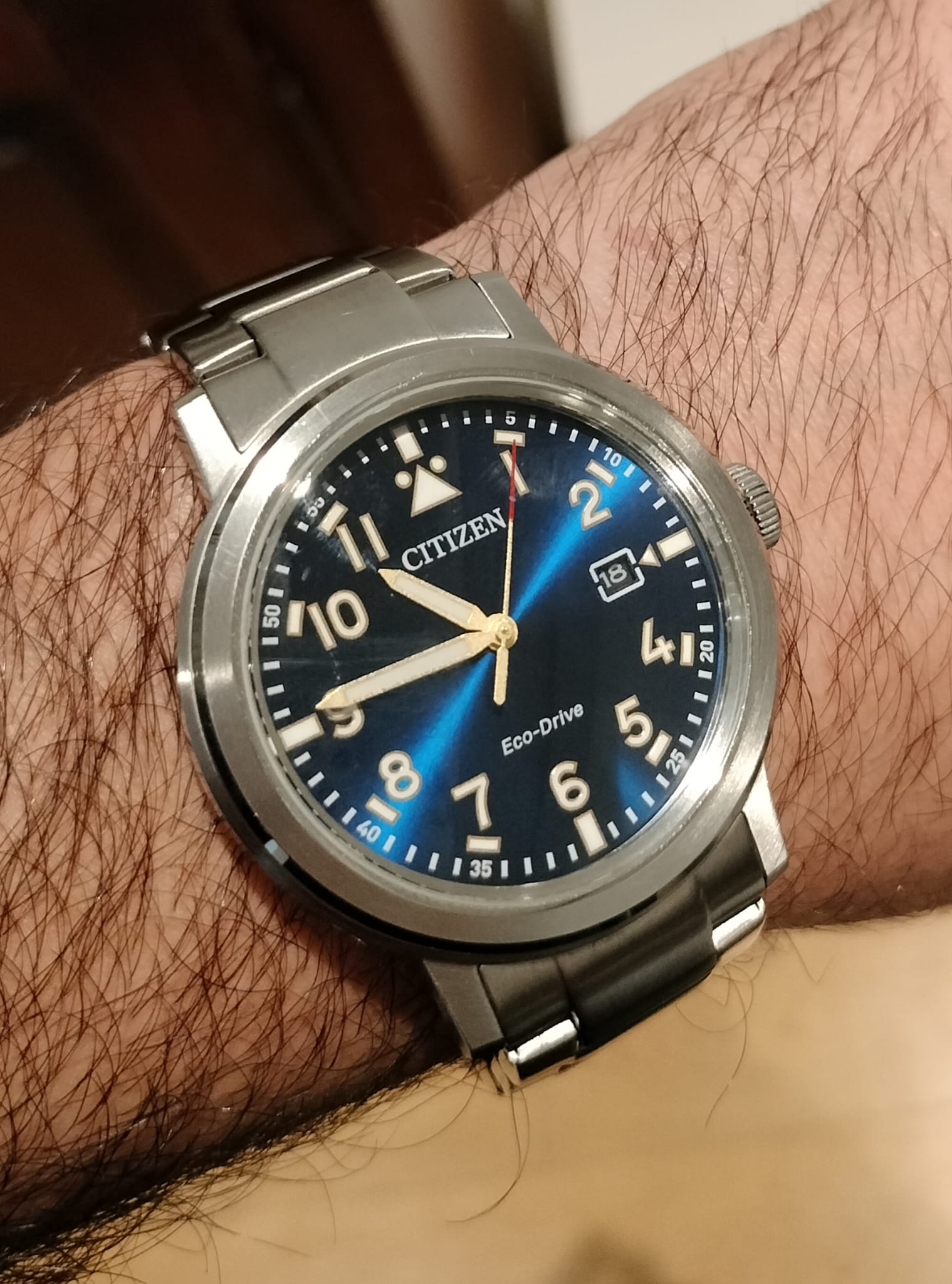
Figure 1. An example of an Eco-Drive wristwatch. Photographed by Clyde94 on 19 June 2023. Citizen Eco-Drive.jpg, Wikimedia Commons. CC BY-SA 4.0. Unmodified.

Dial and solar cell placement#
The appearance of the watch has technical constraints. Many models have a solar cell under the dial, which needs to admit light while concealing the cell below. A ring-shaped solar cell around the edge of the dial lets the dial itself be opaque. The cell’s position affects choices about colour, material, thickness and readability. 11
Some models have a power-saving function that stops the hands after a period in darkness while continuing to track time internally. When exposed to light again, the hands return to the correct time. Features and runtime on a charge differ by model. The absence of routine battery replacement is compatible with using a rechargeable cell that may degrade and with servicing a watch over its lifetime. 11 5
The Japan Environment Association gave Citizen Watch a Gold award in the Eco Mark Award 2014. The selection committee recognised the first Eco Mark certification for a wristwatch in 1996 and the company’s continuing efforts to promote the technology. 13
Receiving and keeping time#
Light supplies energy to run the watch. Time reception is a separate function. In 1993 Citizen released the multiple-transmitter radio-controlled Cal. 7400, and in 2011 it released the Eco-Drive Satellite Wave, which receives time information from satellites. The National Museum of Nature and Science also lists the former in its Essential Historical Materials for Science and Technology. Citizen combined power generated from light with adjustment from an external time signal. 6 9
Mechanical development also continued. Citizen designed and assembled Cal. 0200, announced in 2021, and shared finishing expertise with the Swiss company La Joux-Perret. The movement has a free-sprung balance adjusted by weights on the balance and an escapement made with LIGA, using photolithography and electroforming. Techniques developed to make fine parts for Eco-Drive were also applied to mechanical components. 14
The announcement says the completed watches were inspected before fitting the straps, over 17 days, in six positions and at three temperatures, and supplied with a certificate of compliance with Citizen’s own standard. Integrated manufacturing and international technical exchange within the group both contributed to the result. 14
MIYOTA in other makers’ watches#
Citizen supplies movements to other companies alongside selling its own brands. The movement is the internal mechanism that brings together the time reference, power and parts driving the hands. Other watch companies can combine it with a case, dial and hands of their own. 2 15
MIYOTA’s official history traces its origins to the factory completed in Miyota, Nagano, in 1959. The brand began in 1980 and released the analogue quartz Cal. 2035 in 1981. The factory, brand and individual calibre date to different stages. 15
Two movements show the range of the supply business. Cal. 2035 is a three-hand quartz movement that is 3.15 mm thick and rated by the manufacturer at ±20 seconds per month. Cal. 9015 is mechanical with automatic and manual winding, is 3.90 mm thick and makes 28,800 beats per hour. It runs for about 42 hours after a full wind. These figures come from specifications checked on 4 November 2026. The movements serve watches that require different functions and dimensions. 16 17
Mass production requires repeatable quality as well as precision in individual parts, supporting automated assembly and inspection. MIYOTA says its factories in Japan carry out everything from making the components to quality control. Supplying outside makers is an important part of the business. 15
From machining watch parts to selling machine tools#
Citizen’s machine tools grew out of equipment developed to cut small watch parts accurately. The corporate chronology dates the start of production to 1936. The securities report instead links the start of machine-tool production to the 1941 merger with Nitto Seiki. Sales to outside customers began in 1961 and Citizen developed its Cincom numerically controlled automatic lathe in 1970. Numerical control guides tool or workpiece movements using prescribed values. Equipment developed for watchmaking became a product for making such things as automotive and medical components. 6 8 24
The 2026 integrated report describes Citizen Machinery’s two principal brands as Cincom, for work such as machining long, small-diameter stock, and Miyano, for short, medium-diameter stock. The business tailors equipment to the parts and manufacturing processes of its customers. 3
One example is LFV, low-frequency vibration cutting. When turning metal, long unbroken chips can wrap around a part or tool and damage the surface or interrupt production. The developers describe vibrating an existing feed axis in sync with spindle rotation. On part of each pass the tool crosses material removed on the previous revolution and momentarily cuts nothing, breaking the chips. The system uses the machine’s controls to create the vibration without adding a separate vibration unit. 18
Research by the Tokyo University of Agriculture and Technology and the Citizen group analysed how the vibration conditions produce distinctive surface patterns and affect roughness and roundness. The aim is to control both chips and the finished surface. 19
Diversification and reorganisation of the group#
Miniaturisation, precision machining and low-power technology from watchmaking also went into electronic components and devices. The Devices and Components business includes automotive parts, quartz crystal units, small motors, LEDs, printers and healthcare equipment. The 2026 material explains that the main part of the former Electronic Products and Other Products business was moved into Devices and Components and the rest into Watches. 3 20
The corporate structure changed too. In April 2007 the previous Citizen Watch became a pure holding company and took the name Citizen Holdings. On 1 October 2016 it absorbed the watch operating company Citizen Watch and Citizen Business Expert and changed its name to Citizen Watch. It became an operating holding company by bringing the watch business into the parent company. 4 8
Overseas companies also joined the watch business. Citizen acquired Bulova in January 2008 and Prothor in April 2012 and moved to acquire Frederique Constant in 2016. The Prothor announcement identifies the aim of using La Joux-Perret’s mechanical movement expertise for higher-priced products and to support development in Japan. Cal. 0200 is one example of a product that resulted from such technical exchange. 6 14 21
Citizen announced an agreement to acquire Frederique Constant in May 2016 and completed the acquisition in July. The announcement proposes building on the Frederique Constant, Alpina and DeMonaco brands and sales networks. The law firm advising on the transaction also confirmed the acquisition of all shares in August that year. The acquired companies brought their own histories and expertise to the group. 6 22 23
As of 4 November 2026 Citizen Watch brings together finished wristwatches, movements supplied to other brands, machine tools and small parts used in other industries. Making light-powered watches is one part of that history. The company also diversified by repeatedly producing parts to consistent quality and connecting that ability to international manufacturing and sales. 1 3
Timeline#
| Date | Event |
|---|---|
| 1918 | Shokosha Watch Research Institute is founded, the starting point of Citizen’s corporate history. |
| December 1924 | The first CITIZEN pocket watch is completed. |
| May 1930 | Citizen Watch Co., Ltd. is established. |
| June 1931 | The first wristwatch is completed. |
| 1936 | Machine-tool production begins, according to the official chronology. |
| December 1938 | The company changes its name to Dai Nippon Tokei. |
| September 1941 | Nitto Seiki merges with the company. The securities report dates the start of machine-tool production to this event. |
| February 1948 | The company resumes the name Citizen Watch. |
| May 1949 | Listing on the Tokyo Stock Exchange. |
| June 1949 | Citizen Trading is established. |
| December 1955 | Wristwatch exports begin. |
| 1959 | Movement factory completed in Miyota. |
| April 1961 | Machine tools are sold to outside customers. |
| March 1966 | X-8 electronic wristwatch released. |
| March 1970 | Cincom numerically controlled automatic lathe developed. |
| 1973 | Citizen releases its first quartz wristwatch. |
| 1976 | Crystron Solar Cell released. |
| 1980 | MIYOTA brand begins. |
| 1981 | MIYOTA Cal. 2035 released. |
| May 1993 | Multiple-transmitter radio-controlled watch released. |
| April 1996 | Eco-Drive becomes the first wristwatch to receive Eco Mark certification. |
| March 2001 | Headquarters move to Nishitokyo. |
| April 2007 | The company becomes a pure holding company and changes its name to Citizen Holdings. |
| January 2008 | Citizen acquires shares in Bulova. |
| April 2011 | Citizen Machinery and Miyano merge. |
| September 2011 | Eco-Drive Satellite Wave released. |
| April 2012 | Citizen acquires shares in Prothor. |
| July 2013 | Citizen Watch Manufacturing is established. |
| July 2016 | Citizen acquires shares in Frederique Constant. |
| October 2016 | Citizen becomes an operating holding company through an absorption merger and changes its name to Citizen Watch. |
| March 2021 | Cal. 0200 mechanical movement announced. |
| April 2025 | Yoshitaka Oji becomes president. |
| 2026 | Fifty years since the release of the light-powered watch. The integrated report covers Watches, Machine Tools, and Devices and Components. |
Timeline sources 3 4 6 8 13 14 15 24. Official sources give different release months for the 1976 watch, so only the year is given.
References#
The following web sources were accessed on 4 November 2026.
Citizen Watch, “Company overview”. Headquarters and role as an operating company and holding company.
Citizen Watch, “Watches”. Finished watches, movements and brands within the group.
Citizen Watch, CITIZEN REPORT 2026, pp. 3–4 and 17–26. Corporate history and business areas.
Citizen Watch, “Notice of merger and change of company name”, 1 October 2016.
Japan Clock & Watch Association, “Do solar-powered watches need battery replacement?”. Ageing and replacement of rechargeable cells.
Citizen Watch, “History”. Dates of company foundations, exports, reorganisation and acquisitions abroad.
Citizen Watch, “About CITIZEN: History.” Naming of the pocket watch and the 1930 company foundation.
Citizen Watch, “Product history”. Watches and machine tools from different periods and the 2007 restructuring.
National Museum of Nature and Science, Essential Historical Materials for Science and Technology (Future Technology Heritage), 2024, registration nos. 00259 and 00268 and the register. Radio-controlled watch and Crystron Solar Cell.
Citizen Watch, “Crystron Solar Cell”, historical models. Construction and specifications of the 1976 watch.
Citizen Watch, “Eco-Drive”. Generation, storage, dials, power saving and differences between models.
Shinichi Yamada, “Movement of Eco-Drive Watch”, Journal of the Japan Society for Precision Engineering, vol. 73, no. 1, 2007, pp. 57–60. Technical account by a developer.
Japan Environment Association, Eco Mark Office, “Eco Mark Award 2014”. Citizen Watch’s Gold award and selection committee assessment. Presentation on 5 March 2015.
Citizen Watch, “Development of Caliber 0200, the first new mechanical movement in 11 years”, 4 March 2021. Responsibilities for design, assembly and decoration, inspection and machining.
MIYOTA, “Brand.” Manufacturing, the original factory and brand history.
MIYOTA, “2035 Standard.” Product specifications.
MIYOTA, “9015 Premium Mechanical.” Product specifications.
Ayako Kitakaze et al., “Development of Low Frequency Vibration-Cutting”, Micromechatronics, vol. 60, no. 215, 2016, pp. 2–6. Technical report by the developers.
Akihito Miyake et al., “Study of surfaces generated by low-frequency vibration cutting”, Transactions of the JSME, vol. 86, no. 892, 2020, article 20-00323. DOI: 10.1299/transjsme.20-00323.
Citizen Watch, “Devices and components”. Current product groups and operating companies.
Citizen Holdings, “Notice of acquisition of shares by a consolidated subsidiary”, 5 March 2012. Purpose and timetable of the Prothor acquisition.
Citizen Watch, “CITIZEN WATCH CO., LTD. TO ACQUIRE FREDERIQUE CONSTANT GROUP,” 26 May 2016. Announcement of the acquisition agreement.
Baker McKenzie, “Baker McKenzie Advises Citizen Watch on its Acquisition of Frederique Constant Group,” 10 August 2016. The advisers’ record of completion.
Citizen Watch, Securities report for the 141st fiscal year, filed 23 June 2026, pp. 4–6. The company’s legal history and scope of business.
Citizen Watch, “1976 solar-cell analogue quartz watch registered as Future Technology Heritage”, 3 September 2019.