This article was translated from Japanese using AI. Read the Japanese original
The National Association of Watch and Clock Collectors, Inc. (NAWCC) is a US nonprofit for people interested in timepieces and timekeeping. It began in 1943 as a way for collectors to keep in touch. Today its museum, library and research centre, journal, courses and chapters preserve and share both timepieces and the knowledge needed to understand them. The official introduction, checked on 7 November 2026, gives membership as about 10,000 worldwide. 1
The organisation#
NAWCC is based at 514 Poplar Street in Columbia, Pennsylvania. Its 2021 articles of incorporation give the full name as National Association of Watch and Clock Collectors, Inc. and establish it as a non-stock Pennsylvania nonprofit corporation. Its purposes include education in horology, collecting and making research material available for future use, publicly displaying horological objects, providing a library and supporting chapters. It uses collections as cultural and technical resources. 2
Governance roles are divided between the board and the executive. According to the bylaws of 7 June 2022 published on the official website, seven voting directors are elected by members and five are appointed by the board. The Executive Director and Legal Counsel are nonvoting members by virtue of their offices. The board appoints the Executive Director. Membership requires an interest in horology, an application, dues and adherence to the rules and code of ethics. It is open beyond professional watchmakers and clockmakers. The bylaws specify that membership in itself implies no representation or guarantee by the association. 3
From correspondence among collectors to a national association#
The official history traces the founding to exchanges among L. D. Stallcup, Robert Franks and L. E. Coleman. Stallcup, in Tennessee, collected unusual movements and wanted a way to exchange knowledge and duplicate pieces with other collectors. Franks, of Philadelphia, was interested in cultural history and antique timepieces and attended gatherings of people involved in horology in New York. 4
In 1943 they distributed a prospectus for the Watch Collectors’ Club. The five-page typescript later counted as the first issue of the bulletin. The name changed in response to requests to include collectors of mantel clocks and wall clocks. The second issue, dated 8 November 1943, uses the name National Association of Watch and Clock Collectors. The existing Philadelphia Watchmakers’ Guild became the first chapter, and the first annual meeting took place in Philadelphia on 28 October 1944. A means of corresponding about watches and clocks grew into publications, chapters and meetings. 4
The association’s link with Columbia began when Earl T. Strickler was elected Secretary in 1952. The next year he also became the bulletin’s editor and used his home as a base for administration and materials. In 1971 the association bought a building for its headquarters at the present address. 4 5
The museum and its public collections#
The National Watch & Clock Museum traces its origins to a display for members in Strickler’s home. A museum acquisitions committee was created in 1971, the building was extended in 1976, and it opened to the public on 6 November 1977. The initial display contained fewer than 1,000 objects. Member donations supported the collection and the exhibition and library areas were extended in 1985. Following a larger expansion, the museum reopened on 23 October 1999. 5
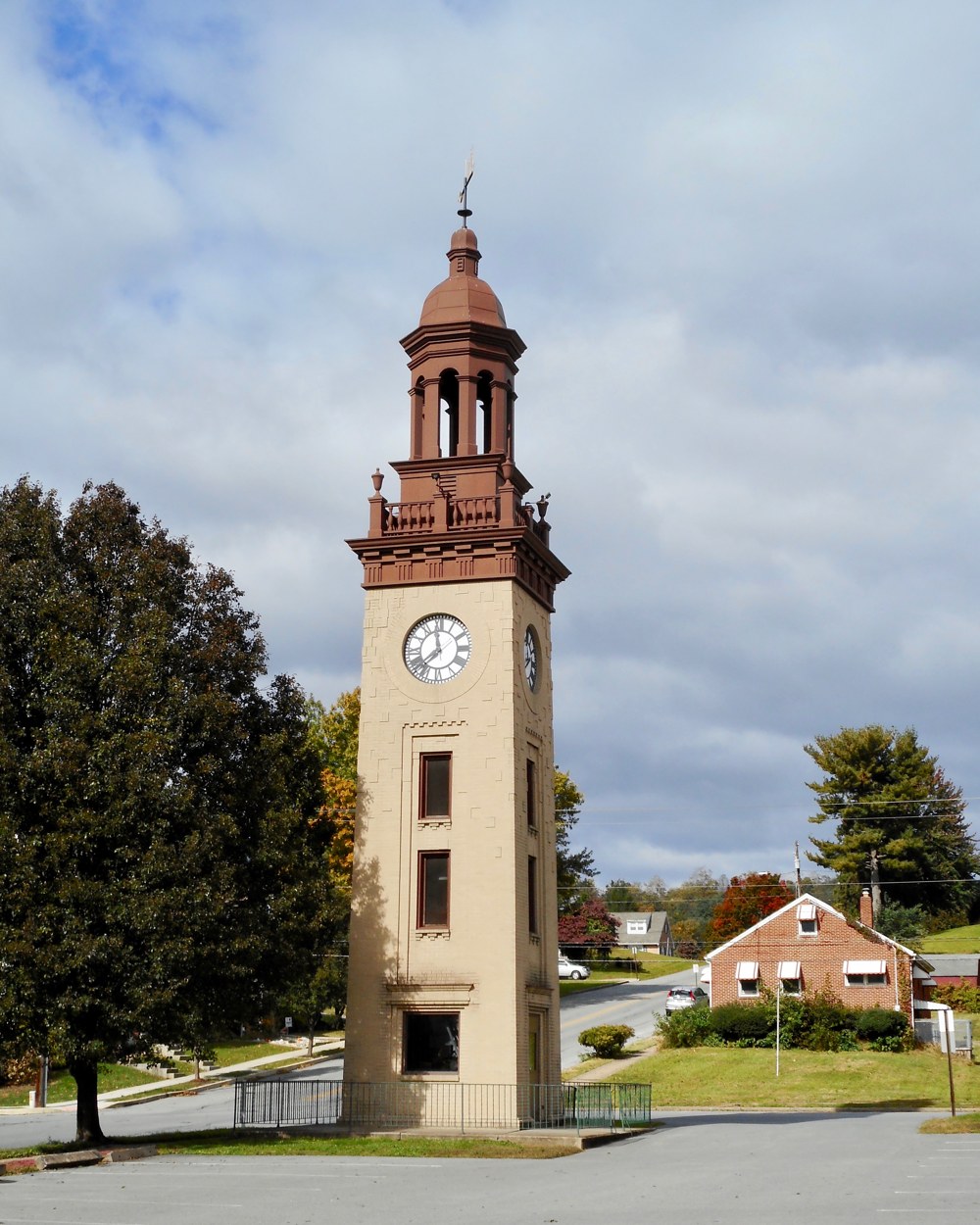
Figure 1. Clock tower of the National Watch & Clock Museum in Columbia. Photographed by Smallbones on 21 October 2018. Source Clock Tower Columbia PA LanCo.jpg, Wikimedia Commons. Licence CC0 1.0. Resized with the original aspect ratio and recompressed as a JPEG.

The Collection Plan approved in 2009 includes manufacturing tools and equipment as well as timepieces. It identifies American objects from 1800 to 1950 as a strength at the time and acknowledges imbalances across periods and places. Acquisitions are intended to fill gaps, taking into account the conditions needed to preserve, document, study and display the objects. The plan uses collection records from 2007. 6
The plan assigns responsibilities for acquisition and deaccessioning to staff, the museum collections committee and the board. It provides a process for turning private collecting into a collection accountable to future researchers and public visitors. 6
Library and archives for researching the objects#
The Fortunat Mueller-Maerki Library & Research Center holds books, audiovisual material, catalogues, periodicals and archives. The library guidance describes public research access and a lending programme for members. The catalogue identifies duplicate copies available for loan. Special collections are excluded from lending. 7
The public archival catalogue lists watch company records, material from retailers and repair shops, personal papers and photographs. The introductory page, checked on 7 November 2026, describes more than 140 collections occupying more than 1,200 linear feet of shelving. The catalogue lets researchers find where material is held and how it is arranged. 8
The association’s own collection, MG-334, covers records from 1942 to 2015, arranged in series for administration, publicity, events, membership and chapters, photographs and other material. The guidance treats research access and copying separately from copyright permission to publish. 9
A recent example is the digitisation of Hamilton Watch Company records. The US Institute of Museum and Library Services (IMLS) records a $39,177 Museums for America grant for fiscal year 2025. The project covers 344 reels of microfilm and about 15,000 pages of paper records. It calls for surveying technical, administrative and sales records, digitising them and making them available online. 10
Publications that make workshop experience searchable#
The Watch & Clock Bulletin is the association’s journal, published six times a year. It covers history, research and technology as well as people’s activities and chapter news. The current publications page describes it as peer-reviewed and invites submissions from non-members. The print and online journal, monthly newsletter and former trading supplement Mart & Highlights have distinct purposes. 1 11
The bulletin index covers the first issue in 1943 onwards. The first 30 issues from the 1940s were indexed from a reprint. Readers are advised to use a conversion table because the index and original issues have different page numbers. 12
Publishing turns a collector’s observations of a clock, a repair discovery or a reading of a document into information others can find later. The journal, physical objects and library materials point to one another and make individual experience available for future research.
Education and chapters#
The School of Horology teaches skills and knowledge in Columbia. As checked on 7 November 2026, its education page lists basic areas including mantel and wall clocks, portable watches, machining for horology, and decorative techniques such as stencilling and reverse painting on glass. Skills for understanding and maintaining timepieces include repair and the historical decoration of cases and dials. Courses and videos for home study are available. 13
Some chapters are regional and others serve a shared interest. The Chapter Handbook approved in April 2023 gives an example of a typical meeting combining chapter business, an educational programme and a Mart for buying, selling and exchanging horological items. It also suggests chapter projects such as restoring a public clock, mounting a display in a local library or speaking to another organisation. These activities connect collecting and meeting other enthusiasts with local education and preservation. 14
The handbook distinguishes membership in NAWCC from chapter membership and sets out chapter dues and rules. 14
Timeline#
| Date | Event |
|---|---|
| 1943 | The Watch Collectors’ Club circulates its prospectus, later regarded as the first issue of the bulletin. 4 |
| 8 November 1943 | The second bulletin uses the name National Association of Watch and Clock Collectors. 4 |
| 28 October 1944 | First annual meeting in Philadelphia. 4 |
| 1952–1953 | Strickler becomes Secretary and then editor of the bulletin, establishing a base in Columbia. 4 |
| 1971 | The association buys the headquarters building at 514 Poplar Street. The museum acquisitions committee is established. 4 5 |
| 6 November 1977 | The museum opens to the public. 5 |
| 1985 | Museum exhibition and library areas are extended. 5 |
| 23 October 1999 | The museum reopens after a major expansion. 5 |
| June 2009 | The board approves the museum’s Collection Plan. 6 |
| Fiscal year 2025 | IMLS records the grant for digitising Hamilton material. 10 |
NAWCC’s history shows how enjoyment of owning timepieces expanded into preservation, the transmission of skills and research open to the public. The museum preserves the objects, the library helps people discover their background, the journal records findings, and the school and chapters offer ways to learn by working on timepieces.
References#
The following web sources were accessed on 7 November 2026.
- NAWCC, About the NAWCC. Association profile, activities and approximate current membership.
2. NAWCC, Articles of Incorporation, Version 1.0, 3 December 2021, pp. 3–4 and 7.
3. NAWCC, Bylaws, Version 3.0, 7 June 2022, pp. 6, 9 and 17.
4. NAWCC, About Our Association — Our History. Official history with material reprinted from the 1993 convention programme.
5. Lindsey Campbell, National Watch & Clock Museum: From the Basement to the Top, Watch & Clock Bulletin no. 434, July–August 2018, pp. 314–318.
6. National Watch & Clock Museum, Collection Plan, board approval June 2009, pp. 2–6 and 9–10.
7. NAWCC, Library & Research Center, Using the Library / Lending Guidelines.
8. NAWCC LARC, Archives Public Interface. Guide to collections and catalogue.
9. NAWCC LARC, National Association of Watch and Clock Archives Collection, MG-334. Collection overview, arrangement and conditions of use.
10. Institute of Museum and Library Services, MA-258006-OMS-25, Museums for America, FY2025.
11. NAWCC, Publications. Journal, submissions, newsletter and former supplement.
12. NAWCC, Bulletin Index. Index and page conversion guide for early issues.
13. NAWCC, Education. Main areas of study and educational videos.
14. NAWCC, Chapter Handbook, approved April 2023, §§ 2 and 7–10.