This article was translated from Japanese using AI. Read the Japanese original
Selling timepieces, making them and distributing time#
Seiko Group Corporation is a Japanese holding company whose businesses include watches and clocks, electronic and precision components, and information systems. The group grew from the retail and repair shop opened by Kintarō Hattori in 1881 and expanded into horological manufacture, overseas sales and electronics. It is now headquartered in Ginza, Chūō, Tokyo, and the holding company manages its consolidated operating companies. 1 2
Seiko is both a brand on a dial and a name for several companies with a history of cooperation. Seiko Watch deals in wristwatches, Seiko Instruments grew out of Daini Seikosha, and Seiko Epson traces its line through Suwa Seikosha. These distinctions help identify where technologies were developed and which organisations marketed the products. 3 4 5
From retail shop to clock factory#
Kintarō Hattori founded K. Hattori in 1881 to sell and repair imported timepieces. In 1892 he established the Seikosha factory and began making wall clocks. The range expanded to the Timekeeper pocket watch in 1895 and alarm clocks in 1899. The business now machined, assembled and adjusted parts into finished products as well as buying and selling imported ones. 2
Seikosha built up experience in pocket watches and launched the Laurel Type 12 wristwatch in 1913. The Japan Society of Mechanical Engineers identifies it as Japan’s first domestically made wristwatch. It credits the combined development of precision machining and assembly with laying a foundation for wristwatch production in Japan. Small timepieces required processes for making, assembling and adjusting gears and arbors at that scale. 6
K. Hattori incorporated in 1917. The Great Kantō Earthquake of 1923 destroyed the store and factory by fire. The business resumed and introduced the first wristwatch bearing the SEIKO brand in 1924. 2 3
Two manufacturing lines and a sales organisation#
Daini Seikosha and Suwa Seikosha#
In 1937 K. Hattori spun off Seikosha’s watch manufacturing division to form Daini Seikosha. K. Hattori remained a separate company. Daini Seikosha established its headquarters and factory in Kameido. It took the English name Seiko Instruments & Electronics Ltd. in 1983 and Seiko Instruments Inc. (SII) in 1997. The Japanese name changed to its current form in 2004. 2 4
In Suwa, Nagano Prefecture, Daiwa Kogyo, established in 1942, played an important role. Epson’s securities report states that it took over the business of Daini Seikosha’s Suwa factory in May 1959 and became Suwa Seikosha, a limited company that reincorporated as a stock company in September. In 1985 it absorbed Epson Corporation and changed its name to Seiko Epson. 5
The Daini Seikosha line in Tokyo and the Suwa factories each developed expertise in design, machining and adjustment. K. Hattori handled sales and exports. 3 5
The relationship with Epson today#
Seiko Epson continues to make watches and movements through this historical connection. It operates independently of Seiko Group Corporation. Epson’s securities report for the year ended March 2026 explicitly states that it has no parent company or equivalent controlling entity. 5
Improving mechanical accuracy and bringing quartz to the wrist#
Grand Seiko and precision manufacturing#
The first Grand Seiko, launched in 1960, exemplified efforts to improve the accuracy of mechanical wristwatches. The Japan Society of Mechanical Engineers describes its accuracy as equivalent to the Swiss chronometer standard of excellence of the time and links the technology to the subsequent observatory competitions. 6
A high-precision mechanical watch needs uniform components, control of friction and adjustment for position and temperature as well as a balance and balance spring. Work on component machining and assembly skills continued after the arrival of electronics. In 2014 the Japan Society of Mechanical Engineers designated the Laurel, first Grand Seiko and Quartz Astron 35SQ together as a Mechanical Engineering Heritage. 6
Commercialising the Quartz Astron#
A quartz watch uses electronic circuits to count the regular vibrations of a quartz resonator and relay them to a display. Seiko’s task was to fit an existing principle, previously used in large devices, into a wristwatch that could run for a long time on a battery. IEEE’s historical account traces this development from Suwa Seikosha’s 1959 project through the portable Crystal Chronometer of 1964 and other stages to the wristwatch. 7
The Quartz Astron 35SQ went on public sale on 25 December 1969. IEEE recognises it as the first quartz wristwatch sold to the public. It combined a quartz oscillator, a hybrid integrated circuit and a small stepping motor to drive the hands. Tsuneya Nakamura and colleagues at Suwa Seikosha developed it. 7
Swiss and US teams were developing electronic wristwatches at the same time. Carlene Stephens and Maggie Dennis’s comparative study shows how engineers in different countries worked in different corporate settings and with different access to electronics. Competition performance of prototypes, public sale and subsequent mass production were distinct milestones. 8
How electronics broadened the business#
Making a timepiece small enough to run on a battery required machining as well as quartz components, batteries and low-power circuitry. SII’s chronology records expansion into electronic components, overseas factories, thermal printers and inkjet heads. An organisation that began in watch manufacture added component and equipment supply to its finished timepieces. 4 9
Spring Drive combines a mainspring with electronic regulation#
Spring Drive, commercialised in December 1999, uses a mainspring as its power source and quartz as its time reference. The first products were sold under the Seiko and Credor brands and used technology developed by Epson. 10 11
As the mainspring unwinds, it drives the hands through gears and turns a small rotor. The electricity generated powers a quartz resonator and integrated circuit. The circuit compares the quartz signal with the rotor’s speed and adjusts electromagnetic braking. The mainspring drives the hands directly through the train, while the electronic circuit uses the quartz signal to regulate their speed. 12
The main technical difficulty was running the circuit on the small amount of power obtainable from the mainspring. Developer Tatsuo Hara’s paper describes the overwinding protection and hand-stop mechanisms needed for the early calibre 7R. The design also had to account for how much of the mainspring’s range could be used and how it transmitted power. 10 11
Holding-company structure and business reorganisation#
In 2001 Seiko spun off its watch business into Seiko Watch and switched to a pure holding-company structure. Its change of name to Seiko Holdings in 2007 reflected that role. The 2009 integration announcement proposed combining Seiko Watch’s product planning and sales knowledge with SII’s precision manufacturing and electronic component technologies. SII became a wholly owned subsidiary that year. 3 4
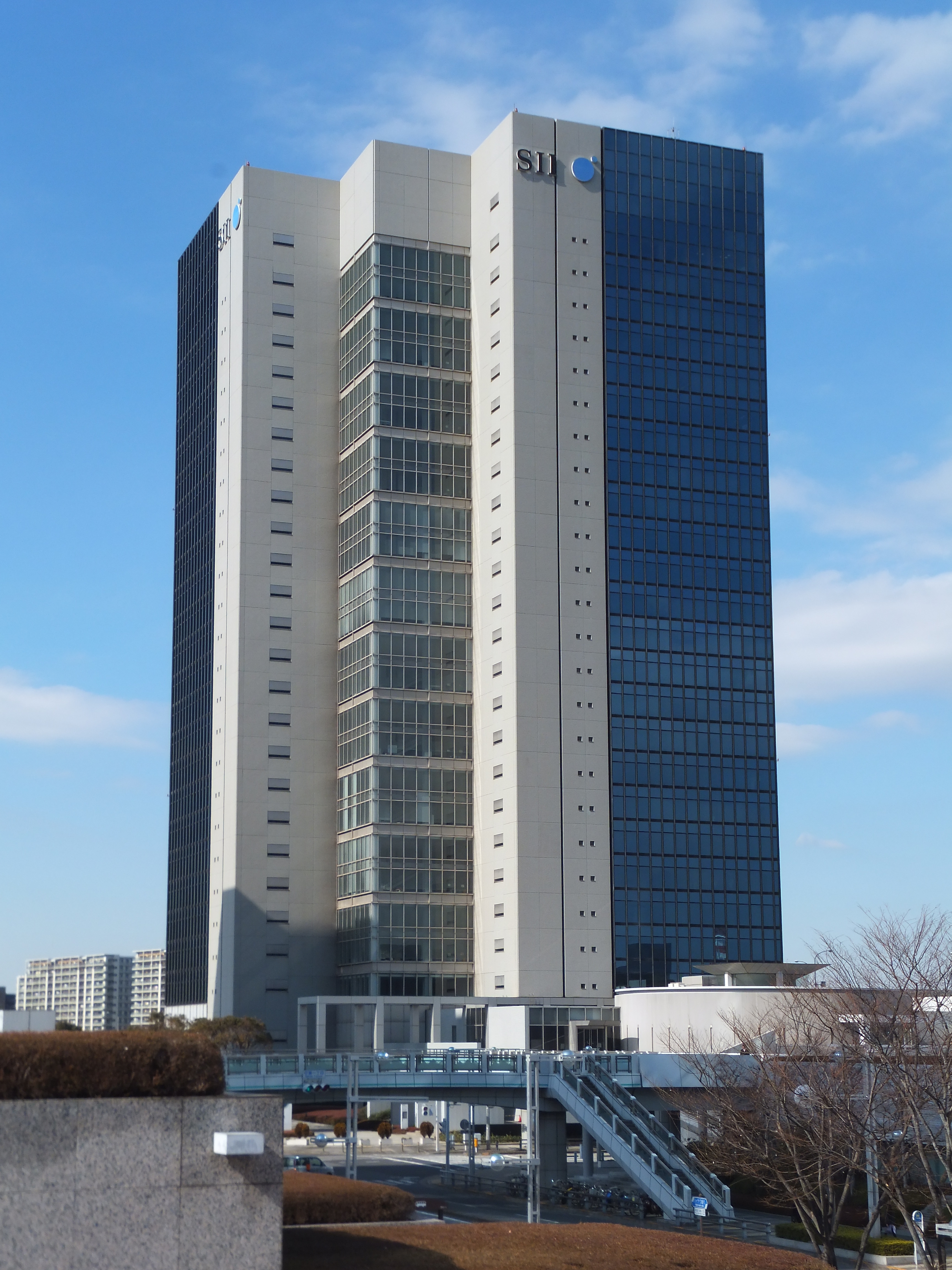
Figure 1. Makuhari headquarters of Seiko Instruments, the successor to Daini Seikosha. Photographed on 20 February 2012 by 掬茶. Seiko Group Corporation has its headquarters in Ginza. Source Seiko Instruments, headquarters.jpg (Wikimedia Commons). Licensed CC BY-SA 3.0 Unported. Image unchanged.

In 2020 SII transferred its watch operations to Seiko Watch. Seiko Watch’s business today includes planning, developing, manufacturing and selling wristwatches and other products, and planning and selling wall clocks, table clocks and alarm clocks. 4 13
On 1 October 2022 the holding company became Seiko Group Corporation. It described the name change as part of a shift towards sharing management resources between businesses and supporting innovation. 14
Present operations and their place in horological history#
The group’s operations as checked on 4 November 2026 centre on three areas. 9 15
| Area | Principal work and organisations |
|---|---|
| Emotional Value Solutions (EVS) | Timepieces from Seiko Watch and retail through Wako, among other operations. Includes products under the Seiko and Grand Seiko brands |
| Device Solutions (DS) | Electronic and precision components from SII, Seiko NPC and others, including batteries, quartz components, semiconductors and printing components |
| System Solutions (SS) | Information systems, time synchronisation, facility clocks and sports timing, among other operations, from Seiko Solutions and Seiko Time Creation |
The group’s timekeeping work extends to other settings. A school or station clock system distributes time to multiple displays. Sports timing integrates starting signals, finish detection and the presentation of results. Information systems synchronise the clocks of devices at different locations. All depend on accurate time, with different equipment and different events to measure. 16 17
Preserving company records also helps pass on the culture of timekeeping. Seiko opened its museum in 1981 and moved it to Ginza in 2020. Objects and records there help explain products recognised as Mechanical Engineering Heritage by the Japan Society of Mechanical Engineers or as IEEE Milestones. 2 6 7
Seiko’s history records how sales, manufacturing, electronic components and information systems developed in separate organisations, cooperated and were reorganised. Both mechanical precision manufacturing and electronic regulation developed through this work. Their applications expanded from wristwatches to components and time-based services. The corporate structure and brands each offer a way to understand that continuity and change. 3 9
Timeline#
| Date | Event |
|---|---|
| 1881 | Kintarō Hattori establishes K. Hattori. |
| 1892 | Seikosha is established and begins making wall clocks. |
| 1895 | Production of the Timekeeper pocket watch begins. |
| 1913 | The Laurel Type 12 is released. |
| 1917 | K. Hattori incorporates. |
| 1923–1924 | The business rebuilds after the Great Kantō Earthquake and launches a wristwatch under the SEIKO brand. |
| 1937 | The watch manufacturing division is spun off as Daini Seikosha. |
| May 1942 | Daiwa Kogyo is established in Suwa. |
| 1947 | The retail division becomes independent as Wako. |
| May 1949 | K. Hattori is listed on the Tokyo Stock Exchange. |
| May and September 1959 | The Suwa factory’s business is taken over to form Suwa Seikosha as a limited company. It reincorporates as a stock company in September. |
| 1960 | The first Grand Seiko is launched. |
| 1964 | The portable Crystal Chronometer is commercialised and used in timing the Tokyo Olympics. |
| 25 December 1969 | The Quartz Astron 35SQ goes on general sale. |
| 1970 | The Seikosha factory becomes a separate company. |
| 1981 | The Seiko museum opens. |
| 1983 | The parent company becomes Hattori Seiko, and Daini Seikosha becomes Seiko Instruments & Electronics Ltd. |
| November 1985 | Suwa Seikosha absorbs Epson Corporation and becomes Seiko Epson. |
| 1997 | The parent company becomes Seiko Corporation. |
| December 1999 | The first Spring Drive products go on sale. |
| July 2001 | Seiko Watch begins operations and the parent shifts to a holding-company structure. |
| 2007 | The parent company becomes Seiko Holdings. |
| 2009 | The group integrates SII as a wholly owned subsidiary. |
| 2013 | Seiko Solutions is established. |
| 2014 | The Laurel, first Grand Seiko and Astron 35SQ are designated Mechanical Engineering Heritage No. 66. |
| 2020 | SII’s watch business moves to Seiko Watch, and the museum moves to Ginza. |
| 2021 | Seiko Clock and Seiko Time Systems merge into Seiko Time Creation. |
| 1 October 2022 | The parent adopts the name Seiko Group Corporation. |
Timeline based on 2 4 5 6 7 11 13 14. Business structure checked against official information on 4 November 2026.
References#
1. Seiko Group, “Company profile and access”, official website, accessed 4 November 2026.
2. Seiko Group, “Detailed chronology”, official history, accessed 4 November 2026.
3. Seiko Holdings and Seiko Instruments, “Basic agreement concerning full ownership by share exchange”, 26 January 2009, pp. 1–2, announcement PDF, accessed 4 November 2026.
4. Seiko Instruments, “Company history”, official website, accessed 4 November 2026.
5. Seiko Epson, Securities Report for the 84th Fiscal Year, filed 24 June 2026, pp. 3, 137 and 198, official PDF, accessed 4 November 2026.
6. Japan Society of Mechanical Engineers, “Japanese wristwatches that marked an era”, Mechanical Engineering Heritage No. 66, designated in 2014, designation account, accessed 4 November 2026.
7. IEEE, “Electronic Quartz Wristwatch, 1969”, milestone recognised in 2004, Engineering and Technology History Wiki, accessed 4 November 2026.
8. Carlene Stephens and Maggie Dennis, “Engineering time: inventing the electronic wristwatch”, The British Journal for the History of Science, 33, 2000, pp. 477–497, especially pp. 483 and 485–490. Authorised reprint hosted by IEEE, accessed 4 November 2026.
9. Seiko Group, Integrated Report 2026, pp. 2–5, official PDF, accessed 4 November 2026.
10. Seiko Epson, “December 1999: Seiko and Credor Spring Drive”, Milestone Products, accessed 4 November 2026.
11. Tatsuo Hara, “Overwinding prevention and hand-stop functions in the Spring Drive watch”, Micromechatronics, 45(3), 2001, pp. 1–9. J-STAGE and DOI, accessed 4 November 2026. Technical report by the developer.
12. Grand Seiko, “Spring Drive mechanism”, official instructions, accessed 4 November 2026.
13. Seiko Watch, “Company profile”, official website, accessed 4 November 2026.
14. Seiko Group, “Change of company name”, 1 October 2022, announcement, accessed 4 November 2026.
15. Seiko Group, “Group companies”, official website, accessed 4 November 2026.
16. Seiko Group, “Facility clocks, digital signage and sports timing and measurement”, business profile, accessed 4 November 2026.
17. Seiko Group, “How one billionth of a second can change our lives: Seiko’s synchronisation systems and the future of time”, interview with staff, accessed 4 November 2026.