This article was translated from Japanese using AI. Read the Japanese original
In 1521, Benvenuto della Volpaia (1486–1532), who took responsibility for maintaining the public clock at Florence’s Mercato Nuovo, changed its bell striking from a 24-hour cycle to a 12-hour one. A manuscript now in Venice preserves notes made when he took on the work, along with gear calculations related to the alteration. While maintaining his father’s clocks, he also made surveying instruments and machine tools. The manuscript brings together drawings and calculations that supported this work. 1 2
A clockmaker’s workshop in Florence#
Benvenuto was born in Florence on 5 May 1486. His father was the clockmaker Lorenzo della Volpaia (Japanese), and his mother was Bartolomea di Lionardo. The manuscript’s heading names his father and grandfather and spells the family name Golpaia. Other forms found in biographical accounts include De li orioli and De Vulparia. After his father’s death, Benvenuto and his brothers Camillo and Eufrosino continued the family’s clock- and instrument-making work. According to the Museo Galileo, Camillo, who took over his father’s workshop, adjusted the planetary clock in the Palazzo Vecchio in 1514. 1 3 4 8
Striking the hours at the Mercato Nuovo#
Among Lorenzo’s work in 1511 was the clock in the Torre del Saggio at the Mercato Nuovo. The merchants’ court accounts describe a mechanism with lead weights and a train of wheels, as well as a device that turned the moon globe below the dial. Ten years later, the same clock came under his son’s care. Benvenuto’s own note on folio 28 recto gives 9 May 1521 as the date he accepted the commission; Pagliara’s biography, drawing on folio 24 verso and other evidence, gives 21 May as the date of the adjustment commission. An account dated 29 November records six months’ pay for the work. 1 2
Taglialagamba reads the drawing on folio 27 verso and the calculations that follow on folio 28 recto as a study of how to make a wheel in the going train smaller and how to transmit rotation to the train through a shaft. With a 24-hour striking cycle, the count of the hours continues to rise through the second half of the day. A 12-hour cycle repeats the same count twice each day. The records show how the way a bell announced the hours was tied to concrete workshop decisions about wheel size and the transmission of motion. 2
Folio 55 recto also records Benvenuto’s rebuilding of the clock of the Servite order. Pagliara notes that, if the date follows the Florentine calendar, it corresponds to 15 January 1530. 1
His father’s clock on a single folio#
On folio 31 verso of a manuscript in the Biblioteca Nazionale Marciana (Mss. Ital., cl. IV, 41, commonly called Marciano 5363) is a section drawing of a weight-driven clock said to have been made by Lorenzo for Father Agostino. Merrill points out that this folio records the layout of 15 wheels, their circumferences and tooth counts, and their rates of rotation. When external gears mesh, their rotational speed ratio is the inverse of their tooth-count ratio. With the layout and tooth counts on the same page, a craftsperson could trace the train and determine how fast each arbor turned. Benvenuto’s manuscript thus preserves calculations that supported his father’s clock. 5
Another folio contains drawings and calculations for Lorenzo’s planetary clock in the Palazzo Vecchio. The Museo Galileo’s 1994 working reconstruction was made with reference to Benvenuto’s drawings. Recreating the original of 1510, this machine is driven by a single weight and displays the time, date, and positions of the heavenly bodies on the same face. It is an example of a manuscript preserving the mechanisms of a lost clock for later generations. 6 7
Instruments for measuring and machines for making#
One of Benvenuto’s early dated instruments that Pagliara identifies in the manuscript is the 1516 orometro ganciometrico on folio 36, recto and verso. The manuscript also contains a drawing of a flour mill in Rome dated 12 February 1521 and a stone-working machine. On folio 85 recto, Benvenuto says that he fitted a model made in Rome with two saws and mentions a plan to increase their number to four. On folio 82 verso, he relates the Roman palm to the Florentine braccio, two units of length. These entries show him interpreting measurements from different cities and existing machines, then recording proposed improvements in drawings and words. 1
The manuscript also depicts instruments by other makers. A note on folio 7 verso describes the drawing as a copy of an instrument made by a man from Domodossola and sent from France by Leonardo da Vinci to Bernardo Rucellai. The ellipse compass on folio 18 recto treats its long leg as the axis of a cone and the leg that carries the tracing point as a generatrix. As the latter leg turns around the axis, its point traces the intersection of the cone with a sheet set at an angle. The Museo Galileo’s exhibition material explains its operation through a reconstruction based on the manuscript. 8 9
A dagger-shaped compass#
The Museo Galileo’s object 2515 is a pair of dividers, 390 mm long. Made of bluish steel with gold inlay, it reveals the maker’s initials, “B.V.”, when its legs are opened. The distance taken between the two points can be transferred elsewhere while keeping the legs at the same opening. “Volentieri” is inlaid in gold on the exterior. The museum says the instrument came from the Medici collections and formed part of a group of instruments used for surveying and related work. 10
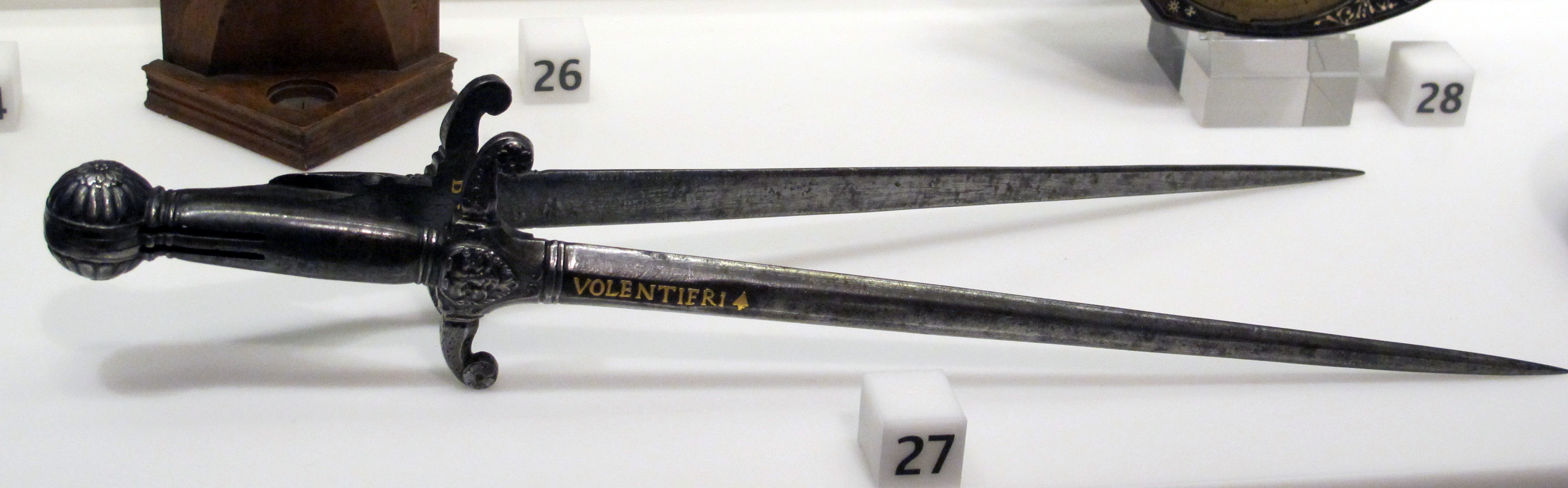
Figure 1. Benvenuto della Volpaia’s dagger-shaped compass. Museo Galileo, object 2515. Photograph by Sailko. Unaltered. Original photograph on Wikimedia Commons · CC BY 3.0

In 1989, Pagliara expressed reservations about attributing the instrument to Benvenuto. The Museo Galileo catalogues it as his work and announced in 2019 that it had acquired another compass bearing the same initials. The museum considers three such instruments, including one in a private collection, to have been commissioned by Pope Clement VII shortly after the siege of Florence. 1 10 11
Tribolo and work in Rome#
Vasari’s Lives recounts that, during the siege of Florence (1529–1530), Pope Clement VII commissioned Benvenuto to survey the city and its surroundings. The sculptor Niccolò Pericoli, known as Tribolo, took part in making the model. Folio 64 verso preserves notes recording the heights around the city. Pagliara questions the tradition that Benvenuto was free to survey inside and outside the city during the siege. He suggests that surveys made before the siege may have informed the model, or that work during the siege may have been limited to areas outside the walls. 1 11 12
In spring 1531, Benvenuto moved to Rome. Pagliara considers Cardinal Giovanni Salviati the likely person who invited him. In early 1532, Clement VII appointed Benvenuto to a post connected with the Belvedere water supply and the fountains in St Peter’s Square. Benvenuto moved to the Belvedere and welcomed Michelangelo, who came to Rome that spring. The letters discussed by Pagliara also show Benvenuto acting as an intermediary between Michelangelo and the pope. A letter from Sebastiano del Piombo dated 15 July that year informed Michelangelo of Benvenuto’s sudden death. 1 3
The manuscript passed to Girolamo, the son of Camillo, and contains notes in his hand. Girolamo later repaired his grandfather Lorenzo’s planetary clock and offered to maintain it. The work of keeping clocks running and recording how they worked on paper passed through different generations of the family. 1 13
Chronology#
| Date | Event |
|---|---|
| 5 May 1486 | Born in Florence. 1 |
| 1511 | His father Lorenzo makes the clock at the Mercato Nuovo. 2 |
| 1516 | A measuring instrument dated to this year is recorded in the manuscript. 1 |
| February 1521 | Records a flour mill in Rome in a drawing. 1 |
| May and November 1521 | Takes charge of the Mercato Nuovo clock. The account of 29 November records payment for the adjustment. 1 2 |
| May 1523 | Makes a will in Florence naming his brothers Camillo and Eufrosino as beneficiaries. 1 |
| 1529–1530 | Involved in surveying and a model-making project associated with the siege of Florence. 11 12 |
| January 1530 (if converted from the Florentine dating system) | Rebuilds the clock of the Servite order. 1 |
| Spring 1531 | Moves to Rome. 1 3 |
| January 1532 | Moves to the Belvedere in Rome. 1 |
| July 1532 | His sudden death is reported in a letter dated the 15th. 1 |
| Second half of the sixteenth century | His nephew Girolamo leaves notes in the manuscript. 1 |
| 1994 | A reconstruction of the planetary clock is made with reference to drawings in the manuscript. 6 7 |
| October 2019 | The Museo Galileo announces its acquisition of a dagger-shaped compass bearing the initials B.V. 11 |
References#
1. Pier Nicola Pagliara, “Della Volpaia, Benvenuto”, Dizionario Biografico degli Italiani, 37, 1989. Biography.
2. Sara Taglialagamba, “Alle origini dell’orologeria di Leonardo: Andrea Verrocchio e Lorenzo della Volpaia per l’orologio di Mercato Nuovo”, Achademia Leonardi Vinci, 1, 2021, pp. 93–126, especially pp. 113–115. Article and transcription of primary sources.
3. Museo Galileo, “Benvenuto della Volpaia”. Biography.
4. Museo Galileo, “Camillo della Volpaia”. Biography.
5. Elizabeth M. Merrill, “Pocket-Size Architectural Notebooks and the Codification of Practical Knowledge”, The Structures of Practical Knowledge, Springer, 2017, pp. 21–54, fig. 5 and pp. 36–37. Bibliographic record · Text and figures.
6. Museo Galileo, “Ancient mechanical clocks”. Exhibition text.
7. Museo Galileo, “Planetary clock”, inv. 3817. Object catalogue.
8. Alessandro Vezzosi, with the collaboration of Agnese Sabato, “Della Volpaia”, La Toscana di Leonardo. Manuscript and family.
9. Istituto e Museo di Storia della Scienza (now Museo Galileo), exhibition text on the compass, p. 6, item 3. Full English text.
10. Museo Galileo, “Dividers”, inv. 2515. Object catalogue.
11. Museo Galileo, “A New Acquisition: the Dagger-shaped Compass of Benvenuto della Volpaia”, 28 October 2019. Acquisition announcement.
12. Giorgio Vasari, Le vite de’ più eccellenti pittori, scultori et architettori, 1568 edition, “Vita di Niccolò detto il Tribolo”. Transcription by Fondazione Memofonte.
13. Museo Galileo, “Girolamo della Volpaia”. Biography.
All web sources accessed 24 November 2026.