This article was translated from Japanese using AI. Read the Japanese original
David Rittenhouse (1732–1796) was a Pennsylvania clockmaker, scientific instrument maker, astronomer and surveyor. Alongside tall-case clocks for everyday life, he made temperature-compensated clocks for observations and orreries that reproduced planetary motion through gearing. He gained international recognition for his observations of the 1769 transit of Venus and went on to serve as president of the American Philosophical Society and the first director of the United States Mint. Clockmaking was the starting point of his scientific work and gave him the means to keep accurate time for observations. 1 2 3
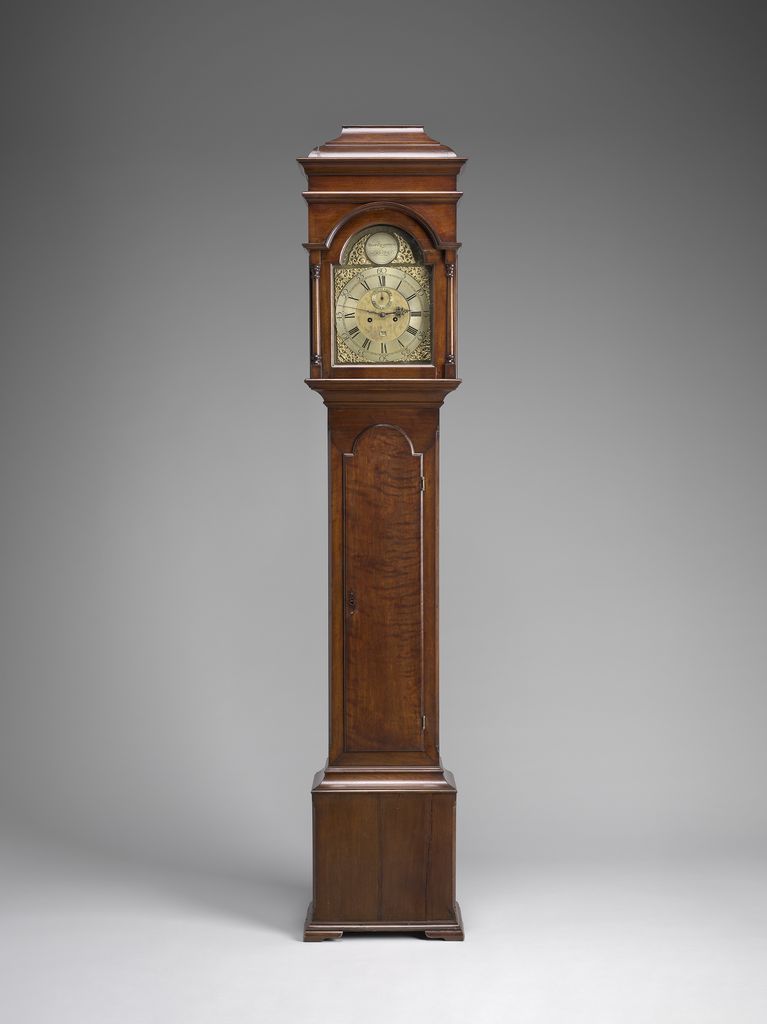
Figure 1. Tall-case clock, c. 1760–1770. Movement by David Rittenhouse, case maker unknown. Walnut, brass and glass. Gift of T. Williams Roberts Jr., Class of 1950 (2022-249). Image courtesy of the Princeton University Art Museum. Object record. The museum’s published image of a public-domain object is reproduced under its terms allowing use without permission. The supplied 1024 px version is used without further processing.
A clockmaker and instrument maker raised on a farm#
Self-education and the workshop#
Rittenhouse was born in 1732 near Philadelphia, in Germantown, into a family associated with papermaking. He grew up with his father Matthias, a farmer, and largely taught himself advanced mathematics and mechanics. The university archives’ biography mentions tools and books inherited from his uncle David Williams and an English translation of Newton’s Principia as resources he learned from. He is reported to have built a wooden clock in his teens. In 1751 he began making clocks as a business on the family farm in Norriton. 1 3
The clergyman Thomas Barton helped him obtain books and meet scholars and later married one of his sisters. In 1813 the biographer William Barton drew on this family connection to assemble letters and testimony. 4
The workshop made clocks and mathematical instruments while Rittenhouse also farmed and pursued research. Barton records the help of assistants, apprentices and craftsmen, and says that Rittenhouse trained his younger brother Benjamin as a mechanic. An astronomical clock of later date bears Benjamin’s name and the year 1786. Workshop assistance and the separate signatures of the two brothers matter when attributing the surviving clocks. 4
Surviving domestic clocks and their customers#
Princeton University Art Museum object 2022-249 is a walnut, brass and glass tall-case clock dated c. 1760–1770. “Norriton” on the dial identifies Rittenhouse’s early place of work. The museum attributes the movement to Rittenhouse and records the case maker as unknown. The customer may have been Robert Roberts (1685–1768) or his son. The clock was used in the family home from the time it was made and stayed in the family after the house was demolished in 1964. It was donated in November 2022. Its provenance helps identify the object and shows how long a clock could remain in household use. 3
Keeping time with astronomical clocks#
Observations and timekeepers#
Comparing the instant Venus crosses the edge of the solar disc or a star passes a reference line calls for a time standard at each observing station as well as a telescope. The American Philosophical Society holds a telescope and clock made by Rittenhouse in 1768–1769 and used in observing the 1769 transit of Venus. The ability to build both the observing instrument and the timekeeper was a strength of his work. 5
An appendix to Barton’s 1813 biography contains accounts of an astronomical clock by Henry Voight, himself a clockmaker, and Robert Patterson, a later director of the Mint. Their familiarity with the apparatus gives a detailed record of its mechanism. 4
A temperature-compensated pendulum#
As a metal pendulum rod warms, it lengthens and the pendulum slows. According to Patterson, Rittenhouse mounted a glass tube with two parallel branches joined by a bend at the bottom on an iron or steel rod. He put alcohol on the side with the closed end and mercury in the remaining part. As the liquids expanded with rising temperature, their mass distribution shifted upward to offset the descent of the centre of oscillation as the rod lengthened. This construction uses the expansion of alcohol as well as mercury, a departure from a bob containing only mercury. 4
Voight describes tying the tube to the rod with thread and supporting it on a pin in the bob. The rate was adjusted by changing the quantity of mercury in an enlarged upper section of the tube, with the bob left in place. The accounts differ in details such as tube length and the position of the bend, and agree on the principle of compensation with alcohol and mercury. The biography’s claim of perfect compensation is a historical assessment, with no modern temperature test cited. 4
Maintaining power during winding#
The same appendix describes three wheels with high tooth counts and an off-centre seconds display. The escape wheel moves outside the back plate, and the pallets are mounted on the pendulum rod. Two springs suspend the pendulum with only a short length left free to flex. The description alone does not establish a particular escapement classification or specific tooth counts. 4
The appendix goes into particular detail about maintaining power during winding. A spring between the great wheel and a fine-toothed ratchet plate stores energy during ordinary running and supplies it to the great wheel while the clock is wound. A pawl holds the plate against turning backwards, avoiding an interruption in drive. The arrangement preserves continuity of observation time during routine winding by drawing on energy already stored in the spring. 4
Building orreries to show planetary motion#
Two instruments for two colleges#
An orrery mechanically shows the motions of planets and satellites around the Sun. Rittenhouse built his first large instrument around 1767–1770. John Witherspoon bought it in 1771 for the College of New Jersey, now Princeton University. With William Smith’s encouragement, Rittenhouse made the second, in 1770–1771, for the College of Philadelphia, now the University of Pennsylvania. 2 6 7
The first instrument, made of wood and metal, is Princeton object PP693. The original design had a central face and two smaller faces, of which the central portion survives. It was damaged during a military occupation of the college in the American Revolution, and Voight was asked to repair it in 1804. Packed after its display at the 1893 Chicago World’s Fair, it went missing until found in a university basement in 1948. A later restoration added an electric motor, so the surviving drive includes a twentieth-century modification. 6 7
The second orrery survives relatively complete at the University of Pennsylvania. The central face shows the Solar System, and the right face the motion of the Moon and eclipses. A third face planned to show details of Jupiter and Saturn may never have been finished. Philadelphia cabinetmakers John Folwell and Parnell Gibbs made the case, combining cabinetmaking with mechanical work. The instrument received study and conservation in the 1970s. Its custodians explicitly state that they have not operated the mechanism in modern times. 2
Calculation through gears and its limits#
Gearing distributes rotation to several arms, showing the positions of different bodies as time advances at a common pace. The user can change the date and see how the positions change, which a static diagram of the Solar System cannot show. A clock counts rotations to display the time. An orrery uses elapsed time to display the positions of several bodies. 2
The gears drive models of the celestial bodies without reproducing gravity itself. Smith’s praise of accuracy over thousands of years records contemporary expectations of astronomy and mechanical work, with no modern performance guarantee accounting for wear, assembly errors or tests of the instrument. 2 4
Observation, surveying and public institutions#
The transit of Venus on 3 June 1769 was an international effort to measure contact times from distant points on Earth and use them to determine the distance to the Sun. Rittenhouse took part at the Norriton observatory. The American Philosophical Society’s exhibition account recounts an anecdote that he briefly fainted from excitement. The work involved observers at different sites, timekeeping, exchange of results and shared calculations. 4 8
The society’s account of the reprinted papers says William Smith was the lead author of the comparison of timings, with contributions to the text and calculations by Rittenhouse. The observations from State House Square in Philadelphia were reported by lead author John Ewing and included contributions by other participants. 9
Rittenhouse moved to Philadelphia in 1770 and became city surveyor in 1774. Surveying put instrument making and astronomy to practical use. Around the end of 1763 he worked for the Penn family on the boundary near New Castle. In a February 1764 letter to Thomas Barton, he mentions the many laborious calculations involved. He also took part in later state boundary surveys. Mason and Dixon carried out the broader boundary survey with which their names are associated. 1 4
During the American Revolution he served as a technical specialist on the Committee of Safety, dealing with cannon, muskets, ammunition and powder facilities, and took part in drafting the state constitution. He served as Pennsylvania treasurer and taught astronomy at the college in Philadelphia from 1779 to 1782. He was president of the American Philosophical Society from 1791 to his death in 1796, and first director of the United States Mint from April 1792 to June 1795. At the Mint he was responsible for precision manufacture and for equipping, staffing and supplying the new institution. He died on 26 June 1796. 1 4 10
Timeline#
| Date | Event |
|---|---|
| 8 April 1732 | Born near Germantown. The date follows the contemporary record and is treated as Old Style in some sources. |
| Teens | Reportedly makes a wooden clock. Sources give ages of sixteen and seventeen. |
| 1751 | Starts a clockmaking business on the Norriton farm. |
| Late 1763–1764 | Undertakes boundary calculations and surveying work for the Penn family. |
| 1766 | Marries Eleanor Coulston. After her death he marries Hannah Jacobs. |
| Around 1767–1770 | Makes his first large orrery. |
| 1768–1769 | Makes a telescope and clock for observations of the transit of Venus. |
| 3 June 1769 | Observes the transit of Venus at Norriton. |
| 1770 | Moves to Philadelphia. |
| 1770–1771 | Makes his second large orrery for the College of Philadelphia. |
| 1771 | The College of New Jersey acquires the first orrery. |
| 1774 | Becomes Philadelphia city surveyor. |
| From 1775 | Performs technical work for the Committee of Safety and takes part in public affairs during the Revolution. |
| 1779–1782 | Professor of astronomy. |
| 1791–1796 | President of the American Philosophical Society. |
| April 1792–June 1795 | First director of the United States Mint. |
| 26 June 1796 | Dies. |
| 1804 | Voight is asked to repair the Princeton orrery. |
| 1893 / 1948 | The orrery is shown at the Chicago World’s Fair. It is rediscovered packed away in 1948. |
| 1950s | The orrery is restored and an electric motor is added. It is displayed in 1954. |
| 1970s | The University of Pennsylvania orrery is examined and conserved. |
| November 2022 | The tall-case clock preserved by the Roberts family is donated to the Princeton University Art Museum. |
Timeline based on 1 2 3 4 6 10. See also 11 for the Old Style birth date.
What the evidence establishes#
Rittenhouse brought together the making of domestic clocks, temperature compensation, uninterrupted timekeeping for observations and mechanical displays of celestial motion. The surviving household clock, the society’s astronomical instruments and the two college orreries show his work in daily life, scientific observation and education. 2 3 5
The available sources do not establish his total output, the division of work on individual parts or the measured performance of his temperature compensation. The instrument the biography calls a “chronometer” was an observatory pendulum clock, distinct from a portable marine timekeeper. The object records and accounts of mechanisms document his contributions directly without establishing patent priority or a general American first. 4
References#
The following sources were checked on 13 November 2026.
- University Archives, University of Pennsylvania, “David Rittenhouse 1732–1796”. Life, university connections and public offices.
2. Penn Libraries, “Rittenhouse Orrery”. Construction, makers and preservation of the instrument of 1770–1771.
3. Princeton University Art Museum, “Tall case clock,” ca. 1760–70, 2022-249. Materials, inscriptions, maker attributions and provenance.
4. William Barton, Memoirs of the Life of David Rittenhouse, Philadelphia, 1813. Text pp. 138–147, the section on the Venus transit, death on pp. 539–540, appendix pp. 42–44 and notes A43–A44 (Henry Voight’s and Robert Patterson’s accounts of the astronomical clock), and notes A50–A51. Project Gutenberg transcription.
5. American Philosophical Society, “Astronomical Transit Telescope and Astronomical Clock”. Manufacture in 1768–1769 and use in observation.
6. April C. Armstrong, Princeton University Archives, “The Rittenhouse Orrery”, 23 December 2014. Purchase, damage, repair and rediscovery.
7. Princeton University Art Museum, “Orrery,” 1770, PP693. Object identification, materials and date.
8. American Philosophical Society, “Sic Transit Glorious: A Transit of Venus Celebration”, 2012 exhibition. Instruments and observations of the transit.
9. American Philosophical Society, 2012 Publications, “1769 Transit of Venus”. Authorship and individual contributions to the reprinted papers.
10. United States Mint, “Former Directors of the U.S. Mint”, updated 5 November 2025. Term of the first director.
11. Edward Ford, David Rittenhouse: Astronomer-Patriot, 1732–1796, University of Pennsylvania Press, 1946, “Paper Mill”, p. 1. The published opening pages were checked for the Old Style birth date. The full book was not consulted.