This article was translated from Japanese using AI. Read the Japanese original
Derek Francis Pratt (1938–2009) learned watch repair in Britain and made pocket watches in Switzerland. He put a small spring immediately upstream of the point where the escape wheel delivers impulse to the balance, seeking to reduce the effects of the mainspring and train on the impulse. In a pocket watch for Urban Jürgensen he built the spring into the rotating tourbillon. When recreating John Harrison’s H4 sea watch, he explored the eighteenth-century workmanship embodied in similarly small parts through their materials and manufacture. 1 2 7
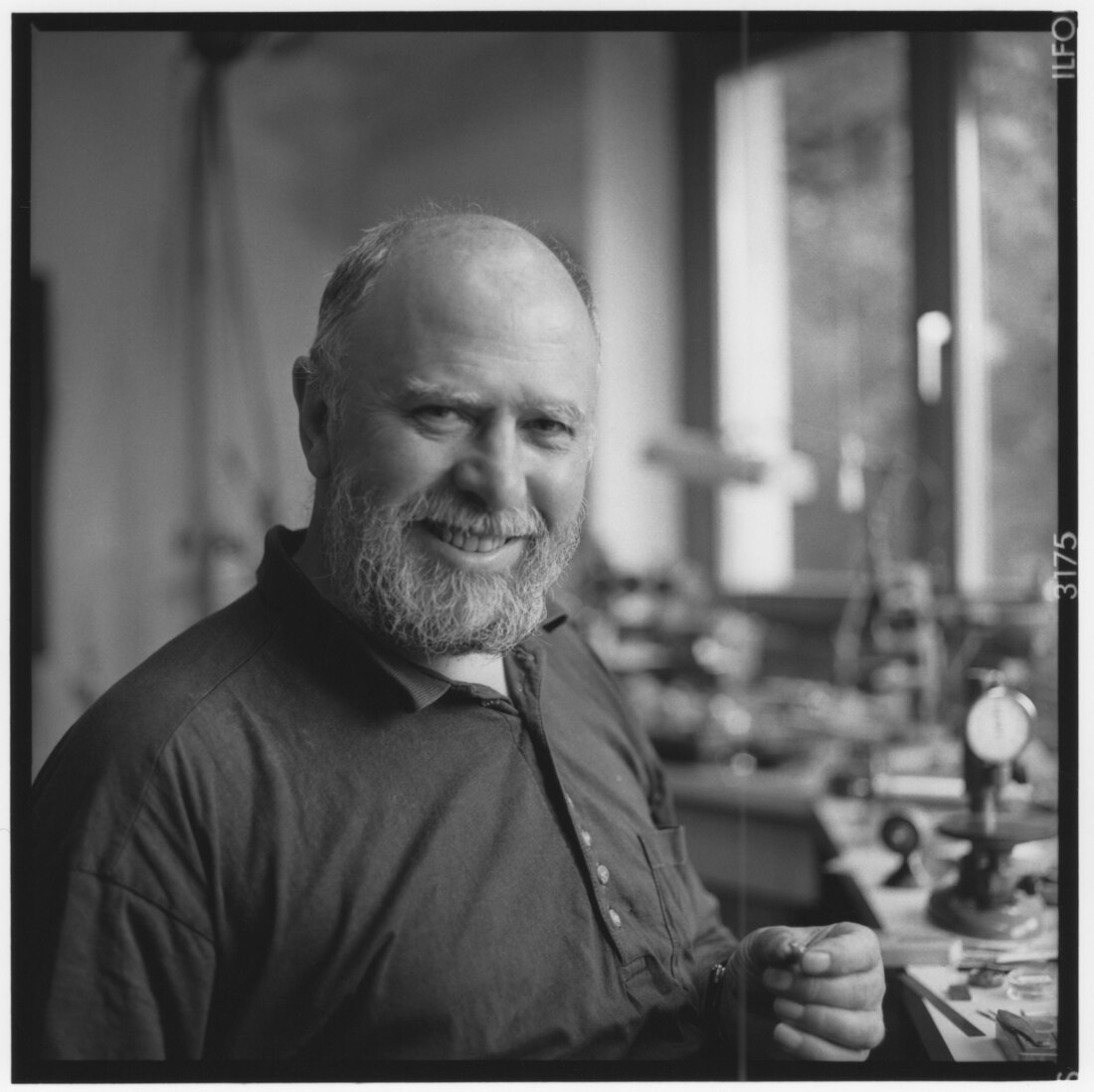
Figure 1. In his Swiss workshop in 2006. Photograph by Juliet Haller, from Wikimedia Commons. CC BY-SA 4.0. Resized and recompressed as JPEG.

Training in Britain and independent work in Switzerland#
Pratt was born in 1938 in Orpington, England. He built model aircraft as a child and began using a lathe. He was an apprentice at Smiths and enrolled at London’s National College of Horology in 1956. He expected to complete a pocket watch in his final year and left after the assignment changed. He worked in precision machining for his former teacher Andrew Fell. According to Timothy Treffry, this included a mechanism for an aircraft recording instrument and fine nozzles for soldering electronics. Watchmaker Anthony Randall met Pratt and his colleague Derek Higginson in Le Locle, Switzerland, in autumn 1963. In 1972 Pratt went independent in Switzerland and met the collector Peter Baumberger through his work on complicated antique watches. Helmut Crott, who worked with both men, recalls that Pratt serviced Vacheron Constantin No. 402833, formerly owned by King Fuad I of Egypt. 2 3 7 19 20
Pratt’s precision work extended beyond horology. The publication for a thermostatic mixing valve claiming British priority in 1968 names Derek John Goldsmith and Pratt. The valve adjusts the mix of hot and cold water as temperature changes. Treffry says Goldsmith later supported Pratt’s watchmaking and acquired his double-wheel remontoir pocket watch. 2 4
As quartz watches spread, Pratt collected machine tools from the mechanical watch industry. He kept several similar machines so that each could be set up for a dedicated operation. For one-off plates and components he used a piercing saw and a small hand-operated lathe. To engine-turn dials he operated the machine by hand, cutting each line individually. The tool had to be positioned for each pass, including where a pattern changed or met a boundary. 2 5
Pocket watches for Urban Jürgensen#
Restoring old movements and adding functions#
Treffry says Baumberger acquired the Urban Jürgensen name in 1979 and the company in 1985. Pratt restored watches and made new ones for the firm. Phillips records that he was its technical director from 1982 to 2005. Work using older movements included a minute repeater to which he added a perpetual calendar, a moon phase and a split-seconds chronograph, and another watch to which he added an equation-of-time display. Identifying the existing functions and deciding where and how to add new ones linked restoration with design. 2 5
A tourbillon rewound at one-second intervals#
A tourbillon carries the escapement and balance in a rotating carriage to average positional rate differences. Pratt fitted a small power supply, a remontoir, into the carriage. In a lever escapement he described, a small spiral spring connects the escape wheel to its pinion. The train rewinds this spring once a second and the spring drives the escape wheel. In 1988 the American Watchmakers Institute’s journal presented an example commissioned by Urban Jürgensen with a gold case and silver dial. It recorded the aim of disconnecting the carriage train to keep the carriage stationary during impulse to the balance. The seconds display also advances in one-second steps. 1 2 6
A barrel and regulator at opposite ends of the Oval#
Breguet’s work inspired the oval pocket watch known as The Oval. Its elongated layout puts a large barrel at one end and a tourbillon at the other. The silver dial gives the moon phase, power reserve, temperature and seconds. Its detent escapement gives one impulse per complete oscillation of the balance. The flying tourbillon incorporates a remontoir. 2 5
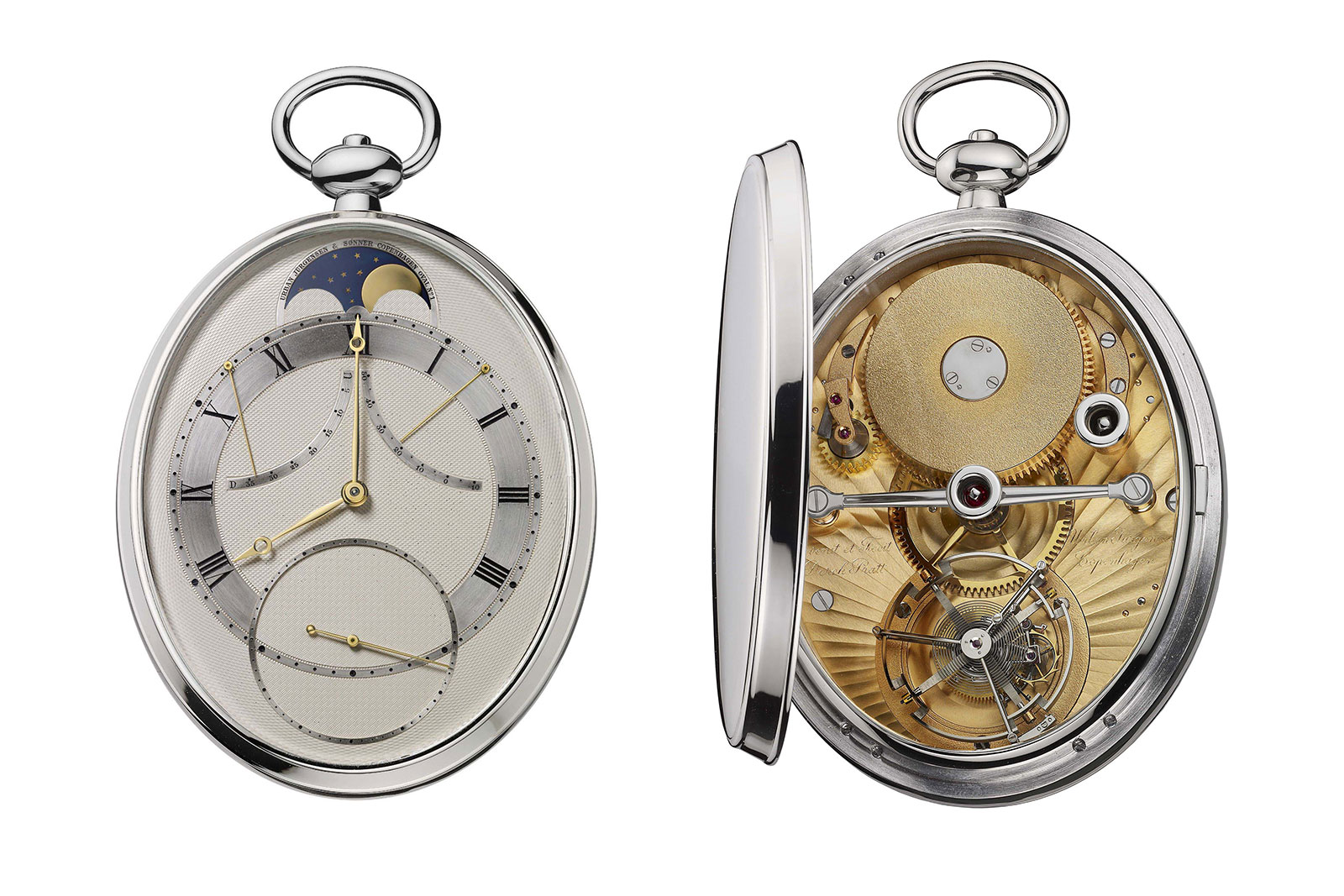
Figure 2. The Oval pocket watch, photographed in 1993 according to the source. Photograph by Tony Baggenstos, from Wikimedia Commons. CC BY-SA 4.0. Original image.

According to Phillips’s entry for lot 40, Pratt began work in 1982 and showed the unfinished watch at the Basel fair in 1993. He cut the moon-phase aperture in the dial by hand and made the oval glass for the back with holes for winding and setting by key. In 2004 he asked Kari Voutilainen to finish the watch. Phillips gives its completion date as 2005. The example offered in 2024 had a platinum case measuring 76 mm by 62 mm and came with Pratt’s silver case. Phillips names Bruno Affolter as the maker of the platinum case. 5
Driving two escape wheels from one train#
Two escape wheels alternately deliver impulse on the two swings of the balance in Pratt’s own pocket watch, completed in 1997. In Breguet’s natural escapement, the wheels mesh and move together. George Daniels gave each escape wheel an independent train and made the wheels act alternately. Pratt devised a way to turn a tourbillon from a single train while driving the two escape wheels in opposite directions and delivering impulse alternately. 1 2 Daniels’s independent double-wheel escapement
The key is two sets of teeth on concentric fixed wheels. The outer teeth of the inner fixed wheel and the inner teeth of the outer fixed wheel mesh with different escape-wheel pinions. As the carriage turns, the pinions rotate in opposite directions. A small spiral spring sits between each pinion and its escape wheel. While one escape wheel delivers impulse directly to the balance, the other spring is rewound. The roles are reversed on the next impulse. This gives each escape wheel power from a nearby spring without starting and stopping the whole train at every impulse. In his 2009 article Pratt describes the impulse as nearly constant and illustrates the arrangement and operation in figures 5–8. 1
The pocket watch was entered in a competition marking the 250th anniversary of Breguet’s birth. Pratt and Daniels also collaborated in manufacture. Jonathan Betts, who was responsible for clocks at the National Maritime Museum, records that Pratt made small escape-wheel pinions for some of Daniels’s wristwatches. In 2004 Pratt proposed using Daniels’s double-wheel arrangement in a wristwatch at the Charles Frodsham workshop. The wristwatch introduced later drives its escape wheels with two independent trains. 1 2 10 Frodsham’s wristwatch
Recreating Harrison’s H4#
John Harrison’s H4 is a large portable timekeeper made in the eighteenth century to keep reference time at sea. Pratt conceived a reconstruction around 1997 and made parts including plates, the fusee, the inner barrel and train components. Roger Stevenson reports that the Charles Frodsham team took over the work in summer 2009, using Anthony Randall’s dimensioned drawings and Pratt’s workshop material. Martin Matthews made the case, Jos Houbraken the dial and Charles Scarr the pierced work. 7 10 11
The pallets are diamond. Pratt worked diamond cylinders of about 1 mm in diameter using a cast-iron lap and diamond abrasive. When a wax mounting came loose, he continued the work with a holder grooved by electrical discharge machining. The Frodsham team made the remaining pallets, adjusted the remontoir to rewind every 7.5 seconds and adjusted the temperature compensation with reference to the surviving original. The reconstruction was completed in 2014 and appeared in the National Maritime Museum’s travelling exhibition marking the 300th anniversary of the Longitude Act. 8 9 10 12
Recording and passing on his techniques#
Late in life Pratt also planned a watch driven by a Tensator industrial constant-torque spring. Randall used Pratt’s remaining papers to describe circular and oval designs and thought work on a prototype had begun with the circular one. 19
Pratt explained mechanisms in specialist journals and contributed technical expertise to the English translation of The Theory of Horology, a textbook for Swiss watchmaking schools. The British Horological Institute held a memorial and exhibition in 2011. The talks, Pratt’s papers and workshop material were collected in Derek Pratt, Watchmaker. The Worshipful Company of Clockmakers created the Derek Pratt Prize for people and organisations doing original work in horology and time measurement. In 2018 Frodsham won it for the double-impulse wristwatch whose development Pratt had set in motion. 2 13 14 15 19 About the textbook
Timeline#
| Year | Event |
|---|---|
| 9 May 1938 | Born in Orpington, England. 3 18 |
| 1956 | Enrols in specialised horological training in London. 2 |
| 1968 | The mixing-valve application with Goldsmith establishes British priority. 4 |
| 1972 | Goes independent in Switzerland and restores watches. 2 |
| 1982 | Takes on technical responsibilities at Urban Jürgensen. According to Phillips, starts the Oval. 5 |
| 1988 | A US trade journal features a gold-cased pocket watch with a one-second remontoir in the carriage. 6 |
| 1992 | Receives the British Horological Institute’s Silver Medal. 3 5 |
| 1993 | Shows the unfinished Oval in Basel. 5 |
| March 1997 | Completes the double-wheel remontoir tourbillon. 1 |
| Around 1997 | Conceives the H4 reconstruction. 7 |
| 1999 | Receives the Musée international d’horlogerie’s Prix Gaïa for Craftsmanship and Creation. 16 |
| 2004 | Discusses the double-impulse wristwatch with Frodsham and asks Voutilainen to finish the Oval. 1 5 |
| 2005 | Completion date of the Oval according to Phillips. 5 |
| 2006 | Receives the Worshipful Company of Clockmakers’ Tompion Medal. 17 |
| 2009 | Publishes on the double escape wheel in March, hands H4 over to Frodsham in summer and dies on 16 September at 71. 1 7 19 |
| 2014 | The Frodsham team completes the H4 reconstruction. Martin Burgess becomes the first recipient of the Derek Pratt Prize. 12 15 |
| 2018 | The Frodsham double-impulse wristwatch wins the Derek Pratt Prize. 15 |
| 2024 | The Oval sells for 3.69 million Swiss francs at Phillips in Geneva. 5 |
| September 2026 | Mary Pratt republishes Randall’s talk on the prototype using a Tensator. 19 |
References#
All sources accessed on 21 November 2026.
1. Derek Pratt, In Breguet’s Footsteps…, Horological Journal, March 2009, pp. 106–110. Figures 3–8 and 11 and the postscript.
2. Timothy Treffry, The Greatest Unknown Watchmaker – Derek Pratt, 30 March 2018. A horological researcher’s recollections and account of the watches.
3. WatchTime, Master Watchmaker Derek Pratt Passes Away, 5 October 2009. Birthplace and Silver Medal.
4. Thermostatisches Mischventil (DE1943272A1), published 1970. Names, British priority and description of the mixing valve.
5. Phillips, Derek Pratt for Urban Jürgensen, “The Oval”, November 2024, lot 40. Specifications, making, provenance and sale result for case No. 1.
6. Horological Times, Horological Showcase: Gold Cased Tourbillon by Derek F. Pratt, September 1988, p. 27. Photograph and description of the mechanism.
7. Roger Stevenson, Derek Pratt’s Reconstruction of John Harrison’s H4, Part 1, 29 December 2016, first published in Horological Journal in 2015. Division of work and transfer of responsibility.
8. Roger Stevenson, Making the Diamond Pallets, Part 2, 4 January 2017. Working the diamond pallets.
9. Roger Stevenson, Making the Escapement, Remontoir and Timing, Part 3, 11 January 2017. Escapement, rewinding and temperature compensation.
10. Jonathan Betts, Remembering Derek Pratt, a Master of All Times, 3 November 2017. Parts for Daniels, advice on reconstructing H4 and its exhibition history.
11. Royal Museums Greenwich, H4, ZAA0037. Provenance and use of Harrison’s original.
12. Horological Society of New York, A Detailed Study of H4. Film introduction, with the project of 1997, transfer and completion in 2014.
13. Manuel Yazijian, The Theory of Horology (book review), Horological Times, reprinted November 2004, p. 40 (PDF p. 42). Division of work on the English translation.
14. Worshipful Company of Clockmakers, Honours & Memorials. Purpose of the Derek Pratt Prize.
15. Worshipful Company of Clockmakers, The Derek Pratt Prize. First recipient and the work awarded the prize in 2018.
16. Musée international d’horlogerie, Les lauréats. 1999 Prix Gaïa for Craftsmanship and Creation.
17. Worshipful Company of Clockmakers, The Tompion Medal. Official list of recipients.
18. Mary Pratt, May 9th, 9 May 2026. Birth date recorded by his daughter.
19. Mary Pratt and Anthony Randall, The Missing Movement, 16 September 2026. Date of death, memorial and Randall’s 2011 talk, including the 1963 meeting and Tensator designs.
20. Helmut Crott, Recollections of Derek Pratt, 17 October 2024. Recollections of work with Baumberger and a watch Pratt serviced.