This article was translated from Japanese using AI. Read the Japanese original
Diederik Johannes Korteweg (1848–1941) was a Dutch mathematician known for the Korteweg–de Vries equation describing solitary waves. In the history of timekeeping, his contribution was a theoretical study of the “sympathy” between two pendulum clocks observed by Huygens. He connected historical records with mechanics by analysing how the pendulums influence each other through their support. 12
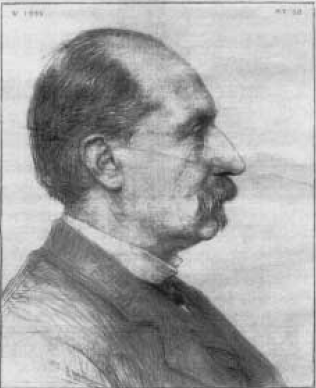
Figure 1. Portrait of Korteweg, circa 1900, by Jan Veth (1864–1925). Source Wikimedia Commons, from KNAW material. Public domain as a faithful two-dimensional reproduction of the original, more than 100 years after the artist’s death. Rights notice. Unmodified.


A career in mathematics#
From technical education and teaching to university#
Korteweg was born on 31 March 1848 in ’s-Hertogenbosch. His father was a judge. He began his studies at the technical school in Delft and became more interested in mathematics than the engineering curriculum. He qualified to teach mathematics and mechanics, taught at secondary schools in Tilburg and Breda and gained the qualification required for university in 1876. He studied in Utrecht and then went to Amsterdam, where he worked under Johannes Diderik van der Waals. 12
His doctoral thesis, examined on 12 July 1878, treated the speed of waves in elastic tubes. The University of Amsterdam had just gained the power to award doctorates, and he received its first. In 1881 he became professor of mathematics, mechanics and astronomy. As the university’s retrospective account shows, his inaugural lecture already reflected his interest in applying mathematics to problems in the natural sciences. 2
Collaboration and teaching#
His research extended from fluid dynamics, thermodynamics and classical mechanics to pure mathematics. He worked with Van der Waals on problems in physics and supervised his student Gustav de Vries’s 1894 doctoral thesis. De Vries’s work on long waves led to their joint paper of 1895. The question behind what is now called the KdV equation was whether a wave moving along a channel could preserve its shape. The wave problem and the sympathy of the clocks involve separate physical models. 2
His students also included Brouwer, who received his doctorate in the foundations of mathematics in 1907. A professor chiefly concerned with applied mathematics, Korteweg supported research in other directions as well. He was also involved in editing Nieuw Archief voor Wiskunde from 1897 to 1941, contributing to mathematical education and publication alongside his work on clocks. 2
From Huygens’s records to the mechanics of clocks#
What sympathy means#
In 1665 Huygens observed two pendulum clocks placed close together falling into step so that one reached the left end of its swing when the other reached the right end. This is antiphase synchronisation. When the clocks were moved apart, a difference in rate appeared, showing that the agreement did not come from identical adjustment by chance. A tiny motion of their common support mechanically coupled the pendulums. 3
Korteweg opens his 1905 paper with Huygens’s letters and a report in the Journal des Sçavans, tracing the shift from an initial explanation in terms of air movement to the minute motion of the support. He also considers John Ellicott’s experiments of 1739. These included one clock taking motion from the other until it stopped, and the amplitude of the two clocks growing in alternation. Korteweg examined these as distinct phenomena. 3
He also helped edit Huygens’s collected works and led that project from 1911 to 1927. The 1905 paper predates that period. 2
The papers of 1905 and 1906#
The English paper appeared in volume 8 of the Royal Academy’s Proceedings, pp. 436–455. Its opening states that it was reported at a meeting on 28 October 1905. The French paper of 1906, “Les horloges sympathiques de Huygens”, is also cited in later studies, including those by Bennett and colleagues in 2002 and by other researchers in 2016. The account here uses the 1905 English paper when discussing the original text. 345
Adding the motion of the support to that of two pendulums#
Three principal oscillations#
The paper treats two physical pendulums attached to a supporting mechanism with one degree of freedom. The two pendulum angles and the support’s motion give the whole system three degrees of freedom. Korteweg limits the analysis to small oscillations in parallel vertical planes and derives the equations of motion by Lagrange’s method. For physical pendulums, mass distribution and inertia about the pivot matter alongside length. 3
A principal oscillation is a pattern in which the parts of the system move with fixed amplitude ratios and a common period, corresponding to what later came to be called a normal mode. Describing any small motion as a superposition of these modes reveals the role of the support. It is a part of the system through which motion and energy pass. 3
A perfectly immovable support would remove this mechanical coupling. A real support can also have motions that cannot all be represented by a single rigid-body motion. Korteweg writes that a similar treatment can work for an elastic supporting structure if one mode of vibration dominates. 3
Synchronisation, beats and stopping#
When the natural periods of two pendulums are close, superposed oscillations can produce motion in which one amplitude grows as the other falls. This modulation differs from synchronisation, which maintains a fixed phase relationship. If the amplitude drops too far, the clock’s escapement may cease working normally. A pendulum may still be moved slightly from outside even after the clock’s own train stops advancing. 3
In the latter part of the paper, Korteweg varies the difference between the pendulum periods and the strength of the coupling through the support to see which principal or compound oscillations can persist. He considers conditions under which the clocks keep different rates and questions whether the alternating transfer of energy described by Ellicott is compatible with exactly equal rates. The mathematical analysis thus tests whether the claims within an observational record are consistent with one another. 3
Strengths and limits of the theory#
Friction and escapements#
Linear analysis of small oscillations alone cannot fully explain how clocks starting in different states settle into a specific synchronised state over time. In a note on p. 438 of the original paper, Korteweg says friction is essential for one of several principal oscillations to remain after the others die out. An explanation without friction is incomplete. Later in the paper he considers which motions the clocks’ driving mechanisms and the support’s friction sustain or damp. 3
He leaves open the construction of a full nonlinear model accounting for periodic escapement impulses and losses. Bennett and colleagues in 2002 describe his analysis as a linear model with three degrees of freedom and argue that this framework alone cannot explain attraction to stable antiphase synchronisation. The 2016 study also describes it as a linear model omitting pendulum damping and driving. 345
What modern experiments added#
Bennett and colleagues varied the coupling in experiments with two clocks on a common support that could move. In 2016 Peña Ramirez and colleagues demonstrated in-phase synchronisation of large pendulum clocks on a flexible wooden structure. The observed states depend on how the support deforms and how the escapements act. Huygens’s antiphase state is thus one possible outcome. 45
Korteweg’s contribution was to recast several phenomena described in historical records as problems in mechanics that include the support. It widened the study of timekeeping from the regulation of individual clocks to their interaction with the structures that hold them.
Timeline#
| Date | Event |
|---|---|
| 31 March 1848 | Born in ’s-Hertogenbosch. |
| 1876 | Gains a university entrance qualification while working as a teacher. |
| 12 July 1878 | Studies wave propagation in elastic tubes and receives the University of Amsterdam’s first doctorate. |
| 1881 | Becomes professor of mathematics, mechanics and astronomy. |
| December 1894 | Gustav de Vries’s doctoral thesis is examined. |
| 1895 | Publishes a joint paper on long waves. |
| 1897–1941 | Helps edit Nieuw Archief voor Wiskunde. |
| October 1905 | Presents research on Huygens’s sympathetic clocks at the Academy. The English paper appears in volume 8. |
| 1906 | French paper on sympathetic clocks, widely cited by later researchers. |
| 1907 | Brouwer receives his doctorate. |
| 1911–1927 | Leads work on the edition of Huygens’s collected works. |
| 10 May 1941 | Dies in Amsterdam. |
| 2002 | Bennett and colleagues revisit Huygens’s clocks through experiments and a nonlinear model. |
| 2016 | An experimental study demonstrates in-phase synchronisation of clocks on a flexible wooden support. |
Biographical details draw on 12, and the publication and later research on the clocks draw on 345.
Scope of the research#
This account covers Korteweg’s mathematical work and his contribution to research on clocks. The available sources do not document clocks he made, a workshop, clockmaking customers or patents. The 1906 French paper was identified from later bibliographies without a line-by-line comparison. Applying the model to a specific modern clock also requires accounting for the support structure and how the clock is driven.
References#
- J. J. O’Connor and E. F. Robertson, Diederik Johannes Korteweg, MacTutor, updated 2006. Overview of life, teaching and research. Accessed 10 November 2026.
2. Eduard de Jager and Tom Koornwinder, eds., D.J. Korteweg and G. de Vries, University of Amsterdam, “Life”, “Scientific work” and “Students and teaching”. Accessed 10 November 2026.
3. D. J. Korteweg, Huygens’ sympathic clocks and related phenomena in connection with the principal and the compound oscillations presenting themselves when two pendulums are suspended to a mechanism with one degree of freedom, Proceedings of the Royal Academy of Amsterdam 8, 1905, pp. 436–455. Scan of the original paper. Accessed 10 November 2026.
4. Matthew Bennett, Michael F. Schatz, Heidi Rockwood and Kurt Wiesenfeld, Huygens’s clocks, Proceedings of the Royal Society A 458, 2002, pp. 563–579, doi:10.1098/rspa.2001.0888. Clock experiments and model. Accessed 10 November 2026.
5. Jonatan Peña Ramirez et al., The sympathy of two pendulum clocks: beyond Huygens’ observations, Scientific Reports 6, 23580, 2016, doi:10.1038/srep23580. Introduction, experiments and model of the support structure. Accessed 10 November 2026.