This article was translated from Japanese using AI. Read the Japanese original
Life and career#
Childhood and apprenticeship (1727–1752): Ferdinand Berthoud (18 March 1727 – 20 June 1807) was born in Pratsmont, in the Val-de-Travers region of what is now the Swiss canton of Neuchâtel.1 His father is said to have been an architect and carpenter, and his mother came from nearby Couvet. Several members of the family were clockmakers, including his brother Jean-Henri.1 At fourteen, he began an apprenticeship as a pendulum-clock maker under Jean-Henri and also acquired a grounding in mathematics, physics, and other sciences.1 After completing his clockmaking apprenticeship in April 1745, he moved to Paris at eighteen to continue his training.1 He worked in the workshops of leading Parisian clockmakers and soon displayed exceptional ability. According to one account, he spent time in Julien Le Roy’s workshop, where he refined his skills alongside Le Roy’s son Pierre, who would later become his rival.1 Berthoud’s reputation grew, and he was highly regarded by his early twenties.
Rise in Paris (1753–1762): Parisian guild rules placed strict limits on craftsmen from outside the city, but Berthoud received exceptional support on account of his talent. In 1752 he presented the design of an equation clock to the Royal Academy of Sciences. His article “ÉQUATION” in the Encyclopédie describes the mechanism as one presented in 1752, with trains displaying apparent solar and mean solar time and an indication for leap years. A 366-tooth annual wheel distinguishes years of 365 and 366 days: in leap years it advances one tooth each day, while in common years two teeth advance together at one point. A stepped cam on the annual wheel moves a lever, advancing or retarding the hand showing apparent solar time relative to mean solar time. This mechanism displays the seasonal variation in solar time; it addresses a different problem from isochronism, the constancy of a pendulum’s period regardless of its amplitude.2 According to the modern manufacturer bearing his name, a special ruling by the King’s Council on 4 December 1753 exempted Berthoud from guild rules and admitted him as a master clockmaker at age 26.3 However, the King’s Council document cited in the Metropolitan Museum of Art’s research commentary is dated 31 December of that year. The sources therefore differ on the date of the special ruling, though both place his admission as a master in 1753.4 With the support of Academy members including royal astronomer Charles-Étienne Camus and hydrographer Pierre Bouguer, the young clockmaker was formally allowed to establish a workshop in Paris.5
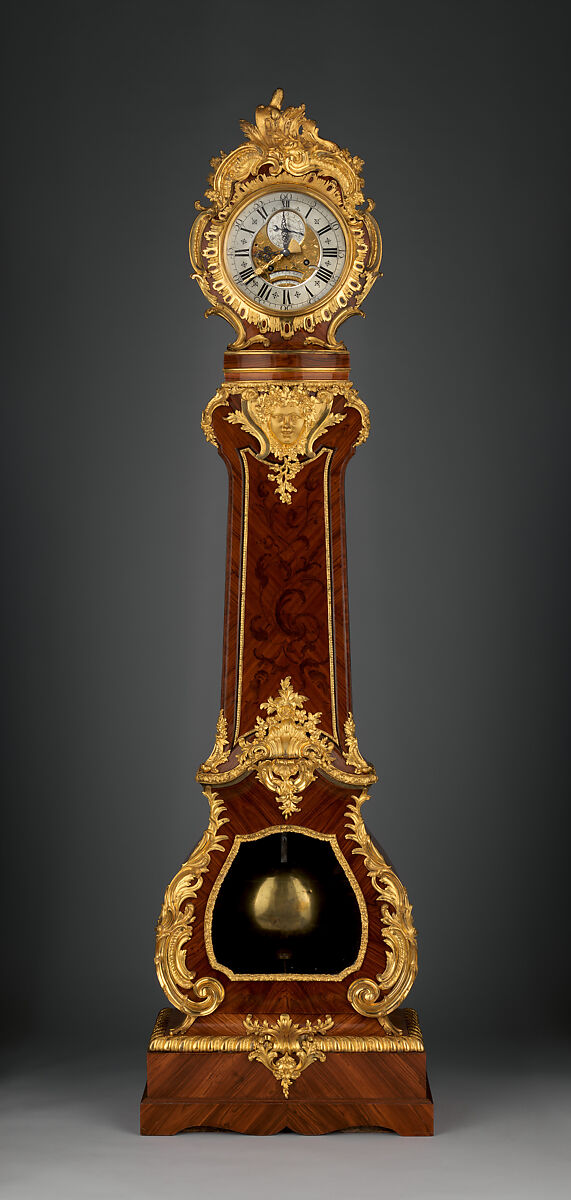
Figure 1: Longcase equation clock, about 1752. Clock by Ferdinand Berthoud; case by Balthazar Lieutaud. Photograph: Trujillo Juan (according to the distributed image’s XMP metadata). Collection and source: The Metropolitan Museum of Art, 2016.28a–e. Terms of use: CC0 1.0 Universal and the Museum’s Open Access policy. No additional modification was made to the distributed image.
From 1755, Berthoud was commissioned to write articles on horology for the Encyclopédie, edited by Denis Diderot and Jean le Rond d’Alembert, further raising his standing in learned circles.5 In 1759 he published his first specialist book, Instructions for the Use and Adjustment of Pendulum Clocks and Watches. Written for readers without prior knowledge of clocks, it explained their proper use and adjustment and demonstrated Berthoud’s talent as an educator.5 The book was repeatedly reprinted and translated into several languages during the 18th and 19th centuries, becoming a bestseller that made his name widely known.5
The longitude timekeeper challenge (1760s): In the mid-18th century, accurately determining a ship’s longitude (its east–west position) at sea was one of the greatest scientific and technical challenges. Britain and France offered large prizes for a practical way to determine longitude, and astronomic methods competed with the use of marine timekeepers.6 Berthoud, who had moved from Switzerland to Paris, became deeply interested in the “longitude problem” and began developing precision clocks for navigation. In December 1760, he submitted a memorandum on the principles of marine timekeepers to the Royal Academy of Sciences, describing his design for his first experimental marine clock, later designated No. 1.7 It was completed in early 1761, but still needed improvement in accuracy and reliability.8
Berthoud’s work on longitude timekeepers gradually gained momentum. In 1763 he published the two-volume Essai sur l’horlogerie (Essay on Horology), which related horology to civic life, astronomy, and navigation and brought together principles verified through experiment. It was received by a broad readership, not only specialists.7 That same year, Louis XV sent Berthoud to London to examine John Harrison’s celebrated marine timekeeper H4.9 Harrison was a pioneer of longitude timekeepers and was close to winning Britain’s longitude prize; completed in 1759, H4 was then the most sophisticated marine timekeeper. Japanese Wikipedia reports that Berthoud, who traveled with Camus and Lalande, was refused access to H4 and saw H1–H3 in exchange for a fee of £500.9 The Metropolitan Museum’s research commentary, by contrast, says he inspected three clocks in May 1763 but apparently did not meet Harrison. Viewing the clocks and meeting their maker are distinct matters.4 Berthoud therefore could not learn H4’s design directly, and the visit fell short of his expectations. His stay in Britain nevertheless exposed him to the latest clockmaking techniques. On 16 February 1764 he was elected a Fellow of the Royal Society of London, gaining international recognition. The Society’s nomination papers are dated 19 May and 12 October 1763, but his election took place the following year. The earlier paper cites his selection to investigate Harrison’s clocks alongside Camus, and his horological publications and inventions, among its reasons for recommending him.10
In the late 1760s, Berthoud pursued the improvement and practical use of marine timekeepers in France, working with senior government officials. A Metropolitan Museum catalogue dates his second visit to London to February 1766. It suggests he did not meet Harrison, and distinguishes such a meeting from seeing a clock or receiving information from other watchmakers.11 During this visit, a mishap by the British Board of Longitude reportedly led to the disclosure of some information about Harrison’s work, and the clockmaker Thomas Mudge gave Berthoud important clues about H4’s construction.4 Berthoud himself wrote in his 1773 book that Mudge showed him a detached escapement in 1766.12 Berthoud also inspected the advanced specialist tools used by British clockmakers and sought to incorporate them into his own work.13
In May 1766 Berthoud submitted a memorandum to the French Navy Minister, the Duke of Praslin (the Count of Choiseul), proposing to build improved marine chronometers Nos. 6 and 8.14 He requested a total grant of 3,000 livres—both a reward for his work to date and funds to build the two new instruments—and the title of clockmaker-mechanic to the King and Navy (marine timekeeper maker). He made clear that he wanted to devote himself to developing longitude timekeepers.14 Louis XV approved the plan in July 1766, authorizing the funding and the work.14
The resulting marine timekeepers Nos. 6 and 8 were tested in the Atlantic in 1768–69. The French naval officer Fleurieu and the astronomer Pingré carried both aboard the frigate Isis and compared them on a voyage from the area around Rochefort via Cádiz, the Canary Islands, the west coast of Africa, the West Indies, and the Azores. The trial also included comparisons ashore before and after the voyage. Fleurieu’s original report records comparisons through 22 November 1769, when winding ceased, and gives a total trial duration of 376 days.15
The timekeepers’ purpose was to carry the time at the point of departure. In practice, at known ports their daily gain or loss—the rate—was determined by astronomical observations or comparison with another clock, and the carried time was corrected using that rate. According to the report’s conclusions, No. 8’s longitude error at landfall was within a quarter of a degree over 45 days; over shorter intervals, examples were within one-eighth of a degree. A calculation from Rochefort to Cádiz over 87 days without an intermediate rate check produced an error of about one-third of a degree. No. 6 did not perform identically: during one final 44-day interval its error reached 50 arcminutes. While recording temperature changes and heavy rolling during the trial, Fleurieu judged the results useful for assessing position at sea and correcting charts. The official report containing the observations and calculations was published in 1773.15
Following the success of the trial voyage, Berthoud summoned his talented young nephew Pierre-Louis Berthoud (Louis Berthoud) from Couvet to Paris in 1769 and took him on as an apprentice and assistant.16 Louis worked under his uncle on the construction and maintenance of marine timekeepers, and later helped support projects supplying chronometers not only to the French Navy but also to the Spanish Navy.16
Service as royal clockmaker (1770–1785): The results of the 1768–69 sea trials finally brought Berthoud an official position and honors. By an appointment dated 1 April 1770, he received the title of Clockmaker-Mechanic to the King and Navy (horological engineer), a life pension, and responsibility for supervising the construction of longitude timekeepers for the French Navy.17 In the 1787 De la mesure du temps, which includes an extract from Fleurieu’s introduction to his voyage account, Fleurieu states that the King granted Berthoud his appointment and salary in 1770. At the time Fleurieu wrote, Berthoud was building 12 new marine timekeepers at the French King’s expense, and the King of Spain had ordered eight for his ships. This is evidence of demand from two royal courts; it does not describe a single order for 20 instruments from one court or a new order placed in 1787.18 This marked the beginning of large-scale production of marine chronometers in France. Berthoud assumed the major responsibility of supplying instruments for numerous expeditions and survey voyages.17 He organized his workshop to meet growing demand for “longitude timekeepers” and worked energetically. His chronometers became essential equipment on later trials and charting expeditions.17
In the 1770s, Berthoud worked to improve escapements. One example was the reported 1771 conversion of No. 3 to a detached escapement.19 In his 1773 account, he calls No. 3’s original escapement an “échappement à cheville” and says he identified its problems after its use in the Mediterranean. In the new mechanism, a detent that stops the escape wheel is temporarily released, allowing the balance to oscillate for a time independently of the train. No. 3, however, did not gain as much amplitude as No. 9, and Berthoud noted that the spring could be adjusted further. The improvement is best understood by considering the results and limitations of each actual instrument.12
In 1773 Berthoud published Traité des horloges marines (Treatise on Marine Clocks), a systematic account of his research. Its four parts cover theory, construction, manufacture, and testing; it includes plates of individual instruments, examinations of friction and lubrication, comparisons of temperature and rate, and tools used in manufacture.12 It also discusses marine timekeepers that drew on Harrison’s inventions; the museum commentary particularly notes the relationship to No. 2.4
These achievements earned Berthoud the confidence of the French court and navy. According to Fleurieu’s introductory extract, No. 6 was given to the naval astronomer Rochon in 1770 and used to determine longitude on an East Indies voyage. Fleurieu quotes Rochon’s letter to Berthoud, dated 27 November 1771 from Île-de-France, praising the regularity of the rate as exceeding expectations. This is a record of Rochon’s assessment of the instrument’s rate at sea.18 By royal order, No. 8 was carried aboard the frigate Flore, commanded by Verdun de la Crenne; Borda and Pingré also participated in the 1771–72 voyage and trial. Fleurieu explains that the King’s No. 8 was tested on this voyage but was not entered for the prize for marine timekeepers.18 Berthoud’s 1802 work states that Chastenet de Puységur carried two small spring-driven clocks in 1784–85 to determine longitude around Saint-Domingue.20 In 1785, five timekeepers were supplied to the La Pérouse expedition: weight-driven Nos. 18 and 19 and spring-driven Nos. 25, 27, and 29. Berthoud’s own delivery record, made under ministerial order, lists the five instruments under the date 23 June 1785.21 La Pérouse commanded the Boussole; the Astrolabe was commanded by Fleuriot de Langle. No. 19 was aboard the Boussole, and the collection catalogue suggests that a surviving gimbal component may have belonged to it. Both ships were lost at Vanikoro in 1788.2022 Four instruments were supplied to the 1791 search expedition led by d’Entrecasteaux: weight-driven Nos. 17 and 21 and spring-driven Nos. 5 and 28. The manuscript records delivery on 6 August, and the 1802 book lists the same four.2120
Berthoud remained active in the 1780s, on the eve of the French Revolution. The Cnam collection catalogue states that in 1782 the King bought 116 tools and instruments for clockmaking, along with four marine timekeepers, from Berthoud. This is a concrete instance of the state acquiring equipment for manufacture and testing.23 His business also faced difficulties. In 1775, Berthoud entrusted supervision of the workshop to his nephew Henri Berthoud, but the business struggled; Henri died by suicide in 1783, leaving debts of 60,000 livres.24 From 1784, another nephew, Louis (the Pierre-Louis mentioned above), took effective charge of the workshop and continued production on a reduced scale.24 Louis was a skilled clockmaker, but is said to have remained dissatisfied that his uncle did not give sufficient recognition to his contribution.24 Works bear several forms of signature, including “Ferdinand Berthoud” and “Fd. Berthoud.” Since other clockmakers and workshops shared the surname, an inscription must be considered alongside a work’s construction, provenance, and number. The Musée Paul-Dupuy attributes to Ferdinand a gold watch from about 1780 signed “Berthoud à Paris” on both dial and movement.25 In the late 1780s, chronometers from Berthoud’s workshop were also supplied to the Spanish Navy; the world expedition of Alessandro Malaspina (1789–94) carried Berthoud Nos. 10 and 13.26
The Revolution, Empire, and final work (1789–1807): The French Revolution began in 1789 and the old regime collapsed. Many royalist technicians lost their positions, but Berthoud’s exceptional skills kept him in demand under the new government. A manuscript by Berthoud from 1793 lists the Republic’s marine and longitude timekeepers, separating instruments sent to sea from those held in storage. The storage list dated 6 June distinguishes instruments held by Vincent Martin, clockmaker to the Navy at Brest; two more sent that month; and four in Berthoud’s own custody. A note at the end says the list was sent to the minister on 19 July. The list of instruments for sea service records deliveries to La Pérouse, Choiseul-Gouffier, and d’Entrecasteaux, as well as instruments assigned to various ports. It documents the Navy’s management and custody of its instruments.21 When the French Institute (the reconstituted former Academy of Sciences) was established in 1795, Berthoud became a member. He continued publishing in the 1790s, including works on longitude timekeepers and catalogues of such instruments.
On 27 November 1794 (7 Frimaire, Year III), the National Convention passed a decree continuing Berthoud’s employment by the Navy. His salary was set at 6,000 livres, including the cost of the clocks and workshop installation; arrears were also to be paid from the naval budget. The decree confirmed a 3,000-livre pension under a contract with the former government, of which 1,000 livres would go to his wife after his death. The pension and salary could not be received simultaneously. The Convention determined that the 1791 law reorganizing public offices did not apply to Berthoud because he performed continuing useful work. This decision is a concrete example of his naval service continuing institutionally through the Revolution.27
Napoleon came to power in France at the beginning of the 19th century. In 1804 Napoleon Bonaparte made Berthoud a Knight of the Legion of Honour in recognition of his long service.3 His nephew Louis became clockmaker-mechanic to the Navy in 1802.3 Breguet historian Emmanuel Breguet explains that Ferdinand resigned that year because of his age and Louis succeeded him. This describes succession to an office held by an individual.28 A story that Napoleon appointed Louis after becoming dissatisfied with a Breguet watch that failed in sand is an anecdote repeated by a later collector’s blog; it is not established as the direct reason for the appointment.29 In this period of official favor, Ferdinand published Histoire de la mesure du temps par les horloges (History of the Measurement of Time by Clocks) in 1802.30 This major work surveyed clock technology and its history and brought together his extensive expertise. In 1807, at the age of eighty, Berthoud published his final work, Supplément au traité des montres à longitudes (Supplement to the Treatise on Longitude Timekeepers). It summarized his major research and experimental work from 1752 to 1807, documenting a half-century of inquiry.31
Ferdinand Berthoud died at his home in Groslay, near Paris, on 20 June 1807. He was eighty, had no children, and was buried in the cemetery at Groslay in the valley of Montmorency.31 A monument honoring his achievements stands at his grave. Berthoud’s career, lived through the upheavals of monarchy, revolution, and empire, was as remarkable as the age itself. His legacy includes extensive work on precision marine timekeepers, thousands of pages of technical literature, finely made clocks, and tools.31 His creative energy continued into old age, and he completed a life worthy of the title “one of the great clockmakers.”
Technical context, inventions, and achievements#
The longitude problem and its context: Berthoud’s development of marine chronometers was closely connected to the most advanced science and technology of his time. In the 18th century, the maritime powers sailed unknown seas in search of new lands, but determining a ship’s longitude (its east–west position) accurately was extremely difficult. Astronomical methods, including hour-angle and lunar-distance methods, required considerable expertise and complicated calculations and were affected by weather. The idea of carrying a precision clock that kept the time at the departure point and comparing it with local time determined astronomically aboard ship had been proposed since the 17th century. Contemporary clocks, however, changed rate with a ship’s motion and temperature, so long-term use required mechanical improvements and careful assessment of error. Since Earth rotates 360 degrees in 24 hours, a time difference of one hour corresponds to 15 degrees of longitude, and one minute to 15 arcminutes. Longitude accuracy depended not only on carrying a clock but also on knowing how fast or slow it was running.15 Britain passed the Longitude Act in 1714, offering a substantial prize for a method that could determine longitude at sea within one degree. France offered comparable prizes and financial support, spurring scientists and craftsmen in several countries to compete.6 John Harrison in Britain led the field, progressing through four experimental marine timekeepers, H1–H4, and achieving a major advance with H4 in 1761. In France, Pierre Le Roy, son of the celebrated clockmaker Julien Le Roy, developed his own precision marine timekeeper in the mid-1760s and received a prize in 1769 for his marine timekeeper and method of timekeeping at sea.4 Le Roy’s experimental instruments, however, were not generally shared at the time and did not lead to a supply of practical instruments for the French Navy as a whole.
Following the work of these pioneers, Berthoud stood out for creating “more practical and robust marine clocks.” Many of his inventions built on principles demonstrated by Harrison and Le Roy, but developed them into robust designs that could be made in quantity.32 At the time, very few workshops anywhere could produce marine chronometers suitable for practical use; Berthoud’s workshop was among the pioneers.32 A history-of-timekeeping exhibition published by the Department of Calvados estimates that Berthoud made about 75 marine timekeepers.33 His own delivery lists record concrete examples: five instruments for La Pérouse and four for d’Entrecasteaux.21 Berthoud moved beyond demonstrating the accuracy of individual prototypes and established a system for supplying multiple instruments to the Navy and maintaining production and service. Delivery records and his office supervising supply show what this practical adoption entailed.214
Escapements for marine clocks: An escapement transfers energy from the gear train to the regulator while controlling when the wheels advance. Berthoud wanted a detached escapement to leave the balance as independent of the train as possible after receiving an impulse, reducing the effects of friction and changes in oil. He recalled making a model in 1754, but said early designs had problems including heavy components, the load of the return spring, and unreliable action under shock; he therefore did not use them in his first marine clock.12
In his 1773 descriptions of Nos. 4 and 9, the detent that stops the escape wheel is supported on pivots at both ends of its arbor and returned by a separate spring. This is a pivoted detent, structurally different from a design in which the detent itself is supported by a thin spring. No. 4 has a balance oscillation every half-second, and No. 9 every second; in both, two oscillations advance the escape wheel by one tooth. No. 9 has six teeth, and its seconds hand advances every two seconds. The text and Plate XIX also describe how the unlocking part clears on the return swing and releases the wheel on the next appropriate oscillation.12
In a comparison on No. 9 after replacing its old ruby escapement with a detached escapement, Berthoud wrote that the amplitude increased with the same driving weight. To return the balance to the same 204-degree arc, he could reduce the previous 10-livre weight by 3.5 livres. This was a result on that specific instrument; he also noted that No. 3 did not show as great an effect. An escapement that leaves free oscillation undisturbed and isochronism, in which the period remains constant as the amplitude changes, are related but separate design problems.12 In his 1787 book, Berthoud sought to make the design simpler to build. In the explanations of Figures 6 and 7 in Chapter IV, a “détente-ressort” makes part of the detent itself flexible, allowing its tip to move. A separate, fine “levée-ressort” is fitted to a disc on the balance staff: on the forward swing it lifts the detent and unlocks the escape wheel, while on the return it flexes and passes by. Berthoud explained that this could reduce friction at four pivots and contact points compared with the older pivoted detent and unlocking parts. Figure 8 in the same chapter also shows an arrangement retaining pivot support and discusses how placing the unlocking spring on the detent makes the part heavier and increases resistance from the maintaining spring and on the balance. The comparison of different support and unlocking arrangements shows a manufacturing improvement, not merely the statement of a principle.34
Temperature compensation: Temperature change was another major challenge. It alters the length and elasticity of metal oscillators and pendulum rods, directly affecting a clock’s rate. Berthoud worked on this from the late 1760s and invented one form of temperature compensation in 1768.16 For pendulum clocks, he adopted the gridiron pendulum principle devised by the Harrison brothers, using the differing expansion of brass and steel to keep the pendulum’s effective length constant. Berthoud’s design is said to have been less effective than Harrison’s original because its rods were too thick and too closely spaced.35 Even so, his astronomical regulator series, with glass-fronted pendulum cases that displayed the complex compensating pendulums, was admired for its visual effect. The Metropolitan Museum distinguishes their attractive appearance from their compensation performance, which did not match Harrison’s original.4
For portable chronometers, temperature compensation of the balance with its hairspring was important. The collectors’ history blog Antiquarian Horology recounts that Berthoud considered patenting a form of temperature compensation for the hairspring, then learned of John Jefferys’s prior invention. However, no application or personal record supporting the patent story has been found, so whether a patent was applied for or granted, and its scope, cannot be established. The anecdote concerns hairspring compensation and should not be conflated with the invention of a cut bimetallic balance.36 The Royal Museums Greenwich account of H4 confirms that in 1753 Jefferys made a pocket watch to Harrison’s design, a success that encouraged Harrison to pursue longitude measurement with a small watch. That account does not substantiate claims about priority in temperature compensation or a patent.37 The specific compensation systems in marine timekeepers differed by model. The Cnam catalogue records compensation mechanisms combining metal rods in Nos. 6 and 8; changing the effective length of a hairspring is not the same as changing a balance’s moment of inertia with a cut bimetallic balance. No. 3 also shows later alterations.38 Temperature compensation, escapement, lubrication, and amplitude interact; Berthoud’s 1773 book also discusses how oil and friction affected compensation.12
Power sources and mounting: The power source and mounting also reflected the purpose of each model. Berthoud’s 1787 book describes Nos. 8, 18, and 19 as weight-driven and discusses the choice of spring power as instruments became smaller.34 Plate XX of the 1773 book depicts No. 10, while Plate XXI is titled “Spring-driven marine clock No. 11,” showing different drive systems.12
In a spring-driven clock, torque changes as the mainspring unwinds. A conical fusee and chain can reduce the change in force transmitted to the train: when the spring is strong the chain acts at a smaller radius, and as it weakens the chain moves to a larger radius. A marine clock also needed a gimbal to remain level aboard ship. Plate XVII of the 1773 book depicts a frame and support that pivot in two directions. The gimbal’s role in maintaining orientation should be distinguished from that of support springs, which absorb shocks.12
Precision machining and tools: High-precision clocks required advanced precision machining. Berthoud was impressed by British tools he saw in London and, with financial support from the King, acquired custom-made tools of his own.13 The 1773 Treatise on Marine Clocks treats manufacture and testing as separate parts alongside the construction of each model, with component drawings and plates of tools. It is significant for documenting the process of making, adjusting, and testing clocks.12 The Cnam retains a list of tools and instruments for manufacture and testing associated with the 116 tools and instruments and four marine timekeepers bought by the King in 1782; museum inventory numbers were later added to it.23 These materials offer a view of the high standards of 18th-century precision work.39
Other achievements: Berthoud made and studied many types of clock besides marine timekeepers. As noted above, his early equation clock, displaying solar and mean time together, received the approval of the Royal Academy. Drawing on years of theoretical work, he also made precision astronomical regulators for observatories, including sidereal clocks and pendulum clocks. Some of his longcase clocks had luxurious wooden cases decorated by leading craftsmen of the period, including Balthazar Lieutaud and Philippe Caffieri.40 They were scientific instruments as well as works of art for royal and aristocratic interiors. Berthoud also worked on watches, but from 1770 onward he declared that he would not undertake ordinary clocks for private customers and devoted himself to chronometer development for the Navy.17 To keep the workshop operating, his apprentices made watches and clocks for sale.17 His publications also contained practical information, including improved escapements for watches and simpler methods of finding longitude using calculations in conjunction with nautical astronomical almanacs.
Berthoud’s research covered horology broadly: isochronism in pendulums and balances, friction and lubrication, the equation of time (the difference between apparent and mean solar time), and clock durability, among other subjects discussed in his day.24 His recognition of fellow makers and the transmission of knowledge are also evident in his publications. Historian Rossella Baldi writes that Berthoud’s “Lettre sur l’horlogerie,” published in the May 1753 issue of Journal helvétique, was dedicated to Pierre Jaquet-Droz, who visited Paris that year. The letter discussed the state of French horology and praised the contributions of Henry Sully, Julien Le Roy, and Pierre de Rivaz. It is an early example of Berthoud’s effort to communicate technical knowledge to general readers as well as specialists.41 His extensive publishing is particularly notable. Beginning with the Encyclopédie articles and early handbook, he went on to publish the Essai sur l’horlogerie (1763), Traité des horloges marines (1773), a guide to navigation by longitude timekeepers in 1775, supplements to the Essai and Traité in 1787, works on the construction and use of pocket longitude timekeepers in 1792 and 1796, a history of timekeeping in 1802, and a final synthesis in 1807. Across his lifetime he wrote more than 4,000 pages of technical literature.31 His works were translated from French into other languages and served as valuable manuals for engineers and scholars into the 19th century. Berthoud was willing to make his knowledge public and appears to have regarded establishing principles grounded in experience and advancing horology as a mission. This reflects an Enlightenment outlook and contrasts with Pierre Le Roy, his teacher and rival, who published little and kept a lower profile.17 Berthoud’s achievements thus extended beyond those of a clockmaker to those of a scientific inventor and educator.
Works, patrons, and apprentices#
Principal works and characteristics: Berthoud’s best-known works include the numbered marine chronometers (horloges marines, montres marines). His first, No. 1, was completed in 1761; its performance was imperfect, but it provided a basis for later improvements.14 Nos. 2 and 3, made in the mid-1760s, were portable, spring-driven balance clocks rather than pendulum clocks. The Cnam catalogue documents the construction and provenance of each.38 Nos. 6 and 8 (dated 1767 in the Cnam catalogue) achieved high accuracy in the sea trials described above and became the French Navy’s first practical longitude timekeepers.16 In a 2025 anniversary interview, the modern manufacturer bearing Berthoud’s name says that after 12 months No. 8 differed from the reference time by 1.35 minutes. This is a figure used by the company to explain its tradition of pursuing precision.42 Fleurieu’s original report, by contrast, distinguishes the 376-day trial including comparisons before and after the voyage, daily rates at ports, calculations using the rate at departure, and calculations using the average rate at departure and arrival. Fleurieu’s conclusion, reprinted in Berthoud’s 1802 history of timekeeping, also explains that opposite errors partly cancelled over long periods of 144, 214, and 287 days. The evaluation considered comparisons over shorter intervals too; a single final difference from departure time cannot represent operation with rate checks and corrections.1520 The Cnam catalogue records that numbering series were restarted, so the highest number cannot simply be treated as the number of clocks Berthoud made in his lifetime.38 Most instruments were delivered to the French Navy, while some went to the Spanish Navy and other countries.1626 The Musée des Arts et Métiers in Paris now holds at least 15 of Berthoud’s marine timekeepers; No. 8 is displayed as an object of national importance.43
Berthoud also made distinguished stationary astronomical regulators. The Metropolitan Museum’s clock from around 1768–70 (accession 1982.60.50) has a tall case of oak veneered with ebony, gilt-bronze decoration, a white enamel dial, and a glazed opening revealing the pendulum. The clock is by Berthoud and the case by cabinetmaker Balthazar Lieutaud; the mounts may be based on models by Philippe II Caffieri. Secure attributions should be distinguished from proposed ones.4
This clock has an equation-of-time mechanism showing both mean and apparent solar time. A pin on a spring-loaded arm follows a kidney-shaped cam mounted behind the calendar disc, changing the motion of the sun-shaped minute hand. The calendar aperture shows the day of the month, not the phases of the Moon or sidereal time. On the surviving clock, the mean-time minute hand is missing, and the solar hand occupies its position. The time train is weight-driven and regulated by a Graham deadbeat escapement and a gridiron pendulum. The striking train, by contrast, is spring-driven and strikes the hours and half-hours. The Museum separately documents the equation mechanism and the clock’s restoration, allowing its decorative appearance and scientific design to be considered together.4
Several pocket watches also survive, including finely worked examples with jeweled gold cases. The Metropolitan Museum holds a late-18th-century pocket watch in gold and rose-cut diamonds attributed to Ferdinand Berthoud (17.101.12).44 These watches do not display astronomical information, but appear to have been luxury objects used by courtiers and wealthy owners. Since Berthoud himself left watchmaking for customers other than the Navy to his apprentices after 1770, the number made by his own hand is limited.17 The Metropolitan Museum catalogue records the surviving signatures “Ferdinand / Berthoud” on the dial and “Ferdinand Berthoud AParis” on the movement back of its longcase regulator (1982.60.50).11 The Musée Paul-Dupuy’s gold watch (Inv. 18262), meanwhile, is signed “Berthoud à Paris” on the dial and movement, and the museum attributes it to Ferdinand and dates it to around 1780. It has engraved gold decoration, translucent blue enamel, and a quarter-hour repeater. Rather than using an abbreviated signature alone to judge quality or authenticity, the construction and provenance of each work should be considered alongside its museum attribution.25
Patrons and supporters: Berthoud’s customers were mainly public institutions. His principal patron was the French King and Navy Ministry. Royal favor began in the 1750s, when he became a master clockmaker at a young age despite being Swiss-born; in the 1760s he received grants through the Academy of Sciences, and from 1770 he held an official post and pension that allowed him to focus on research.17 The Cnam catalogue specifies the scope of the King’s 1782 purchase: 116 tools and instruments and four marine timekeepers.23 The French Navy entrusted longitude measurement to Berthoud’s clocks and carried his chronometers on survey voyages. The Count of Fleurieu, Chevalier de Borda, Count de La Pérouse, and d’Entrecasteaux, all mentioned above, were naval officers who tested the performance of his instruments in practice. Berthoud clocks were also used on the expedition of Alessandro Malaspina, an Italian serving in the Spanish Navy.45 Historian of science Manuel Sellés García writes that Nos. 10 and 13 were used in Spanish coastal surveys led by Vicente Tofiño from 1783 onward and later carried on Malaspina’s expedition.46
The Spanish Navy archive holds records concerning the repair in Paris of four marine timekeepers from the Cádiz Observatory, two of which were intended for the expedition. The records include four letters in French from Berthoud to José de Espinosa, dated between 22 November 1787 and 9 June 1788. The catalogue shows concretely that instruments required repair and transport by their maker even after purchase. In his letter of 22 November 1787, Berthoud said that cleaning, observation, and preparation of temperature-correction tables for the two clocks to be sent first would take at least two months, and asked that they be transported from Rouen to Paris by water. Testing to establish correction values and planning transport were part of maintenance.47 Fleurieu’s introductory extract records an additional order from the King of Spain for eight shipboard instruments alongside 12 being made for the King of France, documenting demand from both courts.18 Berthoud’s reputation thus crossed national borders, and the Spanish court and navy benefited from his work. Spanish procurement was not limited to the Berthoud workshop: Sellés also records the purchase of John Arnold’s Nos. 3, 5, and 6. Adoption depended on purchasing from several makers, managing instruments at the observatory, and training people to repair them. When instruments were sent for repair in 1788, Berthoud offered to train a Spanish apprentice. The selected trainee, Cayetano Sánchez, was to learn cleaning and repair as well as the skills needed to make a similar chronometer. After completing his training in 1791, Sánchez continued studying in other Paris workshops and later at Emery’s workshop in London. Supply of finished instruments was linked to the transmission of maintenance and manufacturing skills.46
Louis XVI and Queen Marie Antoinette may also have collected Berthoud clocks, although few such instances are explicitly documented. More significant as a source of support was the Academy of Sciences under royal patronage. Academy members Camus, Bouguer, and Henri-Louis Duhamel du Monceau valued and supported Berthoud’s work.514 His fellowship of the Royal Society of London also reflects his ties to international scientific institutions. A 1763 nomination letter cites his selection, alongside Camus, to examine Harrison’s clocks and his horological writings and inventions.10 Napoleon was also a keen collector and admirer of clocks and, as noted above, honored Berthoud and his nephew Louis.2430 Breguet’s historical account says Napoleon bought three watches in April 1798, shortly before the Egyptian campaign: repeater No. 38, travel clock No. 178 with calendar, and self-winding repeater No. 216. This purchase record is separate from Louis’s appointment to the naval office in 1802. A purchase as a customer does not establish the reason for a later appointment.4828
Apprentices and successors: Berthoud also worked to transmit his skills through the apprenticeship system. His nephew Louis Berthoud (1754–1813) was his favored pupil and worked for many years as second in command of the workshop. Ferdinand was reluctant to allow Louis to sign chronometers under his own name, but around 1787 permitted him to do so.24 Louis was judged to be even more talented than his uncle, and by the early 19th century his reputation had spread internationally.32 According to the modern manufacturer’s history, Louis became clockmaker-mechanic to the Navy in 1802 and clockmaker to the Paris Observatory and Bureau des Longitudes in 1805. The same account identifies his uncle Ferdinand, an Academy member, as the recipient of the Legion of Honour in 1804. These offices and honors belong to different people and should be distinguished.3 Louis died suddenly in 1813, six years after Ferdinand. He had two sons, Jean-Louis Berthoud (1793–1880) and Charles-Auguste Berthoud (1798–1876), who continued their father’s business. Ferdinand was their great-uncle. The modern manufacturer’s history names Henri Motel, a pupil of Louis, as the person who trained the two brothers.49 They continued the business through a workshop called “Berthoud Brothers” in Paris and the suburb of Argenteuil.49 The Berthoud Brothers were effectively a specialist marine-chronometer firm in the first half of the 19th century; navigators and scientists highly regarded their precise instruments.49 Charles-Auguste won a silver medal at the French Industrial Exposition in 1819, further silver medals in 1823 and 1827, and gold medals in 1834, 1844, and 1849. He was made a Knight of the Legion of Honour in 1849.49 The modern manufacturer estimates that Charles-Auguste made about 350 marine timekeepers before his death in 1876. This estimate is the company’s attribution to him and is distinct from the number made by Ferdinand.50 Charles-Auguste’s death ended the family’s chronometer-making tradition, but across more than a century the three-generation family left a mark on the history of French marine timekeeping.49
Influence and modern legacy#
Contributions to navigation and science: Berthoud’s clocks gave navigators a concrete means of comparing a reference time kept aboard ship with astronomical observations and records of the ship’s movement. In the conclusion to his 1773 report, Fleurieu says that positions derived from the clocks could be compared with dead reckoning, helping assess the effects of currents and leeway, judge the approach to land, and correct charts. He also notes the production of new charts of the western Atlantic, judging the work useful both to navigational accuracy and to geography. This is the trial leader’s record of the instruments’ uses and results; it does not mean that carrying a clock eliminated the dangers of navigation.15
The results depended not only on a clock’s accuracy but on continued observation and correction. Checking the rate at known ports and comparing errors over individual calculation intervals revealed changes in rate that a single time difference at the end of a voyage could not show. Nos. 6 and 8 performed differently, so the clocks of one maker cannot be treated as uniform. Fleurieu’s report discusses partial cancellation of error and evaluates the positions determined for each interval.15 Berthoud’s own delivery lists for La Pérouse’s five and d’Entrecasteaux’s four timekeepers also show that multiple instruments were supplied to actual expeditions. Records specifying instrument number, drive type, destination, and custodian document the move from building prototypes to a continuing supply of instruments for the Navy.21
The transmission of technology involved more than selling finished products. Berthoud’s 1787 letter gives instructions for cleaning, observing, preparing temperature tables, and transporting clocks. Research using Spanish records also reveals his plan to train Cayetano Sánchez in both repair and manufacture. The clocks, observation records, temperature corrections, and skilled maintenance staff formed an integrated system supporting longitude measurement.4746 The naval clockmaker’s office later passed to Louis and then to Breguet in 1815, but it was an office held by an individual and did not mean that one firm had a monopoly on supply. Emmanuel Breguet’s historical account describes the role as a responsibility to make state orders to a specified price and deadline.28 Berthoud’s legacy can be understood through these concrete records of manufacture, testing, supply, and training, as well as through surviving instruments.
Museums and historical research: Objects left by Berthoud continue to convey his influence. A Cnam catalogue of acquisition records states that the King bought 116 tools and instruments and four marine timekeepers in 1782, and that in 1807 the Navy Minister authorized the Conservatoire to acquire Berthoud’s clock collection then in Brest.23 The museum still holds and displays Berthoud marine timekeepers, a workbench, and a set of tools, offering a direct view of the technology and manufacturing process of the period.39 Research that reads objects alongside drawings and trial records connects the history of clockmaking with the history of use. The 20th-century researcher Rupert Thomas Gould was a Lieutenant Commander in the British Navy and left notebooks documenting the disassembly, cleaning, reassembly, and testing of Harrison’s marine timekeepers. The GOU/2 notebook at Greenwich records the disassembly of timekeeper No. 3 in 1924, cleaning in 1929–30, and reassembly in 1931—a specific example of examination of an actual instrument in the 20th century.51
Berthoud’s books also continued to be read, preserving his place in the history of horological engineering in France and in translations abroad. In 1984, the International Museum of Horology (MIH) in La Chaux-de-Fonds, Switzerland, held an exhibition on Berthoud. Its publications catalogue lists Catherine Cardinal’s edited volume Ferdinand Berthoud 1727–1807, Horloger mécanicien du Roi et de la marine as a publication accompanying the exhibition. The catalogue describes a 344-page volume with 20 color plates and 148 black-and-white photographs.52 A 2015 bulletin of the museum’s friends association also recalls Jean-Claude Sabrier’s contribution to the 1984 exhibition and catalogue.53 Berthoud continues to be discussed in the history of horology and science in Europe, North America, and Japan, and scholarly reassessment of his work continues.
A name revived in the modern era: Berthoud’s name has a particular resonance among watch enthusiasts today because a brand bearing the name of the historic clockmaker was revived. In 2006, Karl-Friedrich Scheufele, co-president of Swiss luxury watchmaker Chopard, acquired the “Ferdinand Berthoud” brand name. After years of planning, he founded Chronométrie Ferdinand Berthoud in 2015.54 Its workshop was established in Fleurier, close to Berthoud’s birthplace in Val-de-Travers, about five kilometers away, where the company began making watches in small modern production runs.55 Announced in September 2015, the first model, FB 1, was a sophisticated mechanical watch combining a tourbillon with a fusee-and-chain transmission. Its design drew direct inspiration from Berthoud’s 18th-century marine clocks.55 The development team spent four years completing the watch in secret. The watchmaking world recognized the work, and the model received the top prize, the Aiguille d’Or, at the Grand Prix d’Horlogerie de Genève (GPHG) the following year.56 In its 10th-anniversary retrospective of March 2025, the manufacturer says it won five awards in five GPHG participations, including three Chronometry prizes.42 Award-winning models include the FB 1R.6-1 in 2019, FB 2RE.2 in 2020, and FB 3SPC in 2023; in 2022 the FB 2RSM.2-1 received the Mechanical Exception prize. The awards recognize watches with different displays, power transmissions, and regulating systems.57
Chronométrie Ferdinand Berthoud marked its tenth anniversary in 2025 and has produced a range of ambitious, limited-production watches.55 The company’s stated aim is “authenticity and the pursuit of precision.” Each model takes its own mechanical approach while sharing the goal of improving accuracy.56 For example, the FB-T.FC movement in the FB 1.1 combines a tourbillon with a fusee-and-chain transmission; the manufacturer specifies 3 Hz, a 53-hour power reserve, and COSC certification.58 The FB-RE.FC in the FB 2RE.2 combines a fusee-and-chain transmission with a one-second remontoire; its specifications are 2.5 Hz, 50 hours, and COSC certification.59 A fusee reduces variations in force caused by changes in mainspring tension, while a remontoire periodically replenishes a small energy store to regulate the force delivered to the escapement; the two mechanisms have different functions. This approach uses modern technology to revisit problems Ferdinand Berthoud worked on throughout his life, including escapement improvements, suspension and materials research, and display mechanisms. The company has also established a small in-house museum containing historic chronometers associated with Berthoud, and undertakes restoration of 18th-century instruments as part of its effort to pass that heritage to future generations.56 Berthoud’s name lives on in 21st-century horology as a “living heritage.”
Timeline#
- 18 March 1727 – Born in Pratsmont-sur-Couvet, in the Swiss canton of Neuchâtel.\
- 1741 – Begins an apprenticeship with his brother Jean-Henri at age 14, training as a clockmaker and pendulum-clock maker; also receives scientific instruction.\
- 13 April 1745 – Japanese Wikipedia gives this date for the end of his apprenticeship.1 At eighteen, he moves to Paris to continue his training. One tradition places him in the Le Roy workshop; the Metropolitan Museum commentary notes that there is no record of his working in the Saint-Germain-des-Prés district in 1745–52 and also suggests that he may have worked with Pierre-Joseph de Rivaz.4\
- 1752 – Presents an equation clock to the Royal Academy of Sciences in Paris. Berthoud’s own description of the mechanism in the Encyclopédie explains its display of apparent and mean solar time and the 366-tooth annual wheel’s leap-year mechanism.2\
- 1753 – Becomes a master clockmaker in Paris. The modern manufacturer’s history says that a King’s Council ruling dated 4 December exempted him from guild rules and admitted him as a master at age 26.3 Works in the area around the Île de la Cité.\
- 1755 – Receives several commissions to write horological articles for the Encyclopédie, edited by Diderot and d’Alembert and published from 1751 to 1772.5\
- 1759 – Publishes his first book, Instructions for the Use and Adjustment of Pendulum Clocks and Watches. The practical manual for non-specialists is highly successful and continues to be reprinted into the 19th century.5\
- 13 December 1760 – Submits a memorandum on the design principles of marine timekeepers to the Royal Academy of Sciences, outlining his first experimental marine clock, No. 1.7\
- 1761 – Completes marine timekeeper No. 1. Its performance is insufficient, but it marks the beginning of his marine chronometer development.14\
- 1763 – Publishes the major two-volume Essai sur l’horlogerie. Its discussion of horology in relation to civic life, astronomy, and navigation is translated into several languages and becomes a standard reference.760 In May, he travels to England on the King’s orders to investigate John Harrison’s marine timekeeper H4. Harrison refuses to show him H4, and Berthoud sees only H1–H3.9 Royal Society nomination papers dated 19 May and 12 October survive.10\
- 1764 – Elected a Fellow of the Royal Society of London on 16 February.10 At the request of the French Academy of Sciences, its members Henri-Louis Duhamel du Monceau and Abbé Chappe d’Auteroche test Berthoud’s marine clock No. 3 at sea. Berthoud attends at Brest and joins the trial voyage aboard the frigate Hirondelle.60\
- February 1766 – Makes a second visit to England. The Metropolitan Museum catalogue suggests he did not meet Harrison and says he learned much about H4 from Mudge. Berthoud’s own 1773 book also says that Mudge showed him a detached escapement in 1766. Meeting Harrison, viewing an instrument, and receiving information from another clockmaker are distinct events.1112\
- 7 May 1766 – Submits a plan to the Duke of Praslin, French Navy Minister, for marine timekeepers Nos. 6 and 8. He requests 3,000 livres to make two new models drawing on British techniques, and the title of clockmaker-mechanic to the King and Navy; he states his intention to devote himself to marine timekeeper development.14 24 July 1766 – Louis XV formally approves construction of the two marine clocks and authorizes financial assistance and an appointment.14\
- 1767 – Begins construction of Nos. 6 and 8, studying the strengths of Harrison-style watches and Le Roy longitude clocks while developing his own improved designs.\
- 1768–1769 – Fleurieu and Pingré test Nos. 6 and 8 aboard the Isis, combining astronomical observations and comparisons in ports with use at sea. The full trial reported by Fleurieu lasted 376 days; winding stopped on 22 November 1769. The voyage report is published in 1773.15\
- 1769 – Calls his fifteen-year-old nephew Louis Berthoud from Switzerland to Paris as an apprentice. Louis later helps his uncle make and maintain marine timekeepers and supply chronometers to the French and Spanish navies.16\
- 1 April 1770 – Following the successful trials of Nos. 6 and 8, Berthoud formally receives the title of clockmaker-mechanic to the King and Navy (horological engineer), a pension of 3,000 livres, and the position of general supervisor of chronometer production for the Navy.17 Fleurieu’s introductory extract records the appointment and salary in 1770; at the time of writing, Berthoud was making 12 instruments for the King of France and had an order from the King of Spain for eight shipboard instruments. It also says that No. 6 was given to Rochon in 1770 for an East Indies voyage.18\
- 1771 – The year assigned to Berthoud’s conversion of No. 3 to a detached escapement.19 In his 1773 account he says that he applied to the faster-beating No. 3 a result achieved with No. 9, but the increase in amplitude was smaller and the spring could be adjusted further.12 In 1771–72, the King’s No. 8 is tested aboard the Flore, commanded by Verdun de la Crenne, with Borda and Pingré taking part.18\
- 1773 – Publishes Traité des horloges marines in Paris, a comprehensive account of his knowledge of marine timekeepers and a standard manual on their theory, construction, manufacture, and testing.19 Fleurieu’s account of the trial voyage of marine clocks conducted by order of the King is also published, making public the official adoption of Berthoud’s marine timekeepers by the French Navy.16\
- 1775 – Publishes Les Longitudes par la mesure du temps, a guide to using chronometers for navigation, including the observational and calculation procedures for finding longitude and the required nautical tables. He entrusts supervision of his workshop to his nephew Henri and focuses on research (until 1783).\
- 1775–1783 – Workshop management declines. Henri Berthoud dies by suicide on 29 June 1783 with substantial debts. Louis Berthoud takes over production, reducing the size of the workshop.24\
- 1782 – According to the Cnam catalogue, the King purchases 116 tools and clockmaking instruments and four marine timekeepers from Berthoud.23\
- 1785 – Berthoud’s delivery record under ministerial order lists five instruments for La Pérouse’s expedition on 23 June: weight-driven Nos. 18 and 19 and spring-driven Nos. 25, 27, and 29. La Pérouse commands the Boussole and de Langle the Astrolabe; they sail on 1 August.21203\
- 1787 – Publishes De la mesure du temps, a supplement to the Traité des horloges marines and Essai sur l’horlogerie, adding material on the construction of small longitude timekeepers (pocket chronometers) and astronomical clocks.\
- 1788 – The Boussole and Astrolabe are lost at Vanikoro. A gimbal component believed to come from the Boussole is later recovered; the collection catalogue discusses its possible association with No. 18 or 19, especially No. 19, which was aboard that ship.22\
- 1791 – Supplies four instruments to d’Entrecasteaux’s expedition in search of La Pérouse. The delivery record of 6 August and Berthoud’s 1802 book list weight-driven Nos. 17 and 21 and spring-driven Nos. 5 and 28. The expedition’s two ships are the Recherche and Espérance.212061\
- 1792 – Publishes Part I of Traité des montres à longitudes (Part II follows in 1796), on the construction of pocket longitude timekeepers and practical methods for using small instruments.\
- 1793 – Compiles a list of Republic-owned marine and longitude timekeepers, separating instruments at sea from those in storage. The storage list dated 6 June has a closing note that it was sent to the minister on 19 July. It records instrument numbers, drive systems, destinations, and custodians.21\
- 27 November 1794 (7 Frimaire, Year III) – The National Convention confirms Berthoud’s continued employment by the Navy, a salary of 6,000 livres inclusive of costs, and a 3,000-livre pension under his contract with the former government. The two payments cannot be received simultaneously; 1,000 livres is designated for his wife after his death.27\
- 1802 – Publishes Histoire de la mesure du temps par les horloges, a major history of clock technology from antiquity to his own time, illustrated with numerous plates.30 His nephew Louis is appointed clockmaker to the Navy.3\
- 17 July 1804 – As a member of the reconstituted French Institute, Berthoud receives the rank of Knight of the Legion of Honour from Napoleon.303\
- 1807 – Publishes Supplément au traité des montres à longitudes, his final work, summarizing his major research and manufacture from 1752 to 1807.31 On 20 June 1807, he dies without children at Groslay, aged 80. The Cnam catalogue records that in the same year the Navy Minister authorized the Conservatoire to acquire Berthoud’s collection of clocks in Brest.23 He is buried in the cemetery at Groslay.\
- 18 September 1813 – His nephew Louis Berthoud dies in Argenteuil, aged 59, leaving several manuscripts on his research. In 1812 he had published Entretiens sur l’horlogerie à l’usage de la marine, based on lessons he gave to apprentices.4162 His chronometers were highly regarded by scientists and navigators of the time.49\
- 1819 – Louis’s son Charles-Auguste Berthoud, of the Berthoud Brothers workshop, wins a silver medal at the French Industrial Exposition. He wins further silver medals in 1823 and 1827 and gold medals in 1834, 1844, and 1849, and is made a Knight of the Legion of Honour in 1849.49\
- 15 February 1876 – Charles-Auguste Berthoud dies in Paris, aged 77. The modern manufacturer estimates that he made about 350 marine timekeepers and identifies his death as the end of marine chronometer production by the Berthoud family.50\
- 1984 – The International Museum of Horology (MIH) in La Chaux-de-Fonds holds an exhibition, “Ferdinand Berthoud 1727–1807,” and publishes Catherine Cardinal’s edited catalogue Ferdinand Berthoud 1727–1807, Horloger mécanicien du Roi et de la marine. The MIH catalogue describes it as 344 pages with 20 color plates and 148 black-and-white photographs.5253\
- 2006 – Swiss luxury watchmaker Chopard acquires the rights to the “Ferdinand Berthoud” brand.54\
- September 2015 – Chronométrie Ferdinand Berthoud is founded and introduces the first FB 1 collection under the modern luxury watch brand Ferdinand Berthoud. The watches combine a fusee-and-chain transmission and tourbillon, reviving the spirit of the 18th century.55\
- November 2016 – The FB 1 chronometer wins the GPHG’s top prize, the Aiguille d’Or. Later awards include Chronometry prizes for the FB 1R.6-1 (2019), FB 2RE.2 (2020), and FB 3SPC (2023), and the Mechanical Exception prize for the FB 2RSM.2-1 (2022).5742\
- 2025 – Chronométrie Ferdinand Berthoud marks its tenth anniversary and continues as a small-production luxury mechanical watchmaker, maintaining its focus on precision.55 Chairman Scheufele describes the aim as pursuing authenticity and high precision worthy of the Berthoud name; the company protects the technical heritage in Val-de-Travers, its place of origin, while introducing new work.5556
References#
Japanese Wikipedia, Ferdinand Berthoud. Berthoud’s childhood, family background, and early training. ↩︎ ↩︎ ↩︎ ↩︎ ↩︎ ↩︎
Ferdinand Berthoud, “ÉQUATION,” Encyclopédie, vol. 5, 1755. Wikisource transcription, from “Equation présentée en 1752 … figure 37 A” through the discussion of the common- and leap-year mechanism and the train displaying apparent solar time. Text, accessed 21 October 2026. ↩︎ ↩︎
Ferdinand Berthoud, History, the modern brand’s historical account. Berthoud’s 1770 appointment; succession by Henry and Louis; Louis’s naval office in 1802; and Ferdinand’s 1804 honor. ↩︎ ↩︎ ↩︎ ↩︎ ↩︎ ↩︎ ↩︎ ↩︎
Clare Vincent and Jan Hendrik Leopold, “Longcase astronomical regulator, ca. 1768–70,” object 1982.60.50, The Metropolitan Museum of Art. Biographical context, equation mechanism, construction and condition of the clock, and notes 9 and 17. ↩︎ ↩︎ ↩︎ ↩︎ ↩︎ ↩︎ ↩︎ ↩︎ ↩︎ ↩︎
Ferdinand Berthoud, History, “1753: Master Watchmaker.” His exceptional admission as a master in 1753 at age 26, contributions to the Encyclopédie, and 1759 book. Accessed in 2026. ↩︎ ↩︎ ↩︎ ↩︎ ↩︎ ↩︎ ↩︎
Ferdinand Berthoud, History, “1760: Marine chronometers.” The 18th-century French and British longitude problem and prize efforts. Accessed in 2026. ↩︎ ↩︎
Ferdinand Berthoud, History, “1760: Marine chronometers.” His late-1760 memorandum to the Academy and 1763 Essai sur l’horlogerie. ↩︎ ↩︎ ↩︎ ↩︎
Antiquarian Horology, “Ferdinand Berthoud & (Pierre) Louis Berthoud”, 2018. Says that Berthoud’s first marine timekeeper, made in 1761, “did not work well.” ↩︎
Japanese Wikipedia, Ferdinand Berthoud, consulted 22 October 2026. The account of his 1763 visit to England, including denial of access to H4, access to H1–H3, and election to the Royal Society. ↩︎ ↩︎ ↩︎
Royal Society, “Berthoud; Ferdinand, NA7899”, nomination EC/1764/12, and nomination EC/1763/20. French-language transcriptions in the public collection catalogue and the election date. ↩︎ ↩︎ ↩︎ ↩︎
Clare Vincent, Jan Hendrik Leopold, and Elizabeth Sullivan, European Clocks and Watches in the Metropolitan Museum of Art, 2015, object 42, “Astronomical Regulator,” 1982.60.50, pp. 196, 198, and 201 (dial and movement entries, signature photograph, visit to England, and note 9). Museum publication. ↩︎ ↩︎ ↩︎
Ferdinand Berthoud, Traité des horloges marines, Paris, 1773, pp. 97–99, 316–331, Plates XIX–XXI. ↩︎ ↩︎ ↩︎ ↩︎ ↩︎ ↩︎ ↩︎ ↩︎ ↩︎ ↩︎ ↩︎ ↩︎
Antiquarian Horology, “Ferdinand Berthoud & (Pierre) Louis Berthoud”. Berthoud’s London visit, the blog’s account that he obtained information about H4 from Thomas Mudge through an error by the Board of Longitude, and his interest in British watchmakers’ tools. ↩︎ ↩︎
Japanese Wikipedia, Ferdinand Berthoud. Details of the 1766 plan submitted to the Duke of Praslin and the requested support and office. ↩︎ ↩︎ ↩︎ ↩︎ ↩︎ ↩︎ ↩︎ ↩︎
Charles-Pierre Claret de Fleurieu, Voyage fait par ordre du roi en 1768 et 1769, Paris: Imprimerie royale, 1773, vol. I, pp. 190–200; vol. II, pp. 254–256. The corrections in a footnote on p. 194 of vol. I are applied to columns V and VI on p. 255 of vol. II. ↩︎ ↩︎ ↩︎ ↩︎ ↩︎ ↩︎ ↩︎
Japanese Wikipedia, Ferdinand Berthoud, and Ferdinand Berthoud, History. Fleurieu’s 1768–69 sea trials, their results as summarized in 1773, and Louis’s arrival in Paris. ↩︎ ↩︎ ↩︎ ↩︎ ↩︎ ↩︎ ↩︎
Japanese Wikipedia, Ferdinand Berthoud. Appointment dated 1 April 1770, pension and orders, and later supply of clocks to naval expeditions. ↩︎ ↩︎ ↩︎ ↩︎ ↩︎ ↩︎ ↩︎ ↩︎ ↩︎
Charles-Pierre Claret de Fleurieu, extracts from the introduction to his voyage account, reprinted in Ferdinand Berthoud, De la mesure du temps, 1787, printed preliminaries, pp. 13–16. Fleurieu’s account of the trial of No. 8 aboard the Flore, No. 6 and Rochon’s letter, Berthoud’s 1770 appointment, and orders from the French and Spanish Kings, as reprinted in the 1787 edition. ↩︎ ↩︎ ↩︎ ↩︎ ↩︎ ↩︎
Ferdinand Berthoud, History, “1770: Watchmaker-Mechanic to the King and Navy.” The maker’s account dates the adoption of a pivoted detent escapement in Marine Watch No. 3 to 1771 and the publication of the Traité des horloges marines to 1773. ↩︎ ↩︎ ↩︎
Ferdinand Berthoud, Histoire de la mesure du temps par les horloges, vol. I, 1802, pp. 335, 363, 373, §§ XLV, LII–LVI. The two ships and instruments on La Pérouse’s expedition, and their use by Chastenet de Puységur and d’Entrecasteaux. Digital edition, accessed 21 October 2026. ↩︎ ↩︎ ↩︎ ↩︎ ↩︎ ↩︎
Ferdinand Berthoud, manuscript Journal des expériences et des recherches sur les horloges et les montres, Cnam Ms 73, fol. 3r, 5v–6r. Five instruments for La Pérouse in 1785, four for d’Entrecasteaux on 6 August 1791, and the 1793 inventory of Republic-owned instruments. Digital manuscript, accessed 21 October 2026. ↩︎ ↩︎ ↩︎ ↩︎ ↩︎ ↩︎ ↩︎ ↩︎ ↩︎
La Collection La Pérouse, “Monture à la cardan et support,” FAI64021, held by the Musée Château de Brest, accessed 21 October 2026. ↩︎ ↩︎
Conservatoire national des arts et métiers, archival inventory “Documents concernant l’achat d’instruments d’horlogerie,” shelfmark 10/29, 1807–1828. The 116 objects and four timekeepers purchased in 1782, authorization in 1807 to acquire the Brest collection, and later additions of accession numbers to the tool inventory. FranceArchives catalogue. ↩︎ ↩︎ ↩︎ ↩︎ ↩︎ ↩︎
Antiquarian Horology, “Ferdinand Berthoud & (Pierre) Louis Berthoud”. Henri’s management of the workshop from 1775, his death by suicide and debts in 1783, Louis’s management from 1784, the workshop’s reduced production and use of outside contractors, and Louis’s reported frustration at the lack of recognition from his uncle. The blog also describes Napoleon’s appointment of Louis as watchmaker to the navy in 1802 and recounts anecdotes about a Breguet watch jamming with sand and a watch being smashed after a late arrival. ↩︎ ↩︎ ↩︎ ↩︎ ↩︎ ↩︎ ↩︎
Musée Paul-Dupuy, “Montre en or portant la signature: Berthoud à Paris,” Inv. 18262, about 1780. Attribution, materials and decoration, inscriptions on dial and movement, and quarter-hour striking mechanism; collection record at Occitanie Musées. ↩︎ ↩︎
Watchonista, “Ferdinand Berthoud FB 1 – Malaspina Edition”, 2018; see also WatchProSite. The Spanish Malaspina expedition (1789–94) carried Berthoud timekeepers Nos. 10 and 13. ↩︎ ↩︎
Decree adopted by the National Convention on 7 Frimaire, Year III (27 November 1794), Archives parlementaires, vol. CII, 2012, p. 269, Articles I–III. Persée. ↩︎ ↩︎
Emmanuel Breguet, “Chronométrie de marine et navigation en mer,” Quai de l’Horloge, no. 7, Breguet. Ferdinand’s resignation in 1802 and succession by Louis, Breguet’s appointment in 1815, and the duties and supply contracts associated with the office. Breguet historical account, accessed 22 October 2026. ↩︎ ↩︎ ↩︎
Antiquarian Horology, previously cited biographical article, paragraph connecting Louis’s 1802 appointment with Napoleon’s dissatisfaction with a watch. Cited as a later anecdote, not as proof of the reason for the appointment. ↩︎
Japanese Wikipedia, Ferdinand Berthoud. His 1802 Histoire de la mesure du temps par les horloges and the award of the Knight’s cross of the Legion of Honour by Napoleon on 17 July 1804 as a member of the Institut. ↩︎ ↩︎ ↩︎ ↩︎
Japanese Wikipedia, Ferdinand Berthoud. French title and Japanese translation of the title of the 1807 supplement, its contents, and bibliographical details for the 1984 MIH exhibition catalogue. ↩︎ ↩︎ ↩︎ ↩︎ ↩︎
Jonathan Betts, “Ferdinand Berthoud”, Encyclopaedia Britannica. Assessment that Berthoud built on the sophisticated but fragile prototypes of Pierre Le Roy and John Harrison to make more practical marine timekeepers in quantity. ↩︎ ↩︎ ↩︎
Département du Calvados, exhibition panel “L’année liturgique,” section on marine timekeepers, in its exhibition on the history of timekeeping. Estimates that Berthoud made about 75 marine timekeepers. Exhibition material. ↩︎
Ferdinand Berthoud, De la mesure du temps, 1787, Part I, pp. 23–26, 47–50. ↩︎ ↩︎
The Metropolitan Museum of Art, “Clockmaker: Ferdinand Berthoud – Longcase astronomical regulator”. Context on Harrison’s H4 in the 1760s, Le Roy’s prize in 1769, Berthoud’s appointment in 1770 and four-clock annual production with a life pension in 1773, and Berthoud’s acknowledgment of Harrison’s influence. Accessed 22 October 2026. ↩︎
Antiquarian Horology, “Ferdinand Berthoud & (Pierre) Louis Berthoud”, paragraph on the temperature-compensation patent idea and Jefferys. A collector’s history blog; it provides no application, patent number, or primary source by Berthoud. Accessed 22 October 2026. ↩︎
Royal Museums Greenwich, “H4,” ZAA0037. Collection note on John Jefferys’s 1753 pocket watch made to Harrison’s design and the development of H4; accessed 22 October 2026. ↩︎
Conservatoire national des arts et métiers, Catalogue du musée. Section JB, Horlogerie, 1949, pp. 253–259. ↩︎ ↩︎ ↩︎
Antiquarian Horology, “Ferdinand Berthoud & (Pierre) Louis Berthoud”. The blog discusses full-name and abbreviated Berthoud signatures, forgeries, and his modest character. It also describes the transfer of the workshop’s contents to the Musée des Arts et Métiers after his death and the permanent display of his marine timekeepers, tools, and workbench. ↩︎ ↩︎
The Metropolitan Museum of Art, “Clockmaker: Ferdinand Berthoud – Longcase astronomical regulator”, c. 1768–70. Berthoud’s equation clock of 1752 and its recognition by the Royal Academy of Sciences. ↩︎
Rossella Baldi, “L’Art Horloger,” Ferdinand Berthoud, 22 August 2017, section “Communiquer avec le public.” Dedication of the May 1753 public letter and Berthoud’s praise of other makers. Signed historical essay, accessed 22 October 2026. ↩︎ ↩︎
Chronométrie Ferdinand Berthoud, “10th Anniversary”, 21 March 2025, questions 1 and 3. Accessed 21 October 2026. ↩︎ ↩︎ ↩︎
Antiquarian Horology, “Ferdinand Berthoud & (Pierre) Louis Berthoud”. Louis XVI’s support for Berthoud’s workshop in 1782, royal ownership of its contents, and transfer of the workshop’s contents to the Conservatoire after Berthoud’s death in 1807. ↩︎
The Metropolitan Museum of Art, “Watch,” 17.101.12, late 18th century. Attribution, gold and rose-cut diamonds, and accession record. ↩︎
Enrique Martínez Ruiz, “La presencia española en el Pacífico: de la Ilustración al «desastre»,” España en Filipinas, Instituto de Historia y Cultura Naval, monograph series, notebook 66, 2012, p. 169. Identifies Malaspina as Italian and an officer in the Spanish Navy. Official publication PDF, accessed 22 October 2026. ↩︎
Manuel Sellés García, “Navegación e hidrografía,” in Manuel Silva Suárez, ed., Técnica e ingeniería en España II: El Siglo de las Luces. De la ingeniería a la nueva navegación, Real Academia de Ingeniería / Institución Fernando el Católico / Prensas Universitarias de Zaragoza, 2005, p. 545. Nos. 10 and 13, the purchase of Arnold timekeepers, repairs, and the training of Sánchez. Publisher’s PDF, accessed 22 October 2026. ↩︎ ↩︎ ↩︎
Archivo Histórico de la Armada Juan Sebastián de Elcano, AMN 0531 Ms. 1565/000, “Documentos relativos al envío y devolución…,” 1787–89, and /001–004, “Cuatro cartas de M. Ferdinand Berthoud…,” 22 November 1787–9 June 1788. Collection catalogue and catalogue record for the four letters, accessed 22 October 2026. ↩︎ ↩︎
Breguet, “Purchase of three timepieces by Napoleon before his Egypt campaign”. Purchase of watches Nos. 38, 178, and 216 in April 1798; accessed 22 October 2026. ↩︎
Ferdinand Berthoud, History, “1813: Three generations of master chronometer-makers.” Louis Berthoud’s early death in 1813 and the continuation of the business as the Berthoud Brothers by his sons Jean-Louis (1793–1880) and Charles-Auguste (1798–1876). It records Charles-Auguste’s exhibition medals, Legion of Honour and estimated output of about 350 instruments. ↩︎ ↩︎ ↩︎ ↩︎ ↩︎ ↩︎ ↩︎
Ferdinand Berthoud, “Trois générations de maîtres chronométriers,” Histoire, entry for 1813, final paragraph. Charles-Auguste’s honors and death and the estimate of about 350 instruments attributed to him; accessed 22 October 2026. ↩︎ ↩︎
Royal Museums Greenwich, “Gould, Rupert Thomas, Lieutenant Commander, 1890–1948,” GOU, collection of notebooks and related correspondence, 1923–46; and “Notebook containing details on original stripping of Harrison’s No. 3 timekeeper, 1924,” GOU/2, 1924–31. ↩︎
Musée international d’horlogerie / Institut l’homme et le temps, Éditions, April 2014 edition, PDF p. 2, “Ouvrages publiés à l’occasion d’expositions.” Catalogue entry for Catherine Cardinal, ed., La Chaux-de-Fonds, 1984: 344 pages, 20 color plates, 148 black-and-white photographs, publication no. 9038. MIH publications catalogue, accessed 22 October 2026. ↩︎ ↩︎
Association des Amis du Musée international d’horlogerie, Message, no. 41, March 2015, obituary of Jean-Claude Sabrier, recalling his contribution to the 1984 exhibition and catalogue. Friends’ bulletin, accessed 22 October 2026. ↩︎ ↩︎
Japanese Wikipedia, Ferdinand Berthoud. Chopard’s acquisition of the Ferdinand Berthoud name in 2006 and launch of luxury watches from September 2015; the Japanese account cites a 2015 Forbes article by Y-Jean Mun-Delsalle. ↩︎ ↩︎
Watch I Love, “Ten Years Of Chronométrie Ferdinand Berthoud: Retrospective And Outlook For 2025”, 21 March 2025. Chronométrie Ferdinand Berthoud’s founding under Karl-Friedrich Scheufele in Val-de-Travers in 2015 and its 10th anniversary in 2025. The article also describes the company’s commitment to authenticity and precision. ↩︎ ↩︎ ↩︎ ↩︎ ↩︎ ↩︎
Watch I Love, same article. The article presents Berthoud’s lifelong work on marine chronometers as a guide for the modern company’s development and reports an error of 1.35 minutes for No. 8 over a 12-month voyage. The article reports five GPHG awards in five entries, including the Aiguille d’Or on the first occasion and three Chronometry Prizes. ↩︎ ↩︎ ↩︎ ↩︎
Fondation du Grand Prix d’Horlogerie de Genève, Winners 2001–2024, award listings for 2019, 2020, 2022, and 2023. Accessed 21 October 2026. ↩︎ ↩︎
Ferdinand Berthoud, Chronomètre FB 1.1, manufacturer’s specifications. ↩︎
Ferdinand Berthoud, Chronomètre FB 2RE.2, manufacturer’s specifications. ↩︎
Japanese Wikipedia, Ferdinand Berthoud. Overview of his career, writings, and sea trials. ↩︎ ↩︎
Japanese Wikipedia, Ferdinand Berthoud. Five clocks lent to La Pérouse in 1785 and lost in the 1788 shipwreck, and four lent to d’Entrecasteaux in 1791. ↩︎
Louis Berthoud, Entretiens sur l’horlogerie : à l’usage de la marine : adressés aux quatre élèves qui ont été confiés à l’auteur, Paris, chez l’auteur [imprimerie de P. Didot l’aîné], 1812, 127 pp. ETH Library Zurich, Rar 2053. Library record and digitized original, accessed 22 October 2026. ↩︎