George Biddell Airy#
This article was translated from Japanese using AI. Read the Japanese original
George Biddell Airy (1801–1892) was a British astronomer and mathematician who directed the Royal Observatory, Greenwich, as Astronomer Royal from 1835 to 1881. He built up a system that determined time from observations of the stars, kept it with precision pendulum clocks and sent it to distant places by telegraph and synchronised clocks. His work was in theory and in organising observation and public time distribution.1 2
His work included the theory of pendulums and escapements, designing escapements and compensation for standard clocks, signals for railways and post offices, a time ball for navigators, and work on the Great Clock at Westminster.1 3
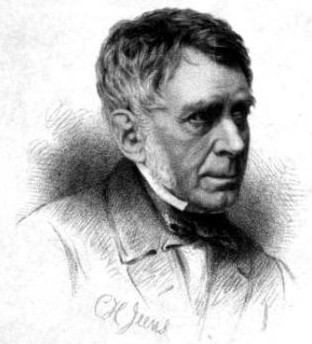
Figure 1. Portrait of Airy by Charles Henry Jeens, 1878. Source: Wikimedia Commons. Public domain, the artist having died in 1879. Rights statement. Unmodified.


From mathematician to Astronomer Royal#
Airy was born in Alnwick, north-east England, on July 27, 1801. His father, William, worked for the government, and his mother was Ann Biddell. As well as attending school, Airy spent much of his time on the farm of his maternal uncle Arthur. With his uncle’s support he entered Trinity College, Cambridge, in 1819. He placed first in the mathematics examinations in 1823 and was elected a Fellow in 1824.2
He became Lucasian Professor of Mathematics in 1826 and professor of astronomy in 1828, taking charge of the Cambridge Observatory. In 1835 he succeeded John Pond as Astronomer Royal and developed the organisation of observations, calculations, instrument renewal and publication. Producing star catalogues for navigation required telescopes as well as regular checks of clock rate and an organisation to manage the calculations.1 2
Pendulums and escapements#
Delivering impulse with little disturbance#
A pendulum clock uses oscillations governed by gravity as its measure of time. Air resistance and bearing friction reduce the amplitude, so the escapement must replenish the energy from the train. The timing of the impulse and friction can also affect the period. In a paper read in 1826 and published in 1830, Airy analysed how small external forces affect the period of pendulums and balances.3
Under the approximation of a small perturbation, Airy argued that a force when the pendulum crosses its lowest point, or forces acting symmetrically on either side of that point, have no first-order effect on the period. In practice, the size and duration of the impulse, friction, temperature, air pressure and errors of manufacture and adjustment still matter. At the end of the paper he proposed an escapement resembling that of a chronometer, leaving the pendulum nearly free for most of its swing.3
Dent 587, dating to around 1842, has a deadbeat escapement with a remontoire devised by Airy. The remontoire periodically replenishes a small store of energy from the train to even out the force supplied to the escapement. The clock was planned for Pulkovo Observatory, but the museum says it apparently never went to Russia.7
Dent 1906 and compensation for air pressure#
The observatory needed a sidereal standard clock for observing star positions. E. Dent & Co. made Dent 1906 under Airy’s direction. It was installed in 1871 and began serving as the sidereal standard in August. Airy’s detached escapement gives the pendulum one impulse per complete oscillation. The escape wheel and seconds hand advance every two seconds.4 5
Environmental effects became apparent in a clock this precise. According to Royal Museums Greenwich, a rise of one inch of mercury in air pressure caused it to lose about 0.3 seconds per day. In 1873 Airy proposed compensation and developed it with Thomas Buckney of Dent. Changes indicated by a mercury barometer moved a magnet, varying the force on magnets at the pendulum to counter the change in rate. A pendulum combining steel and zinc compensated for temperature. The compensation was designed for the clock’s observed behaviour, leaving other sources of environmental error.4 5
Dent 1906 remained the sidereal standard until 1922 and is now preserved in the museum. It brought the maker’s workmanship together with Airy’s escapement, compensation and operating arrangements.4
From observing stars to public time#
Observations, reference clocks and signals#
At the observatory, observers measure when a star crosses the meridian. Comparing the known star position and transit with the clock reading reveals how far the clock is fast or slow. The clock keeps time between observations. Observations and records of its rate provide corrections to its readings. The transit instruments introduced in Airy’s time were central to this system.6
As railways expanded, using different local times became inconvenient. Airy’s autobiography says he prepared an agreement for a telegraph connection with the South Eastern Railway in 1851 and saw Shepherd’s synchronised clocks at that year’s Great Exhibition. The observatory was connected to the telegraph network in 1852. According to the Royal Astronomical Society’s obituary, the observatory clock sent hourly signals to a telegraph centre in London for use in setting railway and public clocks.1 2
Shepherd clocks and the time ball#
Airy recalls installing eight synchronised clocks at the observatory, including one with a large dial outside the gate. Shepherd was named on the equipment as the maker and patentee. After an objection from Bain, who had also worked on electric clocks, the notice was removed temporarily and restored in 1853. Airy’s account describes how this happened and does not settle the legal patent dispute.1
Greenwich’s existing time ball had been installed in 1833 under Airy’s predecessor. Ships in port could compare their chronometers at the instant the ball fell from its raised position. According to Royal Museums Greenwich, in 1852 Airy automated the ball’s release using an electrical signal from the Shepherd master clock.6
A telegraph-controlled time ball was also considered for Deal, on the English Channel. Airy credits the idea to a letter from Commander Baldock and says he surveyed the area and proposed a different site in 1852. An 1856 report records that the electric clock at the Lombard Street post office in London was connected to the observatory and set every day at noon. Distributing time at a distance depended on astronomical observations, a reference clock, wiring and a clock at the receiving end.1
The Great Clock and later work#
Airy also worked on the Palace of Westminster’s Great Clock project, emphasising precision. He was involved in judging the competition from 1846 and required the hour strike to be accurate to within one second. In his autobiography he says Edmund Beckett Denison joined him in 1851, disagreements arose the next year and he resigned in 1853.1 Edward John Dent took the commission in 1852. Frederick Dent took over after his death, and the clock began running in 1859.8 9 The Great Clock was a joint undertaking by designers, clockmakers and those working on the building.1
Airy also worked on celestial positions, optics, magnetism, geodesy and tides, organising extensive observation and calculation. He retired as Astronomer Royal in 1881 and died on January 2, 1892. Standard clocks and telegraphic time signals continued to improve after his tenure, with new instruments taking over the work of determining and distributing time.2 4
Timeline#
| Year | Event |
|---|---|
| 1801 | Born in Alnwick.2 |
| 1819–1824 | Enters Cambridge, places first in mathematics and becomes a Fellow of Trinity.2 |
| 1826–1830 | Reads and publishes his paper on pendulums and escapements and takes charge of Cambridge Observatory.2 3 |
| 1835 | Becomes Astronomer Royal.2 |
| 1851–1852 | Investigates Shepherd’s clocks and develops railway telegraph connections and synchronised clocks.1 |
| 1856 | Reports that the post office clock is set from the observatory at noon.1 |
| 1871 | Dent 1906 begins service as the sidereal standard.5 |
| 1873 | Barometric compensation is added to Dent 1906.4 5 |
| 1881–1892 | Airy retires and dies in 1892.2 |
| 1922 | Dent 1906 is replaced as sidereal standard.4 |
References#
Accessed November 6, 2026.
George Biddell Airy, edited by Wilfrid Airy, Autobiography of Sir George Biddell Airy, 1896, entries for 1851, 1852, 1853 and 1856.
H. H. T., Royal Astronomical Society, Obituary of George Biddell Airy, 1892, reproduced by MacTutor.
George Biddell Airy, “On the Disturbances of Pendulums and Balances, and on the Theory of Escapements”, Transactions of the Cambridge Philosophical Society, vol. 3, 1830, transcription of pp. 105–128.
Royal Museums Greenwich, Collection record for astronomical regulator Dent 1906.
Royal Observatory Greenwich, Astronomical Regulator: Dent 1906. Includes transcriptions from Greenwich Observations for 1871 and other sources.
Royal Museums Greenwich, Astronomer Royal George Biddell Airy and his many measuring devices.
Royal Museums Greenwich, Collection record for Dent 587.
UK Parliament, Constructing the most accurate clock in the world.
UK Parliament, Big Ben’s Great Clock celebrates its 160th birthday, 2019.