This article was translated from Japanese using AI. Read the Japanese original
Jean-Léon Reutter (1899–1971) was an engineer and inventor from Neuchâtel, Switzerland. He devised the Atmos, a clock that winds itself through changes in room temperature, and brought an early model to market with a radiology equipment company near Paris. He later worked with the technical teams at Jaeger and LeCoultre on a new version powered by an expanding capsule containing liquefied gas. 1 2 3
From Neuchâtel to Paris#
Reutter was born on 1 August 1899. According to Jean Lebet, who researched family and company records, Reutter recalled noticing the thermal expansion of liquids in 1913 while attending school in Neuchâtel, after which he built several models. He studied mechanical engineering at the Swiss Federal Institute of Technology in Zurich from 1917 to 1921, then attended the École supérieure d’électricité in Paris from 1922 to 1923. From 1923 to 1926 he worked on telephony and high-frequency telephony for Marius Latour and Thomson-Houston. 1 2
Among the contemporary devices discussed by Lebet is a mechanism by Karl Heinrich Meier that used the expansion of glycerine to wind a low-power torsion-pendulum clock. To use changes in room temperature to power a mechanical clock, a small displacement had to become one-way rotation for winding, while the regulating mechanism had to consume very little energy. Reutter’s early design addressed these two challenges with a pawl and ratchet paired with a torsion pendulum. 2 4
Atmos 0 and the mercury Atmos I#
British patent GB280536A, with a priority date of 15 November 1926, describes a bellows that responds to changes in temperature or air pressure and transfers its movement to a winding shaft through a lever and pawl. In the illustrated mechanism, a valve opens at the end of the stroke to equalize the pressure difference. A prototype that began running in September 1927 used the pressure difference between the air inside a sealed glass dome and two aneroid capsules connected to the outside air. Lebet says that this prototype, later known as Atmos 0, existed in two examples and was reported in the press in the first half of 1928. 2 4
In October 1927, Reutter joined the Compagnie générale de radiologie (CGR) in Courbevoie as an engineer in radiological equipment. According to Lebet, H. Pilon at the company took an interest in the clock, and contract negotiations began in March 1928. A specialist manufacturing and sales department was established in June 1929, and production of the mercury-powered Atmos I proceeded from 1930. 2 3
The mercury mechanism is shown in figures 1–5 of US patent US1885479A, which records a French filing dated 28 November 1928. The two arms of a U-shaped tube contain liquefied gas and its saturated vapour above the mercury. One arm responds quickly to room temperature; the other exchanges heat with a high-thermal-mass object inside an insulated vessel. As room temperature rises, vapour pressure increases first on the side exposed to the room and pushes mercury into the other arm. The shifted centre of gravity tilts the assembly around its axis, and a pawl advances the winding ratchet. When the room cools, the mercury moves back and the assembly returns. 5
An example dated circa 1932, inventory no. IV-36, held by the Musée international d’horlogerie in La Chaux-de-Fonds, canton of Neuchâtel, combines this rotary thermal engine with a clock movement made in Cluses, France. It has a torsion pendulum suspended by an Elinvar wire and an anchor escapement; the pendulum swings in the opposite direction every 30 seconds. The museum says that from 1933 the clock transitioned to movements developed in Le Sentier. Traces of its retail history also remain on the dial. An Atmos I (no. 6356) bearing the name of the Paris retailer Kirby, Beard & Co. survives, and Lebet’s book reproduces an advertisement from the same shop. 2 3 6
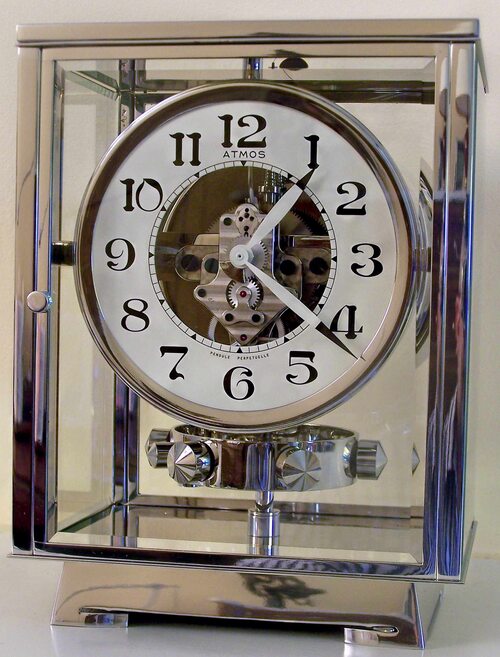
Figure 1. Reutter Atmos RA2, no. 5042. Photograph by AtmosReutter. Source: Wikimedia Commons, Atmos5042.jpg. Licence: CC BY-SA 3.0. Changes: resized and recompressed as JPEG, no cropping.

Development with Jaeger and LeCoultre#
On 27 July 1935, CGR agreed to transfer its contract with Reutter to Établissements Ed. Jaeger in Levallois, near Paris. Lebet says Reutter signed a contract with Jaeger that October, and a new agreement in December added the new Atmos model. At LeCoultre in Le Sentier, preparations for production moved forward under Jacques-David LeCoultre. The 1935 transfer of the contract, the handover of production and sales from 1936 recorded by the Musée international d’horlogerie, and the later manufacture of Atmos II represent different stages of this transition. 2 3 7
Reutter and Jaeger’s design department developed the new mechanism, while LeCoultre drew on the movement architecture it had supplied for the earlier model. The Swiss patent CH199527A, corresponding to the French filing of 22 May 1936, describes how temperature changes the pressure of a fluid in a sealed chamber, moving the end of a bellows. The bellows and spring reciprocate to drive the winding mechanism. According to Lebet, the production Atmos II used chloroethane in this chamber. The design shifted from moving mercury to tilt the entire mechanism to drawing motion from the bellows. 2 7 10
Making the case and sealed components also took time. Manufacturing records cited by Lebet show that the first 25 test pieces reached Reutter in Paris on 28 March 1938. In March 1939, a membrane that lost its seal after a few months became a problem, and full production began toward the end of the first half of 1939. The manufacturer’s timeline dates Atmos II to 1938, while the production records show the interval between testing and full production. 2 8
A different application in portable timepieces#
US2254858A, granted on 2 September 1941 and citing a French filing of 6 April 1937, names Établissements Ed. Jaeger as the assignee of inventor Reutter’s rights. The design feeds vapour from a stored liquid through a valve into a cylinder to move a piston. In the arrangement shown in figure 1, the valve opens again when the mainspring unwinds, allowing vapour pressure to wind it further. The pocket-watch proposal in figures 3 and 4 uses the space inside the case around the movement as a reservoir for the liquid and also suggests a refill port. This mechanism receives energy differently from the mantel clock, which winds in response to changes in room temperature. 9
Reutter died in 1971. The Atmos carried forward the combination of a mechanism that converts changes in ambient temperature into mechanical winding and a low-consumption torsion pendulum. Jaeger-LeCoultre’s current product history traces the lineage of models using this principle from Atmos 0 through Atmos II to the 561 by Marc Newson, introduced in 2008. 1 8
Timeline#
| Date | Event |
|---|---|
| August 1899 | Born in Neuchâtel. 1 2 |
| 1913 | By his recollection, began experimenting with a clock powered by the thermal expansion of liquids. 2 |
| 1917–1923 | Studied mechanical engineering in Zurich, followed by electrical engineering in Paris. 2 |
| November 1926 | Priority date recorded for the British patent on the bellows winding mechanism. 4 |
| September–October 1927 | Atmos 0 prototype began running; Reutter joined CGR the following month. 2 |
| November 1928 | Filed the mercury-powered mechanism in France. 2 5 |
| June 1929–1930 | CGR established a specialist department and moved into production of Atmos I. 2 3 |
| 1933 | LeCoultre began supplying movements. 2 3 |
| July–December 1935 | Contract transferred from CGR to Jaeger, followed by a new agreement. 2 7 |
| May 1936 | Filed the French patent for the new thermal engine. 2 10 |
| April 1937 | Filed in France for a vapour-powered mechanism also applicable to portable timepieces. 9 |
| March 1938–first half of 1939 | First 25 Atmos II test pieces arrived in Paris; full production began the following year. 2 8 |
| September 1941 | US patent granted for the vapour-powered mechanism. 9 |
| 1971 | Died. 1 |
| 2008 | Atmos Newson 561 introduced. 8 |
References#
- Science Museum Group, Jean-Léon Reutter (accessed 27 November 2026).
2. Jean Lebet, Living on Air: History of the Atmos Clock, Jaeger-LeCoultre, 1997, pp. 18–49 (accessed 27 November 2026).
3. Musée international d’horlogerie, Pendule « Atmos », collection description (accessed 27 November 2026).
4. Jean Léon Reutter, GB280536A, published 22 March 1928, specification summary (accessed 27 November 2026).
5. Jean Léon Reutter, US1885479A, 1 November 1932, figures 1–5 and specification (accessed 27 November 2026).
6. de Baecque & Associés, Atmos, distributed by Kirby Beard, p. 118, lot 773, clock no. 6356 (accessed 27 November 2026).
7. Amelia Aranda Huete, Colección Banco de España, Reloj de sobremesa, collection description (accessed 27 November 2026).
8. Jaeger-LeCoultre, The History of Atmos Luxury Clocks, manufacturer timeline (accessed 27 November 2026).
9. Jean Léon Reutter, US2254858A, 2 September 1941, figures 1–4 and specification (accessed 27 November 2026).
10. Jean-Léon Reutter, CH199527A, published 31 August 1938, figs. 1–2 and specification (accessed 27 November 2026).