This article was translated from Japanese using AI. Read the Japanese original
Johan Roussel, born in 1633, was a clockmaker active in seventeenth-century The Hague. In 1657 he appeared as a witness on the same notarial document as John Fromanteel, a clockmaker who had come from London. The next year he and his brother supported testimony from Rotterdam clockmakers in a dispute over a pendulum clock patent. A notarial deed from 1664 records the terms under which Roussel, as a master, undertook to teach an apprentice clockmaking and maintain him for eight years. 1 2 3
Born in The Hague, trained in London#
According to Victor Kersing, who researches the history of clockmaking in The Hague, Roussel was born there in 1633. His father, Cornelis Roussel, also written Russell, was a clockmaker born in London in 1608. His mother, Cornelia de Vries, was the daughter of the headmaster of the Latin school in The Hague. Johan was their eldest son, and Kersing suggests that his father may have been his first teacher. His younger brother Adriaen, born in 1638, also became a clockmaker and helped found the clockmakers’ guild in The Hague in 1688. 1
A small oval timepiece gives an idea of the father’s work. The Dutch horological historian Nanne Ottema lists a small oval watch under Cornelis’s name and notes that it was shown at a 1921 exhibition at the Musée Galliera in Paris. 4
Johan was in London from 1655 to 1657. The horological historian R. Plomp writes that he trained under a London clockmaker during this time. Kersing suggests Ahasuerus Fromanteel as a possible master. 1 5
Two clockmakers sign the same document#
On 3 September 1657, Ahasuerus’s son John Fromanteel entered into a clockmaking contract with Salomon Coster in The Hague. Under the contract, he was to make clocks of the kind already produced in Coster’s shop there until 1 May the following year. His payment per clock depended on whether he provided his own materials. On 13 October John and Roussel both witnessed a different notarial deed, now held in the notarial archives of The Hague City Archives. 1 5 6
Plomp names Roussel as one possible route through which word of the new pendulum clock reached the Fromanteel family in London. In October the following year, 1658, Ahasuerus advertised clocks with a new regulator in the London newspaper Mercurius Politicus. Roussel’s time in London, the two signatures in The Hague and the London advertisement document a period when clockmakers’ work extended across the Channel. 1 5 7
How the clockmakers compared two designs in 1658#
Coster obtained a patent in 1657 for the pendulum clock devised by Christiaan Huygens. The following year Simon Douw, Rotterdam’s city clockmaker, obtained a patent for a different clock. The dispute before the Court of Holland was whether the mechanisms that regulated the two clocks worked on the same principle. 3 8 9
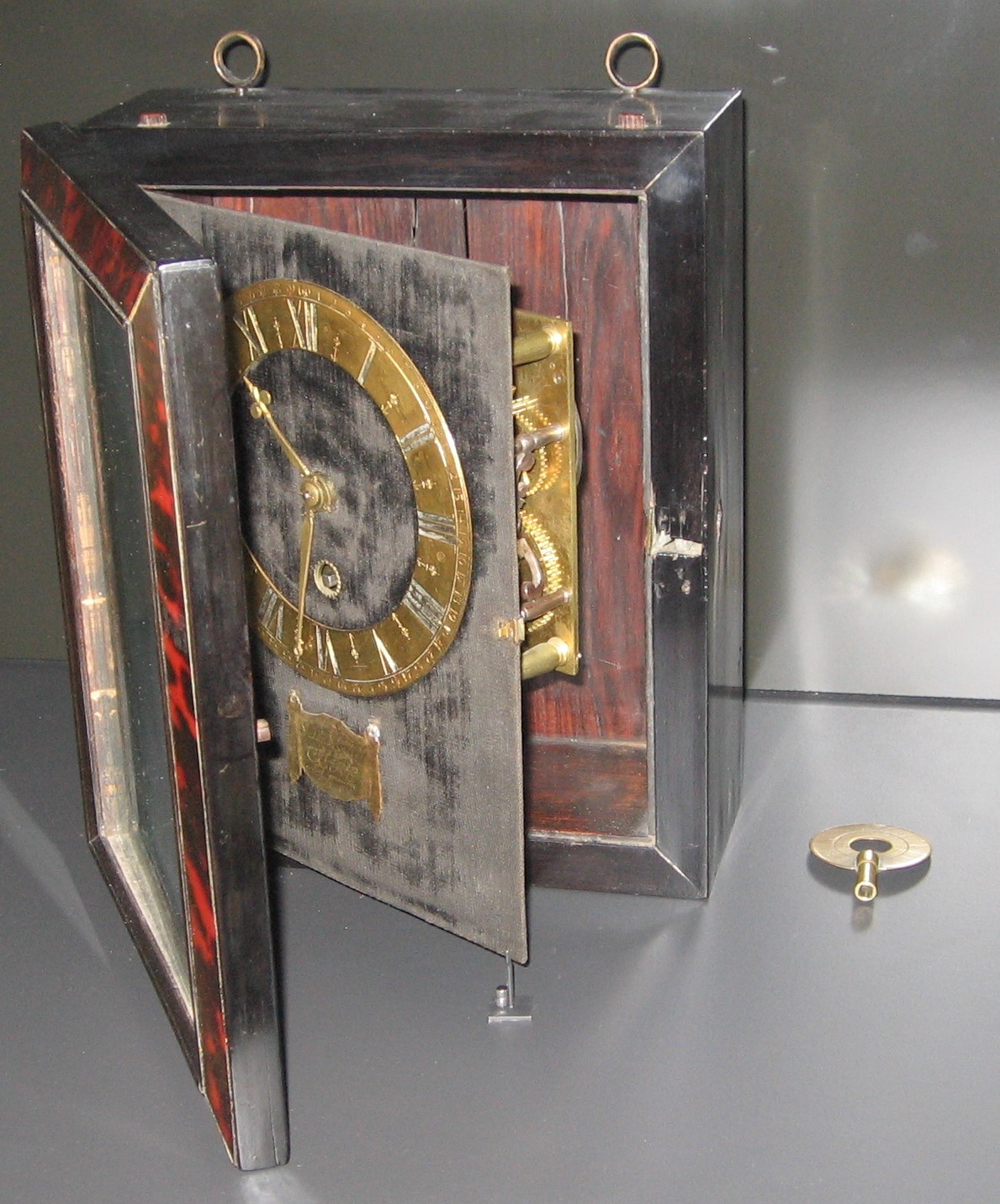
Figure 1. Clock signed by Coster and based on Huygens’s design. Photographed at the Rijksmuseum in Amsterdam by Hansmuller on 30 January 2015. Wikimedia Commons file description, CC BY-SA 4.0. Unmodified.

On 9 October, at Douw’s request, the Rotterdam clockmakers Benjamin Lisle and Johannes van der Thoorn appeared before a notary. Along with the part that regulated the clock’s rate, they compared how the wheels moved during winding. They said, for example, that in Douw’s turret clock design a wheel kept advancing during winding, while the corresponding wheel in Coster’s clock at Scheveningen moved backwards. In the clocks for indoor use, the wheel kept advancing during winding in both cases, but by different means. On 10 October, the Hague clockmakers Johannes and Adrianus Roussel endorsed the testimony. 3 9
The transcription published in 1884 dates the demonstration in the same notarial record to 10 October. It also describes a difference in how the regulator was supported. Huygens’s arrangement used a pendulum suspended from above, kept swinging by a fork on the clock that transmitted power to it. Douw fixed a regulator to a shaft and placed weights above and below the pivot. The position of the smaller upper weight could be changed with a screw to adjust the rate. Both regulators governed the speed of the wheels. To explain how the inventions differed, the clockmakers compared the regulator supports and the paths of power. On 9 December that year, Huygens, Coster and Douw agreed to share the proceeds from both inventions equally if Douw obtained authorisation to exercise his patent in the province. 3 8 10
Eight years as a master to an apprentice#
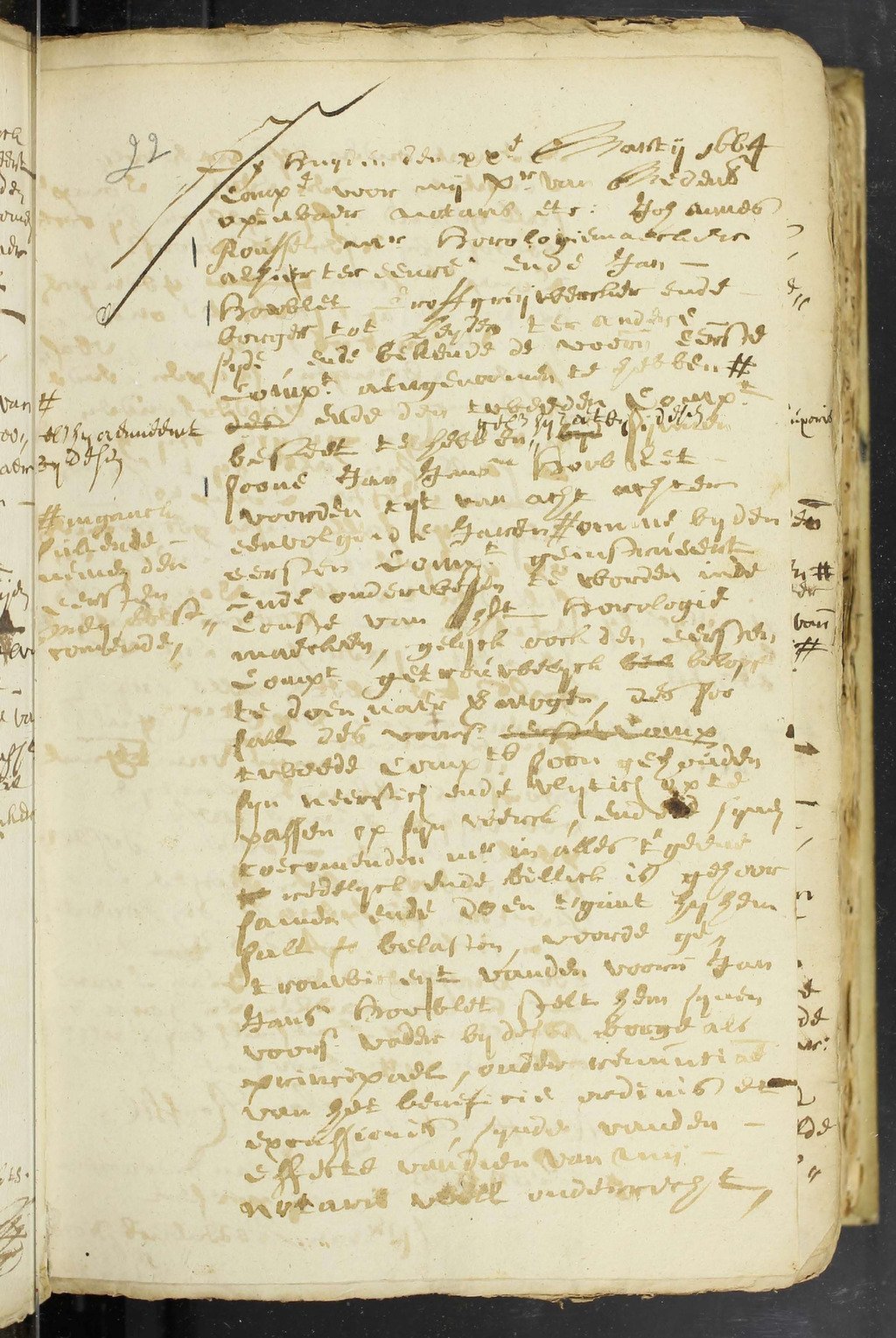
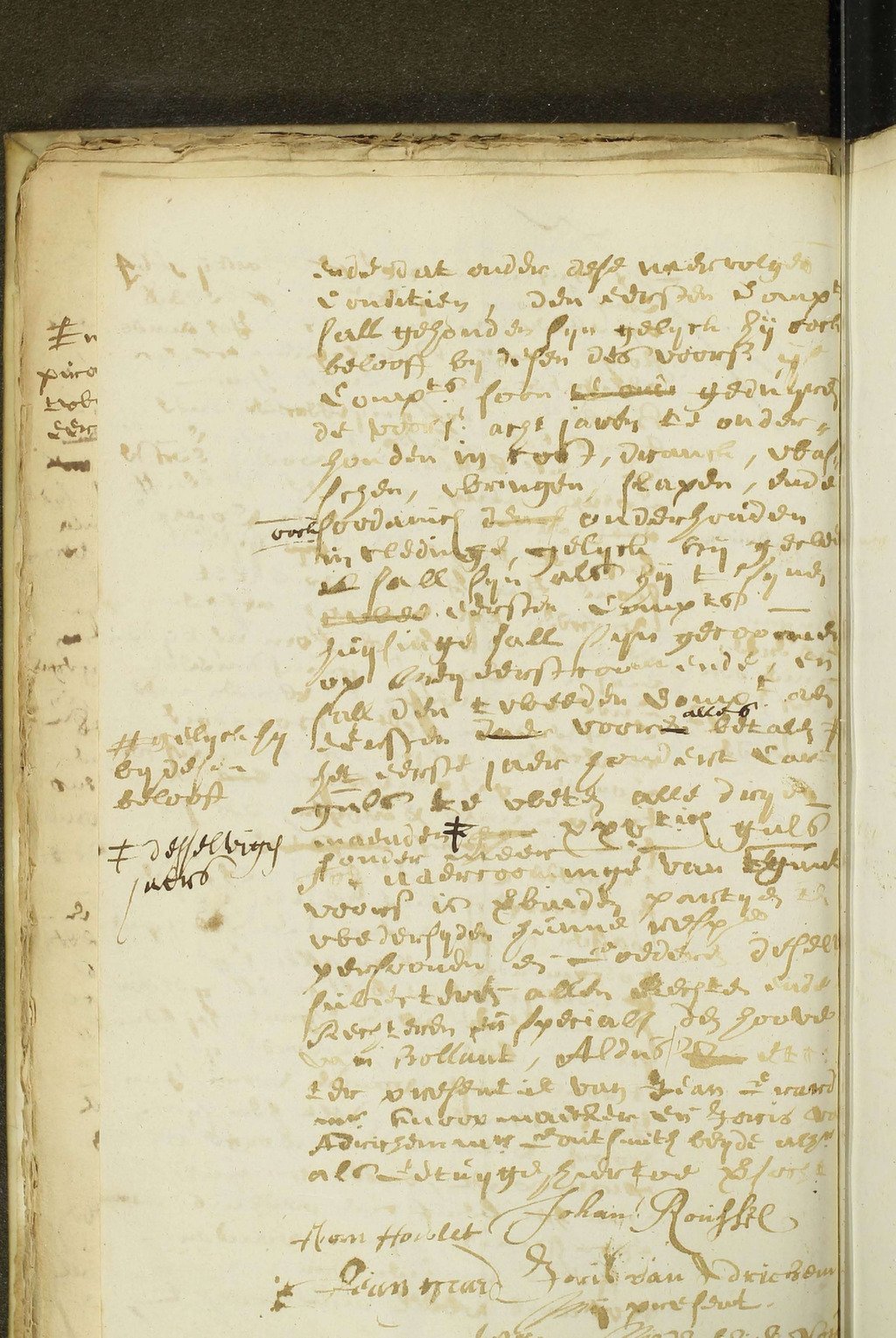
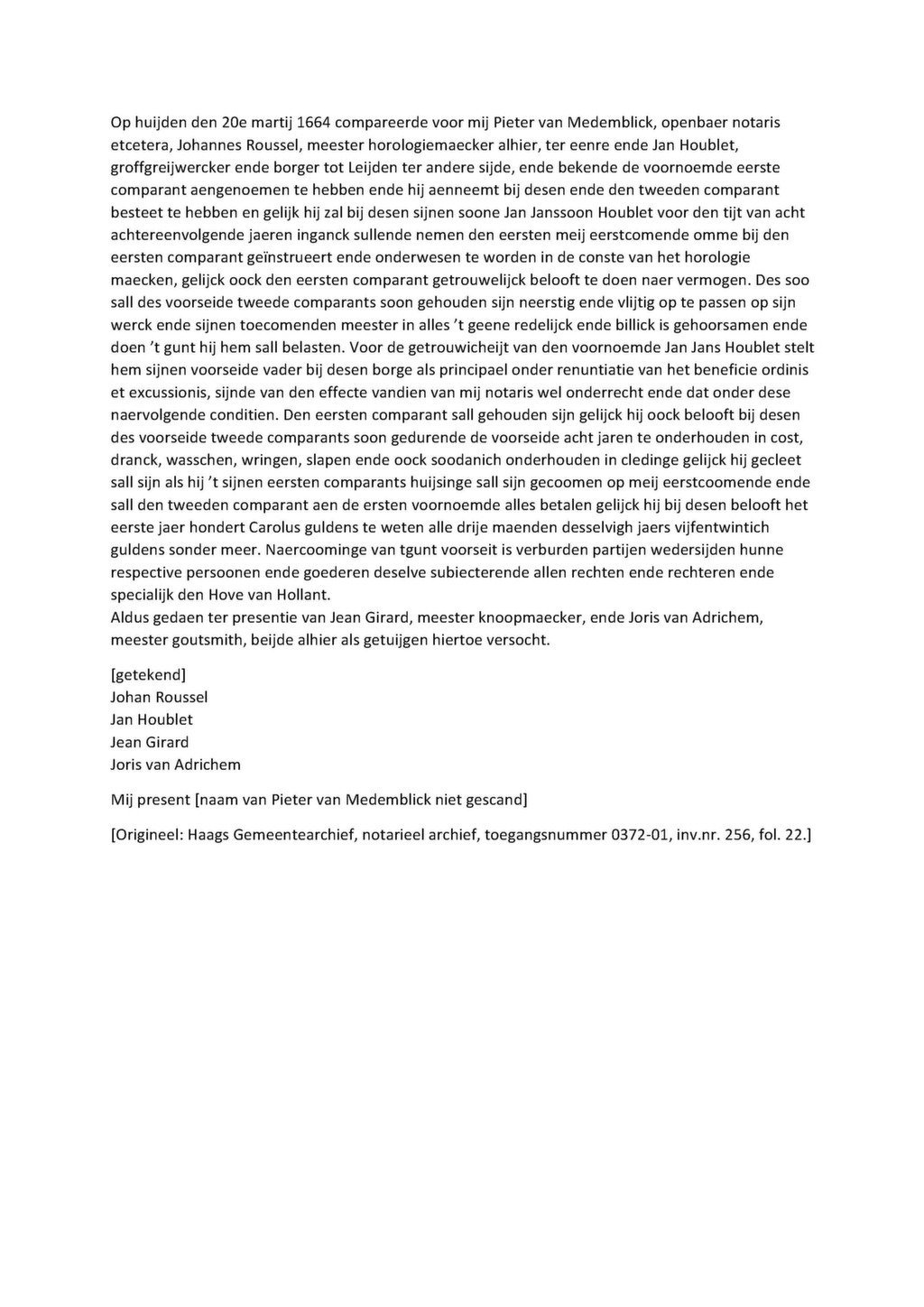
On 20 March 1664, Johan entered into a contract with Jan Houblet, a textile worker from Leiden, before the Hague notary Pieter van Medemblick. The document identifies Johan as a master clockmaker in The Hague. His apprentice was Houblet’s son, Jan Janszoon Houblet, whom he agreed to teach clockmaking for eight successive years from 1 May. The end of the original deed bears Johan’s signature and those of Houblet’s father and two witnesses. The witnesses were master buttonmaker Jean Girard and master goldsmith Joris van Adrichem. 2
The apprentice was to live with his master, work diligently at his usual duties and follow reasonable instructions. His father guaranteed his conduct. In addition to teaching clockmaking, Roussel undertook to provide food, drink, laundry and a bed for eight years, and to keep the apprentice as well clothed as when he entered service. The father was to pay 100 Carolus guilders in the first year, in instalments of 25 every three months. 2
The contract set out both the time required to learn the work and the living arrangements that would let the apprentice continue. Payment was concentrated in the first year, while the master’s duty to support the apprentice ran for eight. A few years after testifying about technical differences in the pendulum clock dispute, Roussel took responsibility for training another clockmaker. 2 3
Timeline#
| Date | Event |
|---|---|
| 1608 | Johan’s father Cornelis is born in London. 1 |
| 1633 | Johan is born in The Hague. 1 |
| 1638 | His younger brother Adriaen is born. 1 |
| 1655–1657 | Johan stays in London. 1 5 |
| 13 October 1657 | Johan and John Fromanteel witness a notarial deed in The Hague. 1 5 |
| 10 October 1658 | Johan and his brother endorse the testimony of two Rotterdam clockmakers in the patent dispute. 3 9 |
| 20 March 1664 | Johan enters into an apprenticeship contract with Houblet’s father. The apprenticeship is to begin on 1 May. 2 |
| 1688 | Adriaen helps found the clockmakers’ guild in The Hague. 1 |
| 1884 | Servaas van Rooijen transcribes the notarial records in the patent dispute and describes the brothers’ testimony. 3 |
| 2005 | Plomp discusses early pendulum clocks and refers to Johan’s travel between The Hague and London. 5 |
| November 2026 | Images of two sides of the apprenticeship contract and a transcription are available through the foundation. 2 |
References#
- Victor Kersing / Stichting Haegsche Tijd, “Haagse Klokkenmakers van de 16 de tot en met de 18 de eeuw”, G, “Contract tussen Johan Roussel en Jan Janszoon Houblet”. The 1657 notarial deed is at Haags Gemeentearchief, 0372-01, inv. 183, fol. 309. Commentary. Accessed 20 November 2026.
2. Apprenticeship contract between Johannes Roussel and Jan Houblet, notarised by Pieter van Medemblick, 20 March 1664. Haags Gemeentearchief, Notarieel archief, 0372-01, inv. 256, fol. 22. Recto, verso, transcription. Accessed 20 November 2026.
3. A. J. Servaas van Rooijen, “Een mededinger van Christiaan Huygens”, Album der Natuur, 1884, pp. 25–31. Transcription of the statements and demonstration of October 1658. Open PDF. Accessed 20 November 2026.
4. Nanne Ottema, Geschiedenis van de uurwerkmakerskunst in Friesland, 1981 edition, p. 101, entry for Roussel. PDF published by Ottema-Kingma Stichting. Accessed 20 November 2026.
5. R. Plomp, “De eerste Nederlandse en Franse slingerklokken, 1657–1662”, Deel 1, Tijdschrift 05/4, Federatie Klokkenvrienden, December 2005, pp. 3–13, especially p. 4. Accessed 20 November 2026.
6. Christiaan Huygens, Oeuvres complètes, tome XVII, 1932, Appendice à « L’horloge à pendule de 1657 », pp. 21–23. Transcription of Coster and Fromanteel’s notarial contract. Text at DBNL. Accessed 20 November 2026.
7. Clare Vincent, Jan Hendrik Leopold with Elizabeth Sullivan, European Clocks and Watches in The Metropolitan Museum of Art, 2015, p. 86, no. 17, “Hooded Wall Clock with Calendar” (1974.28.93). Museum PDF. Accessed 20 November 2026.
8. Christiaan Huygens, Oeuvres complètes, tome XVII, 1932, Appendice V à l’« Horologium ». Technical history of Douw’s device and relevant documents. Text at DBNL. Accessed 20 November 2026.
9. Victor Kersing and Rob Memel, “Salomon Coster, de Haagse periode”, second part, Tijdschrift 1/2015, pp. 28–31, especially p. 30. PDF published by the author. Accessed 20 November 2026.
10. Court of Holland, record of the agreement of 9 December 1658. Transcribed in Christiaan Huygens, Oeuvres complètes, tome II, 1889, p. 290, no. 556. Text at DBNL. Accessed 20 November 2026.