John Ellicott#
This article was translated from Japanese using AI. Read the Japanese original
John Ellicott (1702/3 or about 1706–1772) was a London clockmaker who became a Fellow of the Royal Society in 1738. As temperatures rise, a metal pendulum rod expands and the clock runs slower. Ellicott used the difference between the expansion of iron and brass to devise two compensating methods that changed how the pendulum was supported or raised its bob. A clock with one of these systems crossed the Atlantic and was used at Harvard to observe the 1769 transit of Venus. 1 2 3 4
A London workshop and the Royal Society#
His father, also named John (1674–1733), was a clockmaker. In a public excerpt from David Thompson’s Oxford Dictionary of National Biography entry, the elder John was apprenticed to John Waters in 1687 and qualified to trade with the Clockmakers’ Company of London in 1696. His shop was at Austin Friars and had moved by 1728 to Swithin’s Alley, near the Royal Exchange. Thompson gives the younger man’s birth as 1702/3, while the Royal Society’s biographical index gives about 1706. According to Thompson, the younger Ellicott was registered as an apprentice to Richard Ward of the Clothworkers’ Company and qualified with that company in 1726. 1 2
After his father’s death, John took over the workshop in Swithin’s Alley. By 1731 he had published a pamphlet on using the equation-of-time tables to set a clock to the Sun, and describing a timekeeper for astronomical and other uses. His Royal Society nomination, dated 26 October 1738, describes him as a London clockmaker skilled in mechanics, astronomy and experimental philosophy, and adept at devising and improving instruments. His nominators included Hans Sloane, John Machin and Martin Folkes. 1 2 5 6
Experiments and improvements to instruments beyond clockmaking were also shared through the Society. In 1745 Ellicott reported to Folkes on the specific gravity of diamond; in 1752 he received a letter from John Smeaton describing an improvement to the air pump. The following year Ellicott supported Smeaton’s election to the Royal Society. His workshop experience handling instruments brought him into contact with people engaged in measurement and experiment. 7 8
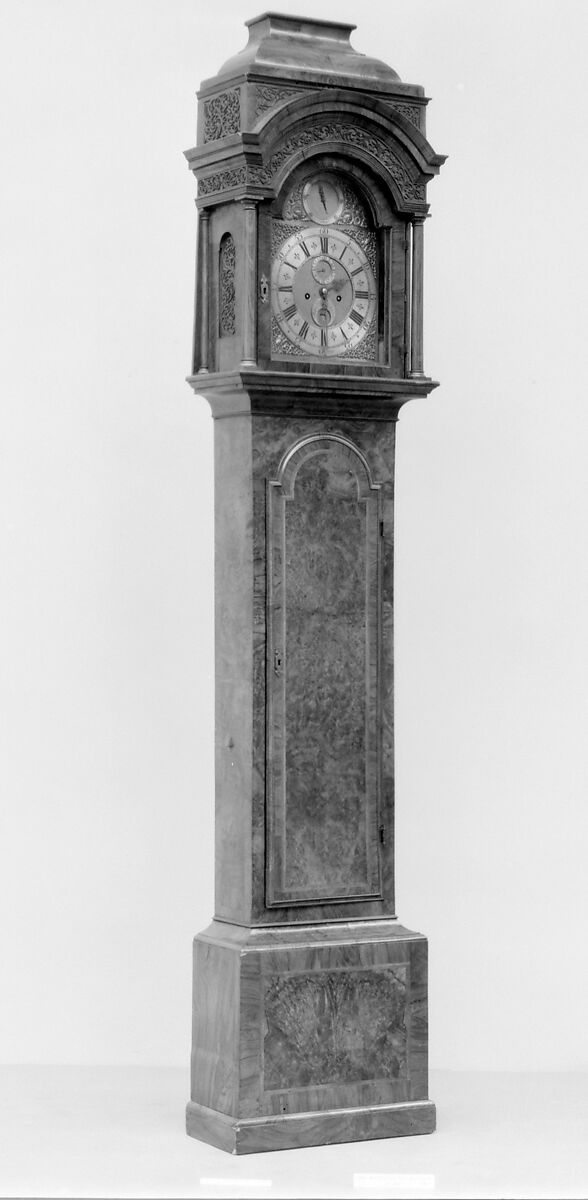
Figure 1. London longcase clock, 1730–40. Clockmaking by John Ellicott. Walnut, 254.6 cm high. Metropolitan Museum of Art, 26.260.29, bequest of Annie C. Kane (1926). Image courtesy of the Metropolitan Museum of Art. CC0 1.0. Unaltered. 9
An experiment with two clocks side by side#
Ellicott placed two precision clocks in separate cases, side by side, with their pendulums about 2 feet apart when at rest. When both were running, the amplitude of one decreased while that of the other increased, and the first clock stopped within two hours. In a subsequent account he tried arrangements in which the cases touched the same rail, and in which a piece of wood connected the two cases. With the wooden connection in place, starting one clock caused the other to begin moving in less than six minutes. When he made the same connection on the stone paving of the Royal Exchange, the second clock took 15 minutes to start. 10
Ellicott thought the pendulum’s swing shifted the load on the case feet from side to side, transmitting slight motion through the rail or wooden piece to the neighboring case. By changing the arrangement, he showed how the cases’ supports and contact with each other affected the clocks’ behavior, even though each pendulum stood inside what appeared to be a sturdy box. 10
Keeping the period steady as temperature changes#
For small swings, the period of a simple pendulum is proportional to the square root of its length. If the rod expands as it warms, the period becomes longer, all else being equal. Ellicott sought to counter the resulting increase in effective pendulum length by using the difference in thermal expansion between iron and brass. He presented the work to the Royal Society on 4 June 1752; it was printed in 1753. The paper appeared in volume 47 of Philosophical Transactions, whose volume years are 1751–52. 3 5 11
In the first method described in the paper, iron and brass rods are joined at their upper ends, and the brass rod bears on the short arms of two levers attached to the lower end of the iron rod. As the assembly heats, the brass expands more than the iron. Their relative movement lowers the short arms, while the long arms raise the pendulum bob. The screw holes in the brass rod are elongated so the brass can expand and contract beneath the screw heads. Turning the screws on the bob side, where they touch the levers, adjusts the levers’ effective arm length and the amount of compensation. 3 11
The second method is a compensating mechanism mounted on the clock’s backplate that raises an ordinary pendulum. Iron and brass rods are joined at the bottom; at its upper end, the brass rod pushes a lever connected to the spring from which the pendulum hangs. As the brass rod expands more than the iron when heated, the spring rises through a narrow gap in a fixed part, shortening the effective length from the bottom of the gap to the centre of oscillation. The same principle appears in a surviving example formerly owned by Richard Howe and described as a portable regulator. 3 6
In early 1750 Ellicott sent Nathaniel Bliss in Oxford a clock that raised and lowered its bob by means of a lever. In Bliss’s reply, printed in the paper, he praised the compensation after about two years of trial as comparable to mercury or gridiron pendulums and noted that the lever was easy to adjust. Russ and Hart reported in 2024 that, in a surviving example of a related design they restored, a brass tube and steel rod took different amounts of time to reach the same temperature; during a rapid rise in room temperature, compensation became excessive. The mechanism responds differently when parts with different heat capacities warm uniformly and immediately after heating is turned on. 3 11
These methods addressed the same problem as George Graham’s mercury pendulum and John Harrison’s gridiron pendulum. The former uses the rise of a column of mercury; the latter combines dissimilar metal rods that expand in opposite directions. Ellicott wrote that he had communicated his idea to Machin in 1738. In the same volume, James Short cited John Shelton’s testimony that Graham had made a pendulum using dissimilar metals and levers in 1737. 3 11 12
Ellicott also sought to apply thermal compensation to portable watches. By his own account, he made a model in 1748 and, at a Royal Society Council meeting in 1752, showed a pocket watch fitted with the mechanism and a model demonstrating the effect of slight heating. Pendulum clocks and pocket watches use different regulating mechanisms, but both approaches moved another component in response to temperature change to limit changes in rate. 3
What surviving examples reveal about use#
Regulators at Harvard and Bologna#
After Harvard Hall was destroyed by fire in 1764, an astronomical regulator by Ellicott was obtained to replace the lost clock. The university’s collection record says it was purchased in 1765 for £35 14s through Benjamin Franklin’s involvement. It has a compensated pendulum that raises and lowers the bob using steel and brass rods and levers. John Winthrop used it to observe the 1769 transit of Venus at Cambridge, Massachusetts. In 1780 Samuel Williams and others took it to Long Island in Penobscot Bay, Maine, to observe a total solar eclipse. 4 13
The Museo della Specola in Bologna also has a regulator attributed to Ellicott. Its silver dial shows minutes and seconds and displays the hours in Roman numerals through an arched aperture. A record dated 15 April 1787, cited by Italy’s cultural heritage catalogue, says it was installed in the meridian observation room, replacing Graham’s clock. An 1843 inventory describes two different kinds of metal rods and a compensating mechanism inside the bob. The catalogue establishes the installation date but does not identify the year of manufacture or purchase. 14
Portable watches and the continuation of the workshop#
The Clockmakers’ Company collection in Britain includes a gold pair-case pocket watch with a cylinder escapement and a diamond endstone. Both its backplate and dust cover are signed “Ellicott London 6027.” The outer case has hallmarks for 1767–68 and repoussé work depicting the Choice of Hercules by Henry Manley, a London case chaser. Records for both movement and case make this an example of a workshop watch brought together with decoration by a specialist craftsperson. 15
Ellicott is said to have become clockmaker to George III’s court by 1762, and he also supplied clocks to the court of Ferdinand VI of Spain. After his death in 1772, his son Edward took over the workshop. The same “Ellicott, London” signature appears on a silver pair-case watch with hallmarks for 1773. The case hallmarks and serial number, alongside the workshop signature, help date surviving objects. 6 16
Chronology#
| Date | Event |
|---|---|
| 1696 | John Ellicott’s father qualifies to trade with the Clockmakers’ Company. 1 |
| 1702/3 or about 1706 | John, the younger Ellicott, is born in London. The biographical entry and Royal Society index give different birth years. 1 2 |
| 1726 | The younger John qualifies to trade with the Clothworkers’ Company. 1 |
| 1731–33 | Publishes pamphlets on the equation of time and astronomical clocks. After his father’s death, takes over the Swithin’s Alley workshop. 1 5 6 |
| 1738–40 | Becomes a Fellow of the Royal Society and reports to it on the interaction of two pendulum clocks. 2 10 |
| 1748 | By his own account, makes a model for applying thermal compensation to a pocket watch. 3 |
| 1752–53 | Presents two methods for a temperature-compensated pendulum to the Royal Society; they are published the following year. 3 5 |
| By 1762 | Becomes clockmaker to George III’s court. 6 |
| 1765–69 | Harvard buys an astronomical regulator. It is used to observe the 1769 transit of Venus. 4 13 |
| 1772 | Dies; his son Edward takes over the workshop. 2 6 |
| 1780–87 | Harvard’s clock accompanies an eclipse expedition. A different Ellicott clock is installed in Bologna’s meridian observation room. 4 14 |
| 2024 | Russ and Hart publish restoration and measurements of a surviving pendulum related to Ellicott’s lever method. 11 |
| 2025 | Harvard’s clock is featured in an exhibition at the Concord Museum. 4 |
References#
All web sources were accessed on 25 November 2026.
- David Thompson, “Ellicott, John (1702/3–1772)”, Oxford Dictionary of National Biography, 2004, 2008 edition, public excerpt.
- The Royal Society Archives, John Ellicott’s certificate of candidature, EC/1738/09, 26 October 1738.
- John Ellicott, “A Description of Two Methods”, Philosophical Transactions, vol. 47, pp. 479–494, published 1753. Original volume.
- Harvard University, Collection of Historical Scientific Instruments, “Astronomical regulator”, collection record.
- History of Science Museum, Oxford, John Ellicott publications catalogue, Radcliffe Tracts 39 (5) and 40 (2), 1753 and 1731.
- Carter Marsh & Co., “Admiral Howe’s Ellicott Regulator”, The John C Taylor Collection, Part II, item 43, pp. 210–215.
- The Royal Society Archives, Letter from Ellicott to Martin Folkes on the specific gravity of diamond, L&P/1/411, 3 July 1745.
- The Royal Society Archives, Letter from John Smeaton to Ellicott on an improvement to the air pump, L&P/2/286, 16 April 1752. Smeaton’s fellowship record, NA6321.
- The Metropolitan Museum of Art, “Longcase clock”, 26.260.29, 1730–40. Image-use terms.
- John Ellicott, “An Account of the Influence Which Two Pendulum Clocks Were Observed to Have upon Each Other” and sequel, Philosophical Transactions, vol. 41, part 1, pp. 126–135, volume for 1739–40.
- G. Price Russ III and F. X. Hart, “An Ellicott(ish) Pendulum”, Watch & Clock Bulletin, vol. 66, no. 470, pp. 362–370, July–August 2024.
- James Short, Letter on the inventor of temperature compensation for pendulums, Philosophical Transactions, vol. 47, pp. 517–524, published 1753.
- History of Science Museum, Oxford, “Transits of Venus: Collection of Historical Scientific Instruments, Harvard University”, entry on the regulator.
- Italian Ministry of Culture, Catalogo generale dei Beni Culturali, “orologio regolatore”, 0800688051, Museo della Specola collection.
- Science Museum Group, “Gold repoussé watch depicting the Choice of Hercules, by John Ellicott”, L2015-3287, Clockmakers’ Company collection 328, case hallmarks for 1767–68.
- Science Museum Group, “Cylinder watch in silver pair case by Ellicott”, 1916-148, hallmarks for 1773.