This article was translated from Japanese using AI. Read the Japanese original
John Harrison (1693–1776) was an English carpenter and clockmaker who made the marine timekeepers now called H1 to H5. To solve the problem of longitude, he addressed temperature, friction, ship motion and variations in driving force individually, making machines that could keep time under conditions very different from those of a precision clock on land. H4 performed well at sea, leading to disclosure of its construction and a test of whether other craftspeople could reproduce it. His brother James, his son William, other watchmakers, astronomers and the sailors who carried out the voyages all contributed. 1 5 13
Life and career#
Woodworking and early pendulum clocks#
Harrison was born in Foulby, Yorkshire, and grew up in Barrow upon Humber, Lincolnshire. His father Henry was a carpenter, and the Nostell collection record describes his trade and the family’s move. Harrison brought his knowledge of materials from woodworking to clockmaking. The Royal Society’s award speech presented him as someone who had studied clocks on his own, outside the customary apprenticeship. Westminster Abbey records his baptism on 31 March 1693. That date is distinct from the date of his birth, also in 1693. 1 2 13 14
Early wooden clocks dated 1713, 1715 and 1717 are known. The signed 1717 clock at Nostell combines wooden wheels and frame, boxwood pinions, steel pivots and brass bearings. It uses an anchor escapement. Its wooden construction should be distinguished from the oil-free grasshopper design. The surviving movement and its later case also have separate histories. 2 3
Harrison tackled lubrication using the properties of wood in his turret clock at Brocklesby Park from the early 1720s. Paul Smith describes the mechanism in a specialist article whose introduction by Andrew King recounts his restoration work. The clock uses brass pivots in lignum vitae bearings and has an early form of grasshopper escapement. Changing the locations of friction and the combinations of materials avoided dependence on oil whose condition changed over time. The article treats conversion from an anchor escapement as tradition, separate in evidential status from the surviving construction. 3
Harrison made precision longcase clocks with his brother James around 1725–1728. They combined a later grasshopper escapement, gridiron pendulum and maintaining power during winding. Harrison himself claimed a rate within one second a month. King researched the technology through inspection and reconstruction. These land clocks form a separate group from the marine timekeepers, but having a reference clock with reduced friction and temperature effects also helped with marine trials. 1 3
The longitude problem and Harrison’s supporters#
Longitude at sea can be found by comparing local time with the time at a reference location. As the Earth turns once a day, an hour of time corresponds to 15° of longitude and four minutes to one degree. Keeping reference time for weeks aboard a ship was difficult. Motion, temperature changes, deterioration of oil and changing mainspring force could alter the rate. 9 10
The Longitude Act of 1714 offered rewards up to £20,000 for determining longitude at sea and appointed commissioners to assess proposals and experiments. The reward levels corresponded to different errors. The strictest limit on the prescribed voyage was 30 geographical miles. Two minutes of time is half a degree of longitude, but the distance corresponding to an angular error varies with latitude. The criterion cannot be translated into a fixed daily rate limit for every voyage. The scheme sought both to demonstrate a practical method and to make it widely usable. 17
Around 1730 Harrison took his design for a sea clock to London. Edmond Halley at Greenwich put him in touch with clockmaker George Graham, who gave financial support for construction. Further support came from members of the Royal Society and the Board of Longitude. Harrison received the Copley Medal in 1749 for making instruments for precision measurement of time. Astronomers were among the supporters of the mechanical method. 1 13
Telescope maker James Short was one of Harrison’s most consistent supporters outside the family. In a 1752 paper he supported Harrison’s claim to the invention of a temperature-compensated pendulum, and later helped inform Parliament and the public. Harrison’s machines were shown in Graham’s workshop and in Harrison’s home, becoming part of London’s growing interest in precision instruments. His work depended on people who viewed, explained and financed it as well as on his own ability to make it. 13
H1 and the Lisbon voyage#
H1, made in 1730–1735, was Harrison’s first experimental marine timekeeper. Two linked bar balances in place of a pendulum were intended to counter the effects of ship motion. The low-friction escapement, materials and temperature compensation made it markedly different from a domestic table clock. The museum gives the exhibit’s dimensions as 620 mm high, 680 mm wide and 450 mm deep. These are separate from the dimensions of the large glazed wooden box that housed the machine. 4
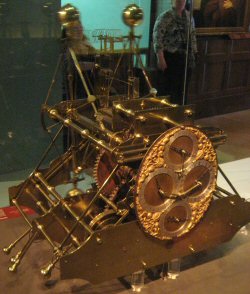
Figure 1. Harrison’s marine timekeeper H1. Photograph by Phantom Photographer, 24 February 2011. Source Wikimedia Commons file. Licence CC BY-SA 3.0 Unported. Unchanged, original image 250 × 294 pixels.

In May 1736 Harrison took H1 to Lisbon, outward in the Centurion and back in the Orford. According to Royal Museums Greenwich, on the return the crew thought a landfall was Start Point. The position obtained with the timekeeper correctly identified it as the Lizard, revealing a discrepancy the museum puts at about 60 miles. This showed its navigational promise. The specified trial to the West Indies was still ahead. 1
The Board’s minutes of 30 June 1737 record Harrison’s proposal to build a smaller machine within two years and his request for £500. The Board saw possible benefits to navigation and arranged payment in two halves, one immediately and the other on proof of delivery of the new machine to the designated captain. Funding was thus tied to building and testing the next instrument aboard ship. 5
H2 and H3, continued work on large machines#
H2 was made in 1737–1739. Larger and stronger than H1, it is listed as 686 mm high and 40 kg. A remontoire evened out the force to its two oscillators. Harrison found a problem in their response to changes in the ship’s heading and kept H2 out of sea trials. Strengthening the machine and regulating the driving force still left an issue with the oscillating system itself. 6
He began H3 in 1740 and spent about 19 years on it. Two large circular balances replaced the bars. The machine incorporated temperature compensation by a bimetallic strip and a caged rolling bearing. The strip uses different thermal expansion in two metals to produce bending. The bearing substitutes rolling for sliding contact to reduce friction. Royal Museums Greenwich also notes that H3 fell short of the expected accuracy. During the long work on H3 a smaller watch offered another route. 7
From the Jefferys watch to H4#
Harrison studied pocket watches while working on large marine timekeepers. A watch John Jefferys made to his design around 1753 helped to establish the new direction. Harrison commissioned a skilled specialist as well as working on the oscillator himself. The Royal Museums Greenwich record for H4 says the success of the Jefferys watch led to work on H4 in 1755 and completion in 1759. 8
H4 resembles an oversized pocket watch in a silver pair case. The collection record gives overall dimensions of 165 × 124 × 28 mm, a dial diameter of 102 mm and a weight of 1.45 kg. These are different from the dimensions of the balance inside. Harrison designed H4 around a fast, wide-swinging balance and hairspring, using a different oscillator from those of H1–H3. Precision components, control of driving force, temperature compensation and maintaining power during winding all fit within the smaller mechanism. 8 9
The technology of H4#
Frequency and escapement#
The Board of Longitude’s 1767 Principles of Mr. Harrison’s Time-Keeper records five beats per second. A beat is one half-oscillation, so the balance makes two and a half complete oscillations per second, at 2.5 Hz. The preliminary matter gives the balance diameter as 2.2 inches and a measurement by John Bird printed there gives 2¼ inches. Both indicate a larger oscillator than an ordinary pocket watch of the period, running at high frequency. 9
Harrison’s distinctive verge-type escapement has diamond pallets to control the interaction between the balance and the power from the wheels. Pins contacting the hairspring were used to adjust the relation between amplitude and period. Isochronism means a constant period as amplitude changes. The book describes an adjustment procedure and Harrison’s theory, leaving open whether complete isochronism across all amplitudes and positions was achieved. 9
Four springs and two different functions in the power supply#
The book identifies four springs. The mainspring supplies power. A second spring inside the fusee maintains power during winding. A third is a small spring rewound at short intervals. The fourth, the hairspring, determines the balance period. The book names Maberley as maker of the first three springs, documenting specialist contributions that the watch’s signature alone cannot show. 9
The fusee uses a cone-shaped wheel and the position of the chain around it to compensate for changes in mainspring force. Its maintaining spring powers the train while the user winds the watch with a key. Farther down the train, the remontoire periodically rewinds a small spring to even out the force to the regulating organ. The original explanation gives eight rewinds per minute, or one every 7.5 seconds. Maintaining power keeps the watch running through manual winding, and the remontoire evens out the force during ordinary operation. 9
A fly limits the speed at which the remontoire rewinds. The frequent rewinding needs its own control to avoid applying a sudden force to the movement. The precision balance operates as part of the full power path that keeps it moving. 9
Temperature compensation, bearings and handling#
H4’s bimetallic compensator consists of thin brass and steel strips riveted together in several places. Differences in expansion bend the strip with temperature, and pins at its free end change the effective length of the hairspring. The later split balance addresses temperature by changing the inertia of the balance itself. The manual also describes adjustment in a cold place and near a fire, with a thermometer. 9
Ruby pivot holes, diamond endstones and diamond pallets address friction and wear. The H4 manual specifies applying a little oil to the pallets and pivot holes. Earlier wooden clocks had pursued oil-free construction, while H4 used its own combination of materials and servicing. 9
The manual also instructs users to adjust the position of the box as the ship heels and to avoid turning the watch suddenly in the plane of the balance. At sea, performance rested on handling as well as design, manufacturing precision and adjustment. 9
Sea trials and publication of the principles#
The Jamaica trial and rate correction#
In 1761 William took H4 to Jamaica aboard the Deptford and returned in 1762. The reported error was about five seconds after correcting for the rate established before departure. Rate is the daily gain or loss. The time shown on the dial can differ from the reference by more than the remaining error after allowing for the known rate and converting to longitude. 1 10 20
Harrison stressed the distinction in his 1767 Remarks. If a clock gains by a known amount every day and the rate is stable, a navigator can correct for the days at sea. Reconstructing reference time depends on knowing how the clock behaves. Its dial reading can be corrected. 10
On 17 August 1762 the Board considered observations and reports from Portsmouth and Jamaica and found the trial insufficient on its own to establish longitude at sea. It recognised H4 as an invention of public benefit and voted £2,500, with £1,500 paid first and £1,000 on its return from a second trial. The amount was to count towards a future reward and the timekeeper was to become public property. 5
The Barbados trial and astronomical observations#
In 1764 H4 went to Barbados on the Tartar. Establishing the longitude difference between Portsmouth and Barbados independently required astronomical observations. The Board on 18 September 1764 gave instructions for calculating with observations of equal altitudes of the Sun, eclipses of Jupiter’s satellites, and occultations of stars and planets. Astronomy and precision instruments were thus part of assessing the timekeeper. 5
The minutes of 19 January 1765 list results from four calculators. Different handling of observations and calculations produced differences in the time equivalent of the longitude error. 5
| Calculator | Recorded value in the timekeeper error column |
|---|---|
| John Campbell | 41.5 seconds |
| John Bevis | 33⅔ seconds |
| George Witchell | 47.3 seconds |
| James Short | 34½ seconds |
The arithmetic mean of the four values is about 39.24 seconds. It is calculated from the table rather than taken from a single reading during the voyage. Gould’s 1923 study also gives 38.4 seconds, a figure obtained differently from the mean of the minutes table. The Board’s finding that H4 came well within the strictest reward criterion is explicit in the minutes of 9 February 1765. 5 20
Gould records departure from Portsmouth on 28 March 1764 and observations in Barbados on 14–17 May. There were 47 days between departure and the first observation. That outward comparison and the one after returning to Britain are separate assessments. Gould also records comparison with the Portsmouth clock after 156 days. H4 was 54 seconds fast after correcting for a gain of one second per day. It was 15 seconds slow after also allowing for the temperature-related rate difference reported before departure. The values depend on different corrections and give no universal daily rate. 20
Demonstrating accuracy and reproducibility#
On 9 February 1765 the Board unanimously found that H4 was well within the tightest longitude limit set by the 1714 Act. It also sought disclosure of the principles and construction methods and the production of further watches of the same kind to establish their usefulness to navigation at large. Successful trial of one watch and dissemination of the technology aboard working ships posed separate technical and institutional challenges. 5
Father and son explained the mechanism, demonstrating it with disassembly. The Board ordered the publication of the 1767 Principles. It includes the Harrisons’ submitted explanation, the people involved in examination and editing, and plates. It is a central primary source for H4’s construction, with several contributors beyond John Harrison. 9
The Greenwich trial deepened a dispute between the Harrisons and Maskelyne. Harrison’s 1767 Remarks objects to the initial rate at handover, the thermal conditions of the timekeeper and thermometer, and tests near freezing or with the watch vertical. The pamphlet documents the inventor’s objections. Determining deliberate damage or manipulation would require evidence beyond one party’s account. 10
H5, the king’s trial and Parliament’s additional reward#
The Harrisons’ next watch, H5, is signed “John Harrison & Son London 1770 No. 2”. This silver pair-cased timekeeper has an arrangement close to H4, with a 7.5-second remontoire, maintaining power, jewelled bearings and a bimetallic strip. The case hallmarks are dated to 1768–1769. Case manufacture, movement signature and later tests have separate dates. 11
H5 was tested in 1772 at George III’s observatory in Richmond. The king’s interest and support helped the approach to Parliament, while his test followed a separate procedure from those of the Board. On 24 April 1773 William told the Board that his father was no longer in a condition to make another watch and that the cost, time and uncertainty of reward left them unwilling to take part in further trials. The minutes show how far the Board’s terms had diverged from what father and son could undertake. 5 11 20
The minutes of 3 July 1773 record that the House of Commons approved up to £8,750 in additional reward and encouragement. Section 29 of 13 Geo. III c.77 also provided for an additional payment for the watch and disclosure of its principles. Earlier rewards, research funding and payment of voyage or experiment costs covered distinct purposes. The settlement was an additional payment after years of work. The full maximum in the 1714 Act was never paid in one award. 5 17
Harrison died on 24 March 1776 and was buried in the churchyard of St John-at-Hampstead, London. 14
The technology after Harrison#
K1 and the spread of marine timekeepers#
The Board commissioned Larcum Kendall to reproduce H4 in 1766. He completed K1 in 1769. The Royal Museums Greenwich account records that it performed well on Cook’s second circumnavigation. K1 documents the steps after the inventor’s success, with a second maker understanding and building the design and a subsequent test on a long working voyage. 12
Making substantial numbers of H4-type instruments required considerable skill and expense. Arnold and Earnshaw later simplified the mechanism and refined the detent escapement and temperature-compensated balance. Royal Museums Greenwich credits Earnshaw with making a simple, lower-cost timekeeper practical for navigation. H4’s diamond-pallet verge and the later spring detent are different mechanisms addressing related problems. 18
In France, Pierre Le Roy and Ferdinand Berthoud also developed marine timekeepers. The Musée des arts et métiers identifies Berthoud No. 2, No. 6 and No. 8 and Le Roy’s 1766 timekeeper with the surviving objects. Its account says Le Roy used two oppositely wound hairsprings for isochronism and movement of mercury to compensate for temperature. It also records the Academy of Sciences prize of 1769. This differs from H4’s adjustment of the effective hairspring length and shows the variety of approaches to keeping time at sea. 22
The lunar-distance method continued alongside marine timekeepers. The minutes of 9 February 1765 record mariners’ testimony about finding their position with angular distances between the Moon and other bodies, and calls for a nautical almanac to ease the calculations. Astronomical observations also established longitude for evaluating H4. Observation, tables and timekeepers were used alongside one another even as they competed, increasing the ways navigators could establish a reference. 5
Materials, friction and temperature#
A gridiron pendulum combines metal rods with different rates of expansion to keep the effective length more nearly constant with temperature. A bimetallic strip converts the expansion difference of two metals into bending. Both use changing temperature to counteract its effects on the mechanism. The grid of rods and the bending of riveted strips are distinct constructions. 3 7 9
Lignum vitae bearings, the grasshopper escapement and the caged rolling bearing change how friction arises. Harrison sought precision through component finish and the design of materials, surfaces, power delivery and response to temperature. Royal Museums Greenwich presents H3’s bimetallic strip and caged bearing as important inventions with uses today. The collection account does not establish direct descent from H3 for every modern temperature controller or bearing. 3 7
Restoration, commemoration and experimental work#
H1–H4 have histories of preservation and restoration. Royal Museums Greenwich holds Rupert T. Gould’s notes for work on H2 and H3 in 1923–1924, assembly of H3 in 1930–1931 and reconstruction of H1 in 1932–1933. A contemporary account in Nature of 11 March 1933 reported that with H1 running again, all four were operational. What visitors see today rests on later investigation and restoration as well as eighteenth-century work. 15 16
On 24 March 2006 Westminster Abbey installed a memorial stone for Harrison. A brass and stainless-steel strip crosses his name and the longitude of the site is inscribed, commemorating his bimetallic work and longitude measurement. His grave is at St John-at-Hampstead. 14
Dava Sobel’s Longitude shows the reach of Harrison’s story. Sobel dates the first edition to 1995 and records translations into many languages and an illustrated edition prepared with William J. H. Andrewes in 1998. Widening recognition of Harrison and testing particular claims against surviving instruments and contemporary records serve distinct but related purposes. 21
Other research revisits Harrison’s late pendulum-clock theory using modern materials. A 100-day trial of Martin Burgess’s “Clock B” began at Greenwich on 6 January 2015. Rory McEvoy describes continuous measurements using radio-controlled time comparison as well as temperature, humidity, air pressure and GPS. The experiment examined a separate land-based pendulum clock and Harrison’s theory, independently of H4’s performance figures. 19
From error in time to error in position#
One second of time corresponds to 15 arcseconds of longitude. Approximating a nautical mile as one arcminute of latitude gives about 0.25 nautical miles, or 463 m, at the equator. At higher latitudes the east–west distance corresponding to the same angle is smaller. The 463 m figure is thus specific to the equator. 10
Daily rate and total error accumulated over weeks are different quantities. Correcting for a constant rate differs from accounting for changes with temperature or position. A marine timekeeper’s reference time gives longitude when combined with local observation. Modern time standards and satellite navigation share aspects of the principle, while their instruments and institutions differ. 9 10
Detailed timeline#
| Date | Event and context |
|---|---|
| 1693 | Born in Foulby, Yorkshire. The baptism is recorded on 31 March. 14 |
| 1713 | Makes an early wooden longcase clock. Further clocks from 1715 and 1717 are known. 2 3 |
| c. 1722 | Brocklesby Park turret clock, studied for its wooden train, lignum vitae and brass, and early grasshopper design. 3 |
| c. 1725–1728 | Makes precision longcase clocks with James featuring a gridiron pendulum, later grasshopper escapement and maintaining power. 3 |
| c. 1730 | Wins support from Halley and Graham in London and starts work on H1. 1 13 |
| 1735 | Completes H1. People who saw it and members of the Royal Society offer support. 4 13 |
| May 1736 | Takes H1 to Lisbon and back in the Centurion and Orford. 1 |
| 30 June 1737 | Board votes £500 for the next machine, half up front and half after delivery to the ship. 5 |
| 1737–1739 | Builds H2. Later identifies a problem with its oscillators and keeps it out of sea trials. 6 |
| c. 1740–1759 | Works on H3 with circular balances, a bimetallic strip and a caged bearing. 7 |
| 1749 | Receives the Royal Society’s Copley Medal. 13 |
| 1752 | Short publishes a paper supporting Harrison on the invention of the temperature-compensated pendulum. 13 |
| c. 1753 | Jefferys produces a pocket watch based on Harrison’s design. 8 |
| 1755 | Begins making H4. 8 |
| 1759 | H4 completed. 8 |
| 1761–1762 | William takes H4 on the Jamaica voyage. Results are corrected for the known rate. 1 10 |
| 17 August 1762 | Board votes for a further trial and payment of £2,500. 5 |
| 1764 | Barbados trial. On 18 September the Board sets a procedure for calculations from the observations and votes to pay £1,000 after the return. 5 |
| 19 January 1765 | Board opens the results of four calculators and records an error table in the minutes. 5 |
| 9 February 1765 | Board finds H4 meets the strictest accuracy requirement and asks for disclosure and reproduction of the design and manufacture. 5 |
| 1765–1766 | Disclosure, handover and testing at Greenwich. Harrison later objects to the test conditions. 1 9 10 |
| 1766 | Board commissions Kendall to reproduce H4. 12 |
| 1767 | Board publishes the Principles. The second edition of Harrison’s Remarks also appears. 9 10 |
| 1769 | Kendall completes K1. 12 |
| 1770 | Year and signature of father and son appear on H5’s movement. 11 |
| 1772 | H5 tested at the king’s Richmond observatory. K1 is used on Cook’s second circumnavigation. 11 12 20 |
| 24 April 1773 | William explains to the Board his father’s condition and why they decline further trials. 5 |
| 1773 | Parliament provides an additional reward of up to £8,750. The Board records the settlement on 3 July. 5 17 |
| 24 March 1776 | Harrison dies and is buried at St John-at-Hampstead. 14 |
| 1923 | Gould publishes The Marine Chronometer. His restoration records for H2, H3 and others also survive. 15 20 |
| 1932–1933 | Gould reconstructs H1. A 1933 account reports that it is running again. 15 16 |
| 24 March 2006 | Westminster Abbey installs the memorial stone. 14 |
| 6 January 2015 | Official 100-day trial of Clock B begins at Greenwich to examine Harrison’s late pendulum-clock theory. 19 |
References#
Web sources checked on 23 October 2026. The sources include images and text of the Principles, a public transcription of the Remarks, official transcriptions and relevant images of the Board minutes, and museum collection records.
Royal Museums Greenwich, “Longitude found — the story of Harrison’s timekeepers”. Overview of his life, supporters, trials and instruments.
National Trust Collections, “Harrison Clock”, 959830.1. Construction, signature and provenance of the 1717 clock.
Paul Smith, introduction by Andrew King, “Building a Harrison Wooden Longcase”, Horological Journal, September 2024, pp. 363–367. Technical and research account by the people who restored and reproduced the original mechanism.
Royal Museums Greenwich, “H1”, ZAA0034.
Cambridge University Library, Board of Longitude minutes RGO 14/5. Minutes of 30 June 1737, 17 August 1762, 18 September 1764, 19 January, 9 February and 23 February 1765, 24 April and 3 July 1773. Also available in the official TEI transcription. The January 1765 error table is on p. 70 of the original.
Royal Museums Greenwich, “H2”, ZAA0035.
Royal Museums Greenwich, “H3”, ZAA0036.
Royal Museums Greenwich, “H4”, ZAA0037.
Commissioners of Longitude, The Principles of Mr. Harrison’s Time-Keeper, with Plates of the Same, London, 1767. Preliminary matter pp. v–xvii and mechanism pp. 19–31. Frequency p. xiv, four springs and lubrication pp. xv–xvi, bimetallic strip p. xii and remontoire p. 19.
John Harrison, Remarks on a Pamphlet Lately Published by the Rev. Mr. Maskelyne…, second edition, 1767. Public transcription of pp. 1–34. Rate correction pp. 2–3 and trial conditions pp. 6–15. Consulted as one party’s reply in the dispute.
Science Museum Group, “Marine Timekeeper known as ‘H5’ by John Harrison and Son 1770”, L2015-3480. Mechanism, inscription, case dating and the king’s trial.
Royal Museums Greenwich / University of Cambridge, “K1”, ZAA0038. Collection account of the commission, completion and use on Cook’s voyage.
Jim Bennett, “James Short and John Harrison: personal genius and public knowledge”, Science Museum Group Journal, autumn 2014, DOI: 10.15180/140209. Original research on supporters, disclosure and dissemination of watchmaking methods.
Westminster Abbey, “John Harrison”. Baptism, death, burial and the 2006 memorial stone.
Royal Museums Greenwich, Gould’s working notes GOU/4 and associated restoration records. Collection catalogue of the 1932–1933 reconstruction of H1 and other work. The notes themselves were not read in full.
“Harrison’s First Marine Timekeeper”, Nature 131, p. 355, 11 March 1933, DOI: 10.1038/131355b0. Public abstract and reproduced portion consulted.
“Transcripts of the Longitude Acts”. Transcriptions of the 1714 Act and 13 Geo. III c.77 §29. The additional reward of 1773 was cross-checked against the contemporary minutes 5.
Royal Museums Greenwich, “Thomas Earnshaw, 1749–1829”, BHC2674. Museum account of the simplification and spread of the marine chronometer.
Rory McEvoy, “Harrison decoded: towards a perfect pendulum clock”, Antiquarian Horological Society, 17 January 2015. Report from the investigator responsible for the Clock B trial.
R. T. Gould, The Marine Chronometer: Its History and Development, J. D. Potter, 1923, pp. 50–60 and 66–69. Trial figures and technical explanations, read alongside the minutes to keep different measures distinct.
Dava Sobel, “Longitude”. The author’s account of the first edition, translations and illustrated edition of 1998. The book itself was not read in full for this reference.
Musée des arts et métiers / Cnam, La mesure du temps, Le Petit Journal, pp. 6–7. Museum pieces by Berthoud and Le Roy’s 1766 timekeeper, Inv. 01395.