This article was translated from Japanese using AI. Read the Japanese original
Lorenzo della Volpaia (1446–1512) made clocks and scientific instruments in Florence. He also knew metalworking, architecture and mathematics. His descendants carried on the workshop. His best-known work was a planetary clock that showed the positions of the Sun, Moon and planets on one dial along with the time. The original mechanism is lost. The design records kept by his descendants and the working reconstruction of 1994 provide different evidence of his work. 12
From the workshop to public clocks#
A craftsman with several trades#
The original-language sources also spell his name Della Golpaia, De Vulparia and Vulpario. His father Benvenuto was a different person from his son of the same name who later kept design records. A 1480 tax record lists Lorenzo as a woodworker with a workshop shared with his brother Mariotto. The workshop crossed the present-day boundaries between woodworking, metalworking and mechanical design. The sources cited here do not identify any school or master from whom he received formal clockmaking training. 3
His work also touched architecture. In 1491 he entered the competition for the façade of Santa Maria del Fiore Cathedral. In 1504, when the location of Michelangelo’s David was debated, he and Giuliano da Sangallo favoured the Loggia dei Signori. His involvement in public discussions of sculpture and architecture extended beyond making small precision objects. 1
Maintaining public clocks#
The city also needed people to keep existing clocks running. In 1490 Lorenzo was in charge of adjusting Florence’s public clocks. He lost the position after the Medici were expelled in 1494 and was reappointed in 1500 after his successor died. He also looked after the cathedral clock in 1497–1499. Adjustment and maintenance applied mechanical skills to keeping clocks usable day after day. 4
In 1511 he worked on the clock of the Torre del Saggio in the Mercato Nuovo. Its striking apparatus is associated with a figure of a small child holding a hammer, attributed to Verrocchio. The attribution concerns the sculpture. Volpaia’s work concerned the clock. 4
Two planetary clocks#
The clock described in 1484#
In a letter to Francesco della Casa dated 8 August 1484, the humanist Angelo Poliziano described an automaton made by Lorenzo of Florence. It is letter 8 in book IV and records how a contemporary observer saw the planetary clock. A 2022 study treats it as a separate work from the clock placed in the Palazzo Vecchio in 1510. 5
According to the study containing an Italian translation of the letter, Poliziano describes a prismatic support, a disk above, a ring of hours, an indication of the ecliptic and indications of the Sun, Moon and planets. He explains how the indications relate to one another. His admiration records a contemporary impression, without measuring accuracy. 6
Negotiations with Hungary and the acquisition in 1510#
Matthias Corvinus, King of Hungary, and his intermediaries appear in the history of the second clock. The maker’s account transcribed in the research describes negotiations for a more complete clock and names Filippo Valori and Francesco Bandini. The chronology rules out a commission made by Lorenzo de’ Medici in 1510. Lorenzo de’ Medici died in 1492 and Matthias in 1490. 56
In 1510 the officials of the Parte Guelfa acquired the clock and gave it to the Signoria of Florence. The decision transcribed in the research links keeping a rare work in Florence with ensuring that the maker was paid and the clock could continue to be maintained. A planetary clock could be a courtly gift and also an achievement worth preserving for the city. 6
How the clock displayed the heavens#
Turning calculations into motion#
A planetary clock uses gears to link the passage of time with periodic celestial motions and display the positions as seen from Earth. Its readings come from a mechanical model rather than direct observations of incoming light. The Museo Galileo explains its purpose in terms of celestial positions and astrological relationships as well as ordinary time. Astronomical calculation and astrological use met in the same instrument. 2
The reconstructed dial has a rotating disk inside a fixed hour ring. Six apertures display Mercury, Venus, Mars, Jupiter, Saturn and the “dragon”. Overlapping disks at the centre show lunar phase, the age of the Moon and the Sun’s indication. The period’s scheme, which includes the Sun and Moon, differs from the modern classification of planets. 2
The dragon represents the lunar nodes, where the Moon’s orbit intersects the apparent path of the Sun. Reading eclipses requires relating the nodes to the positions of the Sun and Moon. Mean motion uses uniform progression as a reference, while true position includes departures from it. Both indications help make the model of celestial motion readable. 56
One source of power and several periods#
According to the museum’s account of the reconstruction, a single weight drives a verge escapement with a ring-shaped regulator. Gear trains distribute the motion of the falling weight to displays moving at different speeds and to the striking mechanism. The work behind the dial stands in several parallel vertical planes. The clock also has celestial and terrestrial globes. The reconstruction’s materials and dimensions are not measurements of the lost original. 27
The clock’s distinctive feature was the arrangement of many displays on one face. Giovanni Dondi’s Astrarium already existed, so Vasari’s praise cannot establish priority for the planetary clock. Volpaia made complex celestial motions comparable within the same field of view. 6
A surviving nocturnal and sundial#
The Museo Galileo also holds a small brass nocturnal and sundial dated 1511, accession No. 1305, 77 mm in diameter. It has overlapping disks and an index for the day and month, and is set for latitude 43 degrees. The time quadrant on the reverse is engraved “Tabula Solis motus”, showing when the Sun enters the signs of the zodiac. It came from Vincenzo Viviani’s bequest. 8
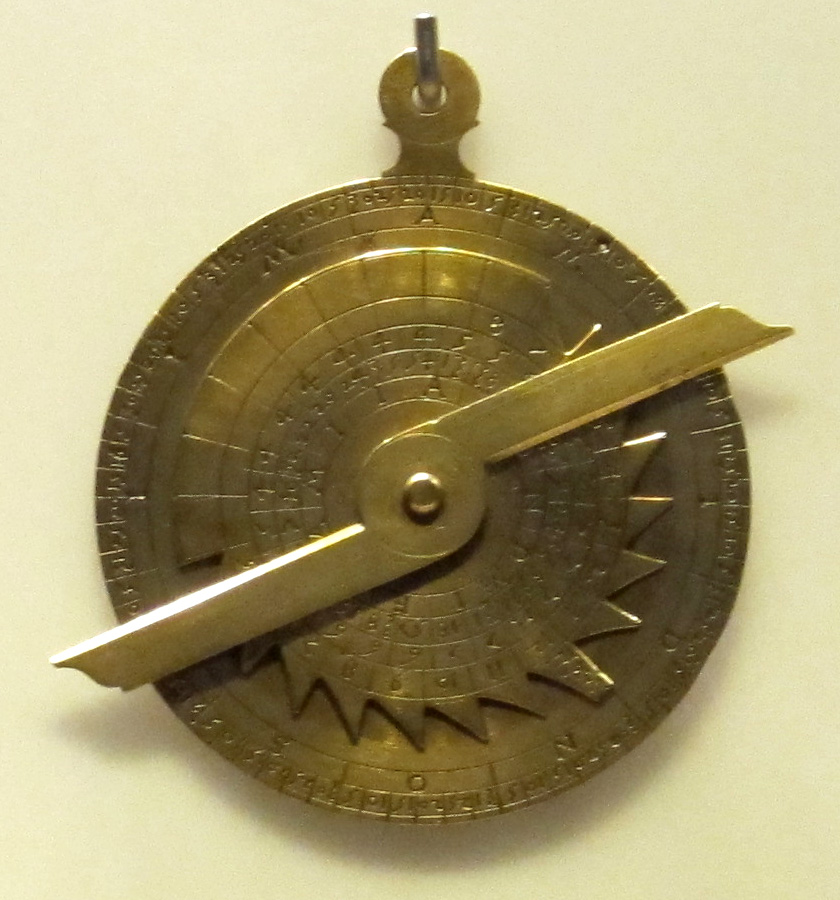
Figure 1. Lorenzo della Volpaia’s nocturnal and sundial, Florence, 1511. Museo Galileo, inv. 1305. Photograph by Sailko, unchanged. Wikimedia Commons CC BY-SA 3.0

A nocturnal gives the time at night from the direction of stars and the calendar date. The museum explains looking at Polaris through the central hole and turning the index towards another reference star. The observer has to aim the instrument and read its scale. Volpaia made both machines that model celestial motion with gears and instruments for reading time directly from the sky. 9
Records passed down and the reconstruction#
Lorenzo died in 1512. His sons Camillo, Benvenuto and Eufrosino and later descendants including his grandson Girolamo carried on the workshop. Benvenuto’s notebooks document his father’s work and a connection with Leonardo da Vinci. The connection alone cannot establish that Leonardo designed the planetary clock. 1
Camillo and then Girolamo took over the maintenance of the planetary clock. Restorations took place in 1560 and 1594. It had stopped working by 1609, and a 1640 inventory records it as parts. This is a more detailed sequence than the museum’s brief statement that it was lost by the end of the sixteenth century. Stoppage, dismantling, the survival of parts and their eventual loss need to be distinguished. 35
In 1994 a working reconstruction was made from the family notebooks with the involvement of Alberto Gorla, horological historian Giuseppe Brusa and historian of astronomy Emmanuel Poulle, among others. The clock with accession No. 3817 is that reconstruction. It was presented at an exhibition at the Palazzo Pucci di Ottavio in Florence from 1 December 1994 to 30 March 1995. 510
Volpaia’s work connects public clock maintenance, calculation of the calendar and celestial periods, manufacture of displays, and the drawings and text that carried this knowledge to his descendants. The ability to reconstruct part of his work after the original was lost shows the value of those records.
Chronology#
| Year | Event |
|---|---|
| 1446 | Reportedly born in Florence. 13 |
| 1480 | Appears as a woodworker in tax records. 3 |
| 8 August 1484 | Poliziano sends a letter describing the first planetary clock. 5 |
| 1490 | Takes charge of adjusting public clocks. 4 |
| 1491 | Enters the cathedral façade competition. 1 |
| 1494 | Loses his public clock position after the Medici expulsion. 4 |
| 1497–1499 | Takes charge of the cathedral clock. 4 |
| 1500 | Returns to adjusting the public clocks. 4 |
| 1504 | Takes part in the debate over the location of David. 1 |
| 1510 | The Parte Guelfa officials acquire the second planetary clock and give it to the Signoria. 5 |
| 1511 | Date of the surviving nocturnal and sundial. Also works on the Mercato Nuovo clock. 48 |
| 1512 | Dies. 1 |
| 1560 and 1594 | Girolamo restores the planetary clock. 5 |
| 1609 and 1640 | Clock recorded first as inoperative and later as parts. 5 |
| 1994 | Working reconstruction of the planetary clock. 7 |
What the sources establish#
The cited records do not quantify workshop training, total output, long-term rate or display error of the planetary clock. The machines documented in the family notebooks cannot all be counted as completed works by Lorenzo. Surviving pieces, copied designs, contemporary testimony and modern reconstruction each provide different evidence. 356
References#
1. Museo Galileo, “Lorenzo della Volpaia”. Life, workshop, family and architectural work. Online biography. Accessed 9 November 2026.
2. Museo Galileo, “Lorenzo della Volpaia’s planetary clock”. Construction, display and purpose of the reconstruction. Exhibition text. Accessed 9 November 2026.
3. Pier Nicola Pagliara, “DELLA VOLPAIA, Lorenzo”, Dizionario Biografico degli Italiani, vol. 37, 1989. Biography. Accessed 9 November 2026.
4. Sara Taglialagamba, “Alle origini dell’orologeria di Leonardo: Andrea Verrocchio e Lorenzo della Volpaia per l’orologio di Mercato Nuovo”, Achademia Leonardi Vinci, 1, 2021, pp. 93–126, especially pp. 104–105 and 112–113. Publisher’s article page DOI Repository PDF. Accessed 9 November 2026.
5. Monika Frazer-Imregh, “Lorenzo della Volpaia asztrológiai órájának leírása Angelo Poliziano levelében (IV, 8.)”, Vallástudományi Szemle, 2022/2, pp. 142–146. Distinction between the two clocks, provenance and reconstruction. Article PDF DOI. Accessed 9 November 2026.
6. Poliziano, letter IV.8, maker’s account (Biblioteca Laurenziana, Ms. Antinori 17, ff. 73v–74r) and Parte Guelfa decision (ASF, Ordinazioni di capitani di Parte Guelfa dal 1474, c. 37). Consulted in translation or transcription in Taglialagamba, cited above, pp. 107–110. Article containing the transcriptions. Accessed 9 November 2026.
7. Museo Galileo, “Planetary clock”, inv. 3817, 1994 reconstruction of the 1510 clock. Catalogue entry. Accessed 9 November 2026.
8. Museo Galileo, “Nocturnal and sundial”, inv. 1305, 1511. Catalogue entry. Accessed 9 November 2026.
9. Museo Galileo, “Nocturnal”. General operating principle. Exhibition text. Accessed 9 November 2026.
10. Museo Galileo, “Lorenzo della Volpaia’s Planetary Clock”, 1994–1995 exhibition. Exhibition record. Accessed 9 November 2026.