This article was translated from Japanese using AI. Read the Japanese original
Nicolas Hanet, also written Anet in the correspondence, was a French clockmaker active in Paris in the second half of the seventeenth century. He encountered the manufacture of the new pendulum clocks while working with Salomon Coster in The Hague, and took part in making and selling them in France. Christiaan Huygens’s letters from 1658 and 1659 record Hanet transporting clocks, receiving payment, delivering orders and repairing a converted clock. His practical work helped turn a scientist’s design into a product people could use in another city. 1
From Coster’s workshop to customers in Paris#
Hanet’s activities in 1658#
In late 1656, Huygens worked out how to use a pendulum to regulate a clock and proceeded to manufacture the design with Coster, a clockmaker in The Hague. After Coster received the privilege to make and sell the clocks in 1657, the new instruments also began to travel abroad. The introduction to volume XVII of Huygens’s collected works says that Hanet spent some time in Coster’s workshop, as did John Fromanteel from England. 2
On 29 November 1658, Pierre Petit wrote from Paris to order a clock from Huygens. The letter said that Coster’s local agent had worked at his workshop in The Hague. The editors identify this agent as Hanet. Petit offered to introduce the clocks to people of high standing and increase sales through the agent. 1
A letter dated 27 December gives more detail. According to Petit, Hanet was making a clock for Montmort and had already sold two or three that he was said to have brought back on his own account. Hanet was making clocks himself while acting as an intermediary for imports. 1
Transport, customs and delivery#
On 13 March 1659, Huygens told the astronomer Ismaël Boulliau that his clock was on its way to France. A seconds display would identify the clock he had ordered, the French ambassador de Thou had provided the clockmaker carrying it with a document for customs, and payment was to be made to that clockmaker. The editors identify him as Hanet. 1
In his reply of 4 April, Boulliau said that he had received the clock from Hanet, that it ran regularly after several days of testing, and that he had paid 20 Reichsthalers plus a fee for delivery. Hanet’s work extended from getting the clock out of the workshop to handing it over in good condition after transport. The letters show a customer, makers, a carrier and scholars acting as intermediaries and building an early market together. 1
On 7 August that year Huygens wrote to Boulliau that Hanet would bring him a clock and a copy of Systema Saturnium. Clocks and scientific books reached Paris through the same transport network. A letter of 18 September to Ch. Bellair also sets out a payment route through Petit to Hanet as Coster’s agent. 1
Getting a pendulum clock to run#
Gears, escapement and pendulum#
In a pendulum clock, a weight or spring powers a gear train and the escapement releases its motion a little at a time. The pendulum’s swings set the interval between releases, and energy supplied by the escapement keeps it swinging. A fork connecting the freely suspended pendulum to the mechanism was an important feature of early Huygens clocks. The introduction to volume XVII of the collected works identifies that coupling as central to the invention. 2
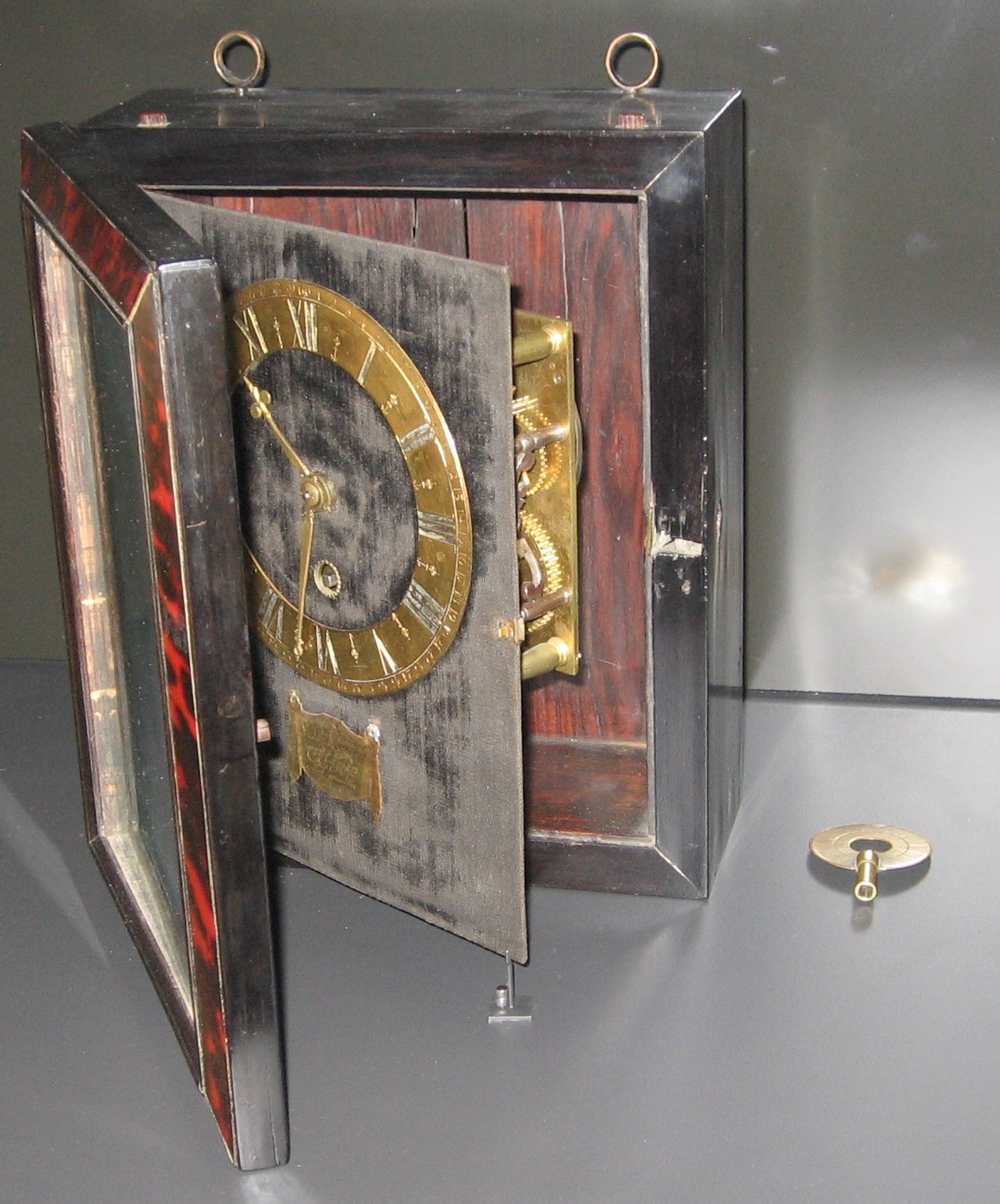
Figure 1. A comparative example of the work Hanet learned from Coster. Clock designed by Huygens and signed by Coster, Rijksmuseum, Amsterdam. Photograph by Hansmuller, 30 January 2015. Source Wikimedia Commons file description. Licence CC BY-SA 4.0. Unmodified.

When this mechanism is fitted to an existing clock, the power source must overcome the resistance of the train and escapement. Copying the shapes of the parts can produce a clock with different friction and gear meshing and therefore a different power requirement. A documented repair that involved Hanet illustrates the problem. 1
Petit’s converted clock and its power problem#
On 13 June 1659, Petit told Huygens that he had converted his clock to pendulum regulation and that it would only run with an excessively heavy weight. He examined a Dutch clock that had arrived and rebuilt his own to copy its pendulum suspension and tooth shapes. When that failed to help, he asked Hanet, who had worked with Coster, to repair it. 1
Petit reported Hanet’s view that his mechanism had four wheels, whereas the Dutch clock he was comparing it to had only three. Petit asked why the number of wheels would pose a problem if the pinion tooth counts and escapement action were similar. 1
The exchange pairs a craftsman trying to make the clock work with a customer studying drawings and reasoning through the mechanism. Hanet’s diagnosis survives in Petit’s letter. It shows that early pendulum clocks required adjustment of the train, tooth form, suspension and power, and that Hanet was trusted to undertake that work. 1
Surviving French pendulum clocks#
A clock of around 1660 in Besançon#
The Musée du Temps in Besançon acquired an Early Pendulum Clock in 2022, inventory no. 2022.3.1. The museum describes it as French, made by Nicolas Hanet around 1660. It is a small clock, 30 cm high by 20 cm wide by 10 cm deep, with a wooden case veneered in ebony and tortoiseshell, as well as copper alloy, iron and velvet. 3
A 2024 catalogue by the organisation supporting the museum’s acquisitions describes the clock as the third example by Hanet known at the time and the first to enter a French public collection. It presents Hanet as a clockmaker who trained in The Hague and began producing pendulum clocks soon after returning to Paris. The compact case and decorative materials show how the new regulating mechanism was accepted as a furnishing for interiors. 3
A religieuse clock in the United States#
In a 2014 account, National Watch & Clock Museum director Noel B. Poirier dated a mantel clock signed by Hanet to around 1685. Its ebony case has tin-based metal and brass inlay, a glazed front door and side windows. Corner columns with capitals and cornices recall a church entrance and give the clock the appearance associated with the religieuse style. A wooden pediment covers the bell at the top, and a plaque below the dial reads “Nicolas Hanet, Paris”. 4
The clock comes from the W. Barclay Stephens Collection, donated by the California Academy of Sciences. The collection record identifies its maker and documents the architectural case, inlay and housing for the bell. 4
Life dates and evidence for Hanet’s career#
The 2024 Besançon catalogue gives Hanet’s dates as around 1625 to around 1687. The National Watch & Clock Museum’s 2014 account gives 1723 as his year of death. Given that difference, the account of his career here focuses on the letters of 1658–1659, which document his work, and follows each holding institution’s dates for its clock. 3 4
The letters and the introduction to Huygens’s collected works document Hanet’s time and practical experience in Coster’s workshop. His dealings with Boulliau and Petit show a clockmaker who both made and sold clocks and whom scholars trusted with repairs. His records show how new technology was transported and made ready to use, work that can be difficult to see in a history focused on inventors and patents. 1 2
Timeline#
| Date | Event |
|---|---|
| Around 1625 | Estimated birth year in the 2024 Besançon catalogue. 3 |
| Late 1656–1657 | Huygens develops the pendulum clock and Coster proceeds with its manufacture and sale. 2 |
| November 1658 | Petit mentions a Paris agent who had worked in The Hague. The editors identify him as Hanet. 1 |
| December 1658 | Petit reports that Hanet is making a clock for Montmort and has sold clocks he brought back. 1 |
| March–April 1659 | The letters document transport from the Netherlands, delivery to Boulliau and payment. 1 |
| June 1659 | Petit reports entrusting the converted clock to Hanet for repair. 1 |
| August–September 1659 | The letters record the transport of a clock and a scientific book, and a payment route through Hanet as Coster’s Paris agent. 1 |
| Around 1660 | Date assigned to the early pendulum clock in Besançon. 3 |
| Around 1685 | Date assigned to the mantel clock at the National Watch & Clock Museum. 4 |
| Around 1687 or 1723 | Death dates given respectively by the Besançon catalogue and the American museum director’s account. 3 4 |
| 2014 | Poirier presents the museum’s religieuse clock signed by Hanet. 4 |
| 2022 | The Musée du Temps in Besançon acquires the early pendulum clock. 3 |
| 2024 | The clock appears in the 75th anniversary catalogue of the Besançon museum’s acquisition support organisation. 3 |
References#
- Christiaan Huygens et al., ed. D. Bierens de Haan, Oeuvres complètes. Tome II. Correspondance 1657–1659, 1889. Full PDF at DBNL. Letters 550 (29 November 1658, pp. 278–282), 558 (27 December 1658, pp. 292–294), 598 (13 March 1659, p. 372), 605 (4 April 1659, pp. 382–384), 627 (13 June 1659, pp. 419–421), 648 (7 August 1659, pp. 453–455) and 667 (18 September 1659, pp. 483–484). Accessed 14 November 2026.
2. Christiaan Huygens, ed. J. A. Vollgraff, Oeuvres complètes. Tome XVII. L’horloge à pendule 1656–1666, 1932, pp. 3–12. Text at DBNL. Dates of the invention, pendulum and fork, Coster’s workshop and foreign clockmakers. Accessed 14 November 2026.
3. Amis des Musées et de la Bibliothèque de Besançon, Florilège 1949–2024, 2024, p. 35, “Nicolas HANET / Horloge à pendule primitive”. PDF on the City of Besançon’s Mémoire Vive site. Accessed 14 November 2026.
4. Noel B. Poirier, “A Look Inside The National Watch & Clock MUSEUM”, Chrono Times, March–April 2014, cover. PDF published by NAWCC Chapter 190. Accessed 14 November 2026.