This article was translated from Japanese using AI. Read the Japanese original
Peter Henlein was a locksmith and watchmaker active in Nuremberg in the first half of the sixteenth century. Contemporary accounts say he made small timekeepers that could be worn and housed some in cases shaped like perfume containers. He was a leading figure in early portable timekeeping. Earlier records of watches and uncertainties around surviving pieces leave open any claim that he was the first person in the world to invent the pocket watch. His documented work brought small timekeepers into civic gift-giving and the lives of prosperous townspeople. 1 2 3
Life and the craft trades of Nuremberg#
Date of birth, trade and the incident of 1504#
Sources also name Peter Henlein as Peter Hele or Heinlein. His birth year is uncertain, with estimates of around 1479–1480 and around 1485. The earlier estimate takes into account his age when accepted as a master in 1509. The latter gives more weight to Cochlaeus’s description of him as a young man around 1511. Craftsmen could become masters at different ages, and those details do not settle his date of birth. Evidence for his childhood, apprenticeship and master is also limited. 1 2
Reliable records place him in Nuremberg in 1504. According to research by the city archives, on 8 September Henlein and two companions were involved in an incident in which the young locksmith Clemens Glaser died. The surviving records leave each person’s role uncertain. Henlein fled to the Franciscan friary, then known as the Barfüßerkloster, and took sanctuary. The city records repeated grants of safe conduct from November 1504 to April 1508 for negotiations with the family. 1
The 1875 edition of Neudörfer’s account of 1547 also discusses the case in a long editorial note based on city records. It contains early wording identifying Henlein as the principal attacker and a later judgement that who committed the fatal act was unproven. A record dated 26 February 1515 reports receipt by Glaser’s family of 21 Rhenish guilders from Henlein, as determined by the court. Sanctuary, legal proceedings and civil settlement took place in separate stages. 3
Master status, collaborators and later years#
Henlein became a master locksmith in Nuremberg on 16 November 1509. Watchmaking overlapped with locksmithing at the time. The qualification was within the locksmiths’ trade, where skills in working precise metal parts and combining springs and wheels could also be used to make watches. Nuremberg produced small metal goods and mathematical and scientific instruments. These skills and markets supported watchmaking. 1 2
Mechanical work did take place at the friary. City archive research notes that Emperor Maximilian’s alarm clock went there for repair in 1497 and that some friars made organs or astrolabes. Whether Henlein studied clockmaking or was able to experiment there remains uncertain. Accounts naming the friary as the place of invention go beyond the records. 1
Neudörfer says Henlein made a Theoria planetarum run with a 16-pound weight with help from Johannes Werner, a mathematician and priest of St John’s Church. He also says they drew on Jakob Bulmann’s diagrams and gears. This testimony about an instrument representing planetary motion shows collaboration among mathematicians, makers and recorders of their work. No surviving instrument can be conclusively linked to the description. 3
The Neue Deutsche Biographie lists three marriages, to Kunigunde, Margarete and Walburg. In his later years Henlein worked on public clocks as well as small watches. Records show an assignment to adjust the town hall chancery clock in 1535 and another to make a large clock for Lichtenau Castle in 1541. He died in Nuremberg in 1542. The tolling of the bell at St Sebald’s records his death, but entries were grouped by period. Research places it between summer and early autumn, with the exact day uncertain. 1 2
How portable watches became possible#
From weights to mainsprings#
A mechanical clock combines a power source, a train that transmits rotation, an escapement that releases it in steps and a regulator. A weight-driven clock needs space for the weight to descend and a stable place to put it. A wound metal spring stores energy in a small case and releases it as it unwinds. Making a wearable watch also required miniaturising the train, supports, regulator and the rest of the mechanism. 2 4
Spring drive predates Henlein. Fifteenth-century records in France and Italy mention small spring-driven timekeepers. The Germanisches Nationalmuseum (GNM) in Nuremberg included a clock of about 1435 belonging to Philip the Good, Duke of Burgundy, in its 2014–2015 exhibition on precursors to portable watches. Henlein built on earlier mechanical technology. 2 5
The account of 1511–1512 and its forty hours#
The humanist Johannes Cochlaeus’s Brevis Germanie descriptio is a major contemporary source for Henlein. Its dedication is dated 26 November 1511, and it was printed in 1512, accounting for both dates in the literature. In the passage reproduced by the city archives, Peter Hele is praised for making tiny timekeepers with many wheels from a little iron. Without weights, they could indicate the time and make a sound for forty hours, in any position and while carried at the chest or in a pouch. 1
The passage documents knowledge of portable timekeepers by that date. The forty hours is a figure from a contemporary description without a test on a specific surviving watch. Dietrich Matthes’s 2015 study urges caution because surviving examples from the first half of the sixteenth century generally run for twelve to fifteen hours. The Latin verb for making a sound has been read as striking or the sound of the movement itself. It cannot establish the construction of a striking mechanism. 4
Running in any position marked a major difference from a fixed clock driven by a hanging weight. It supplies no test of shock resistance or rate in different positions by modern standards, including while walking. For its watch dated 1530, the Walters Art Museum gives twelve to sixteen hours for one winding and says time could be shown and read to about half an hour. That description concerns the museum’s watch, while Cochlaeus describes a type of instrument in general. 6
Evening out power and assigning credit#
The torque a mainspring delivers to the train changes as it unwinds, another problem for small watches. A fusee varies the effective radius of a cone to compensate for the change. A stackfreed uses spring braking and could fit into a shallower movement. Evidence for using these devices is separate from evidence that Henlein invented one. Matthes considers him a possible inventor of the stackfreed but leaves the attribution unresolved. Fusees also have fifteenth-century precedents. The watch by Jakob Zech dated 1525 therefore comes after the invention of the mechanism. 4
Henlein’s documented work combined existing principles in small portable instruments made to be worn. Portability depended on the source of power, size, case and habits of personal adornment. 1 3
Pomanders and surviving watches#
Watches in pomander cases#
The pomander, Bisamapfel or Bisamkopf in German, was originally a pierced metal container for scents such as musk. Using the form as a watch case gave familiar personal jewellery a way to show time. In 1547 Neudörfer placed Henlein among the earliest people to fit small timekeepers into such a case. His heading names Andreas Heinlein, whom the editor Lochner identifies as Peter Henlein from city records. 3
A case originally designed as a perfume container did not necessarily release a fragrance after it housed a watch. The Nuremberg city archives explain that the watch occupied the small interior. The openings are a feature of the design, and the records do not establish a function as vents for perfume in every case. 1
Melanchthon’s watch dated 1530#
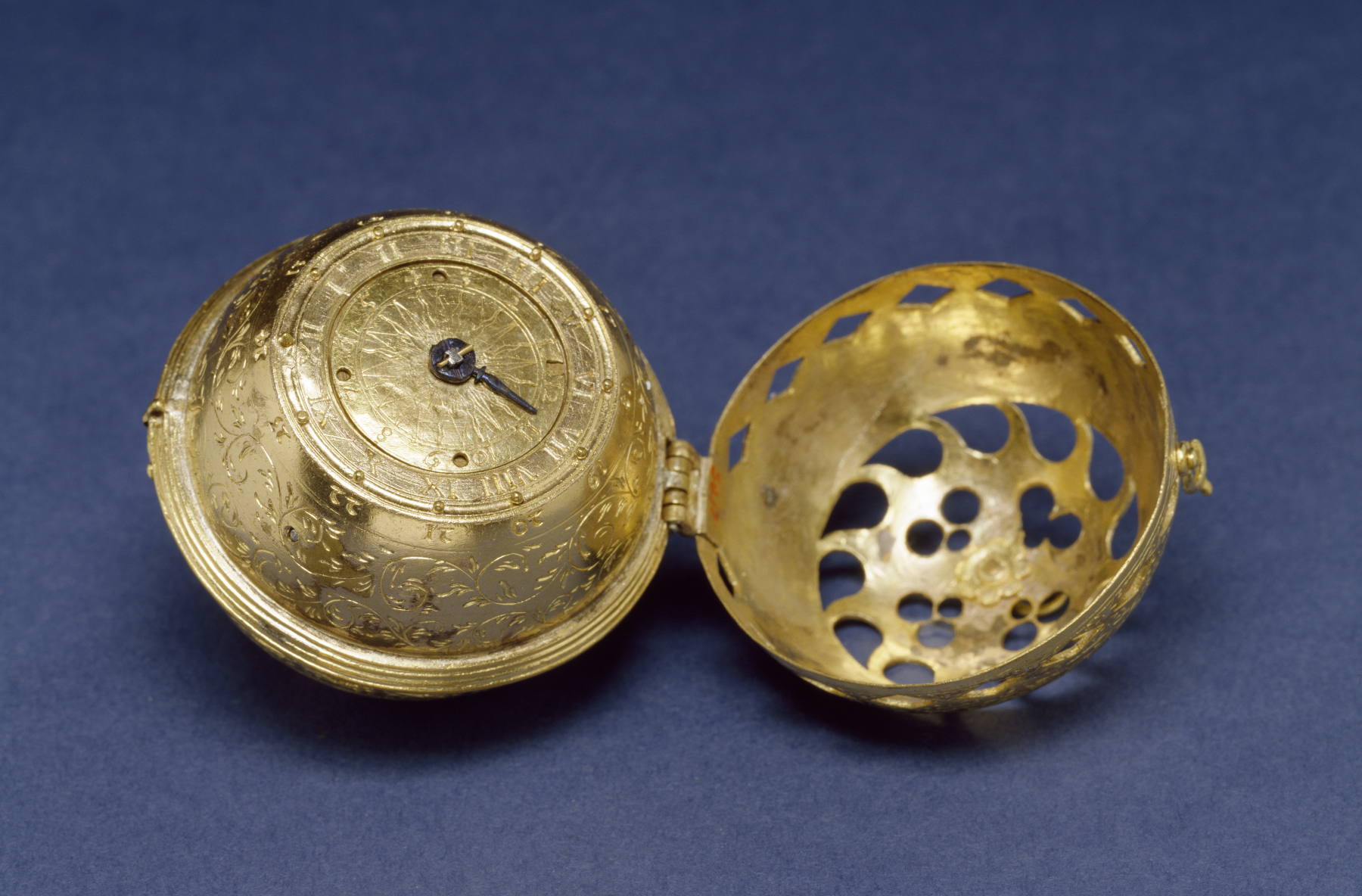
Figure 1. Spherical watch dated 1530 associated with Melanchthon, The Walters Art Museum, 58.17. Attributed to Henlein. Photograph by the Walters Art Museum, object title “Spherical Table Watch (Melanchthon’s Watch)”. Wikimedia Commons file record, museum record. CC BY-SA 3.0 Unported. Unmodified and redistributed under the same licence.

Spherical watch 58.17 at the Walters Art Museum in Baltimore bears on its base the name of the reformer Philipp Melanchthon and the date 1530. The case and dial are gilt brass and the movement iron. The photograph shows the two halves of the case, the hinge, the pierced cover and the relation between the single hand and dial. It has an alarm, which is distinct from striking at regular times. 4 The museum describes it as the oldest known dated watch. 6
There is no maker’s signature. The museum says research in 2014 found its features consistent with an attribution to Henlein. The attribution rests on those features and their historical context. The museum allows that Melanchthon may have ordered it or received it as a gift. The date, connection to Melanchthon and attribution of the maker rely on different evidence. 6
The GNM’s “Henlein watch” and the date of 1505#
GNM object WI1265 is a cylindrical drum watch. Its movement is iron and has a spring and fusee, with a gilt brass case. Inside the lid are Henlein’s name and the date 1510, which the museum identifies as a false inscription added later. Following examination in 2013–2014, the catalogue dates the movement type to the sixteenth century and the assembly to about 1850–1895. The watch combines early and later components. 7
The Fraunhofer Institute, which participated in the examination, used micro-CT to inspect the interior without taking it apart and also reported that the watch was assembled in the nineteenth century. An early style, inscription or material alone cannot establish the date and maker of the assembled watch. 8
A separate claim attributes a privately owned pomander watch to Henlein in 1505. The city archives’ 2011 study introduces the claim and researchers supporting it. It explains that private ownership makes independent investigation difficult and that the identification is not generally accepted. The proposed date of 1505, the GNM’s false inscription of 1510 and the Walters inscription of 1530 concern different objects. The evidence for one cannot date another, and 1505 remains a proposed date rather than the earliest confirmed one. 1 6 7
The British Museum’s silver astronomical watch#
Another approach compares city payments with a surviving object’s materials and weight. In 2015 Matthes published a study attributing the British Museum’s silver-cased astronomical watch 1888,1201.105 to Henlein. It has an iron movement, a gilt silver case and dial, and indications for time, zodiac, lunar phase and lunar age. A record of January 1525 lists payments to Henlein for the watch and to the silversmith Wolf Richel for a gilded silver case. Matthes also notes the closeness of the recorded silver weight of about 351 g to the surviving case and related silver parts at 350.4 g and dates the work to around late 1524. The attribution compares documents and the object without evidence from a maker’s signature. 4
Customers, collaborators and civic gifts#
Henlein’s work involved the makers of precious-metal cases, the city authorities who made payments and the diplomats who received gifts as well as the movement itself. Nuremberg paid him 15 guilders for a gilt pomander watch in 1524. The price needs to be read in light of the object and its materials, complexity and purpose. A single conversion into modern yen gives little context. 1 2
The city’s gift records and the payments to Henlein do not always identify the same transactions. The archives found gifts of 1521–1523 for which no maker is named, and purchases from Henlein in 1522–1525 that give no purpose. The names of recipients alone cannot identify his direct customers. Melanchthon’s relationship to the watch likewise rests on its inscription and the museum’s account of attribution. 1 6
The 1525 division of work with Richel shows how a watch combined mechanism and decoration. The 1875 edition of Neudörfer also reproduces a record of Martin Pfinzing of Nuremberg attempting through Henlein as his agent to recover a copper sphere deposited for Cardinal and Elector Albrecht of Brandenburg. This records Henlein’s place in a network centred on scientific instruments. 3 4
“Nuremberg eggs” and later commemoration#
Accounts that identify an egg-shaped “Nuremberg egg” as Henlein’s invention bring together different shapes and periods. The city archives date the appearance of egg-shaped watches to the second half of the sixteenth century, after his death. Interpreting a word for a small watch as meaning a little egg may have helped create the later association. Spherical pomanders, tall circular watches, thin pendants and egg-shaped watches show different stages in portable timekeeping. 1
In 1565 Nuremberg introduced a master’s test piece and examiners for watchmakers. Watchmakers still worked under locksmiths’ regulations, and the development shows changes in specialisation and the regulation of trades. It does not give Henlein sole credit for creating a clockmakers’ guild. 1
Henlein’s reputation reflects both his work and the later construction of an inventor’s image. The GNM describes how German watchmakers honoured him as the founder of their trade and put his name on schools, monuments and films. In 1905 the German watchmakers’ association and Nuremberg celebrated the claimed 400th anniversary of the invention. A watch exhibition was held and a monument erected in Hefnersplatz. The GNM preserves a gilt silver medal from the celebration. The anniversary took 1505 as the year of invention without conclusive evidence. The commemorations document how the history of watchmaking has been told. 5 9
Examination of objects in 2013–2014 and the GNM exhibition on the Henlein watch dispute from 4 December 2014 to 12 April 2015 revisited that distinction. Contemporary descriptions and payment records establish Henlein as a notable maker of small timekeepers. Determining who made each surviving watch, when it was made and what was original about his work requires comparing documents, objects and technical analysis individually. Those uncertainties leave a documented role in making portable timekeepers. 3 5 7
Timeline#
| Date | Event and source context |
|---|---|
| Fifteenth century | Small spring-driven clocks predate Henlein. French and Italian records and surviving instruments provide context. 2 5 |
| Around 1479–1480 or around 1485 | Proposed dates for his birth in Nuremberg. The exact date is unknown. 1 |
| September 1504 | Involved in the incident in which Glaser dies and takes sanctuary in the Franciscan friary. 1 3 |
| 1504–1508 | Safe-conduct records concern negotiations with the family. 1 |
| 16 November 1509 | Accepted as a master locksmith. 1 |
| November 1511 and 1512 | Dedication and publication of Cochlaeus’s text, describing portable watches and the forty-hour claim. 1 |
| 26 February 1515 | Record of receipt and settlement by Glaser’s family. 3 |
| From 1522 | Receives payments from the city for making watches. 1 2 |
| 1524 | Record of a gilt pomander watch bought for 15 guilders. 1 |
| January 1525 | Separate payments to Henlein and silversmith Richel, used to attribute the British Museum watch. 4 |
| 1530 | Date on the spherical watch inscribed with Melanchthon’s name. 6 |
| 1535 | Work adjusting the town hall chancery clock. 1 |
| 1541 | Commissioned to make a large clock for Lichtenau. 1 |
| 1542 | Dies in Nuremberg. The exact date is uncertain. 1 2 |
| 1547 | Neudörfer describes the making of pomander watches and a planetary instrument. 3 |
| 1565 | Watchmakers gain their own master’s test and examiners while remaining subject to locksmiths’ regulations. 1 |
| Second half of the sixteenth century | Egg-shaped watches appear after Henlein’s death. 1 |
| 1875 | Lochner edits Neudörfer’s account with notes using city records. 3 |
| 1905 | Medal commemorates Henlein and records the spread of his reputation as inventor. 9 |
| 2013–2014 | Examination of WI1265 distinguishes the sixteenth-century movement type from the nineteenth-century assembly. 7 8 |
| 2014–2015 | Exhibition at the GNM. The Walters also cites 2014 research on attribution of its watch. 5 6 |
| 2015 | Matthes publishes research connecting the British Museum watch with the 1525 payments. 4 |
Limits of the sources#
Contemporary documents describe Henlein’s work, but linking their watches to surviving objects is difficult. Cochlaeus praised the city and its craftspeople, Neudörfer recorded the work of individual artisans, and the city accounts tracked expenditure and gifts. Descriptions of performance, judgements of inventorship and payment amounts each give a different kind of evidence. 1 3
Uncertainties remain about Henlein’s birth year, exact death date, training in the friary, the proposed date of 1505 for the privately owned watch and who invented particular compensation mechanisms. Unsigned pieces and alterations call for assessing each attribution against the evidence that supports it. This makes it possible to identify Henlein’s documented work even when questions remain open. 1 4 7
References#
- Horst-Dieter Beyerstedt, “Peter Henlein, oder: Hat die Stadt Nürnberg ein Jubiläum verschlafen?”, NORICA 7, Nuremberg City Archives, 2011, pp. 38–41. Public PDF. Accessed 23 October 2026.
2. Werner Schultheiß, “Henlein, Peter”, Neue Deutsche Biographie 8, 1969, pp. 534–535. Deutsche Biographie. Includes twentieth-century attributions, distinct from recent object research. Accessed 23 October 2026.
3. Johann Neudörfer, Nachrichten von Künstlern und Werkleuten, 1547, edited by G. W. K. Lochner as Des Johann Neudörfer … Nachrichten von Künstlern und Werkleuten … aus dem Jahre 1547, Vienna, 1875, pp. 71–77. Warburg Institute PDF. The contemporary text and the editor’s notes and quotations provide separate evidence. Accessed 23 October 2026.
4. Dietrich Matthes, “A watch by Peter Henlein in London?”, Antiquarian Horology 36(2), June 2015, pp. 183–194. Paper (PDF), author’s public record. Accessed 23 October 2026.
5. Germanisches Nationalmuseum, “Die älteste Taschenuhr der Welt? Der Henlein-Uhrenstreit”, exhibition of 2014–2015. Museum exhibition account. Accessed 23 October 2026.
6. The Walters Art Museum, “Spherical Table Watch (Melanchthon’s Watch)”, object 58.17, 1530. Museum catalogue. Materials, inscription, attribution, running time and provenance. Accessed 23 October 2026.
7. Germanisches Nationalmuseum, “Sogenannte Henlein-Uhr”, WI1265. Current object record. Dates of the type and later assembly, false inscription, dimensions and materials. Accessed 23 October 2026.
8. Fraunhofer IIS and EZRT, “Henlein Uhr”. Account of the CT investigation by the institution that carried it out. Accessed 23 October 2026.
9. Germanisches Nationalmuseum, “Henlein-Preismedaille”, 1905. Collection record. Accessed 23 October 2026.