This article was translated from Japanese using AI. Read the Japanese original
René Le Coultre (1918–2018) was an engineer who advanced research, development and quality assessment in the Swiss watch industry. He helped establish the Centre électronique horloger (CEH) and headed the technical department at Rolex. Alongside quartz wristwatch prototypes, his work included objective methods of measuring performance and arrangements for research across companies. 1 2
Obituaries sometimes called him the inventor of the quartz wristwatch. The resonator, electronics, motor and production model were the work of several engineers and organisations. Le Coultre made the case for the research and brought together researchers, funding and companies. 3 4
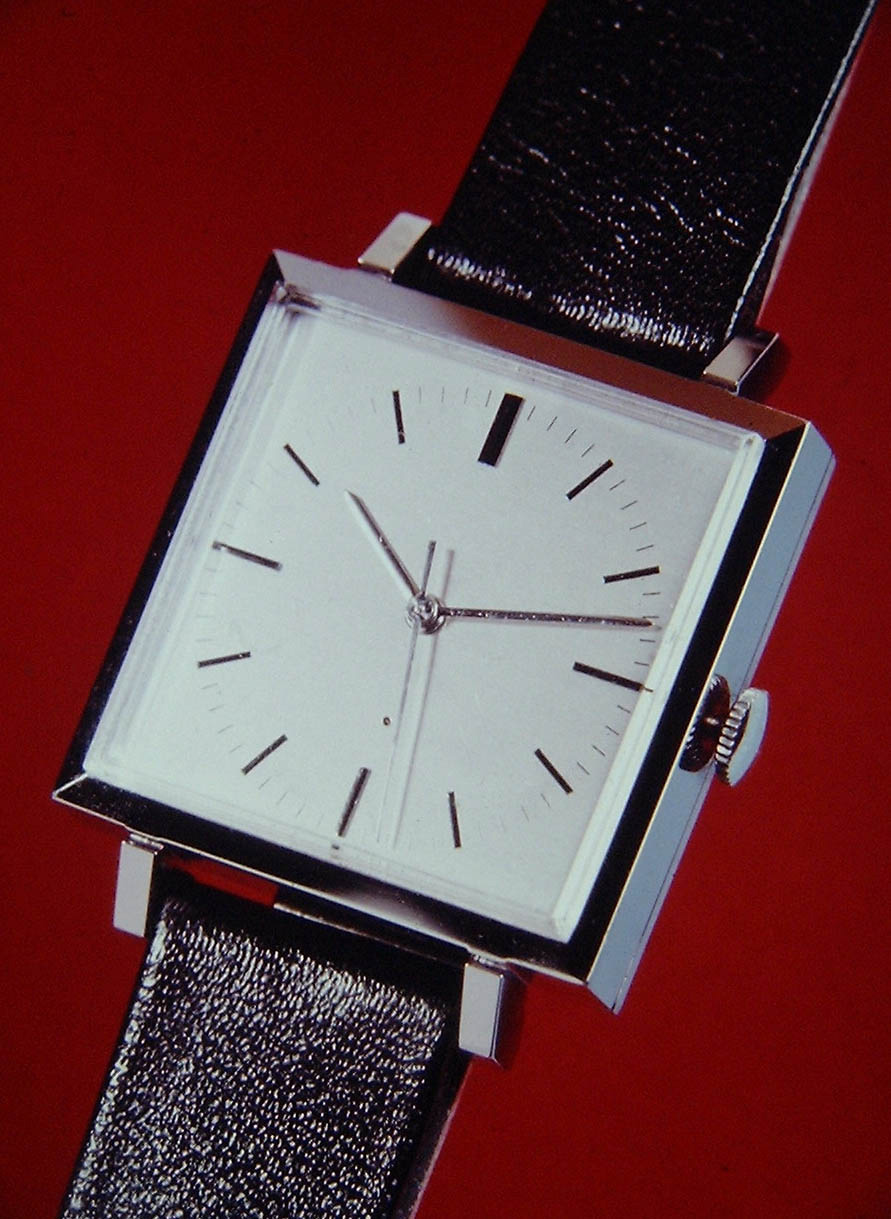
Figure 1. Beta 1 quartz wristwatch prototype developed by CEH in 1967. Author and rights holder, CSEM SA, successor to CEH’s rights. Unchanged. Wikimedia Commons CC BY-SA 3.0 Unported

From mechanical engineering to watchmaking#
Born in Milan on 28 July 1918, Le Coultre went to school in France and studied mechanical engineering in Lausanne, qualifying as an engineer in 1941. According to a biography in the family archive, work and training at Sulzer preceded a post as Jakob Ackeret’s assistant at the Federal Institute of Technology in Zürich, where he studied aerodynamics. He then worked on variable-pitch propellers at Escher-Wyss, on cinema equipment research at Paillard and in the measuring-instrument division of the Société genevoise d’instruments de physique. 2 3
Science journalist Lucien F. Trueb’s obituary for the Société suisse de chronométrie (SSC) also records his engineering education and work at these companies. It says he took over the Mildia watch company in La Chaux-de-Fonds from his father-in-law in 1953. His career spanned heavy machinery, research instruments and mass-produced watches. 1 2
Measuring watch quality#
In 1958 he joined the Federation of the Swiss Watch Industry (FH), advising Gérard Bauer on technical matters and developing the research department. The family biography dates his arrival to 19 May, his appointment as deputy director to 1964 and his appointment to lead research and technology to 1969. The precise dates come from that biography, and the SSC obituary also records his FH work on quality control, standards and research organisation. 1 2
One result was the Contrôle Technique des Montres (CTM), a technical assessment of watches. According to Trueb, watchmaking schools helped measure many watches and compare changes in rate with amplitude, position and temperature. Quality criteria for movements were reportedly set in 1962. 1
A watch that reads correctly in one condition can vary as daily conditions change. Isochronism is the ability to retain the same period as amplitude changes. Positional error is a difference in rate when the watch’s orientation changes. Including temperature lets the assessor compare stability across conditions instead of measuring a single favourable adjustment. Le Coultre’s work examined watch quality across combinations of these variables. 1
The family biography also credits him with NIHS dimensional standards and quality standards for water, magnetic and shock resistance, as well as research on balance springs and reliability in wear. Mechanical improvement and the move to electronics were concurrent parts of his career. 2
Establishing CEH and selecting quartz#
Planning an electronic watch and choosing quartz#
The Centre électronique horloger was established in 1962 as a research partnership of about twenty Swiss watch companies. The official history of its successor, CSEM, describes the original mission as developing electronic watches and dates quartz’s selection as a promising technology to 1965. Seiko’s official development history also links Le Coultre with the creation of CEH in 1962. 4 5
Planning, creating the organisation and selecting a technology took place in stages. The Le Temps obituary reports that in 1957 the FH asked Le Coultre to prepare a report on using quartz to advance the watch industry. Trueb dates Bauer’s electronic wristwatch development mandate to 1959. Those two accounts do not establish a fully formed CEH quartz wristwatch programme in 1957. 1 3
CEH developer Armin H. Frei describes the work inside the research group. He and Rolf Lochinger moved towards combining a small quartz oscillator with a low-power circuit in 1965. Towards the end of that year, director Roger Wellinger made the quartz wristwatch a priority, according to Frei. 6
What had to fit in the wristwatch#
A quartz watch uses a circuit to sustain regular quartz vibrations and divide the high frequency for the display. A watch with hands also needs a motor that converts the electrical signal to rotation. Miniaturisation meant fitting an oscillator, circuit, battery, motor and train together in one case. 7
The Musée international d’horlogerie (MIH) exhibition material from 2002 explains how the resonator mounting limits energy loss and resists shocks. The electronics sustain oscillation, divide frequency and drive the display. Long battery life required adapting integrated-circuit technology, which had originated in the United States, to the watch’s low voltage and low power requirements. 7
The Beta 1 and Beta 2 were both quartz prototypes, but drove their displays differently. According to Frei, Beta 1 used a stepping motor, while Beta 2 used a 256 Hz vibrating motor and ratchet wheel. The latter did not have to divide the high frequency all the way down to one pulse per second, reducing the demands on the divider circuit. Early quartz wristwatches therefore differed in how their hands moved. 6 7
Prototypes, competition and commercial release#
In 1967 CEH completed its Beta 1 and Beta 2 quartz wristwatches. The MIH reports that CEH’s entries took the top ten places in that year’s Neuchâtel Observatory competition. Beta 21, an industrial development of Beta 2, reached the market in April 1970. 4 7
Prototype completion and the first commercial release were separate milestones. Seiko launched the Quartz Astron 35SQ on 25 December 1969. CEH demonstrated accuracy in 1967, while Seiko began selling a quartz watch in 1969. Le Coultre’s contribution was to establish a research partnership capable of progressing towards production. 5 7
Research at Rolex and mechanical watches#
In 1971 Le Coultre moved to Rolex’s technical department. The Italian-language ATS report says he headed research and development from that year. The SSC obituary says André Heiniger placed him in charge of the technical department. The titles differ, but both accounts describe an engineer with experience in electronic watches leading development at Rolex. 1 8
Trueb says Le Coultre established an electronics laboratory and led research that contributed to the Oysterquartz, while also improving the reliability and robustness of mechanical movements. He retired in 1989. The sources document his work in both electronic and mechanical watches. Detailed attribution of Oysterquartz components and individual Rolex calibre changes would require additional records. 1
In 1984, the CEH, Laboratoire suisse de recherches horlogères (LSRH) and Fondation suisse pour la recherche en microtechnique (FSRM) combined to form CSEM. The ATS obituary reports that Le Coultre helped found it. CSEM itself traces its origin to the merger. Electronic watch research had helped establish a broader institutional basis for microtechnology. 4 8
Recording and passing on experience#
In retirement Le Coultre helped document the development of quartz watches. In 2002 he co-authored L’aventure de la montre à quartz with Max Forrer, André Beyner, Henri Oguey and others. He also served on the scientific committee for the MIH exhibition “Mission impossible, The adventure of the quartz watch”. The museum describes an exhibition connected with the authors’ work and showing the development process through prototypes, experimental apparatus, models and documents. 7
The authors had taken part in the research they later described. Frei’s recollections place different emphasis on the progress of the joint programme, ideas within the research group and individuals’ contributions. 6 7
Le Coultre died in August 2018 aged 100. The following year the MIH announced that it had acquired his personal records on the development of quartz wristwatches. It also took in papers and prototypes from Andreas Rusznyak of Battelle, who had worked on a separate line of development. Keeping evidence from different projects allows a fuller account of the research. 8 9
In issue 100 of its journal in 2025, the SSC credited Le Coultre with the idea for the current journal, which began in 1989. The aim was to communicate watchmaking science and technology and support a research community through sharing knowledge. His work included building institutions for measuring quality, doing research and communicating its results, as well as developing quartz watches. 10
Chronology#
| Date | Event | Sources |
|---|---|---|
| July 1918 | Born in Milan, reportedly on the 28th | 3 8 |
| 1941 | Qualifies as a mechanical engineer in Lausanne | 1 2 |
| 1940s to early 1950s | Works at Sulzer, the Federal Institute of Technology in Zürich, Escher-Wyss, Paillard and SIP | 1 2 |
| 1953 | Takes over Mildia | 1 |
| 1958 | Joins the FH | 1 2 |
| 1962 | CEH is established. CTM quality criteria are reportedly set that year | 1 4 |
| 1965 | CEH identifies the quartz approach as promising | 4 6 |
| 1967 | CEH completes Beta 1 and Beta 2 for the observatory competition | 4 7 |
| April 1970 | Beta 21 reaches the market | 7 |
| 1971 | Joins Rolex’s technical and research operation | 1 8 |
| 1984 | Reportedly takes part in founding CSEM | 4 8 |
| 1989 | Retires from Rolex and helps plan the new SSC journal | 1 10 |
| 2002 | Co-authors a history of quartz development and helps with the MIH exhibition | 7 |
| August 2018 | Dies aged 100 | 8 |
| 2019 | The MIH announces the acquisition of his papers | 9 |
| December 2025 | The 100th issue of the SSC journal commemorates its conception | 10 |
Scope of the sources and technical attribution#
Le Coultre’s career is documented in a family biography, a professional society’s obituary, news reports and museum acquisition announcements. The school and company registers, original FH appointment records and contents of the papers acquired by the MIH were not available together for this account. The 1957 proposal, 1959 commission and 1965 technology selection stand as stages reported by different sources. 1 3 4
The sources do not establish a patent for a particular quartz resonator or integrated circuit as Le Coultre’s own invention. His organisational work at CEH and the developers’ contributions to components and circuits together show what the research programme accomplished. 6 7
References#
- Lucien F. Trueb, “René Le Coultre (1918–2018), Une des grandes personnalités de l’horlogerie suisse”, Bulletin SSC, No. 86, December 2018, pp. 27–29. PDF from the SSC. Accessed 22 October 2026.
2. “Le Coultre René (1918–2018)”, author and original publication year unspecified, Piguet family history site, PDF pp. 1–2. Covers his positions in industry and at the FH. The original publication is unidentified. Biographical PDF. Accessed 22 October 2026.
3. Le Temps, “René Le Coultre, inventeur du quartz horloger, n’est plus”, 20 August 2018, displayed update 10 June 2023. Birth and recollection of 1957. Article. Accessed 22 October 2026.
4. CSEM, “History and spin-offs”, undated. Entries for 1962, 1965, 1967 and 1984. Official history. Accessed 22 October 2026.
5. Seiko Watch Corporation, “The remarkable achievement of the Seiko Quartz Astron lives on”, undated. Seiko’s retrospective on the formation of CEH, the 1967 competition and the 25 December 1969 release. Official development history. Accessed 22 October 2026.
6. Armin H. Frei, “History of the First Quartz Wristwatch”, 2009, hosted by his estate. “New Strategy” and “The first Quartz Wristwatch: Beta 1”. A participant’s account of his contribution and priority. Developer’s recollections. Accessed 22 October 2026.
7. Musée international d’horlogerie, “Mission impossible, The adventure of the quartz watch”, English press material, 2002, PDF pp. 2–6. Release of Beta 21, technologies, the co-authored book and scientific committee. Exhibition material. Accessed 22 October 2026.
8. ATS/G.D., “Morto René Le Coultre, l’inventore dell’orologio da polso al quarzo”, Ticinonline, 20 August 2018. Reports using the same ATS dispatch share the same source. Article. Accessed 22 October 2026.
9. Musée international d’horlogerie, “La moisson 2018 des acquisitions du MIH présentée au public”, 12 March 2019, PDF p. 2. Announcement of the acquisition of private papers. Acquisition announcement. Accessed 22 October 2026.
10. René Ziegenhagen, “Bulletin SSC : le premier d’une longue série”, Bulletin SSC, No. 100, December 2025, p. 25. Retrospective on the journal’s conception in 1989. The members-only continuation was outside the review. Public introductory page. Accessed 22 October 2026.