William Robert Broughton#
This article was translated from Japanese using AI. Read the Japanese original
William Robert Broughton (1762–1821) was a British naval officer, navigator and surveyor. After commanding the Chatham on Vancouver’s expedition, he sailed the North Pacific in the Providence and its tender, surveying the coasts of the Japanese islands, the Kurils, the Korean Peninsula and elsewhere. His voyage account, published in 1804, describes coastal features and encounters with inhabitants and gives detailed comparisons between shipboard timekeepers and astronomical observations ashore. 1 2
Broughton’s place in horology is as a user who carried marine timekeepers, checked their daily gains and losses, and used those figures to find longitude. A timekeeper can keep running while a change in rate leads to an error in position. The account shows the conditions that made precision timekeepers useful, including routine winding, decent weather and access to an observing site ashore. 1
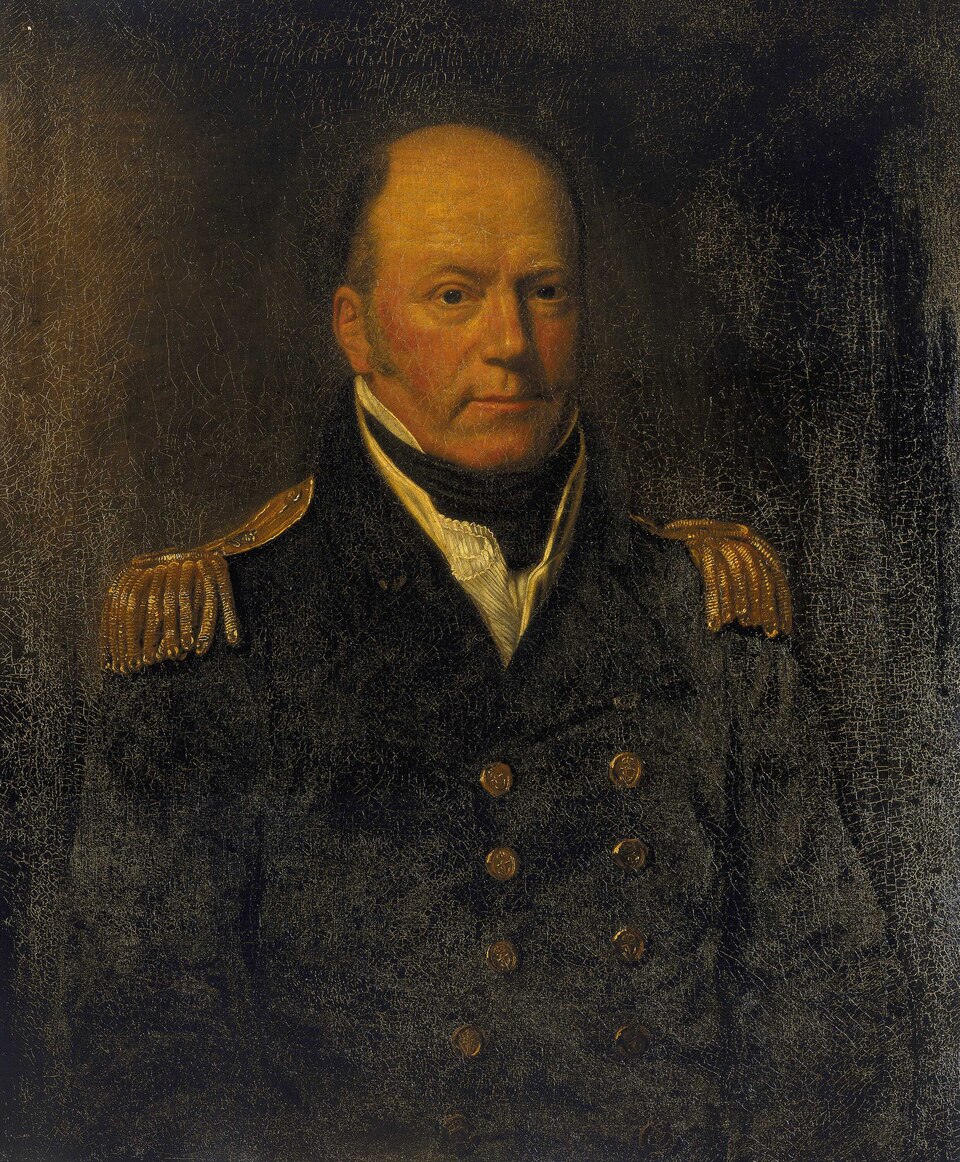
Figure 1. William Robert Broughton. Artist unknown (British school, nineteenth century), National Maritime Museum, Greenwich, London (BHC2576). Source Wikimedia Commons. Public domain under the PD-Art and PD-old-100-expired statements. Reduced JPEG supplied by Commons, with no additional cropping or tonal changes.
Early life and the start of his surveying career#
Broughton was born on 22 March 1762. The public excerpt of the current Oxford Dictionary of National Biography names his father as Charles, a merchant trading with Hamburg, and his mother as Ann Elizabeth. It records his baptism at St Stephen Walbrook, London, on 26 March. He entered the Navy in 1774 and served in North America and then in the East Indies. In 1782 he became an officer on the Burford and took part in fighting in the Indian Ocean between the fleets of Hughes and Suffren. The biographies consulted leave his schooling and any training in clockmaking undocumented. 2 3
In December 1790 he was appointed to command the Chatham on George Vancouver’s expedition. In 1791 he reached the Snares Islands south of New Zealand and Chatham Island, inhabited by the Moriori. In 1792 he surveyed the Columbia River on the west coast of North America, going about 100 miles upstream in small boats. Voyages described as discoveries recorded already inhabited lands within European geography. With the survey results and reports, Broughton crossed Mexico overland from San Blas to Veracruz and returned to Britain in 1793. 2 3
The Providence and the division of observing work#
On 3 October 1793 he was given command of the Providence, which William Bligh had used on a breadfruit voyage. After a refit and outfitting, the ship left Britain in 1795 to join Vancouver. By the time it reached the North American west coast, Vancouver’s party had left. The Providence then crossed the Pacific to survey the Asian coast. 1 2
The crew list in the 1804 book identifies Zachary Mudge separately as first lieutenant and John Crosley as astronomer. Crosley took astronomical observations at ports of call and compared the timekeepers. Command and choice of route, astronomical observations and work handling the ship supported one another and were separate responsibilities. 1
Broughton’s letter from Macao to the Board of Longitude on 1 April 1797 documents the division of work. His original orders were to send Crosley to Vancouver. After learning that Vancouver had returned home, Broughton kept Crosley aboard because his astronomical observations were needed. He also reported that a lack of instruments hindered the observations. Crosley left the expedition in China on 10 June, so observations from August onwards cannot be assigned to him on that evidence. 1 10
Finding longitude with a timekeeper#
A marine timekeeper carried the time of a distant reference point aboard ship. Navigators compared it with local time determined from the Sun or other observations to calculate how far east or west they were. Earth rotates through 360 degrees in 24 hours, so one hour of time difference equals 15 degrees of longitude and one minute of time equals 15 arcminutes. Minutes of time and arcminutes are different units. A small timekeeping error can matter when converted to a position. 1
The time offset in minutes and seconds at a particular instant needs to be distinguished from the rate at which the instrument gains or loses seconds per day. A constant rate can be corrected for the number of days elapsed. A change in rate makes the correction determined at departure insufficient. 1
Apparent solar time from observations of the actual Sun differs from mean solar time, which averages out the variation in the Sun’s apparent motion through the year. The voyage account explicitly uses mean time for its comparisons. Astronomical observations and calculations re-established the timekeepers’ reference at each comparison, quite differently from receiving a modern UTC time signal. 1
Several timekeepers can give different results#
The longitude table from Kealakekua Bay, Hawaii, in January 1796 gives values from several timekeepers: No. 1, pocket watch No. 2, Arnold box chronometer No. 56 and a box chronometer identified as Box E. Even after applying rates previously determined at Port Jackson, their longitudes differed. Broughton then described the rate of Arnold’s box chronometer as so irregular as to make it nearly useless. 1
The account concerns a particular timekeeper on a particular voyage and provides no general test of John Arnold’s work. No. 45, mentioned later, is a different timekeeper from No. 56. The maker, number, date and place are all needed to interpret the comparisons. 1
Ownership and destinations also varied. Broughton had bought timekeepers and navigational instruments in Britain for his Spanish acquaintance Bodega y Quadra. After Quadra’s death he handed them over to the governor at Monterey in June 1796. No. 2 and No. 56 appear among the items handed over, illustrating that the ship carried timekeepers under different arrangements. 1 9
In November 1796, Broughton records that No. 1 had gone unwound at noon and was temporarily unusable. He regretted the loss of the timekeeper in waters with strong currents. A precise mechanism is useful for navigation only so long as its relationship to the reference time is known. Routine winding helped maintain confidence in the survey. 1
Rates of No. 45 at Macao, Etomo and Korea#
In 1797 Broughton recorded different rates for Arnold’s box chronometer No. 45 at different places. The table expresses each comparison against mean time as positive for a gain and negative for a loss. 1
| Place and time of comparison | Daily rate against mean time | Observation |
|---|---|---|
| Taipa near Macao, noon, 8 April 1797 | +0.419 s/day | Crosley’s comparison from single altitudes of the Sun |
| Harbour of Etomo, noon, 21 August 1797 | +1.26 s/day | From equal-altitude observations ashore on 13–21 August |
| Harbour of Chosan, Korea, noon, 21 October 1797 | −9.80 s/day | From observations of solar altitude ashore on 13–21 October |
The 1804 edition gives these figures on printed pp. 171, 275 and 344–345. Etomo appears as Endormo or Endomo in the original and Chosan as Chosan or Tchosan. 1
Equal-altitude observations use the times at which the Sun is at the same altitude before and after its meridian passage. Comparisons on different days determined how the timekeepers’ errors changed. At Etomo, Broughton records that the difference between longitude by timekeeper at arrival and the adopted longitude reached 1° 2′ 30″ in 46 days. The figures show why rates had to be determined again on location. 1
The problem became clearer at Chosan. For the same anchorage on 13 October, he obtained 130° 26′ 21″ E with the Etomo rate and 128° 40′ 33″ E with the Macao rate. A total of 99 sets of lunar distance observations made before arrival, at anchor and after departure were reduced using the timekeeper and used to establish the harbour’s longitude as 129° 7′ 7″. The lunar-distance method estimates time from the separation of the Moon and a star or other body and also allowed the timekeeper results to be checked. 1
Broughton did not decide whether the timekeeper was irregular or the rate determined at Etomo was wrong. He says that using the Macao rate and allowing for the longitude difference at Etomo gave good agreement with later observations. The record leaves any defect in temperature compensation or failure of a particular component unconfirmed. 1
Surveying in Japan, the Ryukyus and Korea#
In September 1796 Broughton entered the harbour of Etomo at Muroran, Hokkaido, aboard the Providence and returned the following year. Muroran’s history records a meeting and exchange of maps with Katō Kengo, a physician of the Matsumae domain. Broughton’s charting involved soundings, bearings, latitude and longitude observations, and arrangements with local people as well as observing the coast from a distance. 1 4
On 17 May 1797 the Providence struck the coral of Yabiji Reef off Miyako Island and was lost. Broughton’s published voyage records the collision around 7:30 p.m. under that date, which also appears in the accounts from Miyakojima and Muroran. The crew moved to the schooner serving as tender, and islanders helped with water and food. The party returned to Macao to regroup and continued the coastal survey in the smaller vessel. The nineteenth-century Dictionary of National Biography dates the grounding to 16 May. The date used here follows Broughton’s original edition. 1 2 4 5
Tadashi Ikeshiro’s article in the bulletin of the Miyakojima City Museum considers the rescue in light of Ryukyuan regulations for helping shipwrecked crews, beyond a traveller’s account of the islanders’ hospitality. The captain’s voyage is an important primary record, and the people he encountered also had institutions and made decisions of their own. 5
Conditions of the stay affected observation alongside the weather. The record from the Korean coast in October 1797 describes local people supplying water and firewood while asking the party to depart and keeping watch on its movements. Rain prevented observations of solar altitude and hence the determination of the timekeeper’s rate. Permission to land and observe and the number of days available affected the accuracy of positions independently of the timekeeper itself. 1
The published voyage, later life and survival of the records#
Broughton left Trincomalee for home in May 1798 and reached Britain in February 1799. In 1804 he published A Voyage of Discovery to the North Pacific Ocean in London, covering the voyage of 1795–1798. In the preface he explains that detailed astronomical and navigational entries would help navigators and scientists, even if the book held little appeal for those reading for entertainment. Winds, currents and soundings therefore appear alongside timekeeper errors and rates and observations of the Sun and Moon. 1 2
He continued in naval service and took part aboard the Illustrious in operations in 1809, the capture of Mauritius in 1810 and the expedition to Java in 1811. He returned in 1812. In 1817 his son William began his naval service aboard the Spencer under his father’s command. Broughton held the rank of colonel of marines from 1819 and died in Florence in March 1821. The Royal Museums Greenwich portrait record and the nineteenth-century biography give 12 March, while Muroran’s account gives the 13th. 2 4 6 7
Records of the 1792 survey, the 1793 crossing of Mexico and the voyage chiefly documented for 1795–1797 are now held as RUSI/NM/132 at the National Maritime Museum. They were transferred in 1968 from the former naval manuscripts of the Royal United Service Institution. The Hakluyt Society published an edition of the voyage edited by Andrew David in 2010. 8 9
Broughton’s contribution to horology is the record linking timekeeper reliability to field observations. Winding, places to observe ashore, the weather, known longitude, the number of days available for comparisons and choice of a rate all affected one another on the voyage. The records show the importance of both making precision timekeepers and using them skilfully. 1
Timeline#
| Date | Event |
|---|---|
| March 1762 | Born on the 22nd and baptised in London on the 26th. |
| 1774 | Enters the Navy. Serves in North America and later in the East Indies. |
| 1782 | Becomes an officer aboard the Burford. |
| December 1790 | Appointed to command the Chatham on Vancouver’s expedition. |
| November 1791 | Reaches the Snares Islands and Chatham Island. |
| 1792 | Surveys the west coast of North America and goes up the Columbia River. |
| 1793 | Takes reports across Mexico overland and returns with them. Appointed to command the Providence on 3 October. |
| 1795 | Sails from Britain for the South Pacific. |
| January 1796 | Compares longitudes obtained with several timekeepers in Hawaii. |
| From June 1796 | Crosses the Pacific from the North American west coast to survey Asian coasts. |
| September–October 1796 | Surveys Etomo and Muroran and the area towards the Kurils. |
| November 1796 | Records a failure to wind No. 1. |
| Late 1796–April 1797 | Refits near Macao and compares timekeeper rates. |
| May 1797 | Loses the Providence on Yabiji Reef, takes refuge in the tender and continues the survey. |
| August 1797 | Revisits Etomo and observes the rate of No. 45. |
| October 1797 | Compares solar and lunar observations with longitudes from the timekeeper on the Korean coast. |
| May 1798–February 1799 | Leaves Trincomalee and returns home. |
| 1804 | Publishes the North Pacific voyage. |
| 1809–1811 | Takes part in operations aboard the Illustrious. |
| 1812 | Returns to Britain. |
| 1817 | Commands the Spencer, in which his son William enters the Navy. |
| 1819 | Becomes a colonel of marines. |
| March 1821 | Dies in Florence. |
| 1968 | Transfer of the manuscripts now held by Royal Museums Greenwich. |
| 2010 | Publication of David’s edited voyage account. |
| 2024 | The bulletin of the Miyakojima City Museum discusses the voyage and the rescue. |
Limits of the evidence#
The 1804 voyage describes observing methods and gives comparisons. The full manufacturing history and internal repairs of each instrument and the reason for the change in the rate of No. 45 remain uncertain. The longitudes quoted here are values adopted from the observations of the period. 1
References#
- William Robert Broughton, A Voyage of Discovery to the North Pacific Ocean, London, T. Cadell and W. Davies, 1804. Preface, crew list, pp. 35–36, 134, 170–171, 193–205, 275 and 337–345, and final chapter. Original at Internet Archive. Accessed 7 November 2026.
2. J. K. Laughton, “Broughton, William Robert”, Dictionary of National Biography, 1885–1900, including the 1904 supplement. Wikisource text. Accessed 7 November 2026.
3. J. K. Laughton, revised by Roger Morriss, “Broughton, William Robert (1762–1821), naval officer”, Oxford Dictionary of National Biography, published 2004, 2013 edition. Public extract covering his birth and early Navy service through 1793. Oxford Academic. Accessed 7 November 2026.
4. City of Muroran, “The Providence”, updated 23 May 2024. Official local account. Accessed 7 November 2026.
5. Tadashi Ikeshiro, “The voyage of the Providence and the age of exploration”, Bulletin of the Miyakojima City Museum, No. 28, 2024, pp. 161–168, especially p. 163. Museum PDF. Accessed 7 November 2026.
6. John Marshall, “Broughton, William”, Royal Naval Biography, entry for his son William, promoted in 1831. The opening gives his father’s date of death and his own entry into the Navy in 1817. Wikisource text. Accessed 7 November 2026.
7. Royal Museums Greenwich, “Captain William Broughton (1762–1821)”, BHC2576. Portrait and biography. Accessed 7 November 2026.
8. Royal Museums Greenwich, “Broughton, William Robert, Captain, 1762–1821”, RUSI/NM/132. Archive record. Accessed 7 November 2026.
9. Andrew David, ed., introduction by Barry Gough, William Robert Broughton’s Voyage of Discovery to the North Pacific 1795–1798, Hakluyt Society, Third Series 22, 2010, Routledge edition 2016. Bibliographic record and public preview. Publisher’s sample PDF. Accessed 7 November 2026.
10. William Robert Broughton to the Board of Longitude, Macao, 1 April 1797. Cambridge University Library, RGO 14/1, f. 158r. Original page at the library, checked in the official IIIF image. Accessed 7 November 2026.