This article was translated from Japanese using AI. Read the Japanese original
Breguet No. 92 is a double-faced pocket watch made by Abraham-Louis Breguet’s workshop. Its case houses the time, a calendar, a Moon phase indication, the difference from solar time, and a mechanism that sounds the time, among other functions. The Duke of Praslin bought it in 1805. It later belonged to the collector David Lionel Salomons and entered the Musée des arts et métiers in Paris. The indications and controls are distributed between a white enamel front dial and an engraved gold dial on the back. 1 2 3
No. 92 is the workshop number for this individual watch. The museum inventory number is Inv. 16311, and Salomons lists it as no. 57 in his 1921 catalogue. The three numbers come from the workshop, the museum and the collector respectively. 1 2
Dating the watch and the purchase in 1805#
Salomons cites Breguet certificate No. 2427, which records the sale of No. 92 to the Duke of Praslin for 4,800 francs. He also reports that the certificate dates manufacture to around 1783 or 1785. The museum’s object record likewise gives “1783/1785”. 1 2
Salomons gives the sale date as “11 Thermidor, 1805”. This combines Thermidor, a month in the French Republican calendar, with a Gregorian year. The sale is dated here to 1805 without converting the day and month. The published account does not establish an order in 1783 or the completion of all work in 1805. 1
Salomons connects the gap between the date of manufacture and the sale with Breguet’s exile during the Revolution. That is his interpretation of the chronology. The sources consulted do not give a day-by-day record of work starting, stopping and resuming, identify each worker’s contribution or establish the continuous time spent making the watch. 1
Indications and controls on both faces#
The white enamel front dial has gold hands and gives the time and calendar, among other indications. The back has a hand-engraved gold dial with Moon phase, state of wind and indications and controls for adjustment. Glass on both sides makes the back another face to read. 1 2
The museum’s detailed record 16311-0001- lists steel, enamel, gold, glass and brass and gives dimensions of 8.7 × 6.5 × 2.5 cm and a weight of 220 g. The dimensions are dated 16 July 2012. The measurements describe the object in the collection without specifying the material of every part or giving a specification from 1805. 5
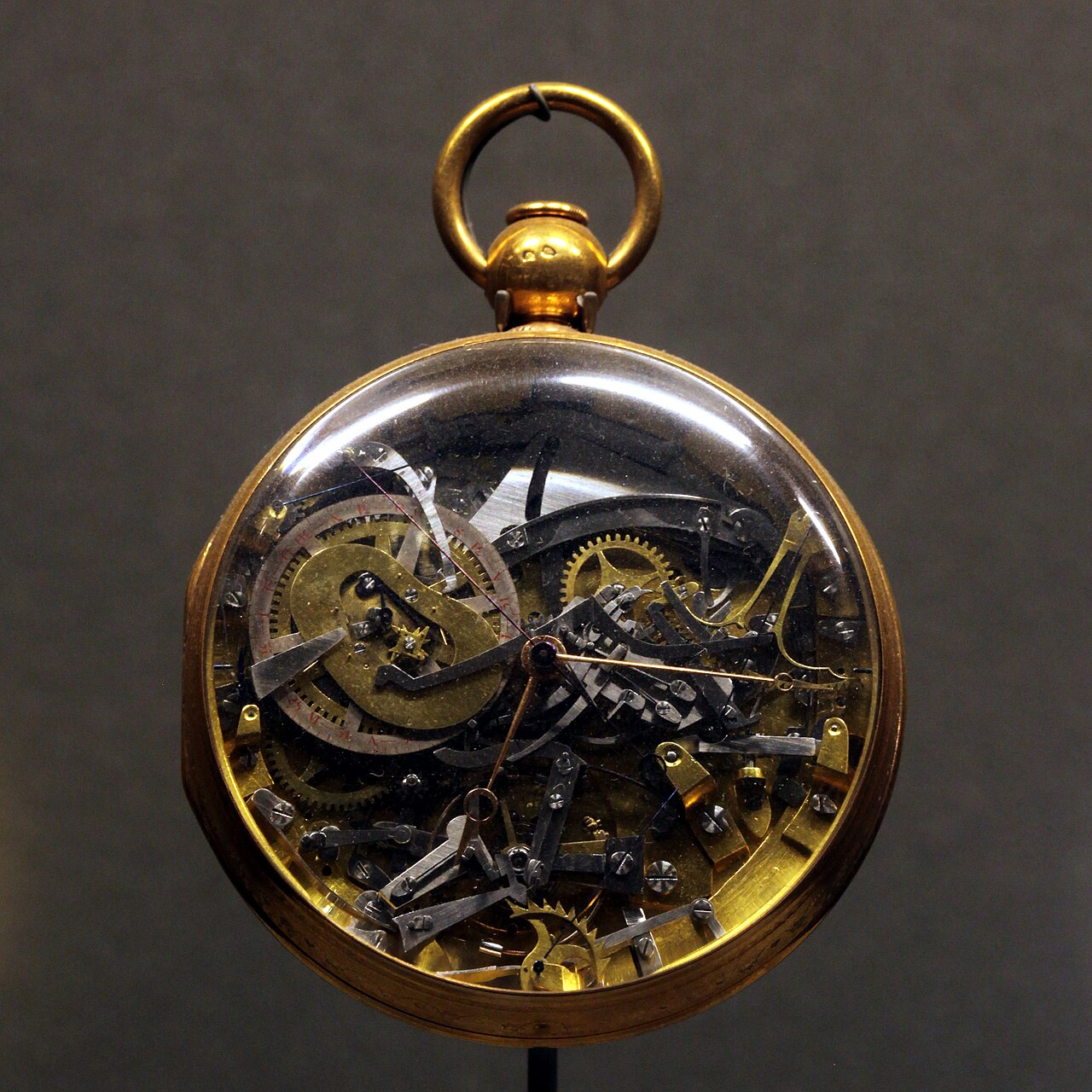
Figure 1. No. 92 with the front dial removed. Photograph by Rama, 13 November 2016. Source Wikimedia Commons file. Licence CC BY-SA 3.0 France. Resized only. The displayed image carries the same licence.

Salomons’s text and the plates with and without the dials show how the visible parts relate to the controls. His catalogue describes separate rear squares for winding, time setting, starting or stopping the independent seconds, and securing the dial. He says the square on the dial-retaining screw is larger to distinguish it from the controls. 1
| Function | What the original sources document |
|---|---|
| Time | Hands show hours and minutes. A square on the back is used for setting the time |
| Perpetual calendar | Salomons classifies it as a perpetual calendar. A square on the front is used to set the calendar |
| Independent seconds | A control starts and stops the seconds indication separately from the control that stops the watch |
| Equation of time | Shows the difference between mean solar time, kept by an ordinary watch, and time based on the apparent motion of the Sun |
| Repeater | Sounds the time on demand. Ten-minute strikes and minute strikes on a gong are documented |
| Thermometer | A thermometer is listed in the catalogue |
| Moon phase and state of wind | The back shows the phase of the Moon and how far the mainspring is wound |
| Adjustment | The back has a rate adjustment and an indication and control for adjusting the speed of the striking mechanism |
The table groups the catalogue’s descriptions by function. Current operating procedures and condition would require examination of the surviving watch. 1
Mechanisms combined in a small watch#
Calendar and equation of time#
Mean solar time and time based on the Sun’s apparent motion differ by an amount that varies with the seasons. No. 92 displays that difference on the watch itself, separately from changes in its rate. 1
The plate on p. 176 of Salomons shows the front dial removed, with the date wheelwork and equation-of-time cam visible. A cam uses its profile to change another part’s motion. In addition to moving the hands, the mechanism thus encodes information about dates and seasons in its motion. The plate alone leaves the calendar’s leap-year treatment, the complete tooth counts and the error of the equation indication undetermined. 1
Seconds that can be stopped#
Independent seconds can be started and stopped separately from the normal time display. Salomons describes one square for operating the seconds and a separate projection for stopping the whole watch. The photograph of the rear with the dial removed shows a thin wheel for the independent seconds and a double star-shaped part. 1
The entry documents starting and stopping the seconds. It gives no evidence of an instant return to zero after stopping, leaving the operation distinct from the start, stop and reset sequence of a modern chronograph. 1
Sounding the time and regulating the watch#
A repeater sounds the time when the user operates the control. Salomons says No. 92 strikes ten-minute intervals au toc and the minutes on a gong. His general description explains au toc as striking the case. The back also has an indication for adjusting the striking speed. 1
The timekeeping mechanism is recorded as having a lever escapement, a compensation balance intended to reduce rate changes with temperature and ruby hole jewels. The escapement meters the train’s advance and the oscillating balance supplies the timing reference. The catalogue documents these components. Modern measurements of daily rate, frequency and running time are unverified here. 1
From Salomons’s catalogue to the museum#
Salomons’s Breguet (1747–1823) of 1921 includes photographs of both faces of No. 92 and the mechanism under the dial. He compared it with his No. 160 “Marie Antoinette” and regarded the workmanship as its equal. This was the owner’s assessment. 1
The University of Southampton’s catalogue of the Salomons family papers, MS 378, documents the donation. MS378/2/69 records a letter of thanks dated 16 May 1924 from the French authorities for education and fine arts, stating that the Duke of Praslin’s Breguet watch would be added to the collection. The finding aid also lists correspondence about related celebrations and the sending of a commemorative plaque, and a certificate concerning the donation of the watch to France. These descriptions come from the holding archive’s catalogue. 3
The museum’s detailed catalogue records exhibitions at the 1935 Brussels International Exhibition, “Chefs d’œuvre de l’horlogerie” in Paris in 1949, and “Horloges et automates” from 21 September to 30 November 1954. It lists the watch as 16311-0001-, a chain and key as 16311-0002-, and a damaged dial as 16311-0003-. The separate entry for the dial leaves the date of replacement and history of restoration open. 5
The museum identifies No. 92 as Inv. 16311 and its detailed record listed it as off display when checked in November 2026. A later account reports theft and recovery after the donation. Original records establishing the dates, restoration work or replacement history have not been located in the sources consulted. 2 4 5
Timeline#
| Period | Documented event |
|---|---|
| Around 1783 or 1785 | Date of manufacture given in the certificate cited by Salomons. The museum dates the object 1783/1785 |
| 1805 | Sold to the Duke of Praslin for 4,800 francs. Salomons gives the date as 11 Thermidor, 1805 |
| 1921 | Salomons publishes the description and photographs as catalogue no. 57 |
| 1924 | Archival records list a letter of thanks, correspondence on events and a certificate concerning the donation to France |
| 1935, 1949 and 1954 | The museum catalogue records exhibitions in Brussels and Paris |
| November 2016 | Date of the front-view photograph shown here |
| Checked November 2026 | The museum’s published record identifies No. 92 as Inv. 16311 |
Sources 1 2 3 5. The date of the photograph is from the file record for Fig. 1.
Significance and scope of the sources#
No. 92 later became a source of comparison for researchers studying historic watchmaking techniques. When announcing No. 1160, its recreation of No. 160, in 2008, the Swatch Group said that studying pieces from the period such as the Duke of Praslin’s watch helped explain period styles and techniques. This is the account of the group responsible for the recreation. No. 1160’s component count and dimensions describe that watch. 6
No. 92 makes it possible to read the time, calendar and phase of the Moon, compare the time with the Sun, and hear the time struck, all from one portable watch. The back serves for display and adjustment, with even the dial screws distinguished from the operating squares. Its design lies in how it arranges indications, adjustment and winding on two sides of a small case. 1 2
Sources for this account include Salomons’s catalogue and photographs with his observations of the watch, museum collection records, and the university’s finding aid for the donation.
References#
- David Lionel Salomons, Breguet (1747–1823), London, 1921. Open original. P. 48 for catalogue no. 57, certificate No. 2427, specifications, dating and controls, p. 28 for general explanations of independent seconds and au toc, and plates on pp. 175–176 for both dials and the mechanisms underneath. Accessed 7 November 2026.
- Musée des arts et métiers, Lionel Dufaux, “Montre n°92 à double face et à grandes complications”, Google Arts & Culture, Inv. 16311. Dating, materials of both faces, purchase in 1805 and holding institution. Accessed 7 November 2026.
- University of Southampton Special Collections, MS 378: Salomons family volumes, p. 26, MS378/2/67–70 and 2/73. Finding aid for records relating to the 1924 donation. Accessed 7 November 2026.
- Breguet Blog, “The holy grail of watchmaking: Breguet’s pocket watch No.160”, 10 September 2018, Ownership section. Later account of theft and recovery of No. 92 after the donation, distinct from original workshop ledgers or police records. Accessed 7 November 2026.
- Musée des arts et métiers, public collection catalogue, “Montre à complication du duc de Choiseul-Praslin”, 16311-0001-, related entries 16311-0002- and 16311-0003-. Dimensions, materials, acquisition, exhibitions and display status. Accessed 7 November 2026.
- Swatch Group, “Marie-Antoinette Grande Complication pocket-watch – N°1160”, 10 April 2008. Account of comparative research using the Duke of Praslin’s watch. Accessed 7 November 2026.