This article was translated from Japanese using AI. Read the Japanese original
At Williamstown Harbour in the nineteenth century, sailors checked their ship’s chronometer by watching a time ball begin to fall. The signal came at 1 p.m. In 1888, the Melbourne Observatory made a new precision clock to send that signal by telegraph, designed by the government astronomer Robert Lewis John Ellery. A pendulum regulated the time; its motion was transmitted to a wheel whose teeth closed an electrical contact. The surviving clock is Museums Victoria’s ST 26040. The Observatory’s instrument maker Carl M. Otto is thought to have made it. 1 2 3
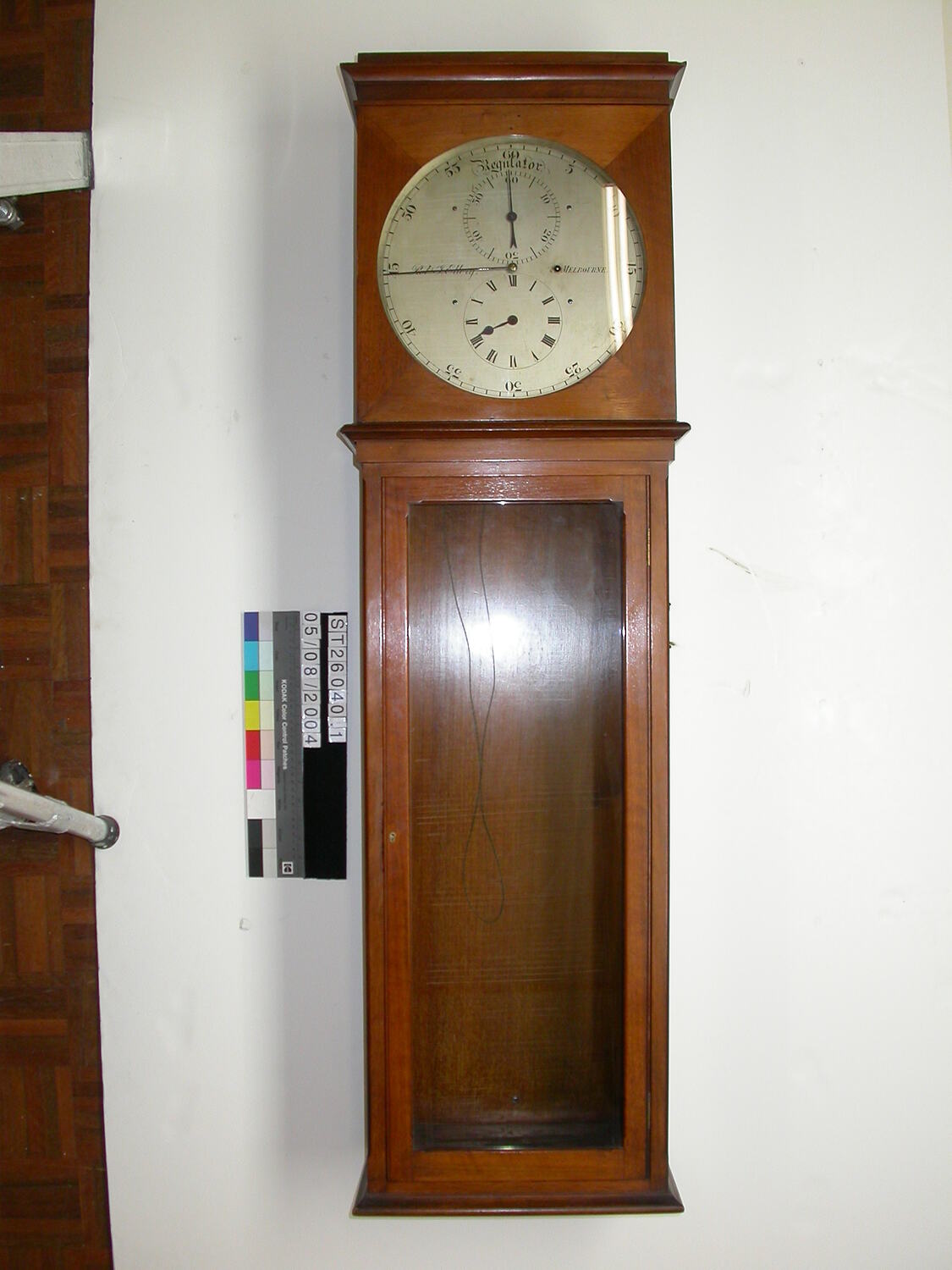
Figure 1. Front of ST 26040. Photograph: Copyright Museums Victoria. Collection record and photograph. Licensed CC BY 4.0. Reproduced without alteration.
Making 1 p.m. at the harbour#
Williamstown Observatory was established in July 1853 to provide accurate time to ships entering Port Phillip Bay. Its first time ball was dropped from a flagstaff at Point Gellibrand. The Victoria Government Gazette of February 1858 says the ball was then dropped from the telegraph station tower at the same point. The notice specified the sequence, except on Sundays: at 12:30 p.m. the ball was raised partway; at 12:58 it was raised to the crossbar; and at 1 p.m. Williamstown mean time it was dropped. The ball’s staged ascent served as advance notice of the fall. 2 4
When observational work moved to Melbourne’s Domain in 1863, Melbourne Observatory took over sending time to the harbour ball. At the observatory, an observer recorded the instants when a star crossed several wires in the transit instrument’s field of view, alongside the clock’s beats on chronograph paper. Pressing a key operated an electromagnet that moved a pen, marking the star’s passage beside the clock ticks. Observing the star transits showed whether the clock was gaining or losing. The observed sidereal time and the Sun’s position given in the almanac were used to determine mean time. On board, a ship could compare its chronometer with the signal; repeated comparisons showed how much it gained or lost in a day. 2 3 5 6
In an 1870 lecture, Ellery described the procedure then in use. Three minutes before 1 p.m., the observatory sent the beats of one clock down the telegraph line, switching to another clock one minute before the signal. The fifth of the final five consecutive signals marked 1 p.m., and an attendant watched for it before releasing the ball. The Williamstown ball sent a signal back to the observatory chronograph when it fell. If the fall differed from the standard time, the correction was published in the shipping column of the next morning’s newspaper. The ball’s release was later automated. 3 5
Keeping an electrical contact closed with a wheel#
ST 26040 is weight-driven. The museum records a deadbeat escapement and a pendulum with a steel rod and cylindrical brass bob. The large outer scale shows minutes; the small dial above shows seconds, and the Roman-numeral dial below shows hours. The round, silver-finished dial is inscribed “REGULATOR ROBERT J. ELLERY MELBOURNE.” It is 1,410 mm high and 420 mm wide. Its depth is 260 mm in the catalogue and 247 mm in a conservation department measurement. 1
In the 1888 annual report quoted by the museum, Ellery explained that the pendulum drove the seconds wheel and hand, whose movement was transmitted to the minute and hour hands. A tooth on the seconds wheel closed the telegraph contact spring. As the tooth passed, the circuit closed; the seconds wheel moved slowly enough to keep the contact closed long enough to operate the line relay. A relay receives a current and switches another contact. If the current is too brief, its moving part may not complete its travel. Ellery reported that this design resolved difficulties in adjusting the line relays. Researcher Jenny Ioanna Andropoulos gives 23 January 1888 as the date the new mean-time clock entered service, based on the annual report. 1 3
A clock made in the observatory workshop in 1870 or 1871 had five contact wheels and five sets of springs: one set served the time-ball signal, two synchronised clocks, and the other two served separate purposes inside the observatory. At watchmaker Thomas Gaunt’s shop, for example, alternating positive and negative currents brought the receiving pendulum into step with the observatory. The harbour time ball had a different task: it was released in response to a signal marking a set time. Both used the telegraph, but one synchronised pendulums while the other delivered time in a single visible drop. 3 5 7
Changes to time distribution and the clock’s history#
In February 1895 Victoria adopted Australian Eastern Standard Time, moving Melbourne clocks forward by about 20 minutes. In the twentieth century, wireless signals made it possible to send time to ships farther offshore. The Williamstown time ball ceased operating in 1926. L. Smith donated ST 26040 on 8 February 1967; it is now held in Museums Victoria’s Melbourne Observatory collection. 1 3 7
Timeline#
| Date | Event |
|---|---|
| July 1853 | Williamstown Observatory established. 2 |
| February 1858 | Gazette notice sets out the procedure for dropping the ball from the Point Gellibrand telegraph tower. 4 |
| 1863 | Melbourne Observatory takes over observation and time-distribution work. 2 3 |
| October 1870 | Ellery lectures on telegraph time signals and checking the time of the ball’s fall. 5 |
| 23 January 1888 | Start of service for the new mean-time clock, according to research based on the annual report. 3 |
| February 1895 | Australian Eastern Standard Time adopted. 7 |
| 1926 | Williamstown time ball service ends. 7 |
| February 1967 | ST 26040 donated by L. Smith. 1 |
| November 2026 | Museum catalogue records the clock in storage and not on display. 1 |
Related articles#
References#
- Museums Victoria, “Regulator Clock – Robert Ellery, Astronomical & Telegraph Controller, Melbourne Observatory, Victoria, 1888” (object ST 26040; includes an extract from the Government Astronomer’s 1888 annual report, p. 6). Accessed 26 November 2026.
- Museums Victoria, “Williamstown Observatory, 1853–1863”. Accessed 26 November 2026.
- Jenny Ioanna Andropoulos, Astronomical Publications of Melbourne Observatory, vol. 1, James Cook University, 2014, §2.5.1.1, pp. 83–84, Table 3, pp. 102, 104. Accessed 26 November 2026.
- Astronomical Observatory, Williamstown, “Time Signal at Williamstown”, dated 29 January 1858, Victoria Government Gazette, No. 20, 9 February. Accessed 26 November 2026.
- Robert L. J. Ellery, “The Common Uses of Astronomy,” lecture delivered 20 October 1870, in Industrial and Technological Museum, Lectures Delivered in the Lecture Room of the Museum During the Spring Session of 1870, Melbourne: Samuel Mullen, 1871, pp. 41, 43–47.
- Museums Victoria, “Chronograph – R. Ellery Design, Melbourne Observatory Workshop, Victoria, 1870s” (object ST 38319). Accessed 26 November 2026.
- Richard Gillespie, Museums Victoria, “Melbourne Observatory & Standard Time in Victoria”. Accessed 26 November 2026.