This article was translated from Japanese using AI. Read the Japanese original
A clock for recording star transits#
Frodsham No. 1062 is an astronomical regulator made by Charles Frodsham of London. It arrived at Melbourne Observatory in 1865 and was used in observations to measure the positions of southern stars. An electrical connection linked it to the equipment that recorded observations. It belongs to the Melbourne Observatory Collection at Museums Victoria, where the clock is documented under ST 46202 and its subordinate record ST 46202.1. 1 2 3
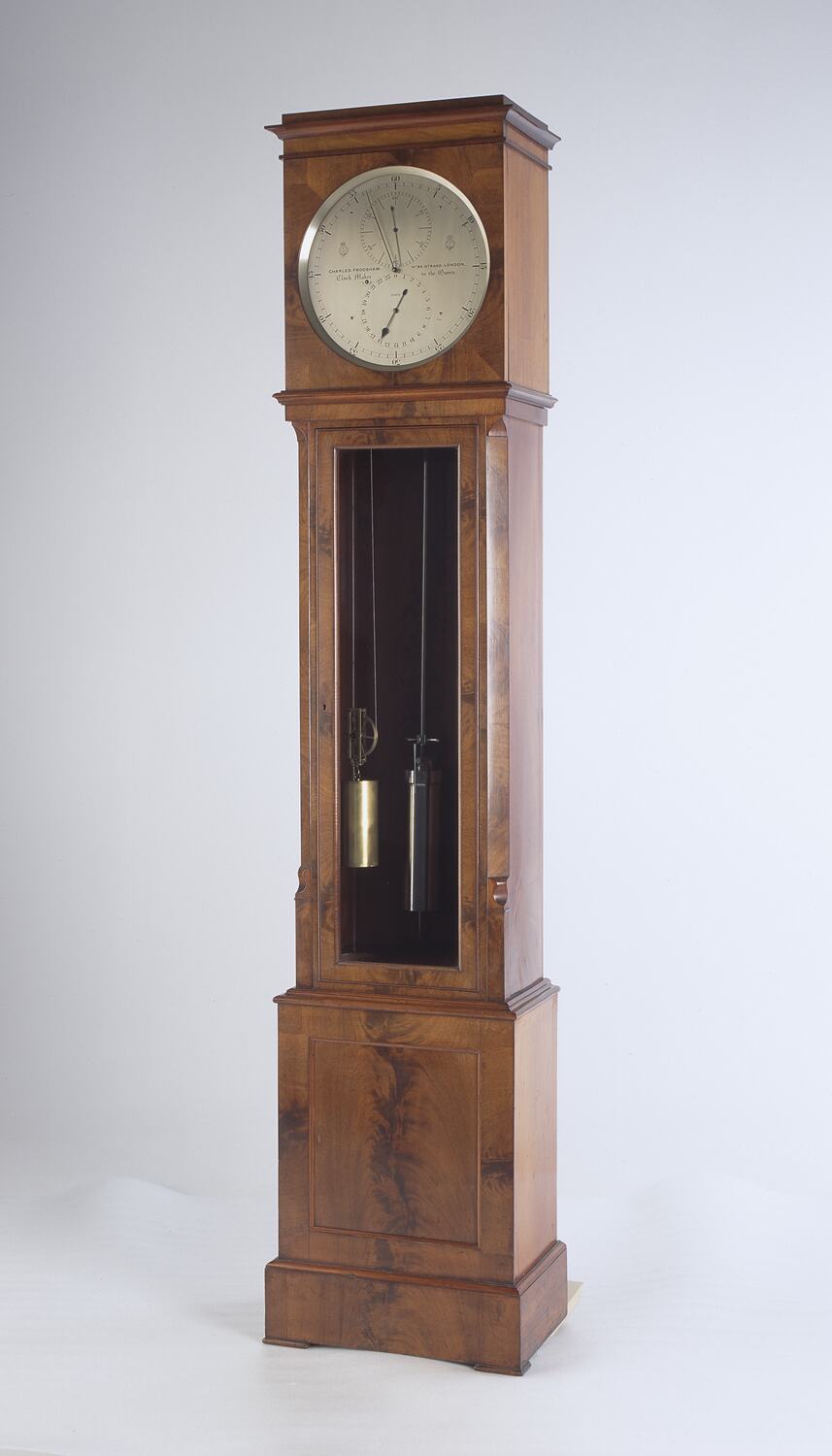
Figure 1. Exterior of Frodsham No. 1062. Photograph by Benjamin Healley. Source Museums Victoria, Regulator Clock - Charles Frodsham. Copyright Museums Victoria, CC BY 4.0. The museum’s medium-resolution image is reproduced unchanged.
Identification and mechanism#
| Item | Details verified |
|---|---|
| Maker | Charles Frodsham, 84 Strand, London |
| Serial number | 1062 |
| Type | Astronomical regulator in a wooden long case |
| Power and duration | Weight-driven, eight-day |
| Escapement and regulator | Deadbeat escapement, mercury-compensated pendulum |
| Dimensions | 1,917 mm high, 425 mm wide, 270 mm deep, according to the museum |
| Use at the observatory | 1865–1944 |
The collection records give the mechanism and dimensions. The dial bears the maker’s name and address, his title as clockmaker to the Queen, and the number 1062. The museum’s title dates it to 1865, while its maker field gives 1864. 1 2 3
A weight supplies power, and the pendulum governs the rate. Its compensation was designed to stabilise the rate as the surrounding temperature changed. Some error could remain. A contemporary account of Greenwich clocks notes that the mercury and pendulum rod can respond to temperature at different speeds. This describes a general issue. The size of any such error in No. 1062 would require measurements of that clock. 1 7
The photograph shows a large dial with smaller dials above and below its centre. The museum’s parent record assigns minutes to the large dial, seconds to the upper subdial and 24 hours to the lower one. The subordinate record assigns seconds to the large dial and minutes to an inner subdial. In the absence of measurements of the motion of the hands or of the train, the two accounts cannot be combined into a single specification. 1 2
Sidereal time and the observation record#
Jenny Ioanna Andropoulos’s study of the observatory’s publications identifies No. 1062 as a sidereal clock. It arrived in March 1865, was placed in the library and was connected to the chronograph in the east transit room for the Zone Observations. The study cites Ellery’s reports of 1866 and 1868, which help trace where the clock was installed and what it did after purchase. 3
To measure a star’s position, the observer records when it crosses a reference line in the telescope’s field. According to the museum’s account, pressing the observer’s button sent a signal that marked rotating paper. The time record and the telescope’s angular scale were used together. Corrections for atmospheric effects, instrument errors and differences in individual reaction time helped establish the star’s position. Accurate observations depended on recording and correction as well as on a good clock. 4
The records connect No. 1062 to a chronograph for stellar observations. Its use in distributing mean solar time would require separate evidence. The published collection records leave open which contacts operated the chronograph at which intervals and whether the wiring later changed. 2 3
The observatory’s time service#
Melbourne Observatory also checked its clocks against observations of the stars and conveyed time to marine chronometers and clocks in the city. The museum describes a telegraph line to a city clock in 1870, followed by time distribution to railway stations and public facilities. Measuring the night sky and maintaining time for public use were linked activities at the observatory. 5
The collection record also describes No. 1062 working with other clocks and transit telescopes to determine time and longitude. Its use in stellar observations is documented. Identifying which clock directly controlled distribution across the observatory at different dates requires separate evidence. 2 3 5
The later connection was to an eight-inch Troughton & Simms transit telescope whose own collection record dates its manufacture to 1883 and installation to July 1884. The description of the clock links its 1883 move with the connection to the new telescope. The records leave open whether the move, installation and completed connection all took place in the same year. 2 6
From scientific instrument to cultural heritage#
When the observatory closed in 1944, the clock went to Mount Stromlo Observatory and was auctioned in 1997. According to the collection record, cultural heritage protections prevented its export. 2
The federal acquisition record lists No. 1062 for support in June 2001. The museum also records purchase with assistance from the National Cultural Heritage Account. The instrument was made in Britain. Its value to the collection also comes from the observations and records it helped produce in Australia. This history distinguishes it from other clocks by the same maker. 1 8
Timeline#
| Date | Event and evidence |
|---|---|
| 1864 | Year in the museum’s maker field, distinct from the clock’s arrival in 1865. 1 |
| March 1865 | The clock arrives at the observatory, is installed in the library and is connected to the Zone Observations recorder. 3 |
| 1883–1884 | The records describe the clock’s move and manufacture and installation of the eight-inch transit telescope. The date the connection was completed remains uncertain. 2 6 |
| 1944 | On closure of the observatory, the clock is transferred to Mount Stromlo. 2 |
| 1997 | It is sold at public auction. The museum records that export was subsequently blocked. 2 |
| June 2001 | Listed in the federal cultural heritage acquisition support record. 8 |
| Checked in November 2026 | Museums Victoria publishes parent record ST 46202 and subordinate record ST 46202.1. 1 2 |
Place in the history of technology#
No. 1062 brought precision pendulum timekeeping into an observing system that preserved records of star transits. 1 3
The parent record lists the clock in storage, while the subordinate record describes it as on display in the Melbourne Gallery. 1 2
References#
- Museums Victoria, Regulator Clock - Charles Frodsham, Eight Day Astronomical, No.1062, London, England, 1865, ST 46202 (undated).
2. Museums Victoria, Regulator Clock - Charles Frodsham, London, No.1062, 1865, ST 46202.1 (undated).
3. Jenny Ioanna Andropoulos, Astronomical publications of Melbourne Observatory, Volume 1, James Cook University doctoral thesis, 2014, p. 102, table 3.
4. Richard Gillespie, Star Observations & Personal Equation, Museums Victoria (undated).
5. Richard Gillespie, Melbourne Observatory & Standard Time in Victoria, Museums Victoria (undated).
6. Museums Victoria, Transit Telescope - 8-inch, Troughton & Simms, London, England, 1883, ST 38756 (undated).
7. Edmund A. Engler, Time-Keeping in London I, Popular Science Monthly, vol. 22, December 1882, transcription on Wikisource.
8. Australian Government, Office for the Arts, National Cultural Heritage Account, past recipients, 2001.
All accessed 13 November 2026.