This article was translated from Japanese using AI. Read the Japanese original
The watch#
Breguet No. 160 combines automatic winding, a repeater that sounds the time to the minute, a perpetual calendar and an equation-of-time display showing the difference between solar time and clock time, among other functions. The pocket watch is known as the “Marie Antoinette” and for its gold-coloured mechanism visible through a transparent rock-crystal dial. The Museum for Islamic Art in Jerusalem holds the original. No. 1160 is a separate watch made by the modern Breguet company. A specialist account gives the original’s diameter as 63 mm and thickness as about 26 mm. 12 1 2 7
Production is usually dated from 1783 to 1827. The workshop records show the specifications evolving over those 44 years. Different specialists made the train and calendar, worked on the escapement and jewels, adjusted the mechanism, and finished the case and rock crystal. The watch is associated with both Breguet and his son and shows how specialist trades contributed over many years. 2 3
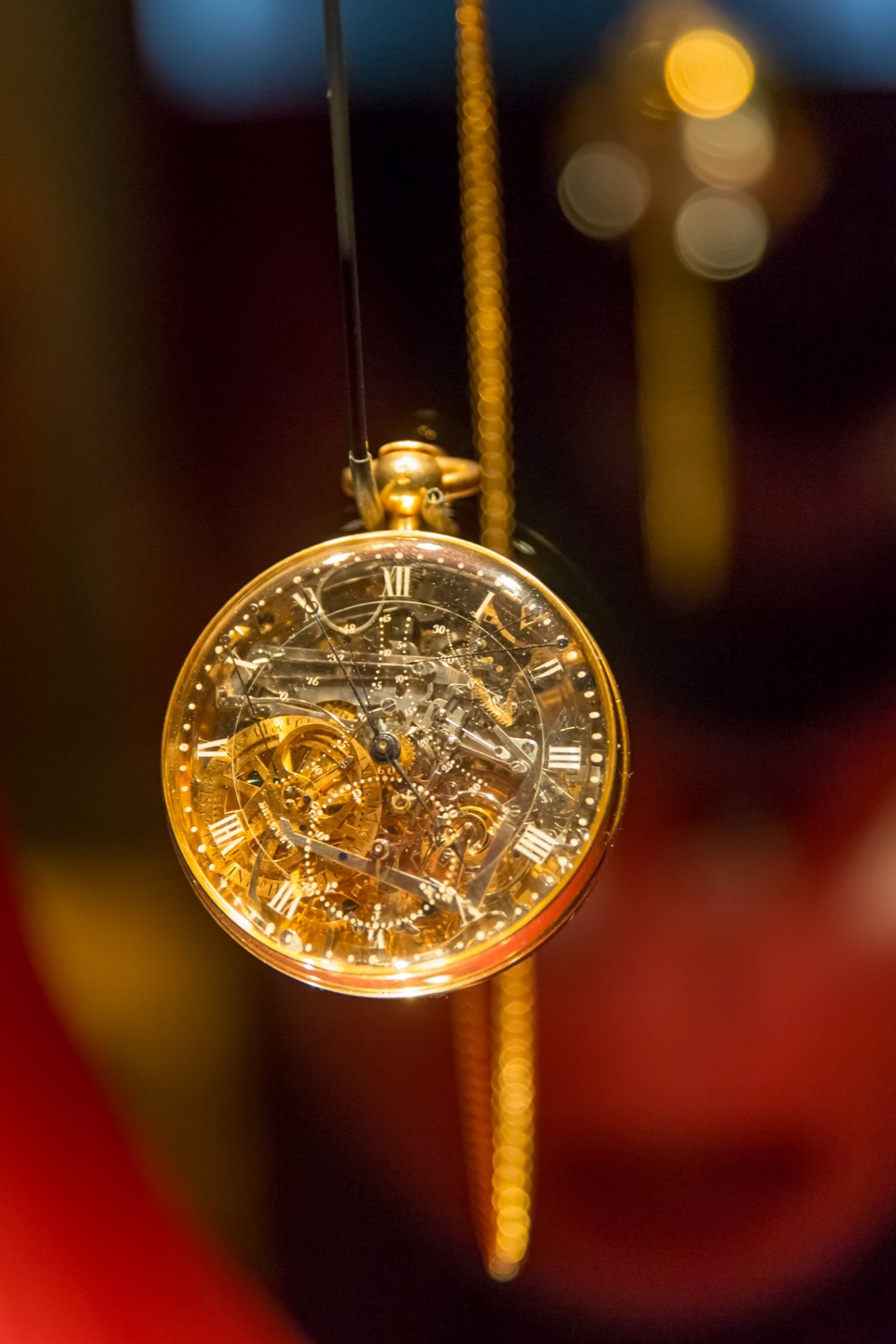
Fig. 1. Breguet No. 160, the “Marie Antoinette,” photographed in Jerusalem in 2018. Photograph by Michael.vainshtein (Michael Vainshtein). Source Wikimedia Commons. Licence CC BY-SA 4.0, also applicable to the image as displayed here. Resized only, with no cropping or colour changes.

The queen’s name and the story of the commission#
The watch records and the later story#
In the familiar story, an unnamed member of the queen’s guard commissioned the watch in 1783, specifying every possible mechanism and setting no limit on cost or time. The story also calls for gold wherever it could replace brass. Workshop historian Emmanuel Breguet presents this as an oral tradition first written down in the late nineteenth century. The customer’s and recipient’s identities require evidence separate from the surviving mechanism. 2 4
An account dated 24 October 1887 attributes the commission to an officer of Queen Marie Antoinette’s guards. Its heading calls it a montre perpétuelle, meaning a self-winding watch. Manufacturing and sales registers use names such as montre d’or, or gold watch. The account was written about a century after the reported commission. Another theory names Count Fersen, whose role in commissioning No. 160 remains unconfirmed. 3 4 5
Sir David Lionel Salomons recounts in his 1921 book seeing the watch in a London shop window on 3 May 1917 and noticing a label reading “Marie Antoinette.” He negotiated the price and bought it the next morning. The object description in the same book also calls it the watch known as the Marie Antoinette. Salomons directly attests to the use of that name in the trade. The queen’s ownership would require separate evidence. 1
Evidence exists that the queen was a Breguet customer. Salomons’s catalogue, for example, reproduces a certificate recording the sale of watch No. 179 to her for 960 francs on 4 September 1792. 1
Reading the completion dates#
Breguet and the museum’s current object description date completion to 1827. According to the company, the watch was finished under Antoine-Louis Breguet after his father Abraham-Louis died in 1823. 2 7
The account of 1887 and Salomons’s book reproducing it give completion around 1802. Later transcripts of the registers record escapement, balance, jewel and adjustment work in the 1810s, and the supply and finishing of parts in 1827. These records give a later date for work on the final state. A museum audio-guide entry also gives the manufacturing span as 1783–1820. Initial assembly, later improvements and preparations for display overlap in the project, and the sources give different dates. 1 3 8
The workshop and the specialists who made the watch#
An interruption and the work documented in the registers#
The French Revolution affected customers and workshop activity. Breguet took refuge in Switzerland in 1793, four years after the outbreak of the Revolution. He returned to Paris in 1795, and the date of return by itself gives no full chronology of renewed work on No. 160. The manufacturing register records substantial specific work from late 1809 onwards. 3 5
The transcribed register gives the following division of work. Its amounts and days record workshop expenditure and labour. Sale price and current value are separate figures. 3
| Name or date in the register | Work recorded | What it shows |
|---|---|---|
| Prudhomme | Gold train | The train was a separate manufacturing task |
| Amiel, Lallemand | Under-dial mechanism, equation of time and related work | Indications beyond timekeeping required specialist work |
| Henry Jacob | Escapement using ruby | A separate maker worked on the early escapement |
| Oudin | Winding mechanism | Automatic winding was one part of the division of labour |
| Courtin, from 1810 | Balance and later work | Work on the regulator continued |
| Hooker, from 1811 | Shaping and fitting hole jewels | Using jewels required separate manufacture and fitting |
| Merceron, 8 November 1811 | Escapement and related work | The escapement remained an important job at a later stage |
| Weber, 1812–1814 | 284½, 228½ and 212 days of work | Shows the scale of work integrating the functions into one watch |
| Kessels and others, from 1817 | Adjustment and work on parts | Work continued after 1814 |
| 1827 | Chain, wheels, repolishing the crystals, painting the dial, display stand and other work | The final stage still included work on the mechanism, case and presentation |
The entries for Weber from 1812 to 1814 add up to 725 days, in agreement with Emmanuel Breguet’s account. Some modern articles instead say 725 hours. The transcribed total of 17,070 francs, 30,000 francs in the 1887 description, and the 1887 sale price of £600 were recorded at different times and refer to different kinds of amounts. Treating them as equivalent measures of production cost obscures those differences. 2 3 5
Technologies added during production#
Alongside its many functions, No. 160 preserves changes made during production. The register records both Jacob’s early escapement and Merceron’s escapement work in 1811. Studies differ on which parts were replaced and when. The record shows work on the design continuing well beyond 1783. 3 5
The surviving watch also gives limited evidence of its early exterior and layout. The transcribed register records obtaining rock crystal in the 1810s, repolishing two crystals in 1827 and painting the crystal dial in October 1827. The transparent dial thus formed part of the continuing work on the exterior. 3
Automatic winding and managing stored power#
A moving weight winds the mainsprings#
A watch known at the time as a perpétuelle was self-winding, drawing energy from motion while carried. It continued to require an energy source. No. 160 uses a platinum winding weight, and Salomons records two barrels. A barrel contains a mainspring, which stores energy from the motion transmitted by the weight. 1 2
Salomons gives particulars of the winding control. A screw thread at the top of a barrel arbor moves small elements up and down. At full wind, one actuates a lever that stops the weight to prevent overwinding. Another moves a hand to show the state of wind in hours. Both functions turn the mainspring’s condition into a mechanical position. 1
The dial shows the state of wind on a 48-hour scale. London’s Science Museum describes it as a power-reserve display of the energy remaining. The user can read how soon the watch will need winding alongside the time. 6
A separate control lets the user immobilise the weight. In Salomons’s description, moving the “Masse” control holds the weight in place and is useful during vigorous movement. Sapphire rollers are also fitted at the tips of the springs that arrest the winding weight and on the weight side. The design considers how to absorb its motion and shut it off as well as providing a dense weight. 1
Separate controls around the case#
The watch has a series of controls around the inside of the case. Salomons records the square for setting the time, a stop for the weight, a stop for the balance, the control for independent seconds, calendar correction and adjustment of the repeater’s speed. The 1887 description also mentions small controls engraved with their functions. 1 3
| Marking or location | Role in the records |
|---|---|
| Square socket between VII and VIII | Sets the time |
| Masse | Locks or releases the self-winding weight |
| Balance | Stops or releases the balance |
| Secondes | Operates the independent seconds hand |
| Mois, J De Mois | Calendar correction, including moving the date hand back or advancing it by a day |
| L, V | Adjusts the repeater’s striking speed |
Salomons identifies intervals during which setting affects the repeater. Some functions can be controlled separately, while the time display and striking remain linked. How each function is set and how it interacts with the others helps explain the watch’s construction. 1
Timekeeping and the two seconds displays#
Escapement, gold hairspring and temperature compensation#
The escapement delivers energy from the mainspring to the regulator in small impulses and lets the train advance with its oscillations. Salomons records an unusual lever escapement made with two pieces of sapphire. The 1887 account describes the finished watch as having a detached lever escapement, compensation balance and gold hairspring. Salomons observed a vertical gold spiral, a three-dimensional form that differs from a conventional flat hairspring. 1 3
The hairspring provides restoring torque as the balance turns. Temperature changes the spring’s properties and the balance dimensions, affecting the period. A compensation balance changes its mass distribution to offset thermal rate changes. Salomons also records a hole for reaching a balance adjusting screw after opening the watch. Temperature compensation, a means of adjustment and a three-dimensional gold hairspring all contribute to timekeeping. 1
The 1887 account says sapphire bearings support the conical ends of the balance staff and that resilient support at both ends protects the pivots from falls. This is the double pare-chute shock protection. The sapphire supplies a hard bearing surface, and the flexible mounting absorbs motion under shock. 3
Jumping hours and independent seconds#
The hour hand jumps each hour, and Salomons says it also advances by half a step five minutes before the hour. The sequence differs from a conventional jumping hour that changes all at once on the hour. The same record says that the hour hand can be moved by whole hours without disturbing the repeater, apart from a certain interval around each hour. 1
A small seconds hand and a larger independent seconds hand serve different purposes. The independent seconds can be stopped and restarted while the watch continues to show time. This is relevant to the later history of elapsed-time measurement. A modern chronograph also has features such as return to zero. 1 3
Salomons calls the wheel for independent seconds paper-thin and especially difficult to make. He describes a double star wheel driving it, with the two stars adjustable slightly out of line to keep tooth tips from meeting and jamming. Independent stopping and one-second jumps are separate properties. The 1887 account distinguishes the large independent seconds from the small running seconds, and the manufacturing register also uses secondes d’un coup. Thin parts and adjustable contact geometry supported these displays. 1 3
Reading the calendar, solar time and temperature#
Perpetual calendar#
No. 160 has a perpetual calendar with weekday, date and month. The mechanism accounts for different month lengths and leap years, beyond an ordinary date wheel repeating every 31 days. Separate components drive the display and allow the user to set it. Salomons says the square in the small seconds dial sets the weekday and month, and there is a position mark at the end of a spring on the month wheel. The mark is hidden when the enamel dial is fitted. 1
A perpetual calendar still needs resetting after the watch stops, and the designation alone leaves unusual calendar exceptions open. Roobaert describes the particular arrangement that moves the date hand backwards at the end of a month. A ring of 31 dates is only part of the display: the mechanism advances and returns the indication to accommodate different month lengths. 1 4
Equation of time#
The equation of time is the difference between apparent solar time shown by a sundial and uniform mean solar time. The shape of the Earth’s orbit and the tilt of its axis cause the difference to vary through the year. The display relates these two time scales. Measuring a watch’s gain or loss is a separate matter. No. 160 indicates the difference alongside the calendar, and the workshop records work on the equation-of-time hand. 1 3
The indication connects mechanical timekeeping with observation of the natural world. An astronomical accuracy figure or assessment of longitude at sea would require measurements beyond the presence of the scale. The watch’s multiple indications let the user read different quantities on one instrument.
Metal thermometer#
The thermometer uses the deformation of metal with heat to drive an indication. London’s Science Museum describes it as bimetallic. The regulator reduces the effect of temperature on rate, while the thermometer makes thermal deformation visible. Compensation and measurement coexist in the same watch. 6
The temperature, equation of time and state of wind appear together. Similar-looking sector scales represent different quantities. The transparent dial lets the user see both the information and the working mechanism in one view. 1
The repeater that sounds the time#
A pusher in the pendant activates the repeater. According to the 1887 description, the hours and quarters strike the case à toc, and the minutes strike a gong. An account of alternating pitches from two gongs on a modern repeater would describe a different construction. 3
The sequence gives the last hour, the number of completed quarters and the minutes since that quarter. At 10:53, for example, it gives ten hours, three quarters of fifteen minutes and eight remaining minutes. It conveys the time in short groups instead of requiring the listener to count fifty-three minute strikes. The Science Museum uses the same example for this watch. 6
Controls to slow or speed the striking also appear in the record. The mechanism links the hand positions to a strike count and transmits the sequence at an audible pace. Different targets, the case and gong, help the listener tell the parts apart. Selection and sound production work together, so the time can be read without looking at the dial. 1 3
Materials, finishing and the transparent exterior#
Gold appears in the case as well as plates, bridges and wheels usually made of brass. Salomons describes gold where parts did not require steel and gives platinum for the winding weight. Springs, staffs and other parts call for their own functional materials. 1 3
The 1887 description gives ruby and sapphire bearings in the train, and sapphire where parts in the escapement and automatic winding assembly rub. These materials can reduce friction and wear, and lubrication can still be necessary. The period phrase “all the friction parts” refers to the bearings, escapement and weight components specified in the account. Gear teeth and other contacts have their own materials. 1 3
Rock crystal is used on both sides of the case and for the dial. Gold parts, hands and scales appear alongside the wheels and levers working below. The transcribed repair entry of 1838 describes a smooth gold case, a rock-crystal back, and white Roman numerals on the crystal dial. The numerals and transparent dial are visible in the photographs consulted. 1 3
An interchangeable dial also appears in the sources. Salomons mentions a white enamel dial that conceals the position mark on the month wheel visible through the clear dial. The choice changes what the wearer can see of the mechanism and its adjustments. The queen’s preferences and the original customer’s intent remain unverified. 1
The records give detail on precision work. Cutting and resetting hole jewels, adjusting escapement jewels, supplying screws, obtaining gold for bridges and polishing the crystal all appear as separate jobs. The watch took shape by bringing materials and specialist skills together and fitting one part to another. 3
Ownership, theft, recovery and exhibition#
Nineteenth-century whereabouts and the Salomons collection#
The provenance after completion has gaps. Emmanuel Breguet notes that No. 160 is absent from the 1833 inventory, suggesting it may have left the workshop between 1827 and 1833. No sale appears in the records for that period, and purchaser and price are unknown. 2
In 1838 the watch appears in a repair record for someone whose designation is read as the Marquis de La Groye of Provins or similar. The marquis identified by that name died in 1837, which complicates the story that he brought it in the following year. The entry documents the repair intake. Identity, ownership and who brought it in remain open, along with any sale to the marquis and the outcome of the work. 2 3
The watch drew attention at the Paris Universal Exhibition of 1855. In a report that year quoted by Roobaert, watchmaker Louis-André Borsendorff mentions its automatic winding, equation of time and lever escapement and expresses surprise at the asking price of 30,000 francs. Frodsham praised the order within its complexity in a jury report for the 1862 London International Exhibition. These assessments document the machine’s reputation before twentieth-century publicity about the queen. 13
No. 92 for the Duke of Praslin, from the same workshop, offers a comparison. In Salomons’s catalogue it has independent seconds, repeater, perpetual calendar, equation of time and thermometer, with moon phase and other indications on the reverse. The displays, controls and layout differ even across comparably complicated pieces. No. 160 stands out for how it combines automatic winding and indications, its use of gold and jewels and the long record of refinements. 1
Spencer Brunton bought it for £600 in 1887. Salomons says it passed after Brunton’s death to his younger brother and later entered Salomons’s own collection. The Science Museum names art dealer Murray Marks and, in 1904, Louis Desoutter along the way. Salomons dates his own purchase to May 1917. 1 6
The 1921 book includes photographs of the transparent dial and back, a technical description and operating details. Salomons also lent many pieces to the 1923 exhibition marking a century after Breguet’s death. Collection, study and exhibition made No. 160 better known. 1 2
Display and theft in Jerusalem#
After Salomons’s death his daughter Vera Bryce Salomons inherited the watch. His collection entered the Museum for Islamic Art that she founded in Jerusalem, which opened in 1974. European timekeepers thus came into a museum of Islamic art through Vera’s work founding the museum and her father’s horological collection. 2 6
A theft occurred on the night of 16 April 1983. On the morning of the 17th, 106 timepieces were found missing, including No. 160. The museum’s account says an art dealer contacted it in August 2006 after seeing pieces from the theft, followed by contact from a lawyer. Negotiations led to the return of 39 objects including No. 160. The recovery became widely reported in 2007. The first lead, return and publicity are separate events. 2 9
The thief was later identified as Naaman Diller. The museum describes recovery from several hiding places and restoration of pieces that had been damaged or dismantled. The clocks gallery reopened in July 2009 after work by clockmaker Boris Sankov and others. The collection’s restoration history gives no itemised list of replacement parts in No. 160. 9
Loan to London#
No. 160 was lent by the Museum for Islamic Art to London’s Science Museum for Versailles: Science and Splendour, from 12 December 2024 to 21 April 2025. The exhibition presented it in the context of court science, technology and royal power. 6 10
No. 1160, the recreation#
While the original was missing in the 2000s, Nicolas G. Hayek initiated a recreation using photographs, drawings and documents. Sources date the start to 2004 or 2005. No. 1160, announced in 2008, was made as a separate watch. 2 6 11
Breguet’s announcement details 823 components, a 48-hour state-of-wind display, automatic winding, perpetual calendar, equation of time, thermometer, independent seconds and double pare-chute. The museum also gives 823 parts for the original. The project brought the historical combination of mechanisms back into the work of modern watchmakers who had to make and adjust them. 7 11
Breguet says the team studied old tools and methods and polished train components with wood, among other techniques. The watch was presented in a box made with oak associated with the queen at the Petit Trianon. The project revisited historical materials and methods as well as the mechanisms. 2
Timeline#
| Date | No. 160 and related events |
|---|---|
| 1775 | Abraham-Louis Breguet opens in Paris, establishing the workshop that will make No. 160. 2 |
| 1783 | The usual starting year for production. The commission from the queen’s guards comes from later tradition. 2 3 |
| 1789 | French Revolution begins. Accounts of interruption and later workshop records provide different kinds of evidence. 1 3 |
| September 1792 | A certificate records another watch, No. 179, sold to the queen. 1 |
| 1793 | Breguet takes refuge in Switzerland. The queen is executed on 16 October. 4 5 |
| 1795 | Breguet returns to Paris. 3 |
| c. 1802 | The 1887 account gives this completion date. Workshop records document further work. 1 3 |
| From December 1809 | Payments and work by Weber and others appear in the records. 3 |
| 1810 | Courtin’s balance work and work on the crystal and case are recorded. 3 |
| 1811 | Hooker and others work on hole jewels, and Merceron on the escapement. 3 |
| 1812–1814 | Weber’s work is recorded as 284½, 228½ and 212 days respectively. 2 3 |
| 1817–1822 | Work continues by Kessels and others, with revisions to escapement and balance. 3 |
| 1823 | Abraham-Louis Breguet dies. His son Antoine-Louis takes over the business and manufacture. 2 |
| 1827 | Generally accepted completion year. Records survive of parts supplied, crystals repolished, dial painted and stand made. 2 3 |
| March 1838 | Repair intake in a name read as Marquis de La Groye or similar. The known marquis’s year of death conflicts with the date. 2 3 |
| 1855 | The complicated watch is shown at the Paris Universal Exhibition, with an asking price of 30,000 francs. 13 |
| 1862 | Examined by Frodsham and other jurors at the London International Exhibition. 13 |
| 1887 | Sold to Spencer Brunton for £600. A description is dated 24 October. 1 3 |
| 1901–1904 | Reported provenance from the Brunton family through an art dealer to Desoutter. 1 6 |
| May 1917 | Salomons discovers and buys it in London. He recalls seeing it in the window on the 3rd and buying it the next morning. 1 |
| 1921 | Salomons publishes Breguet (1747–1823) with observations and photographs of No. 160. 1 |
| 1923 | Salomons lends pieces to the exhibition a century after Breguet’s death. 2 |
| 1925 | Salomons dies and his daughter Vera inherits No. 160. 2 |
| 1974 | The Museum for Islamic Art founded by Vera opens and houses her father’s clock and watch collection. 2 6 |
| April 1983 | No. 160 is among the timepieces stolen on the night of the 16th. The theft is discovered on the 17th. 2 9 |
| 2004–2005 | Work starts on a recreation using surviving documents. 2 6 |
| From August 2006 | Contact from an art dealer and a lawyer leads to recovery. 9 |
| 2007 | Recovery of the original is publicly reported. 2 |
| 2008 | The separate watch No. 1160 is announced. 11 |
| July 2009 | The Museum for Islamic Art reopens the clocks gallery. 9 |
| December 2024–April 2025 | Lent to London’s Science Museum for a special exhibition on science at Versailles. 6 10 |
| 2026 | Research distinguishing changes in manufacture from the story of the commission continues to appear. 5 |
What to look for in the watch#
No. 160 stores energy from the winding weight, keeps time, shows several quantities and sounds the time on demand. The transparent dial displays how these functions are built into the watch. The extensive production records give it further importance as a source for the history of technology by revealing work over decades by specialists. 1 3
The original customer, early specifications, owner in the 1830s and full history of replacement parts remain uncertain. Later descriptions, a collector’s observations, museum entries and the company’s historical research come from different times and viewpoints. The surviving original, its recreation and the various records and traditions each contribute a different kind of evidence.
References#
Sources accessed on 18 October 2026. Workshop registers and descriptions were consulted in published transcriptions, separately from the archival originals.
David Lionel Salomons, Breguet (1747–1823), London, 1921. Public scan of the original edition. Pp. 4 (purchase in 1917), 46–48 (No. 160 certificate, observations and controls), 48–49 (No. 92) and 51 (No. 179), and plates on pp. 174–175. Owner’s observations and earlier certificates reproduced in the book.
Emmanuel Breguet, The “Marie-Antoinette” watch No.160, Quai de l’Horloge, no. 10. Company historical research on the oral tradition, days of work, provenance in the 1830s and the recreation.
Breguet manufacturing and sale registers, repair records of 1838–1839, description signed by Edward Brown on 24 October 1887 and a certificate of 1893. Transcribed in Bernard Roobaert, The Breguet Grande Complication No.160 “Montre d’Or”, version 1.4, 2021, appendices I–IV, pp. 54–59. Period records of manufacture and operation.
Bernard Roobaert, same work, pp. 6–11 on the name and commission tradition and pp. 32–42 on technical topics.
Carlos Torres, In Depth: Breguet No.160 Montre d’Or, SJX Watches, 23 March 2026. Discussion of research on technical changes during manufacture.
Jane Desborough, Fit for a Queen: Famous Marie Antoinette Breguet watch will travel to London for new exhibition, Science Museum, 19 November 2024. The borrowing curator on indications, striking, provenance and display.
Museum for Islamic Art, The Marie Antoinette Clock. Current collection description and component count.
Museum for Islamic Art, Audio Guide. Gives 1783–1820 for No. 160.
Museum for Islamic Art, The Great Clock Robbery. Discovery of the theft, contact in 2006, recovery and reopening in 2009.
Château de Versailles, Versailles: Science and Splendour. Exhibition programme and dates, 12 December 2024–21 April 2025.
Montres Breguet, Presentation of the “Marie-Antoinette” watch in a re-edition version, 2008. Announcement and specifications of the recreation No. 1160.
Breguet Blog, No.160, 2018. Quotes specifications from George Daniels, The Art of Breguet, p. 162. Diameter 63 mm, thickness about 26 mm.
Louis-André Borsendorff, Un coup de loupe à l’Exposition universelle de 1855, original held by the BnF, and Charles Frodsham, Reports by the Juries, International Exhibition of London 1862, 1863. Period exhibition accounts quoted in Roobaert, pp. 8–9.