This article was translated from Japanese using AI. Read the Japanese original
According to an account of Marseille Observatory published in 1826, the east tower of the old observatory housed a Dollond telescope beside an astronomical regulator by George Graham. The pendulum used mercury for temperature compensation, and the donor was the mathematician and astronomer Pierre-Simon Laplace. The dial of the clock, identified as CM29 in the French Ministry of Culture’s survey inventory, names its London maker and records that Laplace gave it to Marseille Observatory in 1822.1 2
The maker and donor recorded on the dial#
Jean Davoigneau, who conducted the heritage survey, transcribed the dial signature as “Geo : Graham London”. The ministry’s catalogue credits George Graham in London and dates the clock to the second quarter of the eighteenth century on the evidence of the escapement and the history of temperature compensation. It measures 172.5 cm high, 43 cm wide and 28 cm deep. CM29 is the object’s identifier in the catalogue.1
When the clock was donated in 1822, the observatory was still at its old site in the Accoules district near the harbour. The 1826 account describes a large central tower flanked by smaller towers to the east and west. In the east tower, the Dollond telescope had a 64 mm aperture and a 1.8 m focal length. It was installed on an equatorial mounting beside the Graham clock. The western observing room housed a Lennel meridian telescope with a gridiron-pendulum clock by Louis Berthoud. The main hall held a mean-time clock with a fir pendulum rod. One observatory thus used several clocks according to the position and purpose of its instruments.2 3
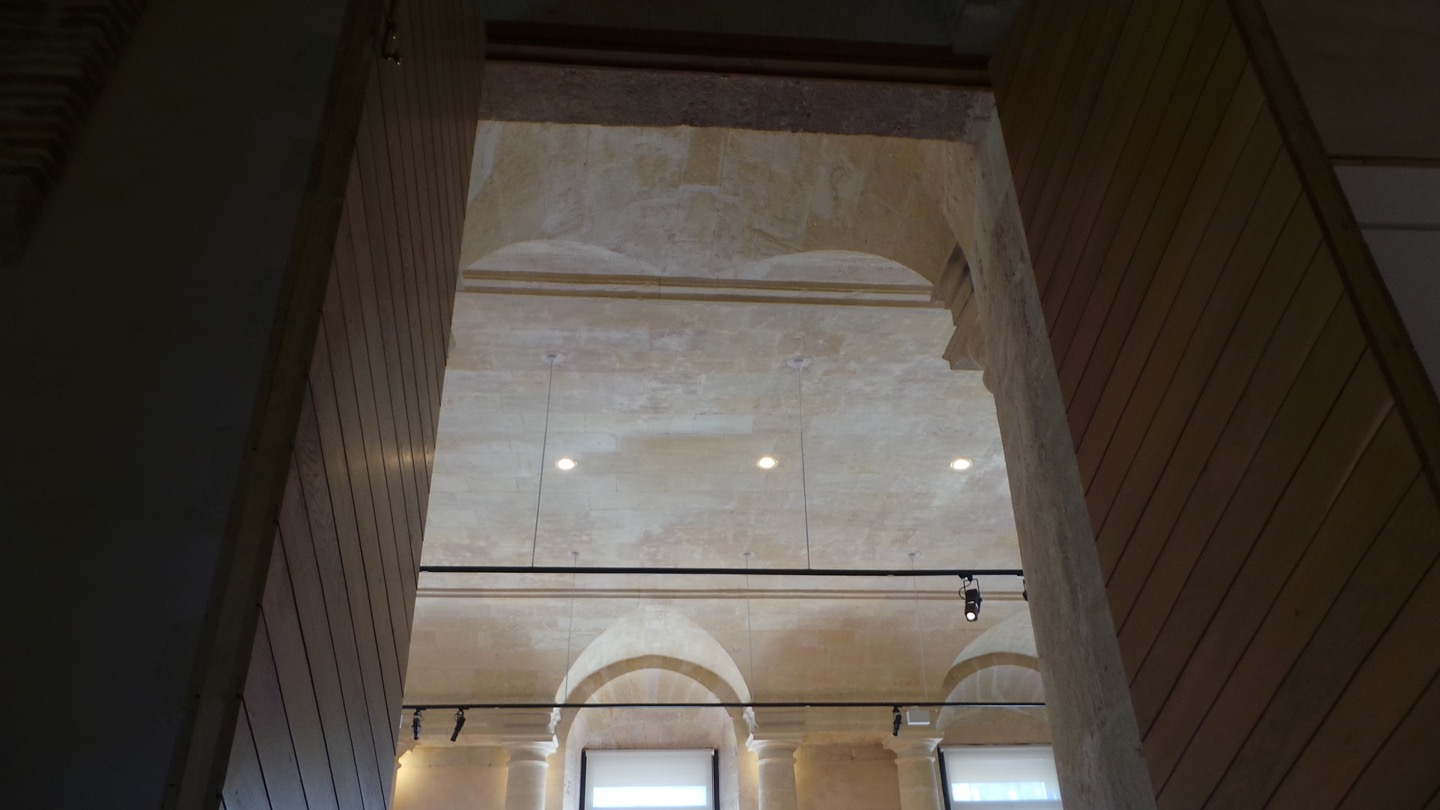
Figure 1. Interior of the Préau des Accoules in the old observatory building. Photographed by MGHX on May 2, 2018. Original image and attribution at Wikimedia Commons. CC BY-SA 4.0. Resized for publication.

Minute and second scales, hour and date windows#
The silver-coloured dial has two scales, each marked from 0 to 60 and each with a different centre. The larger circle indicates minutes and the smaller one seconds. Below the centre of the dial, the hour numerals pass a pointer in an arched aperture. A small rectangular aperture beneath it shows the day of the month. The case has two doors, with glass over the dial and a solid panel in front of the pendulum and driving weight below.1
Keeping the pendulum length stable as temperature changes#
A pendulum’s period increases with its effective length. When heat lengthens a metal pendulum rod, the bob descends, increasing the effective length and tending to slow the clock. In Graham’s mercury-compensated pendulum, mercury expands in a vessel supported below the rod, and its centre of mass rises relative to the vessel. The rise is designed to balance the downward expansion of the rod. Graham’s manuscript on changes in pendulum rate with the seasons and the effect of temperature was read at the Royal Society in London on April 28, 1726.4 5
The height of the mercury determines how much compensation the design provides. Graham reports that in an early trial the column was too high, and cold produced the opposite of its usual effect. The rod and vessel may warm at different rates, so abrupt temperature changes can still produce transient errors. The 1826 account mentions mercury compensation on CM29, and the 1996 survey found a cylindrical glass vessel containing mercury at the lower end of the steel rod.1 2 5
The escapement and a comparison with a Greenwich clock#
According to the survey, CM29 has a deadbeat anchor escapement. While an escape-wheel tooth rests against the locking face of a pallet, the pendulum can continue to swing without pushing the wheel backwards. When the tooth moves onto the impulse face, the train transmits energy to the pendulum. The escapement governs how the train delivers impulse, and the mercury compensation deals with the effect of temperature on the pendulum’s effective length.1 9
A comparable object is Graham’s No. 675 (ZBA2212, c. 1725), held by Royal Museums Greenwich. Its collection record describes a jewelled deadbeat anchor escapement, an eight-day train and a minute scale surrounding subsidiary seconds and hours dials. It now has a zinc-tube compensation pendulum, and the case is attributed to the twentieth century. Even for clocks by the same maker from about the same time, the surviving parts reflect each object’s history.6
From the Accoules to Longchamp#
Usable observing instruments were transferred from the old site to the new observatory on the Longchamp plateau. The building record dates the observatory’s move to 1863, and the catalogue record for CM29 puts the clock’s transfer around 1860. Instruments were installed at the new observatory in stages, and its history dates the start of full operations to 1866.1 2 3
At Longchamp in the late nineteenth century, precision clocks by Auguste Fénon were used together to distribute time. According to the Musée d’Histoire de Marseille, time was transferred from a clock keeping sidereal time, based on the motion of the stars, to the observatory’s master clock showing French legal time. The master clock synchronised subsidiary clocks at the university over electric lines. Seafarers could set their chronometers by subsidiary clocks around the city. The contrast with CM29 beside a telescope in the east tower in 1826 shows how the placement of clocks changed, and who could consult them and where.2 7
The 1996 field survey recorded CM29 in working condition at Marseille Observatory, 2 place Le Verrier. It was listed as a movable historic monument on April 23, 2003. The French Ministry of Culture’s register records it as state property.1 8
Timeline#
| Date | Record |
|---|---|
| Second quarter of the eighteenth century | French Ministry of Culture survey catalogue’s estimated date of manufacture of CM29 in London.1 |
| April 1726 | Graham’s manuscript on pendulums and temperature is read at the Royal Society.4 |
| 1822 | According to the dial inscription, Laplace gives the clock to Marseille Observatory.1 |
| 1826 | A published account of the observatory describes the Graham clock in the east tower and its mercury compensation.2 |
| c. 1860 | The clock’s catalogue record dates its transfer to Longchamp to this period. The building record dates the observatory’s move to 1863.1 3 |
| 1996 | A heritage survey records the dimensions, inscriptions and working condition.1 |
| April 23, 2003 | Listed as a movable historic monument.8 |
References#
- Jean Davoigneau, French Ministry of Culture, “Horloge astronomique dite horloge de Graham (CM 29)”, Palissy IM13000028. Surveyed in 1996, catalogue entry drafted in 1997. Accessed November 20, 2026.
2. “Observatoire Royal de Marseille”, in Statistique des Bouches du Rhône, Marseille, 1826, and the later history of the observatory on the same page. IMCCE, “Histoire de l’observatoire de Marseille”. Accessed November 20, 2026.
3. French Ministry of Culture, “Ancien observatoire”, Mérimée PA13000085. Entered in 2017 and updated in 2026. Accessed November 20, 2026.
4. George Graham, Catalogue record of Graham’s manuscript on temperature compensation for pendulums, The Royal Society, CLP/3ii/20, April 1726. Accessed November 20, 2026.
5. George Graham, Paper on temperature compensation for pendulums, Philosophical Transactions, vol. 34, pp. 40–44, dated 1726. Accessed November 20, 2026.
6. Royal Museums Greenwich, Graham’s astronomical regulator No. 675 (Graham No.2), ZBA2212, c. 1725. Accessed November 20, 2026.
7. Musée d’Histoire de Marseille, Michel Marcelin, “Distribution de l’heure à Marseille à la fin du XIXe siècle”, lecture announcement, September 20, 2022. Accessed November 20, 2026.
8. French Ministry of Culture, “Horloge astronomique dite horloge de Graham”, historic monuments register, Palissy PM13001579. Listed April 23, 2003. Accessed November 20, 2026.
9. James Francis Kendal, A History of Watches and Other Timekeepers, Crosby Lockwood and Son, 1892, p. 125, fig. 47 and its description. Accessed November 20, 2026.