This article was translated from Japanese using AI. Read the Japanese original
Receiving time by radio and supplying seconds to the laboratory#
Riefler No. 76, purchased in 1904 by the US National Bureau of Standards (NBS), is a precision clock whose pendulum swings within a glass enclosure. The National Institute of Standards and Technology (NIST) holds it as 1998.0515.001A. The markings give the number 76, the year 1903 and German patent numbers 50739 and 100870. The inscribed year of 1903 and the 1904 purchase document separate events.1
The NBS compared the clock with time signals sent by an observatory and used the seconds it kept steadily between comparisons for laboratory measurements. Astronomical observation, radio communication, a pendulum clock and recording instruments together provided the reference for testing timekeepers.2
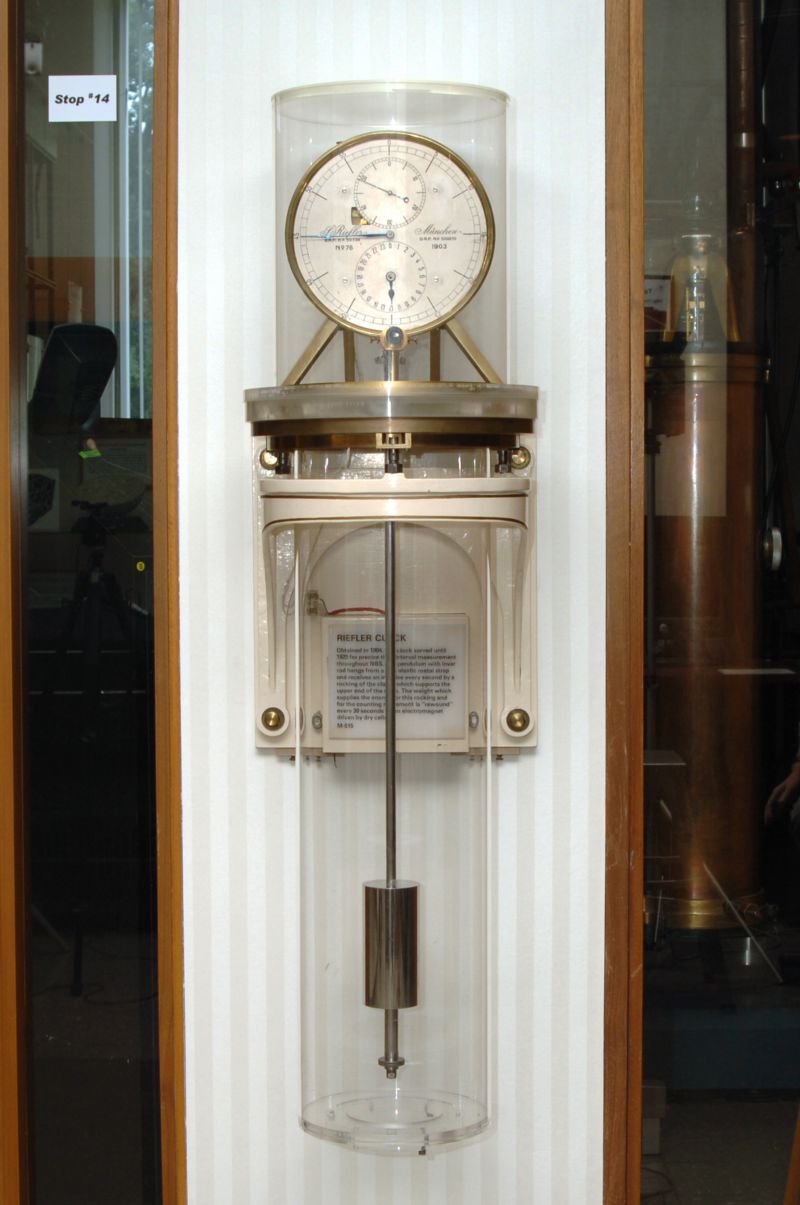
Figure 1. Riefler clock in the NIST collection. The object record gives no photographer. Source and permissions: NIST Digital Archives, 1998.0515.001A. The record allows unrestricted use with this credit: National Institute of Standards and Technology Digital Collections, Gaithersburg, MD 20899. The image service resized it to 800 pixels wide, with no cropping.
Identification and development#
The maker and designer#
The clock was purchased from Clemens Riefler in Germany. Sigmund Riefler developed its method of giving impulse to the pendulum. No. 76 identifies the individual clock now in the collection.1
The NIST record gives its dimensions as 115 × 25 × 27 cm without specifying the axes or whether accessories are included. The photograph shows the dial at the top and the pendulum extending beneath it, all inside glass. The arrangement is characteristic of experimental apparatus that controls the environment around the pendulum.1
The design drew on the 1889 free-spring escapement and a later nickel-steel temperature-compensated pendulum. According to Huber’s study, patent DRP50739 concerns the former and DRP100870 the latter. The markings link No. 76 to those technologies. Subsequent Riefler improvements need their own evidence before they can be attributed to this clock.15
Why the bureau needed a reference clock#
Testing the rate of a watch calls for a more stable reference. The NBS Standards Yearbook of 1927 describes the high-precision Riefler clock as the bureau’s standard for time measurement. Its seconds signals were sent electrically to the laboratory and recorded automatically. The shared seconds marks could thus reach a separate testing location.2
Keeping the pendulum swinging with little disturbance#
Transferring energy through the suspension spring#
A pendulum stops unless the energy lost to air resistance and other causes is replenished. Strong, direct force from the train can disturb its period if the force varies. Riefler’s design rocks the upper end of the short blade spring that suspends the pendulum and gives impulse through that spring. NIST’s account of the clock says this happens once a second.14
The impulse delivered through the suspension spring reduces disturbance from the train. This is the sense in which the pendulum is free. Huber distinguishes this free-spring design from the later free-gravity escapement, which used a different arrangement from No. 76.5
Raising a small weight about every 30 seconds#
A small weight behind the dial supplies power. It descends about 1 cm in roughly 30 seconds and closes a circuit at the bottom. A battery-powered electromagnet raises it so it can descend again and drive the mechanism. Electricity rewinds the mechanical drive, and the pendulum sets the period.1
This short winding cycle reuses a small power source in place of the long fall of a large weight or the slow unwinding of a mainspring. The object record gives no current draw, weight mass or battery life. It also gives insufficient information to infer the electromagnet’s number of turns or voltage.1
Temperature and air pressure#
The pendulum’s period is sensitive to changes in length. No. 76 uses a nickel-steel rod with low thermal expansion, identified as Invar in the NIST image description and the 1927 yearbook. The material helps stabilise the effective length, and some temperature effects remain.124
The pendulum enclosure is operated at reduced pressure, retaining some air inside. The 1927 account says the rate could also be adjusted by varying the pressure within the airtight glass enclosure. The same vessel could hold air conditions steady and permit small, deliberate changes for adjustment.2
NBS Circular 432 of 1941 describes the Riefler-type mean-time standard clock as held at constant temperature and pressure. Accuracy depended on the clock, its surroundings and how it was operated.3
Comparison with the observatory and the meaning of the figures#
Two signals recorded on a chronograph#
According to the 1927 yearbook, the NBS compared the Riefler every day with the United States Naval Observatory noon signal received via the Arlington radio station. A drum chronograph drew a continuous line on paper and marked on it the signals from both sources. The pen travelled across the paper at 2 cm per second, and the scale allowed comparisons to 0.01 second.2
At that speed, 0.01 second corresponds to 0.2 mm on the paper. The figure is calculated from the recording speed given by the yearbook.2
The difference between 0.01 and 0.02 second#
NIST’s current object description gives time-interval measurement to within about 10 milliseconds per day. The 1927 yearbook and fig. 1 of Circular 432 of 1941 give about 0.02 second per day. The publications date from different periods and describe different subjects. The figures do not form a single set of comparable measurements, and neither can be dismissed as an error from those sources alone. The Circular 432 figure describes a “Riefler-type” clock. The text alone does not identify its serial number independently.123
Adding 0.01 second per day over a year gives about 3.65 seconds. In use the clock was compared daily and its rate could be adjusted. The annual total is a calculation, while No. 76’s role was to supply stable time intervals from one comparison to the next.12
Replacement as the standard and later use#
According to NIST’s official history, the Riefler served as the time interval standard from 1904 to 1929, when a Shortt clock took over. The Shortt system uses two pendulums and further isolates the master pendulum from the work of driving the clock mechanism. Its intermittent impulse to the master pendulum differs from No. 76’s impulse through a spring every second.6
The Riefler continued in use after the change of standard. The NIST collection record says the Shortt was moved to another laboratory for measurements of the gravitational constant G, and the Riefler was used as the reference for testing timekeepers until at least 1941. A clock of the same type appears in the 1941 testing guide. The change of the primary standard and the change of the working reference for tests occurred at different times.13
NIST now holds No. 76 as a record of a mechanical time standard. Its purchase price, order date, the names of individual makers and the full repair and replacement history remain unconfirmed in the public material consulted.1
Timeline#
| Year | Event and scope of the source |
|---|---|
| 1889 | Sigmund Riefler’s free-spring escapement. No. 76 was made later.15 |
| 1903 | Year inscribed on No. 76, separate from the purchase date.1 |
| 1904 | NBS buys the clock from Clemens Riefler.16 |
| 1927 | The yearbook records the reduced-pressure enclosure, Invar pendulum, daily radio comparison and supply of seconds signals to the laboratory.2 |
| 1929 | A Shortt clock takes over as the time interval standard.6 |
| 1941 | The NBS testing guide shows a Riefler-type standard clock. The collection account records No. 76 in continued use until at least 1941.13 |
| Checked November 2026 | NIST Digital Archives publishes the record and photograph of No. 76, accession number 1998.0515.001A.1 |
References#
- NIST Digital Archives, Riefler Clock, 1998.0515.001A. Individual clock, dimensions, inscriptions, power, provenance and image terms.
2. National Bureau of Standards, Standards Yearbook 1927, 1927, pp. 44–45. Time standard, reduced-pressure enclosure and records of daily comparison.
3. R. E. Gould, Testing of Timepieces, NBS Circular 432, 1941, fig. 1. Riefler-type mean-time clock and environmental conditions.
4. NIST, Riefler Clock (1900s), image description. Impulse every second, rewinding every 30 seconds and the Invar pendulum.
5. Bernhard Huber, The Engineer of Precision Time: Pendulum Clocks by Sigmund Riefler, DGC Jahrbuch 2019, pp. 261–275. Technical history of escapements, compensation pendulums and pressure adjustment. This concerns the design family rather than the operation of No. 76.
6. NIST, NIST Time and Frequency Division History. The 1904 purchase and replacement in 1929.
Online sources accessed November 13, 2026.