This article was translated from Japanese using AI. Read the Japanese original
In Greenwich, London, the hilltop Royal Observatory shows the instruments used to measure time. Down the hill, the National Maritime Museum tells the story of the people who took that time to sea. Looking at the clocks in this setting connects observations of stars, navigation and the time signals sent out to the city.
The date of a visit affects what can be seen. As checked on 23 October 2026, the entire Royal Observatory was due to close for an extended period from 2 November 2026 for the First Light redevelopment. The published period to see both Harrison’s timekeepers and the historic Prime Meridian at the Observatory ran through 1 November. During the closure, plan around the National Maritime Museum and assume that the Observatory interiors and Meridian Courtyard are inaccessible. 1 2
Opening times, prices and displays in this article were checked on 23 October 2026. All times are local UK time. Except where a venue gives its own estimate, durations are the author’s planning estimates and allow time to read the displays and walk between sites.
Which areas can be visited?#
The Observatory, Maritime Museum and park have their own conditions of entry and opening hours.
| Place or area | Access and what it means for a visit |
|---|---|
| Clock displays in Flamsteed House, Meridian Observatory and Meridian Courtyard | The entire Observatory closes for an extended period from 2 November 2026. Even for visits through 1 November, check for temporary closures in individual areas before booking |
| Time and Society Gallery | Closed all day on 22–23 October 2026. It is separate from the Harrison displays in Time and Longitude |
| Peter Harrison Planetarium and Astronomy Centre | Closed for an extended period from 8 September 2025. An Observatory ticket will not provide the usual planetarium show |
| National Maritime Museum | Normally 10:00–17:00, with free permanent displays. It is the main option during the Observatory closure. Check separately for closures of individual galleries |
| Greenwich Park | Pedestrian gates open at 06:00 and close at times that vary by season. A walk for the views can be planned around the museums’ hours. The park cannot be crossed at night |
For closures in individual areas, consult the Observatory’s official closure list first. Under the First Light plans at the time of checking, the Meridian Courtyard was due to reopen in summer 2027 and the entire project to be completed in spring 2028. 1 2 10 15
Four connections to look for at the Observatory#
Harrison’s timekeepers carry a reference time to sea#
When the Observatory is open, make the Time and Longitude gallery in Flamsteed House the centre of a visit to see the clocks. Earth turns through 360 degrees in 24 hours, so an hour of time difference from a reference point corresponds to 15 degrees of longitude. Navigators could find their position east or west by comparing local time determined aboard from the Sun or other observations with a timekeeper that retained the reference point’s time. Ship motion and changes in temperature made that a different challenge from running a clock ashore. 4 5
Comparison of John Harrison’s experimental timekeepers shows how he approached the problem. H1 has two linked oscillators inside a large frame. Experiments continued with H2 and H3, and H4 took the form of a large pocket watch. Alongside the change in size, look at how Harrison changed the oscillating mechanism to keep time despite the ship’s motion. 5
Royal Museums Greenwich’s detailed display guide identifies the H1 on display as a replica and H2, H3 and H4 as originals. The original H1 is undergoing conservation at the Prince Philip Maritime Collections Centre. 5
The gallery also covers Maskelyne and finding longitude by astronomical observation. The exhibits show how observations, tables and testing of timekeepers all played a part in solving the practical problems of navigation. 4
The meridian and the instruments behind the line#
The metal line in the Meridian Courtyard marks the historic Prime Meridian and is part of paid admission to the Observatory. The instruments at the Meridian Observatory give context to the line popular for photographs. A meridian provides a north–south reference. Measuring when stars crossed it with the help of a clock established reference values for both stellar positions and time. 6 7
Several meridians associated with Halley, Bradley and Airy are marked at the site. The sites of observation shifted slightly as telescopes were replaced, so the reference lines lie in different places. The international conference of 1884 chose the line based on Airy’s transit circle as the common reference. 7
The current international reference meridian runs about 102.5 metres to the east. Greenwich provides a way to compare the history of a reference defined by an observing instrument with modern positioning referenced to Earth’s centre. 7
The gate clock brought time to the city#
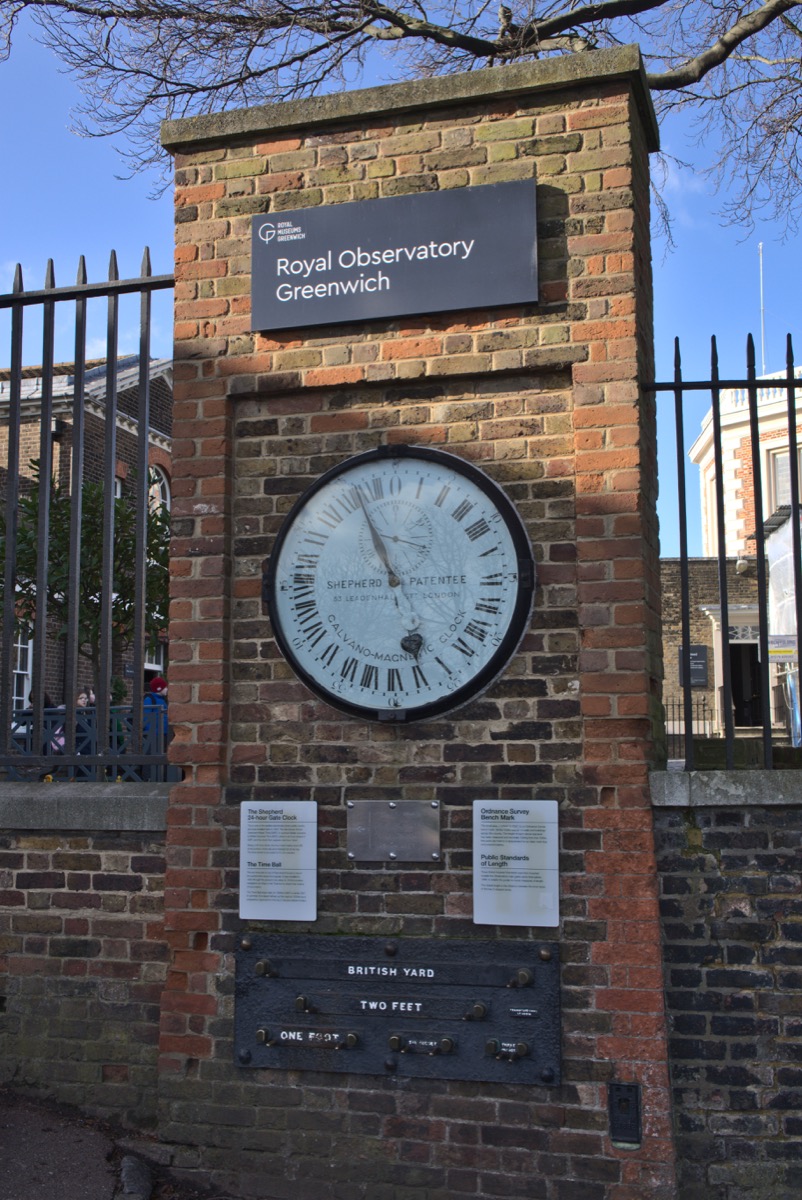
Figure 1. The Shepherd Gate Clock and public standards of length, photographed in 2020. By Robert von Oliva (naruciakk). Wikimedia Commons file. CC0 1.0 Universal. Resized to 1,200 pixels on the longer side and resaved as a JPEG, without cropping or tonal changes.

On the gate wall, the hour hand of the Shepherd Gate Clock goes round the dial once in 24 hours. At noon it points straight down. In the electric clock system introduced in 1852, a master clock in the building sent electrical signals to clocks displaying the time. Seeing the gate clock before reading the indoor exhibits on time distribution helps explain how the Observatory sent time to the city and the railways. 8
The clock displays GMT throughout the year, so during British Summer Time (BST) it appears an hour behind clocks in the city. Its reading shows the distinction between local civil time and the historical time standard. 9
Anyone hoping to see the clock or Time Ball from outside during works from 2 November 2026 should check with the venue in advance for access and operating status.
Waiting for the red Time Ball at 13:00#
The red Time Ball on the roof of Flamsteed House came into use in 1833 as a time signal visible from ships. It normally rises halfway at 12:55, reaches the top at 12:58 and drops at exactly 13:00. The instant of its fall is the signal. 11
Normal operation is at 13:00 GMT in winter and 13:00 BST in summer. It does not operate in strong winds, so the drop fits best into a wider Observatory visit. 11
Through 1 November 2026, a half day for the clocks and meridian#
The Observatory normally opens from 10:00 to 17:00. Its main visitor page gives 16:00 as the last admission, while the general opening-times page also gives 16:15. Avoid making a late visit depend on that difference and follow the time specified on the ticket. Standard tickets are £24 for adults and £12 for ages 4–15. Children under four are free and must be registered with a paying adult. Booking a date and time online secures admission, while walk-up tickets depend on availability. An audio guide is included. 3 10 17
Allow two to three hours in the Observatory to look closely at the clocks. The following order avoids repeated trips up and down the hill.
| Approximate time | Route and things to see |
|---|---|
| About 09:30–10:00 | Walk up through the park from town and arrive for the booked Observatory time slot |
| 10:00–11:30 | Clock displays in Flamsteed House. Compare the forms of H1–H4 and the ideas behind determining longitude |
| 11:30–12:30 | Meridian Courtyard and observing instruments. Connect the 24-hour gate clock to the indoor explanation of time distribution |
| 12:50–13:00 | Find a spot with a view of the Time Ball and watch it fall if it is operating |
| After 13:00 | Walk down the hill for a break and visit the National Maritime Museum if time and energy allow |
This is an example of a self-guided route through areas open at the time. For a visit on 23 October, the Time and Society Gallery was listed as closed. Adjust the order according to what is open and follow the directions at the site. 1
A Day Pass for the Observatory and the sailing ship Cutty Sark costs £38 for adults and £19 for children. An Observatory ticket covers the clocks and meridian. Allow a full day if you also want time to explore the ship. 3
From 2 November, how timekeepers were used at sea#
The National Maritime Museum is a separate venue at the foot of the hill, normally open from 10:00 to 17:00 with free permanent displays. Booking is optional. Reserving a free ticket secures admission and provides pre-visit information. The timekeepers listed on the museum’s site can form the focus of a visit. Check the museum’s own closure notice for the date of your visit. 12 16
Collect a map on Level 0 and start with Sea Things on Level 1. Among the official highlights is a gold-cased pocket watch carried by Titanic passenger Robert Douglas Norman and recovered from his clothing after his death. The watch records one passenger’s life and the loss of the ship. Pacific Encounters, on the same level, explores the knowledge of the people who travelled the Pacific and the history of their encounters with Europeans. 13 14
On Level 2, Polar Worlds lists a marine chronometer associated with Shackleton’s Imperial Trans-Antarctic Expedition. Navigator Frank Worsley used a chronometer, compass and sextant to guide the small boat James Caird to South Georgia. The precision clock in its case supported his observations and judgement as part of a set of navigational instruments. 13
Allow roughly one and a half to two hours for these two timekeepers and the surrounding displays. A riverside walk and a break make this a half-day visit while the Observatory is closed. Royal Museums Greenwich gives roughly one to two hours for its own self-guided route through the free galleries. Allow longer to read the labels in detail or when the museum is busy. 14
The museum also offers a paid space experience, Astronomers Take Over, with an optional planetarium show. The experience alone costs £8 for adults, children and students. With the show it costs £18 for adults and students and £16 for children. The museum allows 60–90 minutes for the experience and about two hours with the show. Some sessions are for schools, so check the museum’s booking screen for a public session on your chosen date. 18
Getting there and dealing with the hill#
Start from Cutty Sark DLR station, Greenwich or Maze Hill National Rail station, or Greenwich Pier. Royal Museums Greenwich puts the walk from Cutty Sark station to the museum at about seven minutes. Greenwich station is nearer the direction of the Cutty Sark, and Maze Hill is near the museum, Queen’s House and Observatory. North Greenwich station, on the Jubilee line, is some distance from the old town. Royal Museums Greenwich estimates about 25 minutes by bus to the museum. 19
Arriving by river makes it easy to see the relation between the ships and the hilltop Observatory. Greenwich Pier is on the waterfront of the historic district, with another walk uphill to the Observatory. Rail, DLR and boat fares and times vary with departure point and service. Check that day’s transport information from Transport for London or the relevant operator separately from the museum booking. 19
The park path to the Observatory is steep, and the venue gives an estimate of 15–20 minutes on foot from the Maritime Museum car park. The roughly 500-metre route to the Observatory from the park car park on Blackheath Avenue, on the south side, avoids the steep climb from the north. Loan wheelchairs are limited and cannot be taken off site. Plan separately for travel from the station. 20
A lift beside Flamsteed House serves the Time and Longitude and Time and Greenwich galleries. It does not reach the Octagon Room, and the Great Equatorial dome has stairs. The courtyard has uneven cobbles. To plan an accessible route, tell the venue which clock displays you want to see and check the route in advance. Pushchairs stay in the designated space outside Flamsteed House. 20
The official 2026 park timetable gives a pedestrian opening time of 06:00 year-round. October closing times are 19:00 during BST and 18:00 during GMT, and the park closes at 18:00 in November and December. For an evening view, follow the signs and any temporary closures that day and plan the way back after leaving the museum. 15
Deciding what to see before setting out#
For Harrison’s timekeepers, check the Observatory opening dates and access to Time and Longitude before booking. For timekeepers at sea, build the visit around the Maritime Museum’s chronometer and navigation displays. For a picture on the meridian, check courtyard access separately from the clock galleries. Choosing a priority makes the itinerary easier to adapt if an area closes or the weather changes.
The walk between hill and river connects the work of improving clocks with the people who needed the time. The chronometers and dials carry traces of astronomers measuring stars, navigators guiding ships and people in town setting their clocks.
References and visitor information#
The following were accessed on 23 October 2026. Venue information is updated regularly. Check the current details before booking and travelling.
- Royal Museums Greenwich, “Royal Observatory closures”. Official updated dates and affected areas.
- Royal Museums Greenwich, “First Light: Transforming the Royal Observatory”. Official project page, especially “Impact for visitors”.
- Royal Museums Greenwich, “Royal Observatory”. Visitor information, prices, booking and last admission.
- Royal Museums Greenwich, “Time and Longitude gallery”. Official exhibition guide.
- Royal Museums Greenwich, “Longitude found — the story of Harrison’s timekeepers”. Official account, including the note on originals and reproductions on display.
- Royal Museums Greenwich, “Stand on the Prime Meridian Line”. Official visitor information.
- Royal Museums Greenwich, “What is the Prime Meridian and why is it in Greenwich?”. Official account of the observing meridians and the current international reference meridian.
- Royal Museums Greenwich, “The Shepherd Gate Clock”. Official account.
- Royal Museums Greenwich, “When do the clocks go back?”. See “Why don’t the clocks change at the Royal Observatory?”.
- Royal Museums Greenwich, “Opening times”. Official timetable for the sites.
- Royal Museums Greenwich, “The Greenwich Time Ball”. Official visitor and operating information.
- Royal Museums Greenwich, “National Maritime Museum”. Official visitor and booking information.
- Royal Museums Greenwich, “10 must-see objects at the National Maritime Museum”. Official gallery information for Shackleton’s chronometer and the pocket watch from the Titanic.
- Royal Museums Greenwich, “Gallery guide to the National Maritime Museum”. Official museum route.
- The Royal Parks, “Greenwich Park: Opening Times 2026”. Official 2026 timetable PDF.
- Royal Museums Greenwich, “National Maritime Museum gallery closures”. Updated official gallery closure notice.
- Royal Museums Greenwich, Royal Observatory ticket selection. Official booking screen, including age bands and registration conditions for free tickets. Categories and prices cross-checked in the French booking interface.
- Royal Museums Greenwich, “Astronomers Take Over: frequently asked questions”. Official FAQ for prices, durations, dates and venue.
- Royal Museums Greenwich, “Getting to Royal Museums Greenwich”. Official directions and links to transport information.
- Royal Museums Greenwich, “Accessibility at the Royal Observatory Greenwich”. Official information on gradients, lift access, wheelchair loans and pushchairs.