This article was translated from Japanese using AI. Read the Japanese original
History#
Le Locle is a mountain town in the canton of Neuchâtel in northwestern Switzerland, with around 900 years of history. (1) Medieval settlers cleared forest and opened farmland, and a charter of 1372 established their rights. (1) From the eighteenth century watchmaking overtook agriculture and lace-making. By the mid-nineteenth century the town was a prosperous industrial centre for precision timepieces. (1) Micromechanical manufacturing followed in the twentieth century. Watchmaking, microtechnology and medical industries now underpin the local economy. (1) UNESCO inscribed Le Locle with neighbouring La Chaux-de-Fonds in 2009 for their watchmaking town planning. (1)
Timeline#
- c. 1150 – Renaud and Guillaume, lords of Valangin, are said to have donated the valley to Fontaine-André Abbey. The charter’s date is uncertain. (Historical Dictionary of Switzerland)
- 1332 – First recorded mention of the place as “dou Locle”. (1)
- 1351 – A chapel dedicated to Mary Magdalene is documented. The tower, still a symbol of the town, was built in the early sixteenth century. (Historical Dictionary of Switzerland)
- 1372 – The lord grants settlers who clear woodland a charter recognising them as free peasants. (1) Rules are established for ownership, continued cultivation and tax obligations, and municipal self-government takes shape in the early fifteenth century.
- 1476 – A treaty of co-burghership with Bern helps address disputes near the border. Bernese soldiers assist during the Thirty Years’ War and the invasion of Franche-Comté, and Le Locle takes part in an allied expedition in 1712. (Historical Dictionary of Switzerland)
- 1502 – Thirty-seven people pay 1,780 livres for citizenship of Valangin. They gain the right to hold communal assemblies and elect representatives and executive officers. (Historical Dictionary of Switzerland)
- 1525 – The bell tower of the old church, a symbol of Le Locle and one of the oldest surviving buildings in the Jura, is completed. (1)
- 1536 – The town adopts the Reformation and becomes Protestant. (1) A Catholic church is prohibited until the mid-nineteenth century. The first Catholic chapel dates to 1861. (1)
- 1592 – Valangin returns to the County of Neuchâtel. Le Locle’s inhabitants retain their legal status and self-government, and the town remains the seat of a local court. (1)
- 1683 – A fire burns 23 buildings including the town hall and rectory, according to the municipal history. (Town history)
- 1707 – The Principality of Neuchâtel passes to the Prussian royal house. Berthier rules as prince during the Napoleonic period of 1806–1814, after which the King of Prussia returns. Neuchâtel retains dual status as a principality and a canton after joining Switzerland. (Canton of Neuchâtel, Prussia)
- 1765 – A fire destroys six houses. (Neuchâtel Historical and Archaeological Society)
- 1792 – Republican ideas spread under the influence of the French Revolution. Some inhabitants pledge support at the Jacobin club in neighbouring Morteau. (1)
- 1793 – Repression by supporters of the old regime sends many residents into exile. Several hundred move to Besançon in the spring and work at its state watch factory. (1) Returnees are credited with bringing skilled labour and new ideas that foster the local watch industry. (1)
- c. 1800 – The area reaches around 800 watchmakers, up from 77 in 1750. (1) Watchmaking overtakes farming and lace-making. (1) (2) The latter employed about 500 people in the late eighteenth century, but quickly lost ground. (2)
- 1833 – Fire heavily damages the town centre. ICOMOS links the fires of 1833 and 1844 to reconsideration of the street plan. From 1856 to 1861 the Quartier Neuf is developed to architect Hans Rychner’s plan. (ICOMOS evaluation, Historical Dictionary of Switzerland)
- 28 February 1848 – The Neuchâtel Revolution begins at Le Locle. Royalist authorities withdraw and republicans raise the Swiss flag. On 1 March the revolutionaries march to Neuchâtel and the new government takes over the castle. The district prefecture created under the new system remains until 1935. (Historical Dictionary of Switzerland, Town history)
- 1855 – A municipal secondary school is founded. (1)
- 1856 – Chocolatier Klaus is founded. (1) It later opens a factory that operates until 1992. (1)
- 1857 – A railway opens between La Chaux-de-Fonds and Le Locle. Besançon follows in 1884 and Les Brenets in 1890. (Historical Dictionary of Switzerland, Town history)
- 1866 – Educator and revolutionary James Guillaume proposes a branch of the First International Workingmen’s Association. (1) An international watchworkers’ solidarity organisation takes shape in Le Locle that year and the town becomes a centre of socialist activity.
- 1868 – Founding of Le Locle’s École d’horlogerie. (1) Its education is highly regarded and forms the basis of the Technicum, founded in 1902. (1) Le Locle’s technical school and the engineering department of Haute École Arc continue this lineage. (1) (2)
- 1884 – Railway from Le Locle to Besançon opens. (1)
- 1890 – A branch line to Les Brenets opens. (1) Links improve for the mountain town, but it remains off the continental railway trunk routes and has been described as relatively isolated despite heavy through traffic. (1) (2)
- 1897 – Local workers form a socialist party organisation. (1)
- Around 1900 – Le Locle has 12,559 inhabitants in 1900. (Historical Dictionary of Switzerland) In Capital, Marx analyses the division of labour in Jura watchmaking and describes neighbouring La Chaux-de-Fonds as a vast factory town. (UNESCO)
- 1912 – Socialists gain a majority on the municipal executive. (1) Organised labour remains influential into the later twentieth century.
- 1930s – The population declines amid changes in watchmaking. A district reorganisation abolishes Le Locle’s prefecture in 1935. The district itself survives until 2018. (1)
- 1954 – Hélène Nardin, daughter of Doxa founder Georges Ducommun, sells the Château des Monts she inherited to the town, providing a site for local history and horology museums. (4)
- 23 May 1959 – The Musée d’horlogerie du Locle opens in the Château des Monts. (4) (4) A local museum opens alongside it and the town expands public access to its heritage.
- 1970s–1980s – A natural history museum opens. Accounts give different opening years, 1972 and 1982. (1) (Wikivoyage)
- 1992 – The independent Droit de parole group takes the municipal executive seat previously held by the Communist Party. The Klaus confectionery factory, in business since 1856, closes the same year. (Historical Dictionary of Switzerland)
- 2004 – Residents directly elect the executive for the first time, choosing three members of the Party of Labour, one Socialist and one Liberal Progressive. (Historical Dictionary of Switzerland)
- 2009 – UNESCO inscribes “La Chaux-de-Fonds / Le Locle, Watchmaking Town Planning”. (1) Straight streets and regular blocks planned for nineteenth-century watchmaking integrate homes and workshops, a notable example of industrial towns dedicated to a single industry. (3) (3)
- 1 January 2021 – Merger with Les Brenets takes effect. (1) The municipality’s population rises to around 11,000, from 9,865 at the end of 2020 to 10,741 at the end of 2021. (2) (5)
Notable people#
- Daniel Jeanrichard (c. 1665–1741). A watchmaker from La Sagne who established a family workshop at Petit-Monts in the early eighteenth century, dated by the town to 1705. Nineteenth-century legend made him the founder of regional watchmaking. Historian Estelle Fallet describes a workshop that drew on Genevan tools and knowledge and preceded the later network of specialised workers. (Jeanrichard biography, Town history)
- Abraham-Louis Perrelet (1729–1826). A watchmaker of the Le Locle area associated with eighteenth-century self-winding pocket watches, in which movement of the wearer winds the mainspring. The attribution of early mechanisms and inventions remains disputed. Richard Watkins compares evidence for Perrelet and Sarton and urges care with unsigned watches. (Watkins)
- Jacques-Frédéric Houriet (1743–1830). Studied under Abraham Louis Perret in Le Locle and trained in Paris before returning in 1768 to run a workshop with family members. From 1806 he pursued marine chronometers. (Historical Dictionary of Switzerland, Houriet) Precision watches with spherical hairsprings survive. (Auction record)
- Frédéric-Louis Favre-Bulle (1770–1849). A watchmaker and inventor from La Sagne who opened a workshop in Le Locle. (Auction record) His practical inventions included an escapement of his own and electrically operated devices. (10) He produced pocket chronometers and tourbillon watches and contributed to precision watchmaking. (8)
- Marie-Anne Calame (1775–1834). An enamel painter and teacher born in Le Locle. In 1815 she and friends founded Les Billodes to educate and train poor girls, and admitted disadvantaged boys from 1820. It continues as an educational institution. (Underground Mills exhibition)
- Samuel Girardet (1730–1807). Bookseller and publisher, ancestor of a family of artists and engravers who worked on watch-case ornament and medal designs. (Historical Dictionary of Switzerland)
- Fritz Huguenin (1845–1915). In 1868 the engraver and his younger brother Albert, a guilloché worker, started a watch-case decoration workshop in Le Locle. They began making medals in 1888 and exporting them in 1897. (Historical Dictionary of Switzerland, Huguenin)
- James Guillaume (1844–1916). Taught in Le Locle from 1864 to 1869 and founded a local branch of the First International with Constant Meuron in 1866. He helped establish the Jura Federation in 1871 and later wrote and edited educational material in Paris. (Historical Dictionary of Switzerland, Guillaume)
- Ulysse Nardin (1823–1876). Born in Le Locle, he established himself there in 1846, with his father and sisters also working in the shop. Early watches reached Latin America through a Paris dealer, and from 1850 his brother Jules sold them in La Paz. He won an award at the 1862 London International Exhibition. Under his son Paul-David the firm went on to specialise in marine chronometers. (Historical Dictionary of Switzerland, Nardin)
- Charles-Émile Tissot (1830–1910). A watchmaker and businessman who went to the United States in 1848 and returned in 1853 to start a firm assembling watches from sourced parts in Le Locle with his father Charles-Félicien. From 1858 he expanded into the Russian market. (Museum lecture notice, University of Neuchâtel study)
- Georges Favre-Jacot (1843–1917). Born in Le Locle, he started an ébauche workshop in 1865 and brought the manufacture of interchangeable machine-made parts together in one factory. It became Georges Favre-Jacot & Cie in 1896, produced watches under the Zenith name from 1897 and reorganised as Zenith SA in 1911, when he left management. (Historical Dictionary of Switzerland, Favre-Jacot) His house designed by Le Corbusier is also local architectural heritage. (1)
- Pavel Bure (Paul Buhre). A family of watch dealers active in Russia. Auction documentation says the firm acquired a Le Locle factory by 1874 and became a supplier to the Russian imperial court in 1899. A chronometer in the company’s name survives with a 1943 rate certificate from the Neuchâtel Observatory. (Antiquorum catalogue)
- Others. Watch historian and teacher Alfred Chapuis (1880–1958) also had ties to Le Locle. The clock and watch museum holds his papers. (Horological archives)
Main industries#
Watchmaking defines Le Locle’s history and economy, and the town has been called the cradle of Swiss watchmaking. (17) After its introduction in the late seventeenth century, farmers made parts as a second occupation in winter. Professional watchmakers increased in number in the eighteenth century. (13) (13) Nineteenth-century pocket watches and marine chronometers brought worldwide recognition, with much of the population working in related trades. The town reports 8,415 jobs located in the municipality in 2021, including 5,194 in the secondary sector. These counts cover more than watchmaking and refer to jobs in town, independently of workers’ residence. (Municipal economic report) The industry makes escapement and regulating parts as well as complete watches. Nivarox-FAR, based in Le Locle, formed in 1984 through consolidation including Nivarox hairsprings (1937) and FAR escapement parts (1932). It manufactures regulators and small components at several sites in the Jura Arc. (Swatch Group)
Machine engineering and machine tools grew closely with watchmaking. As watch production mechanised in the late nineteenth century, Le Locle developed small precision lathes and milling machines. (2) DIXI’s history traces its roots to 1902 when the Le Phare watch factory began developing machine tools for its own use. The first bearing the DIXI name appeared in 1906. DIXI SA was established in 1928 to take over the machine tool business. It diversified into fuzes in 1934 in response to fluctuations in the watch market and developed a horizontal boring machine prototype in 1947. In 1978 it acquired Zenith-Movado and in 1999 sold Zenith. The DIXI Machines assets were sold in 2007. DIXI Polytool, its cutting-tool business, operates in Le Locle. (DIXI history, DIXI Polytool) From the late twentieth century, electronic watch parts and measuring-instrument makers further diversified local industry.
Bobbin lace was a traditional trade. About 500 women were making lace in the eighteenth century, but it declined as watchmaking grew. (2) Chocolate was another industry. Klaus, founded in 1856, made fine chocolates and confectionery, with an average of about 200 workers in 1959 taking seasonal variation into account. The Le Locle plant closed in 1992. The company also had a factory in Morteau, France. (Franche-Comté heritage inventory)
Microtechnology and medical devices have grown using fine machining techniques developed in watchmaking. (1) Le Locle has major Swiss factories for artificial joints and dental implant components and development facilities for medical endoscopy. These industries share people and skills with watchmaking and form a regional industrial cluster.
Watchmaking and urban development#
Watchmaking’s emergence and expansion#
Le Locle’s watch industry began in the late seventeenth century. According to tradition Daniel Jeanrichard took apart and studied a broken English pocket watch, made a copy and taught the technique locally. (13) In the later établissage system, specialists made parts in separate workshops for assembly elsewhere. (Jeanrichard biography, Historical Dictionary of Switzerland) Output expanded greatly in the eighteenth century, turning winter work into the main industry. The number of local watchmakers grew from about 77 in 1750 to 800 by 1800. (2) With La Chaux-de-Fonds, Le Locle became a leading Swiss watchmaking district.
Eighteenth- and nineteenth-century makers pursued precision and complications. Perrelet is associated with early self-winding watches, with competing attributions for the inventions and mechanisms. (Watkins) Houriet studied isochronism and used a spherical hairspring. No. 27, attributed to Favre-Bulle, combines one with a compensation balance, a detent escapement and a tourbillon. (Historical Dictionary of Switzerland, Houriet, No. 27 auction record) The local museum reportedly holds a flute clock with automata attributed to Pierre Jaquet-Droz. (4)
Mass production marked a turning point. Until the later nineteenth century, workers made parts at home or in small workshops for factory owners to assemble. American-style machine production of parts was introduced gradually from the 1870s. In Le Locle, Favre-Jacot had opened his ébauche workshop in 1865 and brought mechanical manufacture of interchangeable parts together in one factory. (Historical Dictionary of Switzerland, Favre-Jacot) The ICOMOS evaluation says large workshops and integrated factories were built along existing streets to compete with late nineteenth-century American mass production. Even in 1870 about 90% of Swiss watch workers worked from home. Domestic and factory production coexisted during the transition. (ICOMOS evaluation)
Swiss production and exports of mechanical watches peaked in the twentieth century. Le Locle manufacturers sold into European, American and Russian markets and gained a reputation for accuracy and reliability. Ulysse Nardin won many awards for marine chronometers and Zenith for pocket chronometers in observatory competitions. (13) (13) Around 1900 international competition intensified and larger firms absorbed some smaller workshops. The Bure firm obtained a Le Locle factory and supplied watches to Russia. Its acquisition by 1874 and a chronometer with a 1943 Neuchâtel Observatory rate certificate are recorded in an auction catalogue. (Antiquorum catalogue) Mechanical watchmaking continued to support the local economy through the Second World War period.
The quartz crisis and industrial restructuring#
Quartz watches and international competition brought major changes to Swiss watchmaking in the 1970s. The Historical Dictionary of Switzerland gives a national decline from around 70,000 employees in the mid-1960s to about 30,000–35,000 in the 1980s. Switzerland also pursued its own quartz development, with wristwatch prototypes made at the Centre Électronique Horloger in Neuchâtel in 1967. (Swiss watchmaking history) Former manager Luc Tissot recalled over 1,200 employees at Tissot in Le Locle in 1973, and closure of its ébauche factory during the crisis with 500 layoffs. (Europa Star interview) Zenith records stopping the El Primero in 1975 and the preservation of its manufacturing equipment by Charles Vermot. (Zenith historical account) SSIH, including Tissot, merged with ASUAG in 1983, was renamed SMH in 1985 and became the Swatch Group. (Swatch Group history) Rolf Schnyder acquired Ulysse Nardin in 1983 and developed complicated watches with Ludwig Oechslin. (Ulysse Nardin history)
Le Locle retained watchmaking through the quartz era. The high-end mechanical revival from the 1990s led to renewed recognition of its traditional skills. Tissot, Zenith, Ulysse Nardin, Mido and Montblanc continue to make mechanical watches from bases in town. (13) Montblanc has a Le Locle workshop and also continues the former Minerva workshop at Villeret. (Montblanc official site) Sellita has facilities in neighbouring La Chaux-de-Fonds. Le Locle again has a prominent place in global mechanical watchmaking.
Technical innovation and its effects#
Growing demand in the early nineteenth century prompted planning on a grid with workshops in residential buildings. (3) UNESCO recognises watchmaking town planning as an example of close links between society and technology. (3) Large windows and attic workrooms gave watchmakers natural light, combining efficient production and everyday living. (3) Le Locle and La Chaux-de-Fonds developed into towns focused on a single industry. Karl Marx presented La Chaux-de-Fonds as a great factory town in Capital in discussing division of labour in Jura watchmaking. (3)
Materials research addressed temperature. Guillaume’s low-expansion iron–nickel alloy Invar reduces dimensional change in parts such as pendulums. Hairsprings called for other alloy properties. Reinhard Straumann’s Nivarox was ready for practical application in 1933, with emphasis on temperature, magnetic and oxidation resistance. (Development of Nivarox)
Audible time is another part of Le Locle’s watchmaking history. At the end of the nineteenth century Barbezat-Boillot exhibited a governor designed to brake a repeater train quietly. It regulated the pace and reduced noise associated with older governors. (1896 exhibition report)
The balance and hairspring oscillate together and the escapement passes energy from the train periodically. Research uses observation, mechanical models and numerical analysis. Naperkoski’s 2022 study in the United States modelled a lever escapement from observations of a real movement to investigate short-term stable operation. (Naperkoski thesis)
Museums and notable collections#
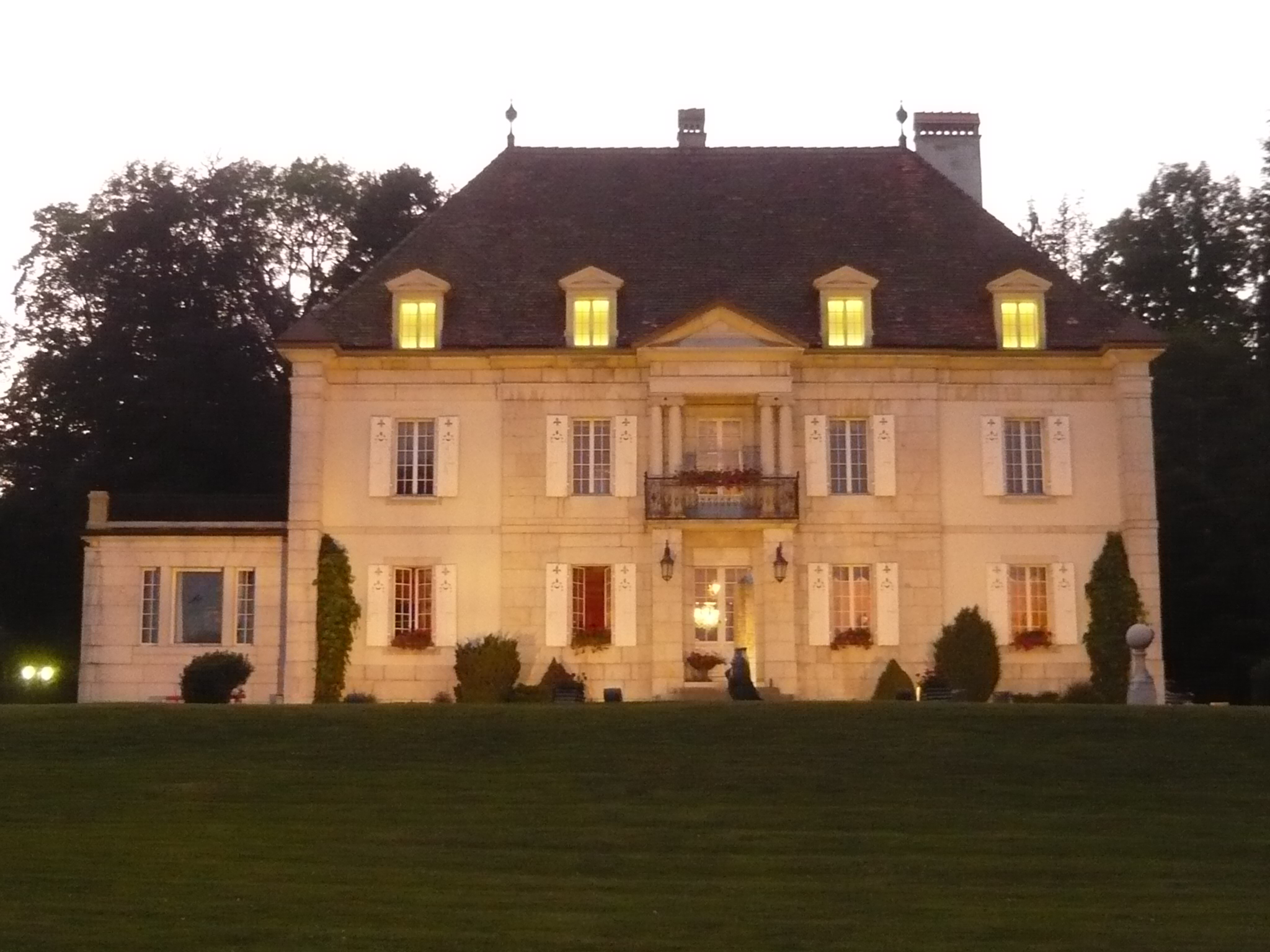
Figure. The horology museum at the Château des Monts (2011), photographed by Mirejo. Source Wikimedia Commons file. Licence CC BY-SA 3.0 Unported. Unchanged. The image is available under the same licence.

For a small town, Le Locle has several distinctive museums, including the Musée des Beaux-Arts du Locle, Musée d’Horlogerie du Locle, natural history museum and the Underground Mills of the Col des Roches.
Musée des Beaux-Arts du Locle (MBAL). It began with a society of art enthusiasts in 1862. The museum opened in a permanent room at a school in 1876. The museum gives 1913 for the move to its current building, while a municipal report from 2009 records installation of the collections there in 1908. It has emphasised prints and the graphic arts since 1946 and was renovated in 2011–2014. About 5,000 objects include paintings, drawings, watercolours, sculpture and prints from the seventeenth to the twenty-first century. (Museum history, Collection, Municipal renovation report)
Musée d’Horlogerie du Locle, Château des Monts. This museum of timekeeping occupies an eighteenth-century manor on a hill north of town. (1) Local notable Samuel DuBois built the Louis XVI-style house by 1789, with an ornate interior and English-style garden. (4) (4) The town bought it in the 1950s and opened the museum in 1959. (4) The collections include timepieces, automata, tools and papers. Maurice Sandoz donated 35 timepieces and automata in the 1950s, helping build the collection. (Museum) There are clocks, pocket watches, workshop tools and automata designed to entertain through sound and movement. (4) (4) Collection accounts include an eighteenth-century flute clock attributed to Pierre Jaquet-Droz that plays music and moves figures (4), a late eighteenth-century singing-bird cage with gilded Rococo ornament (4), and a Neuchâtel clock of around 1830 attributed to Julien-Auguste Maillardet. (4) A complicated astronomical pocket watch signed by Jean Miolan of Geneva, early nineteenth century, has striking, repeating and astronomical displays. (4) Theft of several clocks in August 2026 led to a temporary closure for investigation and safety checks. (Swissinfo report) The objects on display vary. An exhibition on the history of timekeeping uses models and film to trace technologies from Renaissance clocks to atomic clocks. (4) The archives list around 3,500 specialist publications, drafts by Alfred Chapuis and early production ledgers from Ulysse Nardin and Jürgensen. (Horological archives) The building itself preserves the character of a wealthy eighteenth-century Jura home, with a spiral staircase and rooms decorated with carved wood.
Natural history museum. The town holds natural history collections. A 2018 guide records minerals, birds and mammals and dioramas. (Wikivoyage) The town records an event by the museum in 2022 at the Jehan-Droz school building, and its 2025 accounts provide for maintaining the collections. (Municipal 2022 event notice, 2025 accounts)
Underground Mills of the Col des Roches. West of town near the border, mills made use of the drop as the Bied river flowed underground. In 1652 three millers applied to use the site, operating flour mills and stampers with waterwheels. A long shaft later carried power to a sawmill above ground. The town bought the mills in 1884 and in 1898 converted them to a slaughterhouse that also served for border quarantine. After closure in 1966, volunteers began clearing the cavern in 1973 and partially restored the waterwheels. A water channel installed in 2007 allowed them to run again. The museum documents local use of water power before the watch industry. (History of the Underground Mills)
Technical details: Horology and precision engineering#
Mechanical engineering and timekeeping#
At the centre of a mechanical timekeeper are an escapement and an oscillator. The escapement periodically gives force from a spring or weight and the train to an oscillator such as a pendulum or balance. It also controls the advance of the train. (24) The train advances in synchrony with the oscillator and moves the hands regularly. (24) In a lever escapement, the balance’s motion repeatedly locks and releases the escape-wheel teeth, and force passes to the balance through the lever. (24) This meters the train and replaces energy lost by the oscillator. (24) The periodic sound of contact provides evidence of its action from outside. (24) A typical Swiss lever gives two beats per complete balance oscillation. At 18,000 beats per hour there are five beats and two and a half complete oscillations per second. (Naperkoski thesis) Escapements affect accuracy and their improvement is central to the history of mechanical timekeeping. (24) Makers in Le Locle experimented with planetary gearing and natural escapements in the eighteenth and nineteenth centuries. The now-dominant lever escapement spread quickly after reaching continental Europe in the late eighteenth century. The escapement and oscillator together have become much more accurate through technical developments since the thirteenth century. (24)
The balance and hairspring form an oscillator, and in a clock the pendulum fulfils that role. Period depends on pendulum length or on balance inertia and the hairspring’s restoring torque. An ideal linear oscillator has the same period at different amplitudes, a property called isochronism. Actual rate is affected by changes in amplitude, friction and temperature. Mathematical models help watchmakers analyse errors and refine dimensions and materials. Jacques-Frédéric Houriet studied hairspring isochronism and used spherically wound springs. No. 27 attributed to Favre-Bulle has a gold spring of that form and a compensation balance. (Auction record) In the early nineteenth century Abraham-Louis Breguet, born in Neuchâtel, devised the tourbillon to average positional errors by slowly rotating the balance and escapement. Calculation and experimentation supported improvements of this kind.
Precision manufacture and materials#
Small wheels, balances and screws require precision and finishes suited to their use. Arbor and bearing clearances affect friction and movement. Eighteenth- and nineteenth-century makers in Le Locle finished parts with files, lathes and loupes. By the nineteenth century, automated part production by makers such as the French maker named in the Japanese article as “Jacques Marē” and Georges Auguste Leschot in Switzerland brought drilling machines for small holes and wheel-cutting machines. Le Locle makers adopted them to produce screws and wheels in large quantities. (2) DIXI made machine tools bearing its name in 1906 and a prototype horizontal boring machine in 1947. (DIXI history) Finishing also matters in parts that are normally hidden, including chamfered bearing holes, mirror polishing of wheels and bluing of steel for corrosion resistance. Geneva stripes and perlage are visible when the back of a fine watch is opened. Such decorative finishing is part of the heritage of the Swiss industry, including Le Locle.
Traditional trains used brass and hardened steel, and jewelled bearings reduced pivot wear. The Metropolitan Museum of Art records that Nicolas Fatio and the Debaufre brothers applied for a patent in 1704 for piercing jewels. Its London watch of c. 1715–19 uses diamond bearings. Widespread Swiss use came later. (Metropolitan Museum of Art) The inscription on No. 96, attributed to Houriet for Berthoud Frères, mentions ten pierced ruby jewels. (No. 96 auction record) Compensation balances developed in the later eighteenth century. The split brass-and-steel rim bends in warmth, reducing its diameter and moment of inertia to compensate for the tendency of the hairspring to lose rate with rising temperature. Several makers improved this type. (Compensation balance) Le Locle makers used it in fine chronometers. Guillaume’s iron–nickel Invar offers low expansion. His Elinvar limits variation in elastic modulus with temperature and is used for hairsprings. These are separate material properties. (Open University account) Reinhard Straumann developed Nivarox for hairsprings in the 1930s. (Development of Nivarox) The alloy, which can contain nickel, chromium and beryllium, resists temperature change, magnetic fields and deterioration over time. (26) Watchmaking thus contributed to materials development as well as mechanical precision.
Acoustic engineering and watches#
The periodic sound of a mechanical escapement helps investigate operation. Apart from measuring rate from the intervals, Su and Du’s 2007 research analysed frequency components over time and compared them with responses from a finite-element model to study particular faults. The university’s published abstract describes this use of the sound of operating watches. (Su and Du paper)
A minute repeater sounds hours, elapsed quarters and remaining minutes on demand. A governor spaces the blows. The Swiss National Exhibition report of 1896 describes a Le Locle repeater by Barbezat-Boillot using weights that spread centrifugally and touch a surrounding surface to brake the train quietly. (1896 exhibition report) An auction catalogue also records a Zenith watch of about 1900–1905 with a mechanism by local maker César Racine. Three gongs and hammers serve a grande sonnerie that sounds hours and quarters automatically and a repeater that sounds minutes on demand. The catalogue cites historian Chapuis on the Tianjin firm Vrard commissioning a portrait watch from Racine in 1902 as a gift for a Chinese client. It lists patents from 1893 onward. Their original claims were not checked here. (Antiquorum catalogue)
Mathematical and physical models#
Pendulum period and force transmission in an escapement can be studied theoretically. The eighteenth-century Encyclopédie article on the pendulum describes nearly isochronous circular-arc oscillation at small amplitudes and observations at different latitudes by Maupertuis and others. (Encyclopédie, “Pendule”) H. R. Playtner’s 1910 work diagrams contact between pallet jewels and escape wheel and analyses impulse angle for the lever escapement. (Playtner)
Naperkoski measured a movement, made a CAD model and analysed its lever escapement by finite elements. The model achieved stable operation over two seconds and the specified rate goal. Balance amplitude was 5.23% below the lower target limit, so this was the one performance goal of three that the model missed. Measurements of the actual movement informed both model construction and evaluation. Balance frequency was about 2.5 Hz. (Naperkoski thesis)
Influence today#
Watchmaking remains economically and culturally significant in Le Locle. The town’s 2021 statistics give 5,194 secondary-sector jobs of 8,415 local jobs, including machine tools and pharmaceuticals as well as watchmaking. (Municipal economic report) Tissot, Zenith and Ulysse Nardin have headquarters or workshops there and export watches to international markets. Parts suppliers such as Nivarox-FAR serve brands worldwide. The watchmaking school tradition continues through advanced technical education, including electronics and information technology, supplying skilled people to local industry. (1) (2) The local economy has changed while retaining watchmaking as a foundation.
Watchmaking history also informs urban preservation and public access. A municipal heritage trail established in 2004 interprets buildings and the industry. (Heritage trail study) The watchmaking heritage biennial opens workshops and related sites in Le Locle, La Chaux-de-Fonds and Saint-Imier. (Urbanisme horloger)
Technical education continues the lineage of the watchmaking school founded in 1868. (Historical Dictionary of Switzerland) The horology museum presents the history of watch components and automata. The archives preserve manufacturers’ production ledgers and watchmaking school records. (Museum, Horological archives)
Le Locle’s horological culture grew through specialist workshops, mechanised factories, schools and archives. The World Heritage designation recognises the streets that combine housing and workspace and the persistence of the industry as production methods changed. (UNESCO)
References#
Sources cited in the article#
- Le Locle — Wikipédia. Source page.
- Locle, Le. Source page.
- Swiss Federal Office of Culture, La Chaux-de-Fonds / Le Locle : urbanisme horloger. Document.
- Musée d’Horlogerie du Locle — Wikipédia. Source page.
- Ле-Локль — Википедия. Source page.
- chronometer watch; watch-case; presentation-box; tourbillon watch. Source page.
- Frédéric-Louis Favre-Bulle - Grail Watch Wiki. Source page.
- Le Locle - Wikipedia. Source page.
- Le Locle: Top attractions and activities in 2025, Swiss Activities. Source page.
- Signed F. Berthoud, no. 96, “Chronomètre Echappement Libre à …. Source page.
- Chiming Watches: 12 Exceptional Minute Repeaters, Alarms …. Source page.
- Revolutionary Minute Repeaters | ArtyA Watches. Source page.
- Escapement - Wikipedia. Source page.
- Nivarox-FAR - Grail Watch Wiki. Source page.
- Jean-Marc Barrelet, « Locle, Le », Dictionnaire historique de la Suisse, revised 2021.
- Estelle Fallet, « Daniel Jeanrichard », Dictionnaire historique de la Suisse, revised 2007.
- Swatch Group, Nivarox-FAR.
- Europa Star, 1933: The Origins of Nivarox and Incabloc, pp. 99–101.
- S. Su and R. Du, “Signature analysis of mechanical watch movements”, Mechanical Systems and Signal Processing 21 (2007), pp. 3189–3200.University-hosted abstract consulted.
- Open University, The challenge of temperature: Invariant metals.
- Lionel Bartolini, « Neuchâtel (canton) », Dictionnaire historique de la Suisse.
- Hanspeter Marti, « Prusse », Dictionnaire historique de la Suisse.
- Société d’histoire et d’archéologie du canton de Neuchâtel, « Le Locle avant l’incendie ».
- Christie’s, Watch No. 27 attributed to Favre-Bulle.
- Richard Watkins, The Origins of Self-winding Watches, 2013, pp. 185 onward.
- Moulins souterrains du Col-des-Roches, Marie-Anne Calame : artiste et fondatrice des Billodes, 2015 exhibition notice.
- Swissinfo / Keystone-ATS, Cambriolage du musée au Locle, 10 August 2026.
- Musée d’horlogerie du Locle, Le musée.
- Arc horloger, Musée d’horlogerie du Locle : fonds documentaires.
- ICOMOS, La Chaux-de-Fonds / Le Locle, evaluation, 2009, pp. 244–246.
- DIXI, Histoire.
- DIXI Polytool, À propos de nous.
- Région Bourgogne-Franche-Comté, Chocolaterie et confiserie Klaus.
- Myriam Volorio Perriard, « Jacques-Frédéric Houriet », Dictionnaire historique de la Suisse.
- Anne Jeanneret-de Rougemont, « Fritz Huguenin », Dictionnaire historique de la Suisse.
- Cyrille Gigandet, « James Guillaume », Dictionnaire historique de la Suisse.
- Estelle Fallet, « Ulysse Nardin », Dictionnaire historique de la Suisse.
- Christie’s, Houriet for Berthoud Frères, No. 96, 2017 auction catalogue.
- Moulins souterrains du Col-des-Roches, Histoire.
- Musée d’horlogerie du Locle, La saga des Tissot dans le monde, Lecture notice.
- Université de Neuchâtel, Techniques et stratégies publicitaires, pp. 21–23.
- Jean-Marc Barrelet, « Georges Favre-Bulle », Dictionnaire historique de la Suisse.
- MBAL, Le MBAL.
- MBAL, Collection.
- Ville du Locle, Rapport MBAL, pp. 3–4.
- Estelle Fallet et Béatrice Veyrassat, « Horlogerie », Dictionnaire historique de la Suisse.
- Europa Star, « Luc Tissot, au nom de l’avenir ».
- Swatch Group, History.
- Ulysse Nardin, Heritage.
- Zenith, Charles Vermot.
- Journal officiel illustré de l’exposition nationale suisse, 1896, p. 498. Report on watchmaking.
- Antiquorum, Zenith, made by César Racine, 2022 auction catalogue.
- Wikivoyage, Le Locle, Natural history museum, updated 2018.
- Ville du Locle, Réalisation de cartes de Noël 2022.
- Ville du Locle, Rapport des comptes 2025.
- UNESCO World Heritage Centre, La Chaux-de-Fonds / Le Locle, Watchmaking Town Planning.
- Courvoisier et Aguillaume, L’inscription au Patrimoine mondial de l’UNESCO, 2011, account of the heritage trail.
- Fondation Urbanisme horloger, Biennale du Patrimoine Horloger.
- Hodinkee, Compensating Balance.
- « Pendule », L’Encyclopédie, première édition.
- H. R. Playtner, An Analysis of the Lever Escapement, 1910.
- Ville du Locle, Rapport du Conseil communal sur l’attractivité, pp. 17–18、2021 employment figures.
- Metropolitan Museum of Art, Daniel Delander, Pair-case watch, Collection account.
- Brian M. Naperkoski, Exploring the Dynamics of a Mechanical Watch Lever Escapement Using Finite Element Analysis, Virginia Tech, 2022.
- Montblanc, « Savoir-faire ».
- Antiquorum, Paul Buhré No. 8529, 2011 auction catalogue.
- Ville du Locle, « Histoire ».
French Wikipedia, “Le Locle” (2023 edition). Geography, history and economy. (Le Locle — Wikipédia) (Le Locle — Wikipédia) (Le Locle — Wikipédia)
French Wikipedia, “Le Locle”, history section. Medieval and early modern settlement, Reformation and revolution under Prussian rule. (Le Locle — Wikipédia) (Le Locle — Wikipédia) (Le Locle — Wikipédia)
French Wikipedia, “Le Locle”, nineteenth and twentieth centuries. Development of watchmaking, railways, social movements and World Heritage designation. (Le Locle — Wikipédia) (Le Locle — Wikipédia) (Le Locle — Wikipédia)
English Wikipedia, “Le Locle”. The town’s place in watchmaking and its principal companies. (Le Locle - Wikipedia) (Le Locle - Wikipedia)
Swiss Federal Office of Culture, “La Chaux-de-Fonds / Le Locle, urbanisme horloger” (PDF, 2009). World Heritage nomination summary on nineteenth-century planning and Marx’s reference. () ()
Historical Dictionary of Switzerland, “Locle, Le”, J.-M. Barrelet, 2021 revision. History, population, industries and watchmaking statistics. (Locle, Le) (Locle, Le)
French Wikipedia, “Musée d’Horlogerie du Locle”. Museum and Château des Monts history and collection list. (Musée d’Horlogerie du Locle — Wikipédia) (Musée d’Horlogerie du Locle — Wikipédia)
French Wikipedia, “Musée des Beaux-Arts du Locle”. Founding, building and collections including prints. (Musée des Beaux-Arts du Locle — Wikipédia) (Musée des Beaux-Arts du Locle — Wikipédia)
French Wikipedia, “Le Locle”, museum section. The art, horology and natural history museums and the underground mills. (Le Locle — Wikipédia) (Le Locle — Wikipédia)
English Wikipedia, “Escapement”. Mechanism and history of mechanical escapements. (Escapement - Wikipedia) (Escapement - Wikipedia)
Naperkoski, B. M., “Exploring the Dynamics of a Mechanical Watch Lever Escapement Using Finite Element Analysis” (master’s thesis, Virginia Tech, 2022). Simulation of a lever escapement, including stable operation and unresolved issues. () ()
H. R. Playtner, “An Analysis of the Lever Escapement” (1910). Historical technical analysis of the lever escapement. (An analysis of the lever escapement - H.R. Playtner (1910)) ([PDF] Signature Analysis of Mechanical Watch Movements - CORE)
The Naked Watchmaker, “Jacques-Frédéric Houriet inventor of the spherical balance spring” (blog, 2021). Biography and technical work of the Le Locle watchmaker, including the spherical hairspring. (chronometer watch; watch-case; presentation-box; tourbillon watch) (Jacques-Frédéric Houriet - Portrait of the Father of Swiss Chronometry)
Russian Wikipedia, “Ле-Локль”. Includes a figure of one in six residents in the watch industry. (Ле-Локль — Википедия)
Denrespublika (denresp.ru), “Часовое дело в России”, 23 October 2019. History of Russian watchmaking noting Russian merchant Pavel Bure’s acquisition of a Le Locle factory in 1874.