This article was translated from Japanese using AI. Read the Japanese original
The National Watch & Clock Museum in Columbia, Pennsylvania, brings together everything from a nineteenth-century monumental clock with moving figures and a sounding organ to pocket watches and marine chronometers made in nearby Lancaster. The adjoining library and research center also preserves Hamilton drawings, test reports, and employee photographs. The museum makes it possible to study a timepiece both in the setting where it was used and through the work of the people who designed and made it. 4 6 7 8
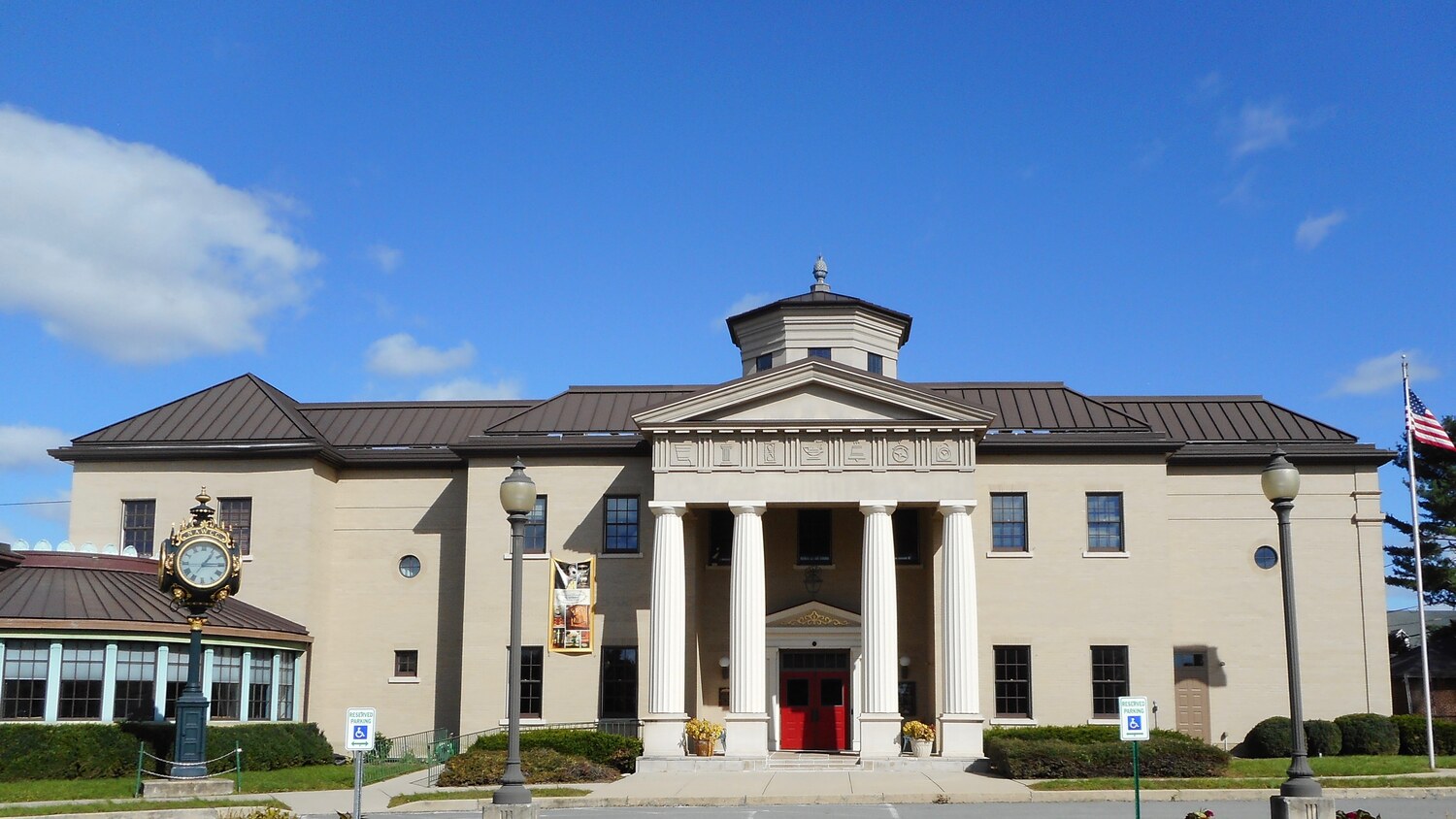
Figure 1. The museum’s entrance on Poplar Street (2018). Photograph: Smallbones. Source: Wikimedia Commons file page. Rights: CC0 1.0. Changes: resized and recompressed; not cropped.

A members’ collection in a ferry town#
Columbia lies along the Susquehanna River in western Lancaster County. John Wright began operating a ferry there in 1730, and the settlement was known as Wright’s Ferry. The town blocks were laid out in 1788, and Columbia became a borough in 1814. The town grew as a transportation hub where roads, canals, and railways converged. In the twentieth century, it became home to a collection of timepieces donated by the association’s members. 2 3
The museum’s operator, the National Association of Watch & Clock Collectors (NAWCC) (in Japanese), traces its origins to a club formed by portable-timepiece collectors in 1943. According to the museum history, collecting and display began in 1952, when the association’s secretary, Earl T. Strickler, set up an exhibition in the basement of his Columbia home. As membership grew, the association established its headquarters at 514 Poplar Street. In 1971 it formed a collections committee, solicited donations of clocks and watches, and expanded its library for research and loans. 1 5
The museum opened to the public on November 6, 1977, with fewer than 1,000 objects on display. Among the opening gifts were a pocket watch made in Springfield, Illinois, a demagnetizer dating from around the early twentieth century, and a French key-wound pendant watch. From early on, the collection included both timepieces and the tools used to repair and maintain them. Exhibition and library space was expanded in 1985, and the museum reopened in October 1999 after renovating its galleries. 1
Bringing the Engle Clock back to life#
About 3.35 meters tall, the Engle Clock was made by Stephen D. Engle, a clockmaker and jeweler in Hazleton, Pennsylvania. According to a museum report compiled during its restoration, a touring exhibition by Captain Jacob Reid and his wife appeared in newspaper accounts in 1877, and the clock is said to have reached its final form in 1878. In addition to its clock dial, it displays such things as the phases of the moon and tides, and includes mechanisms showing the positions of the moon, constellations, and other bodies in relation to Earth’s rotation. 6 9
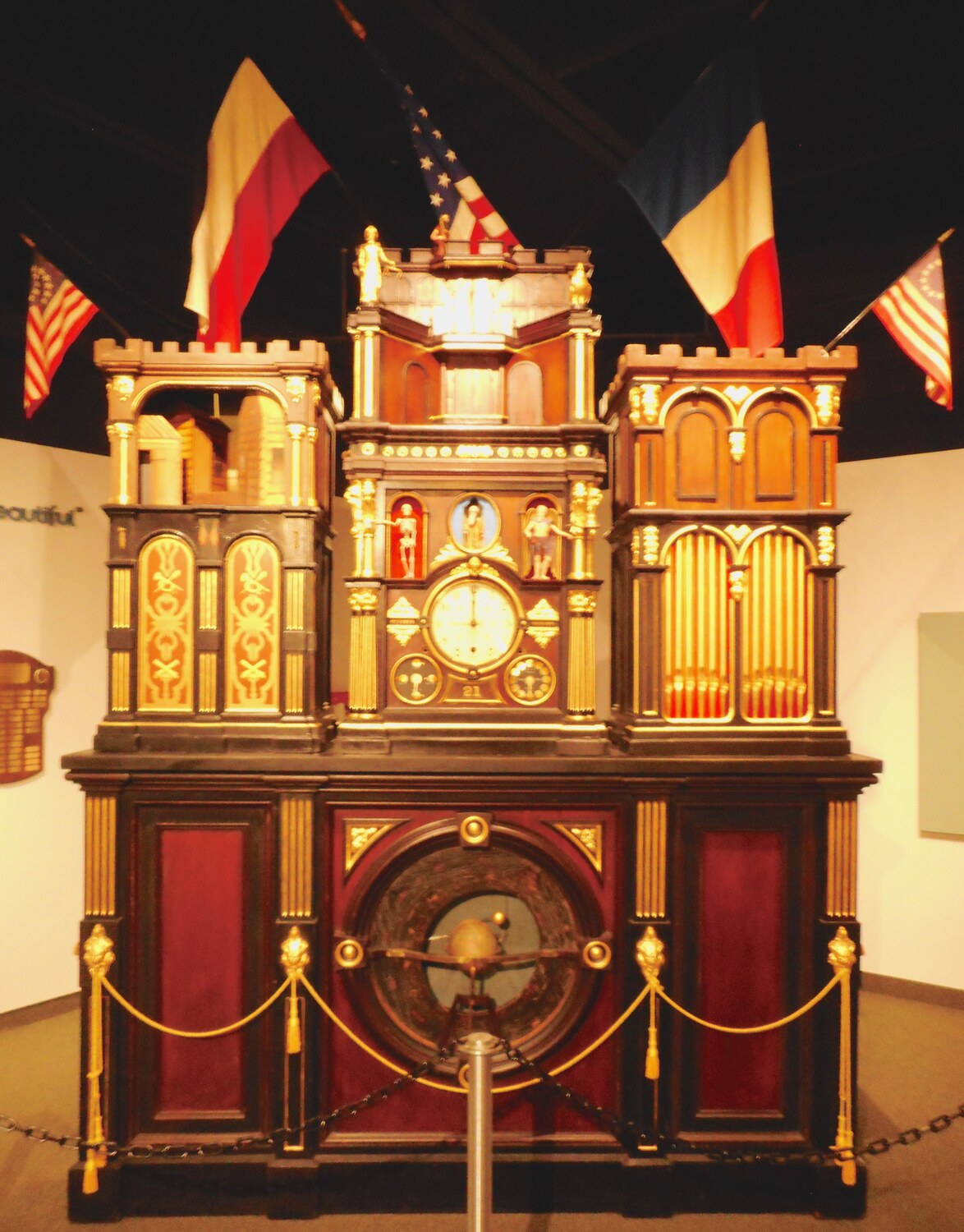
Figure 2. The Engle Clock in the museum (2018). Photograph: Smallbones. Source: Wikimedia Commons file page. Rights: CC0 1.0. Changes: resized and recompressed; not cropped.

The museum’s account says that the clock has 48 moving figures and two organ mechanisms. On the hour, a skeletal figure representing Death strikes a skull. In the left tower, soldiers from the American Revolutionary War appear; the restoration report says this scene is activated manually. When apostles appear in the central tower, the organ in the right tower plays a hymn. 6 9
The clock disappeared after its touring exhibition and was found in a barn in upstate New York in 1983. It was later moved to Connecticut, and the association bought it in 1988. The restoration report records separate work on the case’s gilding, the dial, the backdrop painting, the organ bellows and mechanism, and the moving figures. Staff and volunteers used documentation showing the clock’s appearance and operation, along with surviving parts, to guide the work. It went on public display on September 19, 1989. The museum’s current collection guide also advertises demonstrations of the clock in motion. 1 4 9
Tracing Lancaster watches through objects and drawings#
From workshop-made tall clocks to factory pocket watches#
Among the local objects highlighted by the museum is a tall-case clock dating to around 1810 and signed by Martin Schreiner. It has a brass movement driven by three weights, and its musical mechanism plays seven tunes. A rural and maritime landscape is painted on its iron dial, which also indicates the moon. It brings together a timekeeping mechanism, furniture, painting, and music in a single object. 7
In Lancaster, Adams & Perry built a watch factory in 1875, and the Hamilton Watch Company was incorporated in the city in 1892. The museum holds an Adams & Perry pocket watch from around 1877 and a Hamilton Grade 936 pocket watch, serial number 1, described as dated April 21, 1896. The Dudley Masonic Model 1 (No. 1139), dating to around 1922, is another Lancaster-made example; it incorporates Freemasonry-inspired designs into movement components. 4 7 8 10
From finished products to design and test records#
The museum also presents period factory machinery that it says remains operable in its gallery on early American watchmaking. The Robert Wolfe Marine Chronometer Gallery includes an example of a model mass-produced by Hamilton during the Second World War. Original marine-chronometer drawings and work instructions can also be found among the regional materials described by the museum. 7 11
The inventory of the Library & Research Center’s “Hamilton Records Collection” (MG-335) lists 71 boxes of material dating from 1874 to 1996. For example, the balance-spring records include specifications and research reports, while the chronometer records include drawings, test-related reports, and photographs. Other series contain watch-school teaching materials, employee records, and labor-union documents. According to the inventory, most of the material was rescued from disposal containers in the mid-1980s when the Lancaster facility closed; some was donated to the research center’s library in May 1986. The survival of documents used in the factory makes it possible to study how specifications were set and skills taught, alongside the finished products. 8
Galleries and research center#
The museum’s collection guide describes more than 13,000 clocks, watches, and related materials from around the world. Its exhibition guide includes a gallery of Chinese and Japanese timepieces, as well as a gallery of public clocks installed in towers, on walls, and along streets. The latter invites visitors to consider how a mechanism looks in its setting and where its sound and dial were directed. 4 11
According to the museum’s January 2026 progress report, the heating, ventilation, and air-conditioning system was upgraded in 2025, and additional equipment serving the collections storage area was installed. The same report says that 12 of the 15 objects in the public clock gallery had undergone conservation and were operating daily. Two E. Howard tower-clock movements were displayed against a timber-plank wall evoking the inside of a tower. The renovation plan thus encompasses both demonstrating clocks in operation and storing them in a temperature- and humidity-controlled environment. 12
The address is 514 Poplar Street, Columbia, PA 17512. Museum opening days vary by season, and the last admission is one hour before closing. The adjoining Fortunat Mueller-Maerki Library & Research Center has a separate schedule and asks research visitors to contact it in advance. For company documents, repair-shop records, or personal papers, its online archives catalog can be searched for collection names and call numbers. 13 14 15
Timeline#
| Date | Event |
|---|---|
| 1730 | John Wright begins operating a ferry across the Susquehanna River. 2 |
| 1877–1878 | The Engle Clock’s touring exhibition begins; the museum’s restoration report says it reached its final form in 1878. 9 |
| 1892 | Hamilton is incorporated in nearby Lancaster. 8 10 |
| 1943 | A collectors’ club, predecessor of the NAWCC, is established. 5 |
| 1952 | Strickler exhibits clocks in his home in Columbia. 1 |
| 1971 | The association establishes a collections committee. 1 |
| November 1977 | The museum opens to the public. 1 |
| 1985 | Exhibition and library space is expanded. 1 |
| October 1988–September 1989 | The Engle Clock is brought to the museum and opened to the public after restoration. 1 9 |
| October 1999 | The museum reopens after its galleries are renovated. 1 |
| 2025–January 2026 | The museum summarizes progress on HVAC upgrades and conservation displays in the public clock gallery in its Year One report. 12 |
References#
1. Lindsey Campbell, National Watch & Clock Museum: From the Basement to the Top, Watch & Clock Bulletin, July–August 2018, pp. 314–318. Accessed November 23, 2026.
2. Advisory Council on Historic Preservation, Columbia Borough, Pennsylvania. Accessed November 23, 2026.
3. Lancaster County Planning Department, Columbia2040: Compendium, Map 1.1, “Regional Setting.” Accessed November 23, 2026.
4. National Association of Watch & Clock Collectors, Museum Collection. Accessed November 23, 2026.
5. National Association of Watch & Clock Collectors, About the NAWCC. Accessed November 23, 2026.
6. National Watch & Clock Museum, The Engle Clock, description of the mechanism and its actions at different times. Accessed November 23, 2026.
7. National Watch & Clock Museum, Historical Watch & Clock Contributions from Lancaster, Pennsylvania, descriptions of objects and document collections. Accessed November 23, 2026.
8. Claire Moclock, NAWCC Library & Research Center Archives, Hamilton Records Collection, MG-335, Collection Overview and Arrangement, 2019. Accessed November 23, 2026.
9. Thomas J. Bartels, The 8th Wonder of The World, NAWCC Bulletin, February 1990, pp. 16–24. Accessed November 23, 2026.
10. Hamilton Watch, History of Hamilton, “Railroad Accuracy” and “Military Heritage.” Accessed November 23, 2026.
11. National Association of Watch & Clock Collectors, Exploring Exhibits. Accessed November 23, 2026.
12. National Watch & Clock Museum, Five-Year Plan 2024–2029, Year One Progress Report, January 2026, pp. 1–3. Accessed November 23, 2026.
13. National Association of Watch & Clock Collectors, Visit. Accessed November 23, 2026.
14. National Association of Watch & Clock Collectors, NAWCC Library & Research Center. Accessed November 23, 2026.
15. NAWCC Library & Research Center Archives, Archives Catalog. Accessed November 23, 2026.