This article was translated from Japanese using AI. Read the Japanese original
Cuckoo clock shops are only one part of the Black Forest’s clockmaking history. Schramberg, in southwestern Germany, has the former Junghans factory terraced into a hillside, a museum of everyday clocks and the power plant that supplied a clock factory. The town offers a chance to see what the clocks looked like, where and how they were made in quantity, and how people used them. 1 2 4
For a day centred on clocks, visit the Junghans Terrassenbau Museum in the morning and ErfinderZeiten in the former H.A.U. factory district in the afternoon. The first closes at 16:00. The second pairs clocks with exhibits on everyday life. Opening, admission and transport information below was checked on 23 October 2026. 1 3
Three museums at two sites#
| Museum | What to look for | Address |
|---|---|---|
| Junghans Terrassenbau Museum | Workshop lighting, Black Forest clocks, component manufacture and changes in the product range | Lauterbacher Straße 68 |
| ErfinderZeiten | Black Forest clocks alongside post-war life and transport | Gewerbepark H.A.U. 3/5 |
| Diesel Museum | Power equipment that supported large-scale clock production | Former H.A.U. factory district |
The terraced Junghans building and the H.A.U. district are separate destinations. H.A.U. stands for the Hamburg-American Clock Company. The district today includes businesses alongside the museums. Use each museum’s address to plan the trip between sites. 1 3 5
Morning at the Terrassenbau#
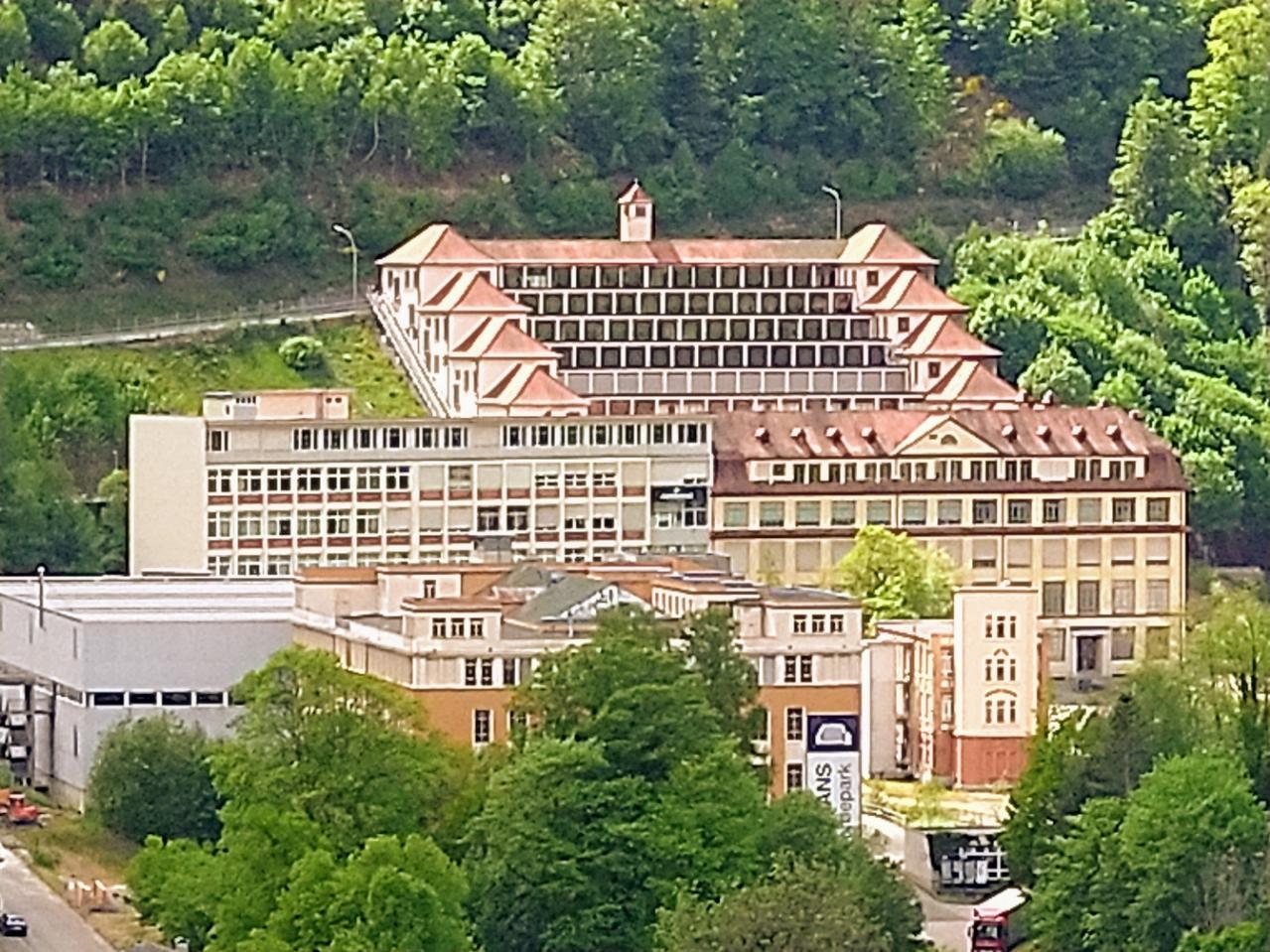
Figure 1. The Junghans Terrassenbau. The slope and rows of workshops show how the building steps up the hillside. Photograph by Martin Hahn, unchanged. Wikimedia Commons file Original Landauf, LandApp post 216871 CC0 1.0 Universal

Terrassenbau means a terraced building. Architect Philipp Jakob Manz designed the factory built in 1916–1918. Its nine levels step up the steep slope, and nearly every workstation in the long, narrow workshops was by a window. Look at the windows in relation to the hillside. The layout brought natural light to fine clockmaking work within the limits of the site. 1
The displays range from wooden clocks and clocks that play music or move figures to Junghans products and the industries that supplied components. Comparing the clockmaker’s workshop, a self-playing musical device and the spring-making machinery of local firm Pfaff & Schlauder reveals the work behind the finished pieces. Springs store energy inside a clock, and these parts show aspects of factory production that the dial and case alone cannot. 1
The terraced building houses exhibits of machinery and workshops. Ask the museum about demonstration times or special tours if you want to see equipment in action or arrange a guided visit.
Hours, admission and tours#
The official German-language listing gives Tuesday to Sunday, 10:00–16:00, with last admission at 15:00 and Monday closure. It also lists closures on 24–26 and 31 December, 1 and 6 January, and the Sunday and Tuesday of Fasnet. Standard admission is €8 and concessions €4. Group tours are by prior arrangement, for up to 25 people, at €50 plus admission. Contact anfragen@junghans-terrassenbau-museum.de. The English page gives different hours. Plan around the German listing’s 16:00 closing time and confirm the date if arriving late. 1
Afternoon at ErfinderZeiten#
ErfinderZeiten is a museum of cars and clocks. The displays trace post-war life and transport, with a Black Forest clock exhibition on an upper floor. The museum gives its location as 4. OG, the fourth floor above ground or the fifth storey when counting the ground floor as one. 2
The displays cover cuckoo clocks, Max Bill’s kitchen clock, alarm clocks and sports timing. Each has a different job. Cuckoo clocks announce the time aloud, kitchen clocks make it easy to read, alarms signal a set time, and sports timers compare short intervals. Seeing the clocks alongside displays of kitchens and shops helps place them back in everyday use. 2
If clocks are the priority, ask at reception where the exhibition is and spend time there before moving on to the cars and scenes of everyday life. If your companions are interested in cars, budgeting two hours or more for the whole museum is one way to accommodate both interests. This is a suggested allocation and the time needed to see every exhibit can vary.
Admission, winter closures and bookings#
Regular opening is Tuesday to Sunday. From 15 March to 31 October the hours are 10:00–18:00, and from 1 November to 14 March they are 10:00–17:00. The museum closes from 7 to 31 January. It lists special openings on Easter Monday, Whit Monday and 26 December. 3
The standard single-museum ticket costs €8 and includes the Diesel Museum. ErfinderZeiten tours last about 1½–2 hours, are limited to 20 people and cost €50 plus admission. Book early via erfinderzeiten@schramberg.de or +49 7422 29300. The museum lists free parking, lockers and accessible facilities. Ask when booking about specific wheelchair routes or tours in your preferred language. 3
The Diesel Museum and the power behind clock production#
Also in the former H.A.U. district, the Diesel Museum houses a large 1911 diesel engine and generator in a 1904 power plant. The engine survives in its original location beside the electrical equipment. The scale of the machinery shows what it took to power the factory making those small gears. 4
Look at how the engine, generator and distribution equipment worked together. Check demonstration dates and times in advance if you want to see the machinery running.
The Diesel Museum has separate opening arrangements despite sharing the ticket. The county listing describes mainly weekend opening in winter and leaves some periods unspecified. From November in particular, ask ErfinderZeiten whether both museums are open on the same day. If the Diesel Museum is closed, spend longer with the clock exhibits. 3 4
A full day or a shorter visit#
This example starts at 10:00 on a Tuesday through Sunday when both the Terrassenbau and ErfinderZeiten are open. It excludes 7–31 January, the Terrassenbau’s Christmas, New Year and Fasnet closures, and any exceptional closures. The Diesel Museum stop depends on confirming its hours for that day. The times allow for the exhibits and breaks. Adjust them for your arrival and check transport options in advance if walking is a concern.
| Approximate local time | Activity | What the time allows |
|---|---|---|
| 10:00–12:00 | Terrassenbau Museum | Explore the building, clocks and component manufacture |
| 12:00–13:30 | Lunch and transfer to the former H.A.U. site | Allow time for food and travel |
| 13:30–15:30 | ErfinderZeiten | Compare the clock floor with exhibits on everyday life |
| 15:30–16:15 | Diesel Museum if open | See the factory’s power equipment |
| Afterwards | Return, or walk in town if time and weather allow | Prioritise your connection and leave room in the schedule |
With half a day, choose the Terrassenbau for architecture and manufacture, or ErfinderZeiten for clocks alongside everyday life and cars. Staying at one site leaves more time to see it.
For a break outside, the Park der Zeiten is an option in town. The Villa Junghans, built in 1885–1886, and its garden belonged to Erhard Junghans, the founder’s son. The factory, everyday objects and a factory owner’s garden offer different perspectives on the same industry. 7
Arriving by train and bus#
Buses connect Schramberg with the railway stations at Rottweil and Schiltach. Route 40 goes towards Rottweil and route 50 towards Schiltach. According to the county, these replaced the old 7478 service on 10 December 2023. Use the new route numbers when checking timetables. 6
Look up both outward and return services for the date of travel and check the route from the bus stop to each museum. Routes 40 and 50 connect the town to the rail network. The ErfinderZeiten car park also serves the Diesel Museum and railway museum. The Terrassenbau is at a separate address. 3 6
Continuing through the Black Forest#
Allowing one day for Schramberg’s museums and another for other clockmaking towns leaves time to see what makes each different. As of 23 October 2026, the German Clock Museum in Furtwangen was closed for a major renovation and its official FAQ gave no reopening date. Treat StattMuseum activities at other venues as individual events and check their participation arrangements. The permanent galleries were closed. 8
The terraced workshops, everyday clocks and former power plant show how clockmaking shaped architecture and daily life in Schramberg. Decide how much time you want to give the finished clocks and how much to a particular stage of production, and allow for each site’s opening hours.
Historical background#
| Year | What to look for on a visit |
|---|---|
| 1861 | Junghans founded, a starting point for the factory and local component industry. 1 |
| 1885–1886 | Villa Junghans built, part of the setting of today’s Park der Zeiten. 7 |
| 1904 and 1911 | H.A.U. power plant built and the diesel engine and generator installed. 4 |
| 1916–1918 | Construction of the terraced Junghans factory building. 1 |
| 2016–2018 | Restoration of the terraced building. 1 |
| December 2023 | The railway bus connection is split into routes 40 and 50. 6 |
| From August 2024 | German Clock Museum in Furtwangen closes for renovation. 8 |
References and visitor information#
Accessed on 23 October 2026. Confirm opening days, prices, which exhibitions are open and transport with the official sources for your date.
- Junghans Terrassenbau Museum, official visitor information in German. Architecture, exhibitions, opening hours, prices and tours. The article uses the German page because the opening hours differ from those on the English page.
- Auto- und Uhrenmuseum ErfinderZeiten, Uhren. The clock floor and exhibits.
- ErfinderZeiten, Besucherinfos and Anfahrt. Hours, winter closure, prices, tours, facilities, location and parking.
- Landkreis Rottweil, Auto & Uhrenwelt Schramberg – Dieselmuseum. History of the power equipment, exhibits and winter opening.
- Stadt Schramberg, Der Technologie- und Gewerbepark H.A.U.. Current use and site layout.
- Landkreis Rottweil, Regiobus. Routes 40 and 50, railway connections and access to official timetables.
- Stadt Schramberg, Park der Zeiten. The garden and villa, owner and construction dates.
- Deutsches Uhrenmuseum, Museum geschlossen. Renovation closure, reopening date pending and off-site activities. Official FAQ in German, English and French.