The Greenwich Time Ball#
This article was translated from Japanese using AI. Read the Japanese original
The Greenwich Time Ball at the Royal Observatory signals the time by dropping a ball from a tall mast at a fixed instant. Installed on the roof of Flamsteed House in 1833, it gave navigators on the Thames and in the London docks a way to compare their ships’ chronometers with the reference time. Observers shared the instant the ball began to move rather than trying to read a clock dial at a distance.12
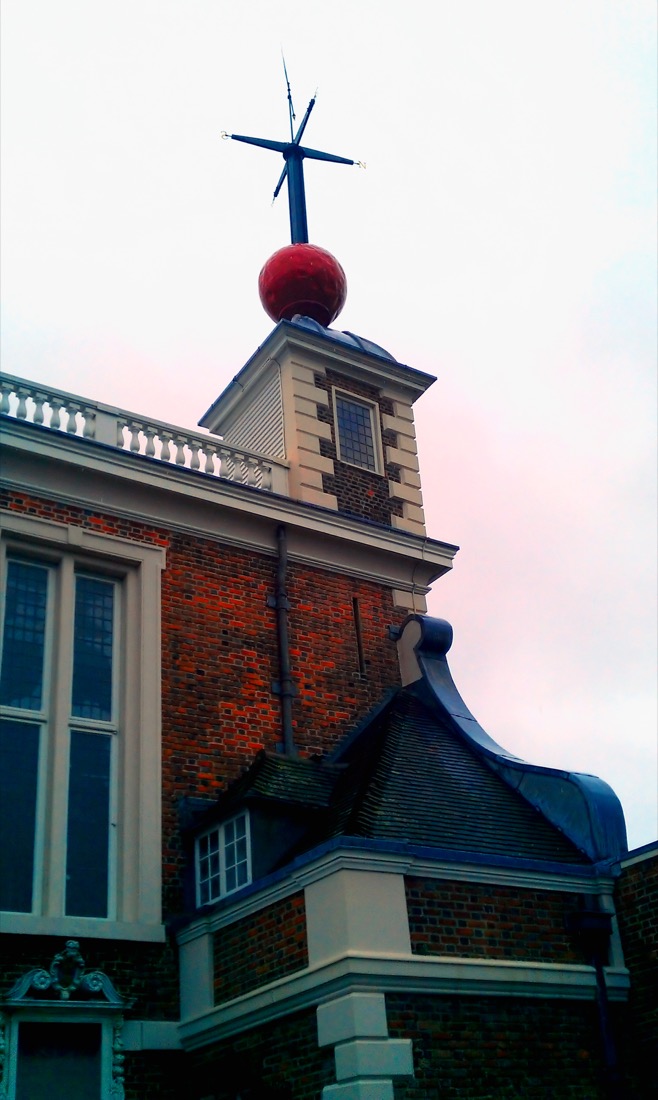
Figure 1. The Greenwich Time Ball, photographed on March 4, 2012, by Andres Rueda. Source: Wikimedia Commons file description. Licence: CC BY 2.0. Resized to 1,100 pixels on the longer side, with no cropping or colour changes.

Finding a marine chronometer’s error and rate#
A chronometer retains the time of a reference location while the ship moves. Before departure the navigator needs to know how far ahead or behind its reading is and how many seconds that difference changes per day. The time ball made the comparison visible from the ship. It allowed the observatory to show the time to ships at a distance, a different operation from carrying a clock out to a vessel.23
An 1844 article in The Illustrated London News gives an example of using one observation to find the time error and daily observations to find the rate. A chronometer showing 13:03:05 at the start of the ball’s fall is three minutes and five seconds ahead of Greenwich mean solar time. If it shows 13:03:07 at the same signal the next day, the chronometer has gained two more seconds over those 24 hours. The navigator can record the error and its change without resetting the timekeeper each day.3
The same article explains how observers determined sidereal time from meridian transits of stars whose positions were known, and derived mean solar time from it. A reference clock kept that time, and the machine that raised and released the ball turned the observatory’s result into a signal visible from ships.3
Installation in 1833#
Portsmouth had an earlier time ball in 1829. Greenwich’s was installed in 1833 under John Pond, the sixth Astronomer Royal. Royal Museums Greenwich, which operates the site today, credits the manufacture to Maudslay, Sons and Field. The observatory oversaw the installation, and the firm supplied the machinery.24
The rooftop position made the ball visible from ships on the river. It was a public means of signalling time between the observatory and its users. The visible ball and the later system that sent signals by wire served different purposes. Connecting them let a single reference clock activate visible signals at separate locations.35
The machinery for lifting, holding and releasing the ball#
The ball, shaft and chain#
The 1844 article and its diagrams identify a winding mechanism to raise the ball, a trigger and linkage to hold and release it, and a clock that gave the signal time. The shaft supporting the ball extended downward to a piston that moved inside an air cylinder. The shaft, a pulley for the lifting chain and iron guide rods supported the vertical motion.3
Pulling the chain with the windlass raised the shaft through a weight fitted with a collar. At the top, a catch held the piston. Operating the connecting rod and trigger released it. The force to raise the ball, the mechanism to hold it and the action that released it at the appointed time had separate functions. As a time signal, the critical instant was when the ball was released and began to move.3
Cushioning the fall with air#
The piston and air cylinder slowed the fall of the ball and shaft and prevented a hard stop at the bottom. A cock regulated the release of air from the cylinder. It cushioned the last part of the descent.3
The 1844 article instructs observers to watch only for the moment the ball leaves the top of its path, since the descent takes several seconds. The instant of departure is the reference, separate from the time taken to reach the bottom.3
The transition to electrical control#
Before electrical control, one person watched the clock and released the ball, while another recorded when it actually fell. The Astronomer Royal’s 1851 report says one assistant dropped it and the other observed and recorded the time of the drop. The record made it possible to determine the error of the signal afterwards.5
The Shepherd electrical clock system was introduced in 1852. According to the 1853 annual report, the master clock dropped the ball at Greenwich and the telegraph company’s ball in the Strand and also drove the gate clock and other clocks at the observatory. The clock kept time, the electrical circuit transmitted the command to release, and the ball produced the visible signal.56
The June 1852 report describes the position as of May 18 of that year. The 1853 report records subsequent operation. The dates of the reports and the dates of the events they describe can differ.5
The 1853 report also records a decision to put up a separate time ball at Deal for ships in the Downs anchorage. Current from Greenwich would release it. The observatory’s time could thus travel along a wire to a distant port and be turned there into a visible signal.5
What the signal could convey#
Many observers could watch the same event at once. Receiving the signal required watching it and having a clear line of sight. The current official guide says observers who miss it must wait until the next day and that the ball does not operate in strong winds. The ball provides one opportunity to compare time at a predetermined instant.1
The machine itself was exposed to weather. The 1856 annual report records that the wind brought the ball down on December 6, 1855. Inspection of the broken mast revealed the cause of its deterioration, and the installation was repaired. A large outdoor signal depended on the clock’s accuracy and the condition of the mast, guides and parts that held the ball.5
The accuracy of the reference clock, the action of the release, the observer’s detection of the start of the fall and the reading of the ship’s own chronometer each influence the time the observer obtains.35
Timeline and present operation#
| Date | Event and significance |
|---|---|
| 1829 | A time ball is installed in Portsmouth before the one at Greenwich. |
| 1833 | Greenwich installs its ball under Pond. Maudslay, Sons and Field make it. |
| November 9, 1844 | The Illustrated London News describes the mechanism and calculating chronometer error and rate. |
| 1851 report | Records the separate jobs of dropping the ball manually and observing and recording the time of the drop. |
| 1852–1853 reports | The electrical clock system and distribution are established. The master clock controls the Greenwich and Strand time balls. |
| 1853 report | Records the decision to install a time ball at Deal controlled by current from Greenwich. |
| December 6, 1855 | Wind brings the ball down. The 1856 report records deterioration of the mast and its restoration. |
| Checked November 6, 2026 | The official guide says the ball is out of operation during restoration of the observatory. |
In a normal demonstration the ball is raised halfway up the mast at 12:55, taken to the top at 12:58 and dropped at 13:00. The current official guide specifies 13:00 GMT in winter and 13:00 BST in summer. On November 6, 2026, the site stated that operation was suspended during restoration work.1
Sources on construction and operation#
The 1844 description of the parts documents the arrangement before electrification. It calls the ball black, while the ball is red today.3
The contemporary descriptions and operating reports trace how observation, timekeeping, release and sighting the drop worked together, and how the signal later became part of electrical time distribution.
References#
- Royal Museums Greenwich, The Greenwich Time Ball. Operating guidance and notice of suspension. Accessed November 6, 2026.
2. Graham Dolan, The Greenwich Time Service, section “The Greenwich Time Ball”. Accessed November 6, 2026.
3. Author unknown, “The Time Ball, Royal Observatory, Greenwich”, The Illustrated London News, November 9, 1844, p. 304. Transcription of text and figures, edited by Graham Dolan, with an editorial note on an error in figure numbering. Accessed November 6, 2026.
4. Royal Museums Greenwich, Our collections: A unique history of timekeeping. Maker and installation in 1833. Accessed November 6, 2026.
5. George Biddell Airy and others, Astronomer Royal’s annual reports, 1851, 1852, 1853 and 1856, Extracts from the Reports of the Astronomer Royal relating to clocks, chronometers, the time-ball and longitude determinations (1836–1868), edited by Graham Dolan. Transcribed texts, distinct from facsimiles of the original publications. Accessed November 6, 2026.
6. Royal Museums Greenwich, History of Royal Observatory Greenwich. The 1833 installation and the 1852 electrical clock system. Accessed November 6, 2026.