This article was translated from Japanese using AI. Read the Japanese original
A montre à tact is a pocket watch that gives the time by touch using an arrow on the outside of the case and raised markers around its edge. The workshop of Abraham-Louis Breguet began selling this type of watch in 1799. To read the time, turn the external arrow with a finger. The position at which it stops relative to the markers gives the time in the dark or while the watch is still in a pocket.1 2 3
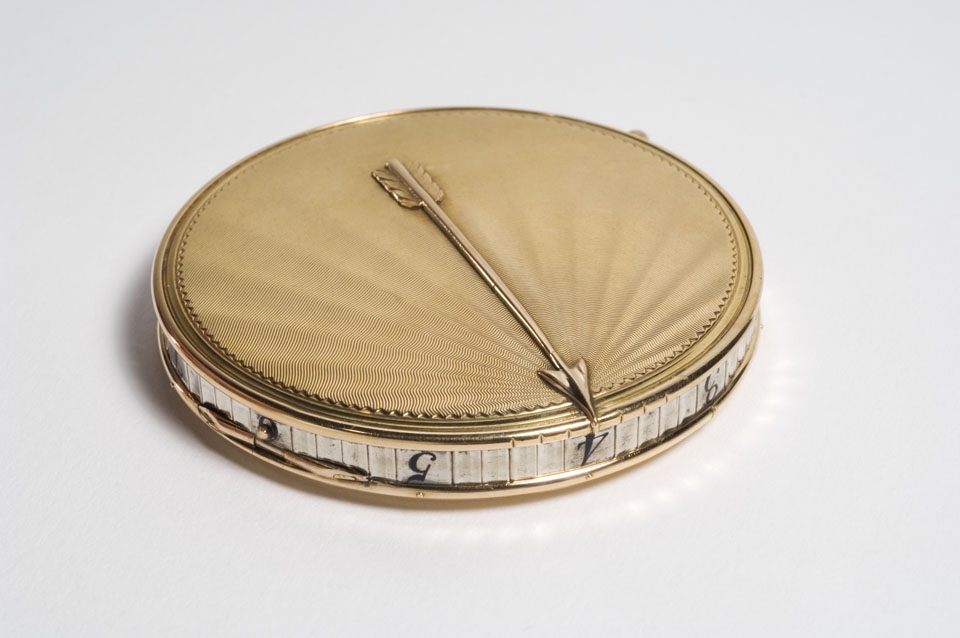
Figure 1. Made by Breguet around 1800. Nationalmuseum, Sweden (NMK 1114/1922). Formerly owned by Gustaf Mauritz Armfelt. Photograph courtesy of Nationalmuseum, with no individual photographer credited. Licence: CC BY-SA 4.0. Reproduced as supplied.
Turning the external hand to read the time#
The arrow stops at the position of the internal hour hand#
A watch at the Musée Paul-Dupuy in Toulouse (inv. 18269) has one blued steel hand on a white enamel dial. Pushing the arrow on the outside of the cover causes a projection on its inner side to come up against the dial hand and stop. The direction of the arrow can then be read by reference to the raised markers at the edge of the case. The inner hour hand advances while the watch is running, and the external arrow stays where it was read until it is moved again. The Musée international d’horlogerie (MIH) describes both examples in which the hand itself turns and examples in which the wearer turns the caseback carrying the arrow.2 3
The fineness of the reading depends on the markers. The museum record for Figure 1 lists twelve gold studs. Jérôme Bonaparte’s watch has twelve diamonds at the hours and twelve pearls marking the intervening half-hours. At equal intervals the hour marks are 30 degrees apart, with half-hour marks bringing the interval down to 15 degrees. If the arrow falls between two marks, the wearer estimates the position by touch. This scale guides the reading, while the regulating mechanism inside determines the watch’s rate.4 5
Leaving the previous reading in place#
The MIH’s collection account cites an 1800 record of Geneva’s Société des Arts. It describes the display as usable at night by people with hearing impairments and as a way to compare the beginning and end of an activity. Setting the arrow at the start leaves it in that position. When moved again later, the distance it travels before stopping gives the difference between the two times. The hour hand makes one revolution in twelve hours, so this method applies to intervals shorter than one revolution.3
From subscription watches to jewels and calendars#
According to the Louvre’s exhibition text, Breguet advertised the souscription watch in 1797. The customer paid a quarter of the price when ordering and received a watch with a large central barrel and a single-hand dial. Early montres à tact used this base movement. An excerpt from Breguet’s draft writings published by the company describes the challenge of bringing the repeater’s usefulness in the dark to a simple single-hand watch.6 7
A repeater sounds the time on demand. The montre à tact can be read silently by feeling the external hand and raised markers. In examples with gemstones or pearls in place of gold studs, the decoration itself forms the scale. No. 611, acquired by Joséphine on February 18, 1800, is a small medallion-shaped watch in Breguet’s account. The watch sold to Jérôme Bonaparte in 1809 has a tactile scale made of gems and a dial visible when the cover is opened.1 5 7
Surviving examples#
| Example | Case and tactile display | Movement and additional indications |
|---|---|---|
| Breguet No. 602, c. 1800 (MIH, I-493) | Gold arrow shot by Cupid on a rotating enamel caseback. Arabic numerals engraved in the silver side, with studs at three, six and nine o’clock. | Off-centre subsidiary dial with two blued steel hands. Central barrel, ruby cylinder escapement, brass three-arm balance and flat balance spring.3 |
| Musée Paul-Dupuy inv. 18269, c. 1800 | Diameter 63 mm. Silver engine-turned cover with gold studs. The movement is marked No. 756, the later case No. 1402. | Centre-wound movement, ruby cylinder escapement and regulator with bimetallic temperature compensation. The inner cover has a table of the equation of time with Republican and Gregorian dates.2 |
| Breguet No. 728, sold March 9, 1801 according to Antiquorum | Turning the surviving cover clockwise reveals the calendar and equation of time through apertures. Turning it in the opposite direction allows the time to be read by the arrow. | Subsidiary dial graduated in five-minute steps. Antiquorum says the main dial was replaced with one for two hands during servicing in the workshop.8 |
| Breguet No. 3801, sold to Monsieur Rigaud in 1826 (MIH, I-473) | Gold case with engine-turned back. | Lever escapement. The MIH also holds a watch from the workshop of Basile-Charles Le Roy (I-1325), using the same tactile principle with a virgule escapement.3 |
On No. 728, turning the same cover in different directions gives two readings. The calendar apertures show the correspondence between months in the Republican and Gregorian calendars and the equation of time for the first day of each ten-day period in the Republican calendar. The equation of time is the difference between apparent solar time as shown by a sundial and mean solar time. One case thus provides an external hand for reading time and apertures for calendar and correction values.8
Other watches read by touch#
Horological researcher Oliver Cooke describes sixteenth-century watches with raised studs at the hour positions and a strong hour hand that could be felt. Breguet’s watches transfer the position of the continuously running internal hand to the external arrow whenever the user takes a reading. In the twentieth century wristwatches appeared with a crystal that opened to let the wearer touch a dial with Braille. Cooke illustrates an example from around 1952 by the Anglo-Celtic Watch Company in Wales.9
On Eone’s Bradley, described by Cooke in 2014, a ball moving in a groove around the outside of the case shows the hours, and a ball moving in a groove on the front shows the minutes. Magnets inside the case position the balls, which the user reads against raised hour markers. Both designs put the reading on the outside, with Breguet’s arrow stopping under a finger on each reading and the Bradley’s two balls following their positions magnetically.9 10
Timeline#
| Year | Event |
|---|---|
| Sixteenth century | Watches are made with raised markers and a sturdy hour hand for reading by touch.9 |
| 1797 | Breguet advertises the souscription watch in a brochure.6 |
| 1799 | Breguet begins selling the montre à tact.1 |
| February 1800 | Joséphine acquires No. 611.1 |
| 1800 | A record of Geneva’s Société des Arts describes the tactile display and reading elapsed time.3 |
| March 1801 | No. 728 is sold to Monsieur Falsetti.8 |
| December 1809 | Jérôme Bonaparte buys a watch with a tactile scale made of gems.5 |
| 1826 | No. 3801 is sold to Monsieur Rigaud.3 |
| c. 1952 | Example of an Anglo-Celtic wristwatch with Braille.9 |
| 2014 | Cooke presents Eone’s wristwatch that uses two balls to show the time.9 |
References#
- Montres Breguet, Vente de la première « montre à tact ». Start of sales and No. 611. Accessed November 21, 2026.
2. Musée des Arts Précieux Paul-Dupuy / Occitanie Musées, Montre de souscription à tact, inv. 18269. Accessed November 21, 2026.
3. Musée international d’horlogerie, Montre à tact, I-493, related objects I-473 and I-1325, and quotation from an 1800 Geneva record. Accessed November 21, 2026.
4. Nationalmuseum, Pocket watch, a so called montre à tact, NMK 1114/1922. Accessed November 21, 2026.
5. Fondation Napoléon, “Tact” watch belonging to Jerome Bonaparte, King of Westphalia, and French version. Accessed November 21, 2026.
6. Musée du Louvre, Subscription watch, Breguet at the Louvre, 2009 exhibition. Accessed November 21, 2026.
7. Montres Breguet, À l’origine de la famille « TRADITION », Le Quai de l’Horloge, no. 5. The montre à tact and Breguet’s draft writings. Accessed November 21, 2026.
8. Antiquorum, Breguet No. 728, Important Watches, Wristwatches and Clocks, October 15, 1994, lot 370. Accessed November 21, 2026.
9. Oliver Cooke, Keeping in touch with time, Antiquarian Horological Society, June 9, 2014. Accessed November 21, 2026.
10. Eone, Bradley Voyager Cobalt, “Details”. Accessed November 21, 2026.