This article was translated from Japanese using AI. Read the Japanese original
Some singing-bird automata emerge from the lid of a small box and sing notes that glide from high to low. Their voices come from a sliding-piston whistle, or sifflet à piston coulissant in French. Bellows or another source supply air to a single whistle, and a piston moving back and forth inside the pipe changes the pitch. This saves the space previously taken up by several pipes and allows the pitch to change smoothly.1 2
From several pipes to one#
A serinette is a small hand-cranked organ for teaching tunes to birds. As a pinned cylinder turns, it opens valves for individual notes, and air from bellows sounds the corresponding pipes. A birdcage clock from 1785 in the Musée des Arts et Métiers in Paris (no. 10.634) has seven horizontal pipes in the base and can play three tunes. A mainspring and fusee drive the cylinder that controls both the sequence of notes and the movement of the bird’s beak.1 3
By the late eighteenth century a design had appeared that varied the length of the air column inside a single pipe. The 2012 exhibition Automates & merveilles attributes the invention in general to the Jaquet-Droz and Leschot workshop, while Sandrine Girardier attributes it to Jacob Frisard, a watchmaker who worked with them. A March 1793 letter cited by the exhibition records Leschot telling Frisard that he wanted their technique kept within the workshop while other makers continued to use several pipes.1 2
Changing the air column to control pitch#
The changing length inside the whistle#
When air is blown into the mouth and the jet oscillates across its edge, the air column resonates inside the pipe. The face of the piston acts as the closed end. The shorter the distance from mouth to piston, the higher the fundamental note. If air continues to flow as the piston slides, the pitch changes continuously.1 4
For a uniform pipe open at one end and closed at the other, the approximate fundamental frequency is the speed of sound divided by four times the effective length of the air column. If that length is halved at the same temperature, the model gives twice the fundamental frequency, a rise of one octave. The effective length includes a correction near the mouth. Even if piston travel is proportional to cam displacement, frequency varies inversely with length, so the same travel changes the frequency more in the higher register.4
Timing the piston and the air supply#
A lever follows the changing profile of a rotating cam, converting rotation into the piston’s back-and-forth motion. Maintaining the airflow as the pitch changes produces a glide. Stopping the air, moving the piston and blowing again produces a pause before the next note. In the late eighteenth-century design Girardier describes, one set of small cams moved the piston and another operated the bellows. The 2012 exhibition material explains that this arrangement produced trills, glides and sequences of short notes.1 2
In the “mechanism producing the song of a nightingale” at the Musée des Arts et Métiers (no. 10.638), a mainspring barrel drives the train, and bellows at the side feed air to a horizontal whistle. Two cams side by side act through their own levers. One controls the stroke that pushes the piston in, and the other controls its spring-driven return. There is also a device that stops the fly governor, and a set of auxiliary bellows. A lever releases the movable board of the auxiliary bellows. The performance pauses when they inflate and resumes when the air escapes. The museum’s earlier catalogue dates the mechanism to 1850, while later exhibition material gives around 1885.3 5
Adjustment and preservation#
Air leaking between the piston and pipe weakens the action of the closed end. Even with a small clearance, a sticking piston fails to translate the cam profile accurately into pitch. Adjusting the song requires smooth motion between pipe and piston and coordination of the airflow with the cam position. In 2016 the Musée des Arts et Métiers obtained a simplified demonstration replica of no. 10.638 to convey the sound and movement without running the original frequently.3 4 5
Scent bottles, singing-bird boxes and wristwatches#
A scent-bottle watch by Jaquet-Droz & Leschot that Antiquorum dates to about 1795 contains a bird mechanism on the reverse. A fusee and chain power the mechanism that operates the bellows and sounds the piston whistle. The catalogue counts eight cams, two of which control movement of the beak and tail. When the small door in the case opens, the bird sings, and the door closes after the song. The watch train, sound mechanism and bird animation fit into the same case.6
The Musée des Arts et Métiers holds a singing-bird box made by A. Bontems in 1954 (no. 20.445). Its transparent case measures 10 × 6 × 3 cm and contains a barrel, bellows and piston whistle. When the bird stands upright, three coaxial tubes through its body connect to the mechanism so the bird opens its beak, moves its wings and turns its body. The box houses both the parts that produce the song and those that animate the bird.3
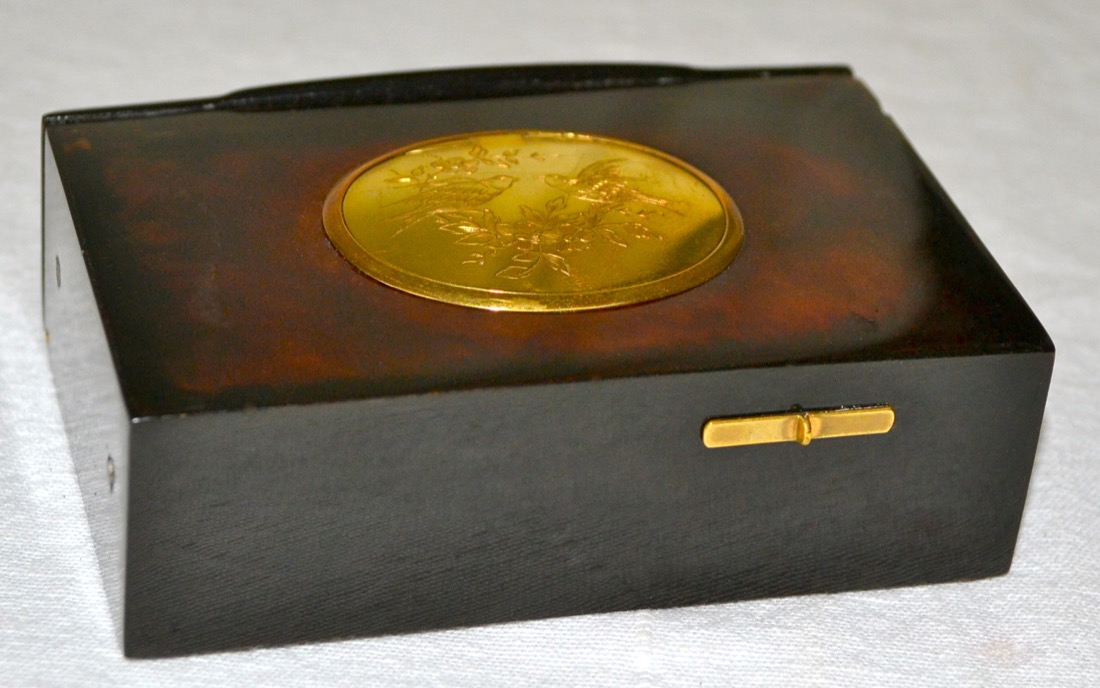
Figure 1. Bontems singing-bird box, c. 1890, shown with the lid closed. Photograph by Raphael Cole. Source: Wikimedia Commons file description. Licence: CC0 1.0. Resized.

A wristwatch design with piston-driven airflow#
Published Swiss patent application CH706792A2, naming François Junod as inventor, describes a design for compressing air in a wristwatch to reproduce bird song. In claim 1 a piston compresses the air supplied to the whistle. Claims 8 and 9 describe a separate piston moved by a cam and a lever to vary the whistle’s internal volume and adjust the pitch. In claim 11 a cam-operated valve governs the flow from an air reservoir to the whistle, varying the intervals, length and intensity of the notes.7
According to the maker, the modern Jaquet Droz Charming Bird wristwatch uses a whistle incorporating sapphire. For instance, in the red-gold J031533202, the push-button-activated bird mechanism is hand-wound and the hours and minutes are powered by automatic winding. The Charming Bird won the Mechanical Exception Watch Prize at the Grand Prix d’Horlogerie de Genève in October 2015.8 9
Timeline#
| Date or period | Documented event |
|---|---|
| 1785 | Date of the birdcage clock with a seven-pipe serinette at the Musée des Arts et Métiers.3 |
| Late eighteenth century | The sliding-piston whistle associated with the Jaquet-Droz and Leschot workshop helps make singing birds smaller.1 2 |
| March 1793 | Leschot mentions other makers with multiple pipes and his own workshop’s technique in a letter to Frisard.1 |
| c. 1813 | The Rochat brothers, who make singing-bird mechanisms, move to Geneva.1 |
| Nineteenth century | The Musée des Arts et Métiers’ mechanism no. 10.638 shows how two cams and auxiliary bellows control the song.3 5 |
| 1954 | The A. Bontems singing-bird box enters the Musée des Arts et Métiers collection.3 |
| July 2012 | Montres Jaquet Droz files a Swiss application for a whistle design to be incorporated into a wristwatch.7 |
| October 2015 | The Charming Bird wins the Mechanical Exception Watch Prize at the Grand Prix d’Horlogerie de Genève.9 |
| 2016 | Artimachines makes a replica showing the action of the museum’s nightingale mechanism, no. 10.638.5 |
References#
- Musée international d’horlogerie, La Chaux-de-Fonds, Musée d’horlogerie du Locle and Musée d’art et d’histoire de Neuchâtel, Automates & merveilles, 2012 exhibition materials, pp. 30–31 and 35–36. Accessed November 20, 2026.
- Sandrine Girardier, L’entreprise Jaquet-Droz. Entre merveilles de spectacle, mécaniques luxueuses et machines utiles. 1758–1811, Éditions Alphil–Presses universitaires suisses, 2020, pp. 210–211. Accessed November 20, 2026.
- Conservatoire national des arts et métiers, Catalogue du musée. Section Z, Automates et mécanismes à musique, 1960, pp. 24–29, figs. 9–12, records 10.634, 10.638 and 20.445. Accessed November 20, 2026.
- Neville H. Fletcher and Suszanne Thwaites, The Physics of Organ Pipes, 1983. Sound production by an air jet and resonance of a closed pipe. Accessed November 20, 2026.
- Musée des Arts et Métiers, Quelles alternatives au fonctionnement ?, no. 10.638 and its 2016 replica (fig. 09). Accessed November 20, 2026.
- Antiquorum, Jaquet-Droz & Leschot; Jean-Georges Rémond & Co., Geneva, May 2019, lot 35, “Calibre” and “Notes”. Accessed November 20, 2026.
- François Junod (inventor), Montres Jaquet Droz SA (applicant), CH706792A2, filed July 31, 2012, claims 1–3 and 8–11 and figs. 1–6. Accessed November 20, 2026.
- Jaquet Droz, Automata Collection, p. 127, Charming Bird. Accessed November 20, 2026.
- Grand Prix d’Horlogerie de Genève, 2015 Prize List, October 29, 2015. Accessed November 20, 2026.