Steinheil’s Transit Prism#
This article was translated from Japanese using AI. Read the Japanese original
Fit a small glass prism to a window frame and a single star appears as two images. Read the clock when the two images of the moving star coincide, then compare the reading with the same observation on the following night. Carl August von Steinheil called the instrument he devised for measuring a clock’s daily gain or loss a transit prism (Passage-Prisma). His 1846 description was written with clockmakers in mind who had limited access to an observatory transit telescope. 1
A clockmaker’s window as an observing station#
At an observatory, a transit telescope turns on a horizontal east–west axis. The observer notes the moment when a celestial object crosses the meridian and passes the wire in the field of view. The wire needs illumination at night, and the level and orientation of the axis must be checked. Steinheil thought this was an elaborate arrangement for clockmakers with little space or access to auxiliary equipment. 1
Observers could already compare the times at which a star disappeared behind the edge of a distant building on successive nights. In Olbers’s method, described by Steinheil, observing the same edge from the same position reproduces the direction of transit. The dipleidoscope (article in Japanese) made by Dent in London compares a once-reflected image with a twice-reflected image. Steinheil devised an arrangement that allowed the observer to look directly towards the celestial object and an optical path that made it easier to match the brightness of the two images. The Deutsches Museum archive lists a description and sketch dated 20 November 1844 and a draft letter dated 29 November concerning an application for a privilege. 12
How one star produces two images#
Two angles of the prism’s cross-section are equal and the remaining angle is about 90 degrees. Some light from the star passes beside the prism and directly into the eye. Some enters a face of the glass and is refracted, reflects once off the inside face that forms the long side, then is refracted again as it leaves through the other face. If the direction to the star is parallel to the reflecting surface, the rays leaving the glass are parallel to the direct rays and both images appear at the same position. 1
When the star lies to one side of the plane of the reflecting surface, the direct and reflected images appear on opposite sides of that plane. The gap narrows as the star approaches the plane. The images coincide at the crossing and then part. Their coincidence is the instant to look for. The 1846 drawing shows a small aperture placed so that the plane of the reflecting surface nearly bisects it, guiding the line of sight and admitting both direct light and light from the prism. The prism is secured to a brass fitting screwed to the window frame with wood screws. 1
Finding local time and measuring the clock’s rate#
To find local time, align the reflecting surface parallel to the plane of the meridian. The Sun’s centre makes its upper transit across the meridian at local apparent noon. To compare this with mean solar time, apply the equation of time for that day. To measure only the clock’s gain or loss, observe the same star without moving the instrument. Precise meridian alignment is unnecessary in this case. A star returns to the same position after about 23 hours, 56 minutes and 4 seconds of mean solar time. If the difference in clock readings is 23 hours, 56 minutes and 9 seconds, for example, the clock gained about five seconds in that interval. 1
Steinheil reported that he could judge the moment when the Sun’s images coincided to within about three quarters of a second. This figure refers to judging the coincidence of the images. Alignment of the reflecting surface and conversion to local time also affect any comparison between local time and the clock’s display. The Deutsches Museum classifies the instrument chiefly as a means of checking a clock’s rate. Observing the Sun requires dedicated protection. Looking directly at it through period darkened glass or through the museum instrument can damage the eyes. 135
The instrument with a telescope in the Deutsches Museum#
Deutsches Museum object no. 567 is an example with a telescope, dated to 1836–1847 and attributed to Munich. The prism is 29.6 mm wide and the telescope is 67 mm long, with a clear objective aperture of 6.4 mm. Made of glass, brass and wood, the instrument weighs about 200 g. According to the museum, the body turns to adjust the orientation of the reflecting surface, and the telescope can be swung around the prism and fine-tuned so that its line of sight is perpendicular to the prism’s axis. 3
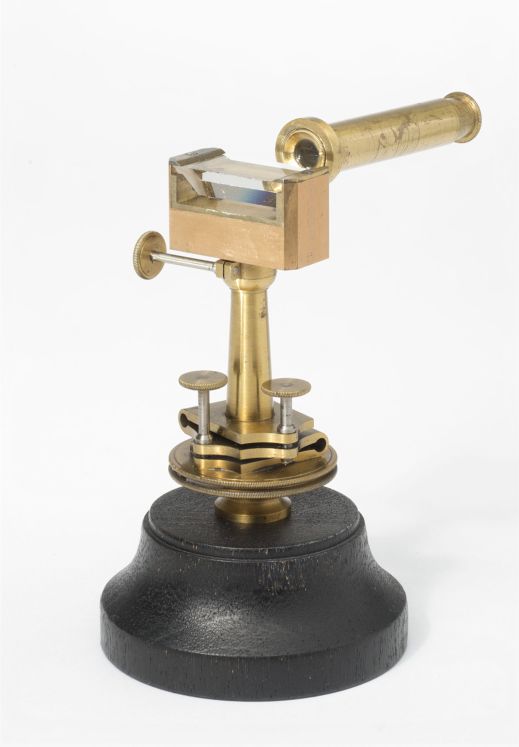
Figure 1. Transit prism with telescope (object no. 567, photograph 567_0001). The collection page gives no individual photographer’s name. Image and rights credit to the Deutsches Museum. Collection entry, CC BY-SA 4.0. The museum’s display JPEG is reproduced unchanged.
According to the museum’s records, Steinheil’s 1847 price list described the instrument as suitable for travel because it fit in a small box. As the converse of using a transit to find the time at a known location, Steinheil envisaged using the observation to find one’s position when the time was known. The museum identifies maintaining a stable position of the telescope’s objective relative to the prism as a challenge with this kind of instrument. 13
Steinheil also designed a different transit instrument that the observer looked through along the rotation axis. In Deutsches Museum object no. 701, a mirror at 45 degrees redirects starlight along the horizontal rotation axis. The eyepiece stays in place when the instrument is aimed at stars at different altitudes. According to the museum, a similar instrument was used to determine time at the Vienna Observatory. 4
Timeline#
| Year | Event |
|---|---|
| 1836–1847 | Manufacturing period assigned by the Deutsches Museum to its transit prism with telescope (567). 3 |
| November 1844 | Steinheil prepares a description and drawing of a transit prism that improves on Dent’s instrument. A draft letter on the application for a privilege also survives. 2 |
| January 1846 | The Kunst- und Gewerbe-Blatt publishes Steinheil’s description of the instrument as a means of determining a clock’s rate. It is reprinted the same year in vol. 99 of the Polytechnisches Journal. 1 |
| 1847 | The workshop price list describes the prism as suitable for travel. 3 |
| August 2016 | The digital catalogue of the Deutsches Museum’s founding collection records the instrument’s dimensions, mounting and use. 3 |
References#
1. Carl August von Steinheil, “Ueber Beobachtungsmittel zur Erkennung des Ganges der Uhren, insbesondere über das Passage-Prisma,” Polytechnisches Journal, 99 (1846), pp. 104–111. Reprinted from the January 1846 issue of the Kunst- und Gewerbe-Blatt. Accessed 20 November 2026. 2. Deutsches Museum Archiv, FA 005 Steinheil, 13 October 2023 edition, pp. 45–46, FA 005/0201–0202. Accessed 20 November 2026. 3. Deutsches Museum, “Passage-Prisma mit Fernrohr,” Gründungssammlung, object no. 567, edited by Julia Bloemer and Benjamin Mirwald, 24 August 2016 edition. Accessed 20 November 2026. 4. Deutsches Museum, “Passageinstrument,” Gründungssammlung, object no. 701, edited by Julia Bloemer and Benjamin Mirwald, 24 August 2016 edition. Accessed 20 November 2026. 5. NASA Science, “Eclipse Viewing Safety,” precautions for direct observation of the Sun and for using optical instruments. Accessed 20 November 2026.